

This Is the World Cup Too: Stories More Incredible Than Football Itself
![[object Object]](https://api.hedonistmagazine.net/storage/images/2026/06/1b9d1ba8-fb74-4d23-b3f5-5b3b5decb1d4.webp)
Behind the goals, trophies and legendary champions lie stories that have shaped the history of the FIFA World Cup just as profoundly as the matches themselves. From political pressure and controversial decisions to human tragedies, collecting crazes and moments that became part of popular culture, these are the stories that prove the World Cup has always been much more than a football tournament.
A Policeman as an Assistant and a One-Armed Footballer
The first FIFA World Cup was held in Uruguay in 1930. Yugoslavia reached the semi-finals, where it was stopped by the host nation. The Yugoslav side took the lead through Đorđe Vujadinović and looked set for another upset. However, Uruguay quickly equalized and went on to score five more goals for a convincing victory.
One of the tournament’s most famous anecdotes is linked to Uruguay’s second goal. A police officer reportedly returned the ball from beyond the goal line back into play, allowing Juan Anselmo to score past Milovan Jakšić. Referee Almeida Rego remained silent about the incident but was not silent when he disallowed what eyewitnesses claimed was a legitimate Yugoslav goal.
In the final, where Uruguay defeated Argentina, Uruguayan footballer Héctor Castro played despite having only one arm. He had lost the other in childhood, yet that did not stop him from scoring during the tournament and becoming one of its most remarkable figures.
The Telegram That Entered World Cup History
At the center of the third World Cup, just as four years earlier, stood Italy and its leader, Benito Mussolini. Before the final against Hungary, the fascist dictator reportedly sent his players a telegram carrying a simple message: “Vincere o morire!” (“Win or die!”).
Led by Giuseppe Meazza, Giovanni Ferrari and Silvio Piola, the Azzurri chose the first option, defeating Hungary 4:2 and becoming the first national team to successfully defend a World Cup title. With the 1942 and 1946 tournaments cancelled because of World War II, Vittorio Pozzo’s side remained world champions for a full twelve years.
The Day Brazil Fell Silent
On July 16, 1950, a match took place at the Maracanã Stadium that would forever change the history of Brazilian football. In front of more than 200,000 spectators, Brazil needed only a draw against Uruguay to secure its first World Cup title. The atmosphere was so euphoric that newspapers had already proclaimed Brazil champions, gold medals bearing the players’ names had been produced, and city officials had begun celebrating in advance.
Uruguay, however, refused to play the role of spectators. Led by captain Obdulio Varela, they staged a dramatic comeback and won 2:1, producing one of the greatest shocks in sporting history. An almost unreal silence descended upon the stadium, while the defeat was experienced in Brazil as a national tragedy.
The event became known as the Maracanazo - the symbol of the day a nation that had already seen itself on top of the world lost its greatest football dream. Two people reportedly took their own lives inside the stadium; more tragedies followed in the days afterward; four players never represented Brazil again; the commemorative medals disappeared without a trace, and the planned champions’ anthem was never performed.
A Mystery That Has Lasted Six Decades
The 1966 World Cup in England is remembered for one of the most controversial moments in football history. The hosts won their only World Cup title by defeating West Germany 4:2 after extra time, yet discussion still centers on Geoff Hurst’s goal in the 101st minute.
His powerful shot struck the crossbar, bounced down toward the goal line, and back into play. Referee Gottfried Dienst awarded the goal after consulting assistant referee Tofiq Bahramov.
Whether the ball fully crossed the line remains a question without a definitive answer, despite countless studies and analyses conducted over the decades. Because of that decision, the Wembley final is still considered one of the most disputed matches in World Cup history, while Hurst’s strike remains both the goal that won England its title and one of football’s greatest mysteries.
The Panini Revolution That Captivated Generations
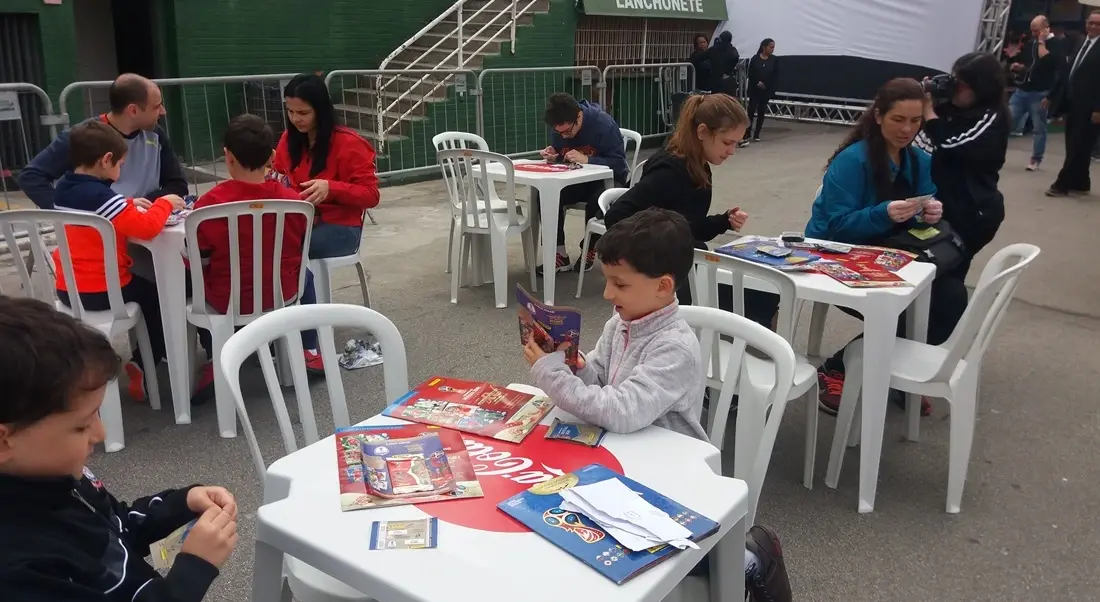
The 1970 World Cup in Mexico is remembered, among many things, for the first Panini album featuring self-adhesive stickers, a phenomenon that would spark a collecting obsession that would last for generations.
It was also the first tournament where referees could use yellow and red cards. Yet because the football was relatively clean and free of excessive roughness, no player was sent off during the competition.
The Mexican tournament was revolutionary in another way. Before the opening match between Mexico and the Soviet Union, 50,000 colorful balloons were released into the sky. Since then, every World Cup has begun with an official opening ceremony.
The Hand of God and the Goal of the Century
The 1986 World Cup in Mexico remains forever associated with the genius of Diego Maradona, who wrote one of football’s most famous chapters within a matter of minutes.
In the quarter-final against England, played only four years after the Falklands War, the Argentine captain first scored a controversial goal with his hand, later known as the “Hand of God.” The officials failed to spot the infringement, and Maradona later famously said the goal was scored “a little with Maradona’s head and a little with the hand of God.”
Just four minutes later came a moment of pure magic. Picking up the ball in his own half, Maradona dribbled past several English players, rounded the goalkeeper and scored a goal that FIFA later voted the “Goal of the Century” in 2002.
Argentina won 2:1 and eventually lifted the World Cup, while the Hand of God and the Goal of the Century became enduring symbols of one of the greatest individual performances ever seen at a World Cup.
The Tragedy That Shook the Football World
The 1994 World Cup in the United States is remembered not only for Brazil’s fourth world title but also for one of the darkest stories in sports history.
Colombian defender Andrés Escobar scored an own goal in a crucial match against the host nation. Colombia lost 2:1 and was eliminated from the tournament.
Just five days after returning home, Escobar was murdered in Medellín. According to reports at the time, the gunman shouted “Goal, goal, goal...” while firing, mocking the own goal that had defined Escobar’s World Cup.
Humberto Castro Muñoz was arrested and initially sentenced to 43 years in prison, although he was released much earlier. Over the years, speculation persisted that the murder was connected to gambling losses and criminal organizations, turning Escobar’s death into a symbol of an era in which football, violence and organized crime dangerously overlapped.
His murder remains one of the greatest tragedies ever associated with the FIFA World Cup.
- Compiled by Dejan Marić / HEDONIST
Related articles
How Panini Created the First Social Network
Before Instagram, TikTok, and endless scrolling, there was a different kind of algorithm. It didn’t run through the internet, but through school hallways, parks, apartment courtyards, and lunch breaks. Its name was simple - Panini.

Gone with the Wind: Has Sport Lost Its Soul?
At the end of the promenade, near Ciglana and Vitanova Bara, right by the large bend where the Danube forms whirlpools capable of spinning the boats of careless fishermen for hours, lies Ledine. It is a meadow where a small-sided football tournament is held every sunny Sunday, and where, every other day, rain or shine, muddy kids from the surrounding alleyways chase a ball day and night.