

A 1950s Icon Preserved as a Family Treasure

![[object Object]](https://api.hedonistmagazine.net/storage/images/2026/07/9b9e0b86-3023-40fd-972a-4010d0682837.webp)
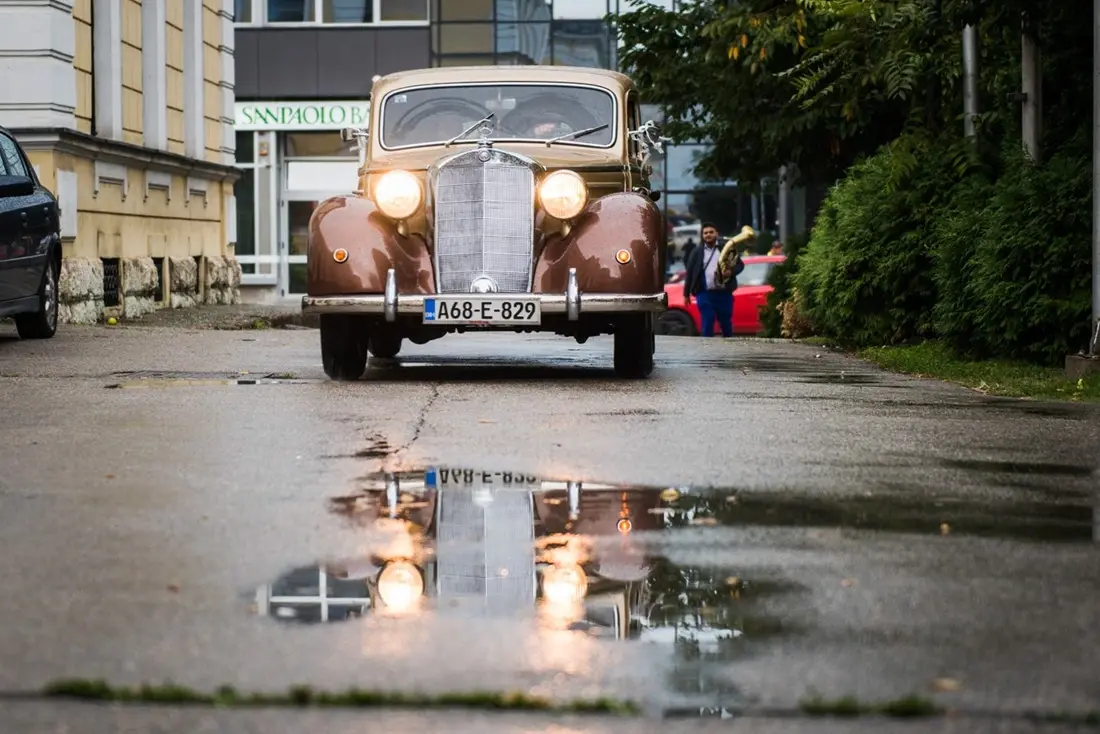
Mercedes-Benz automobiles - particularly the marque's legendary sports cars - have been known as the "Silver Arrows" since the 1930s. Yet the Mercedes, carefully preserved in the garage of Banja Luka collector Velimir Tamamović, gleams more like gold.
In fact, it resembles a chest filled with 71-year-old treasure. Its value lies not only in its rarity and elegant golden finish, but also in the purpose it serves. If everything goes according to plan, the car's next owner will be Velimir's son. As far as the Tamamović family is concerned, this is one automobile that simply isn't for sale.
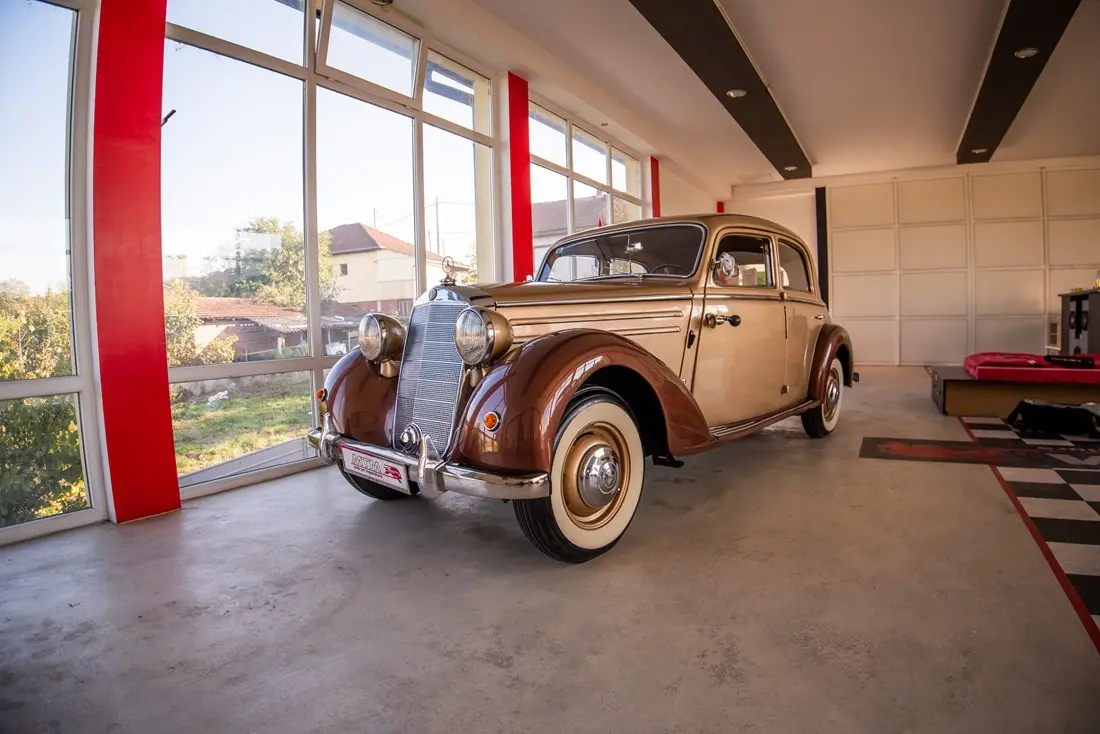
One glance at the beautifully restored Mercedes-Benz 170 S is enough to understand why.
For those old enough to remember its era, the car evokes memories of a time when only society's elite could afford such luxury - a successful surgeon in Stockholm is believed to have been its very first owner. Younger generations know cars like this only from classic films and history books. Thanks to enthusiasts such as Tamamović, however, this remarkable automobile can still be admired on the streets of Banja Luka, driven on special occasions, or even rented for weddings, film productions, and other exclusive events.
Editor's Note: This feature is part of the HEDONIST archive and was originally published in Issue No. 7 of the magazine in 2021.
What truly sets Tamamović's Mercedes apart from the handful of surviving 170 S models displayed at classic-car gatherings is not simply its immaculate condition. Two things make it exceptional: the painstaking restoration carried out almost entirely by its owner in his own workshop, and the extraordinary story of how this three-pointed star made its journey from an abandoned Swedish forest to the heart of Bosnia and Herzegovina.
According to family lore, everything began with a phone call from Velimir's brother, who lives in Sweden.
Hidden deep in a forest, half-sunken into mud and abandoned for decades, he had stumbled upon what appeared to be a Mercedes-Benz 170 S. Its condition was so poor that only someone with genuine expertise would have recognized what lay beneath the rust and decay.
"We somehow tracked down the owners and eventually agreed on a price," Tamamović recalls. "But then I ran into the first major obstacle. Two apple trees had grown on either side of the car over the years, literally trapping it between their trunks. As the trees expanded, they slowly began twisting the bodywork. In Sweden, cutting down a tree without permission can land you in serious legal trouble. To this day, I honestly don't know how we managed it, but we eventually extracted the car without damaging either tree."
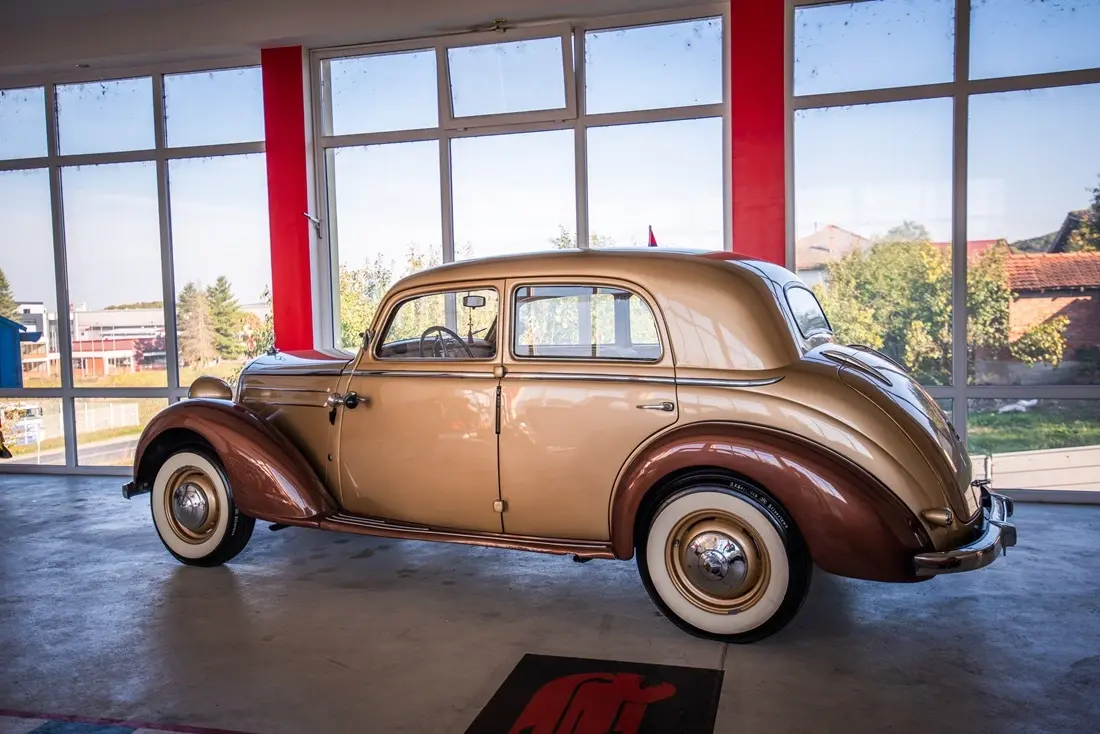
Stepping inside Tamamović's workshop, MTM Auto Art Reparature, feels less like entering a repair garage than walking into a private museum. The unmistakable scent of gasoline and fresh paint fills the air. Nearby sits a freshly imported 1986 Trabant, another Trabant ingeniously converted into a barbecue and beer dispenser - a creation that reportedly became one of the attractions at Munich's Oktoberfest - alongside a vintage Jawa motorcycle restored to concours condition and an immaculately preserved go-kart.
Yet the undeniable centerpiece is the Mercedes itself.
And, as it turns out, adventures have followed the car ever since it was little more than a pile of rusting steel.
"Once we finally got it out of the forest, I secured it to a trailer and started driving home through Germany," Tamamović says. "Suddenly, police cars surrounded me with flashing lights and sirens. I pulled over completely confused, only to be told that I was breaking the law."
The officers believed the deteriorated vehicle posed a safety hazard.
"They insisted that I couldn't transport old scrap metal like that because parts might fall off onto the motorway. In fact, they assumed I was a scrap dealer illegally hauling metal across the country. I showed them all the paperwork and explained that it was a valuable collector's car, but it made no difference. They told me it could only be transported inside a sealed shipping container - and not one I arranged myself. I had to hire a certified transport company. The cost immediately skyrocketed. I had no choice. By the time I reached customs back home, they thought I was completely insane for spending so much money on what looked like a heap of junk."
Fortunately, Tamamović possessed something even more valuable than money: patience.
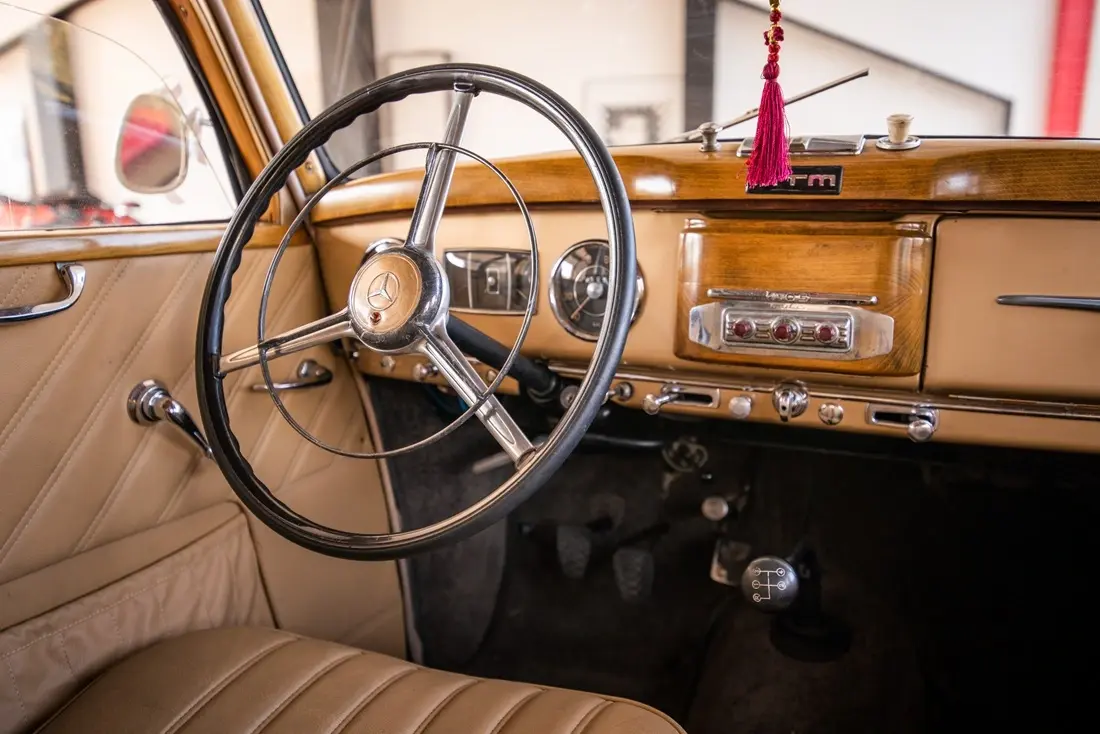
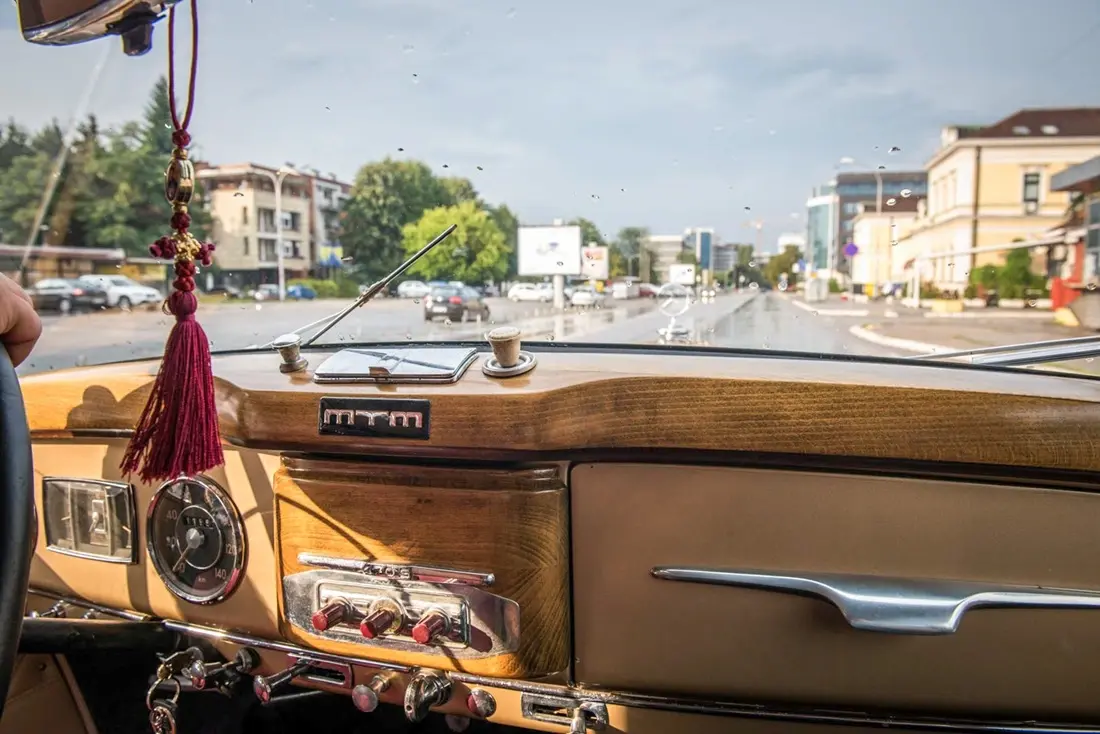
Over the next seven years, he devoted countless hours to returning the Mercedes to its original glory. Every detail was painstakingly restored to factory specifications. The ashtray and electric cigarette lighter - rare luxuries in the early 1950s - remain exactly where Mercedes engineers intended them to be. The seats retain the comfort of finely crafted armchairs, while the wood trim, original radio, mechanical switches, exterior-mounted horn, and distinctive rear-hinged "suicide doors" all preserve the spirit of an era when the 170 S represented the cutting edge of German automotive engineering.
Only one significant change was made.
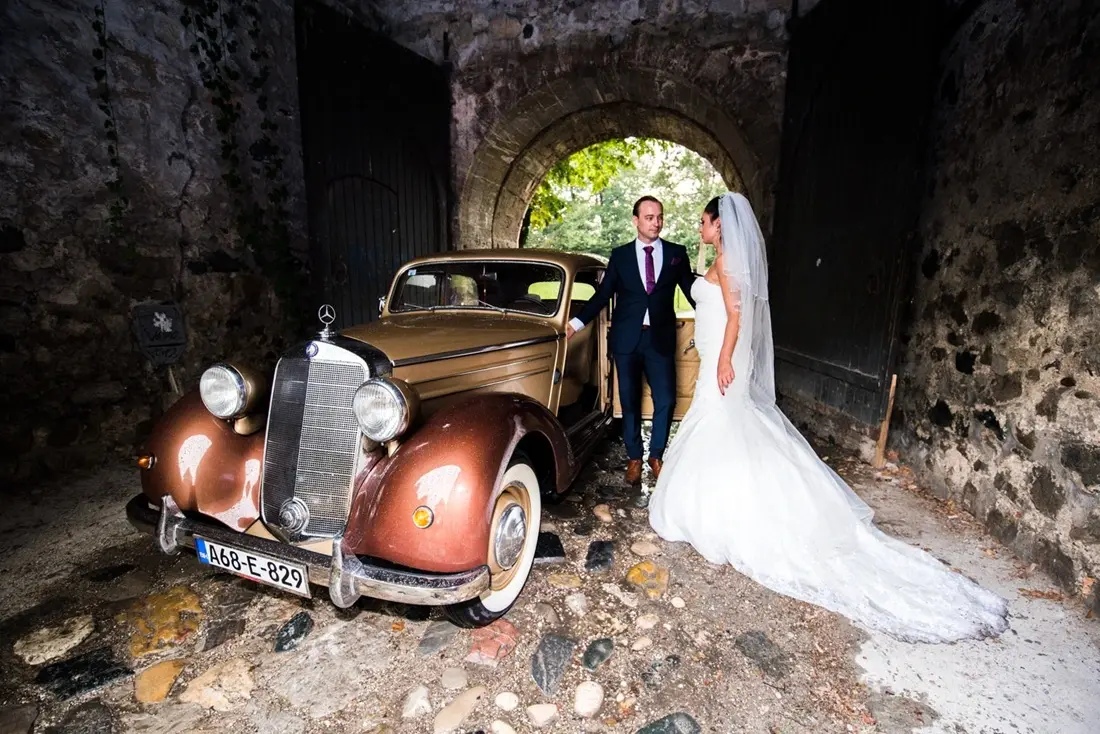
The original black paint was replaced.
"I didn't want it to look like a funeral car," Tamamović laughs.
White was never seriously considered either, as he felt the chrome detailing would disappear against such a bright finish. After experimenting with numerous shades, he finally settled on a unique blend of antique gold and rich chocolate brown - a color combination instantly reminiscent of Bajadera, the iconic Balkan praline.
The resemblance was so striking that discussions even began with the confectionery manufacturer about featuring the "chocolate Mercedes" in one of its advertising campaigns.
Then the pandemic arrived, and the project quietly disappeared.
Mechanically, the 170 S remains every bit as fascinating as its appearance.

Starting the engine is an experience almost forgotten today. After turning the ignition key, the driver presses a mechanical starter lever with a foot - much like operating a clutch or brake pedal. The lever engages the starter motor, bringing to life a 1.7-liter gasoline engine producing a modest 39 kilowatts (around 52 horsepower). Despite its relatively humble output, the engine delivers a deep, reassuring growl that suggests considerably greater strength.
Even more remarkable is its cooling system.
The radiator, crafted entirely from copper, weighs an astonishing 40 kilograms (88 pounds). The turn signals are operated by rotating an elegant chrome ring built into the steering wheel, while power is transmitted through a four-speed manual gearbox with reverse. The fuel tank holds 60 liters, and every mechanical component reflects the engineering philosophy that helped Mercedes-Benz rebuild its reputation in the years following the Second World War.
The 170 S marked a turning point for the company, symbolizing a return to quality, craftsmanship, and innovation. It is therefore hardly surprising that Tamamović's beautifully restored example has collected numerous awards at classic-car events across Bosnia and Herzegovina and neighboring countries, including recognition at the prestigious Sarajevo Oldtimer Rally.
Maintaining perfection, however, comes at a price.
The Mercedes rides on handcrafted black-and-white BFGoodrich Silvertown tires, produced in the United States using traditional methods. According to Tamamović, each tire costs around $1,000. Even something as seemingly insignificant as a rear turn-signal lens commands extraordinary prices, with original examples selling for approximately €500 apiece.
Finding replacement parts, he explains, was often easier through specialized suppliers than through private collectors. Chasing obscure advertisements frequently meant traveling hundreds of kilometers only to return empty-handed.
Every successful restoration became a small victory.
Today, Tamamović estimates that a fully restored Mercedes-Benz 170 S like his would command well over €100,000 on the international collector's market.
Yet its true value cannot be measured in money.
For the Tamamović family, this is far more than a classic automobile. It is a piece of living history, preserved through passion, craftsmanship, and patience - a family heirloom destined to remain exactly where it belongs.
- By Slobodan Popadić / HEDONIST
- Originally published in HEDONIST Magazine, Issue No. 5 (2021).
Related articles
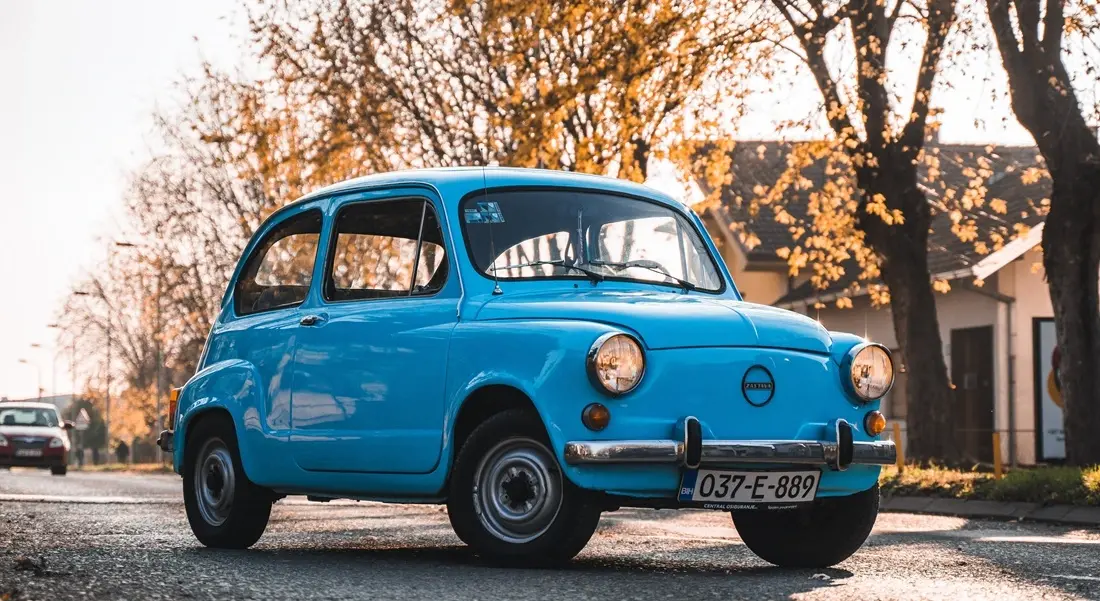
The Little Giant That Refuses to Retire
It has been branded with many slogans: “All cars are driven, only the Fićo is loved,” “Our fathers learned to drive in it,” “The car that motorized Yugoslavia.” It has always remained modest, unique, and unmistakable. Simply put - the Fićo.
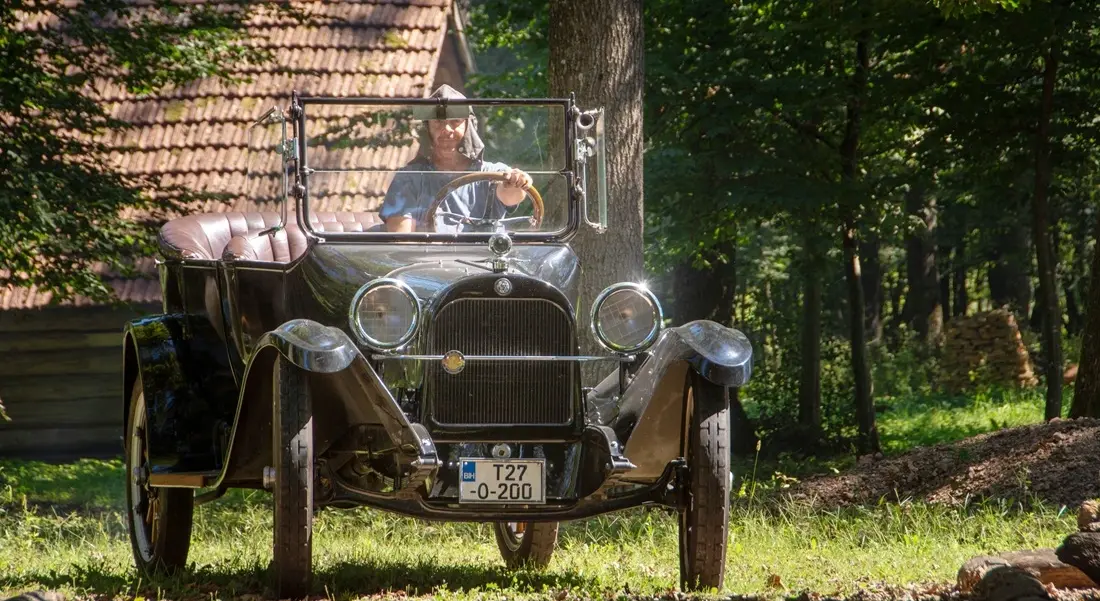
We Drove the Oldest Car in Bosnia and Herzegovina: The Story of a 1921 Dodge
Imagine driving a convertible powered by a 3.5-litre gasoline engine, worth more than 100,000 BAM, yet equipped with no seat belts, no radio, and no turn signals. The HEDONIST Magazine team had exactly that privilege, thanks to the hospitality of Miladin Savičić from Laktaši, owner of the oldest and perhaps most unusual automobile in Bosnia and Herzegovina.
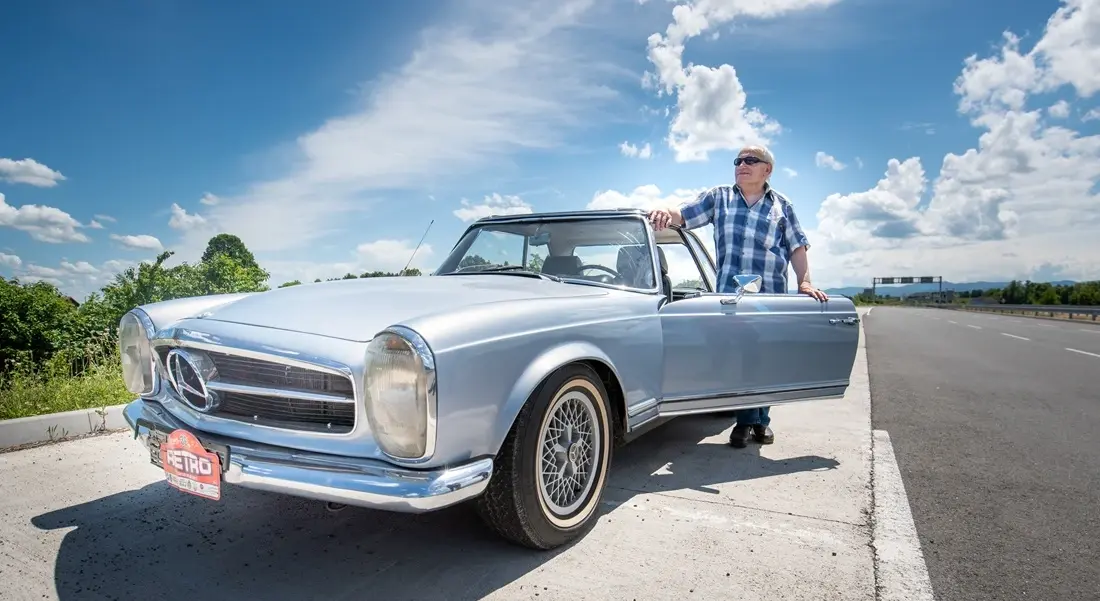
The Man Who Drove on Schumacher’s Tires
Parked on a grassy lawn, bathed in the June sun, painted sky blue with a black roof, it looked like a million-dollar jackpot. Automotive connoisseurs know that it truly is one. In a sea of today’s uniform sedans, this gem from 1967 has character, a name, and a surname: the Mercedes-Benz 250 SL “Pagoda.”