

The Mountain That Still Keeps Its Secret: What Really Happened at Dyatlov Pass? (2)

![[object Object]](https://api.hedonistmagazine.net/storage/images/2026/07/efef9734-9160-4411-a027-21667ba176a3.webp)
Few events in modern history have inspired as many competing explanations as the Dyatlov Pass incident. For more than six decades, researchers, journalists, scientists, and amateur investigators have tried to answer the same haunting question: why did nine experienced mountaineers leave the safety of their tent in the middle of a freezing winter night, wearing little or no clothing, descend a mountain in temperatures approaching –30°C (–22°F), and ultimately lose their lives?
Some theories are rooted in science and well-understood natural phenomena. Others emerged from the Cold War atmosphere, incomplete evidence, and inconsistencies in the original Soviet investigation. Still others belong more to the realm of folklore and popular culture than to historical inquiry, yet they have played a significant role in transforming the tragedy into one of the world's most enduring mysteries.
As improbable as some of these explanations may seem today, nearly every one arose for a reason.
The Avalanche Theory
The oldest, and perhaps the most widely discussed, explanation is that the group was forced from their tent by a small avalanche or the imminent threat of one.
At first glance, the theory appears convincing. If a mass of snow had begun sliding toward the campsite, the experienced hikers would have understood they had only seconds to react. Rather than struggling to reach the tent's entrance, which may have been blocked by snow, cutting through the fabric with knives would have been the fastest escape route. Such a scenario could explain why they abandoned nearly all of their equipment and hurried downhill away from the slope.
However, serious objections soon emerged.
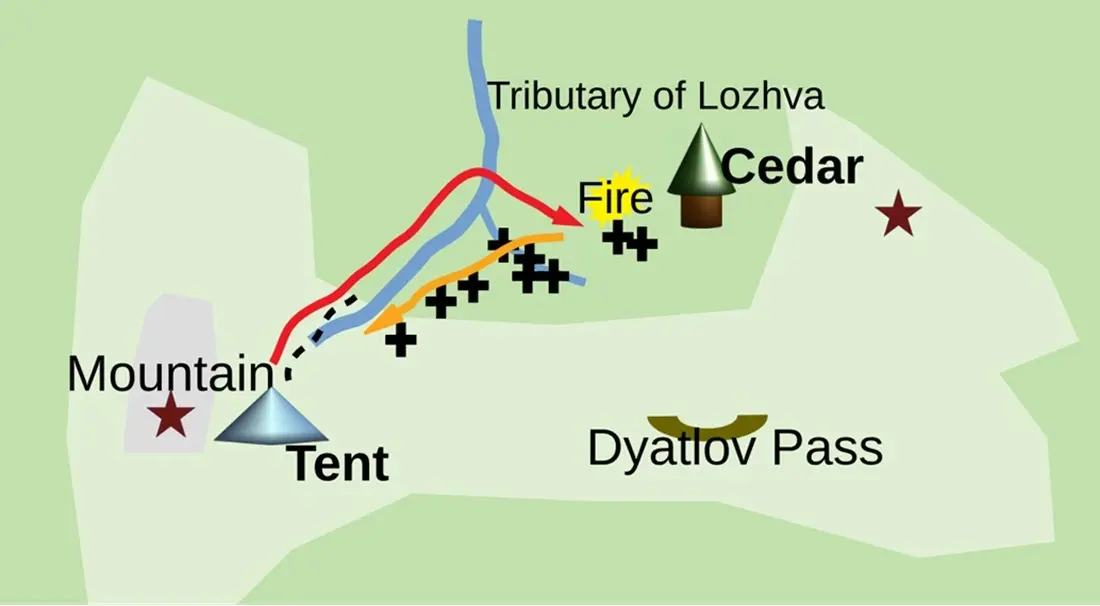
Rescuers found no evidence of a classic avalanche. The tent had not been crushed beneath a massive snow deposit, and most of its support poles remained standing. Footprints leading nearly a mile (1.5 kilometers) down the mountainside had survived largely intact - something difficult to reconcile with a powerful avalanche sweeping across the area.
The slope itself also appeared too gentle for the kind of large avalanche traditionally associated with such disasters.
For decades, these observations led many investigators to dismiss the avalanche hypothesis altogether.
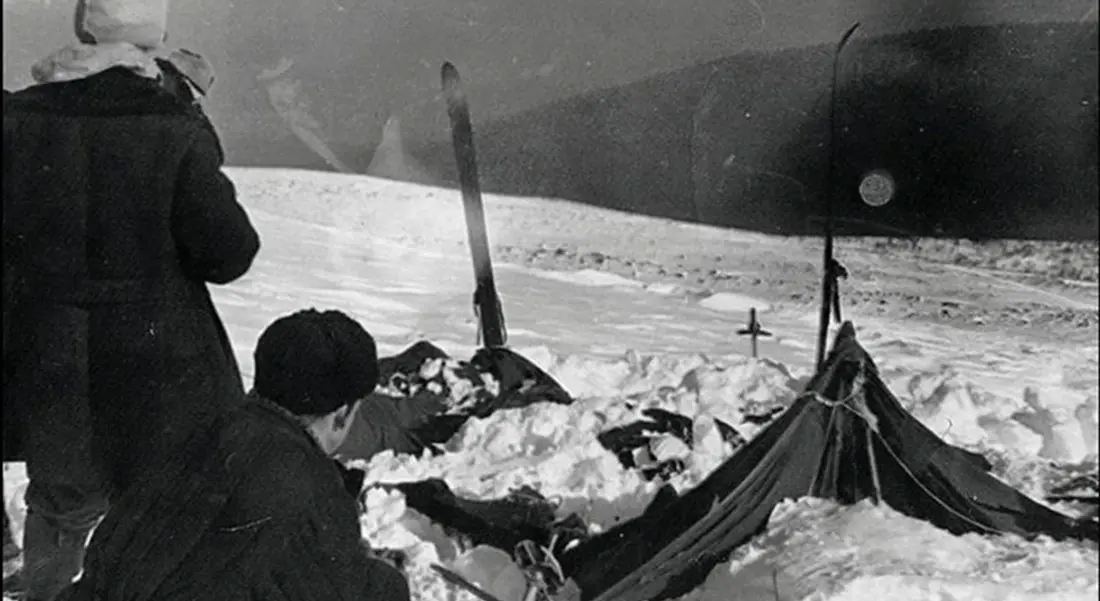
In recent years, however, the theory has undergone a remarkable reassessment. Scientists from Switzerland's Snow and Avalanche Research Institute, together with other experts, used sophisticated computer simulations to demonstrate that a catastrophic avalanche was never necessary. A relatively small slab of compacted snow, released several hours after the hikers carved a platform for their tent, could have collapsed onto one side of the shelter.
Such an event may have created the perception of immediate danger, prompting the group to evacuate the tent without delay while also accounting for some of the severe internal injuries later discovered.
Even so, the theory leaves several important questions unanswered.
Katabatic Winds
Another natural explanation has gained increasing attention among meteorologists in recent years.
It centers on katabatic winds - extremely powerful streams of cold, dense air that accelerate downhill under the force of gravity. These winds are well documented in Antarctica, Greenland, and several mountainous regions around the world, where they can reach hurricane-force speeds.
According to this hypothesis, the expedition encountered one of these violent wind events during the night. The combination of deafening noise, intense gusts, and the threat of the tent being ripped from the mountainside may have convinced the group that retreating temporarily into the shelter of the nearby forest was the safest option.
This explanation fits well with one of the investigation's most puzzling findings: the footprints did not suggest a frantic escape. If the hikers believed they were making a temporary tactical withdrawal rather than fleeing an immediate catastrophe, their relatively orderly descent toward the trees becomes far more understandable.
Yet one question remains difficult to answer. Why would such experienced mountaineers leave behind nearly all of their winter clothing if they intended to return only minutes later?
Secret Military Testing
Perhaps no theory has captivated public imagination more than the possibility of secret military experiments.
The historical context is impossible to ignore. It was 1959, at the height of the Cold War. The Soviet Union was rapidly developing new missiles, aircraft, and classified weapons systems, many of which were tested under strict secrecy.
Against this backdrop, it seemed entirely plausible that the hikers had unknowingly wandered into the vicinity of a covert military operation.
The theory gained further momentum after reports from several witnesses who claimed to have observed mysterious orange lights moving across the skies above the northern Urals during the same period. Historical records also confirm that military activities took place in parts of the broader region at various times.
Supporters argue that an explosion, shock wave, or experimental weapon may have forced the group to abandon their tent.
Despite decades of speculation, however, no convincing physical evidence has ever emerged. Investigators found no blast crater, no explosive residue, and no signs of large-scale fire or detonation at the campsite.
A Falling Rocket
Closely related is the hypothesis that part of a rocket or military projectile crashed near the campsite.
Given the Soviet Union's extensive missile program, it was not impossible that debris from a test flight could have landed in the remote mountains.
Such an event might also explain the mysterious lights reported by witnesses.
Once again, however, the evidence falls short. No rocket fragments, impact site, or physical traces supporting such a scenario were ever discovered.
As a result, most historians regard the idea as an interesting possibility rather than a credible explanation.
Experimental Weapons
Another theory suggests that the hikers became victims of an experimental weapon.
Over the years, speculation has included infrasound devices, unconventional explosives, and technologies capable of inducing fear or disorientation.
One particularly popular hypothesis focused on infrasound. According to this idea, powerful winds flowing around the mountain could have generated extremely low-frequency sound waves. Although inaudible to the human ear, some researchers proposed that such waves might provoke intense anxiety, panic, or irrational behavior.
The concept attracted considerable attention for years.
Today, however, most experts agree that there is insufficient scientific evidence to demonstrate that infrasound can trigger the kind of coordinated actions observed at Dyatlov Pass.
It remains an intriguing hypothesis - but one supported more by speculation than by experimental proof.
The KGB and Secret Agents
One of the most enduring conspiracy theories claims the hikers were not accidental victims at all.
According to this version of events, members of the expedition were secretly involved in an intelligence operation, perhaps facilitating the exchange of classified materials with foreign agents.
When the mission allegedly went wrong, everyone involved was eliminated.
Supporters often point to the fact that portions of the original Soviet investigation remained classified for many years, as well as the traces of radiation found on some items of clothing.
Yet when many of those documents were eventually released, they provided no evidence of such a conspiracy. The radiation has plausible civilian explanations, and no reliable records suggest that any member of the expedition worked as a covert operative.
While the theory continues to appeal to enthusiasts of Cold War espionage, it has found little support among professional historians.
The Mansi People
From the earliest days of the investigation, suspicion briefly fell upon the Mansi, the Indigenous people who have inhabited the northern Urals for centuries.
Some investigators wondered whether the hikers had unknowingly entered sacred land or disturbed hunting grounds, provoking a violent confrontation.
The evidence quickly dismissed that possibility.
No signs of struggle, no unfamiliar footprints, and no indication that other people had been present were found at the scene.
On the contrary, members of the Mansi community actively assisted search teams and helped rescuers navigate the harsh mountain terrain.
Today, this theory is considered effectively disproven.
The Yeti
If one theory propelled the Dyatlov Pass incident into popular culture, it was the legend of the Yeti.
Its origins are surprisingly mundane.
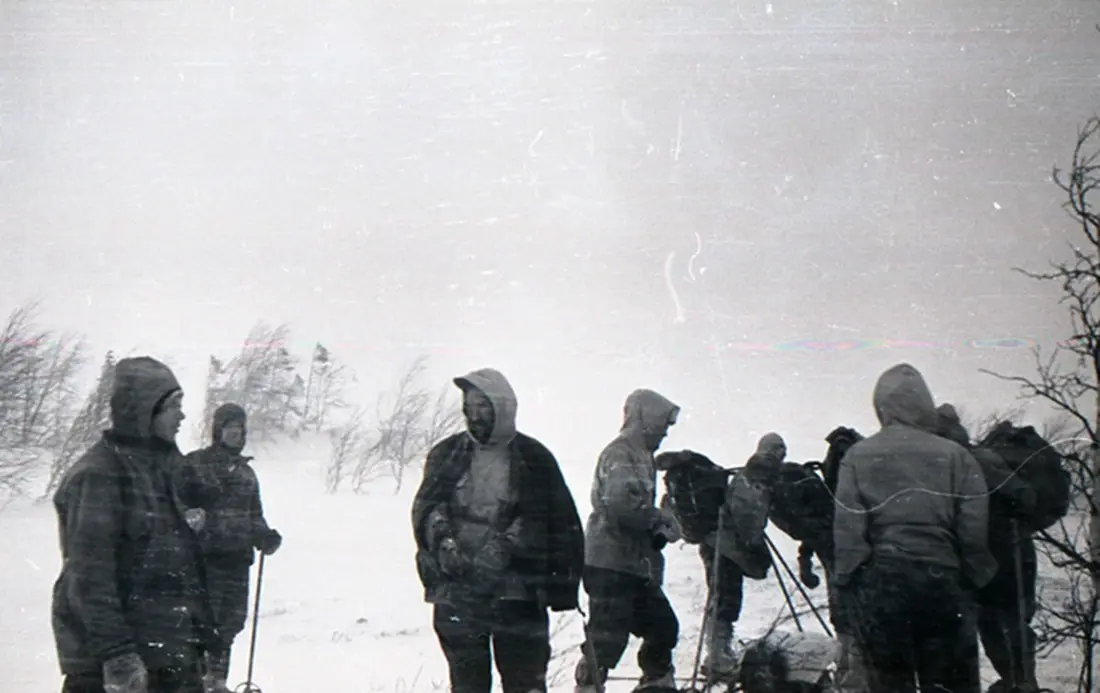
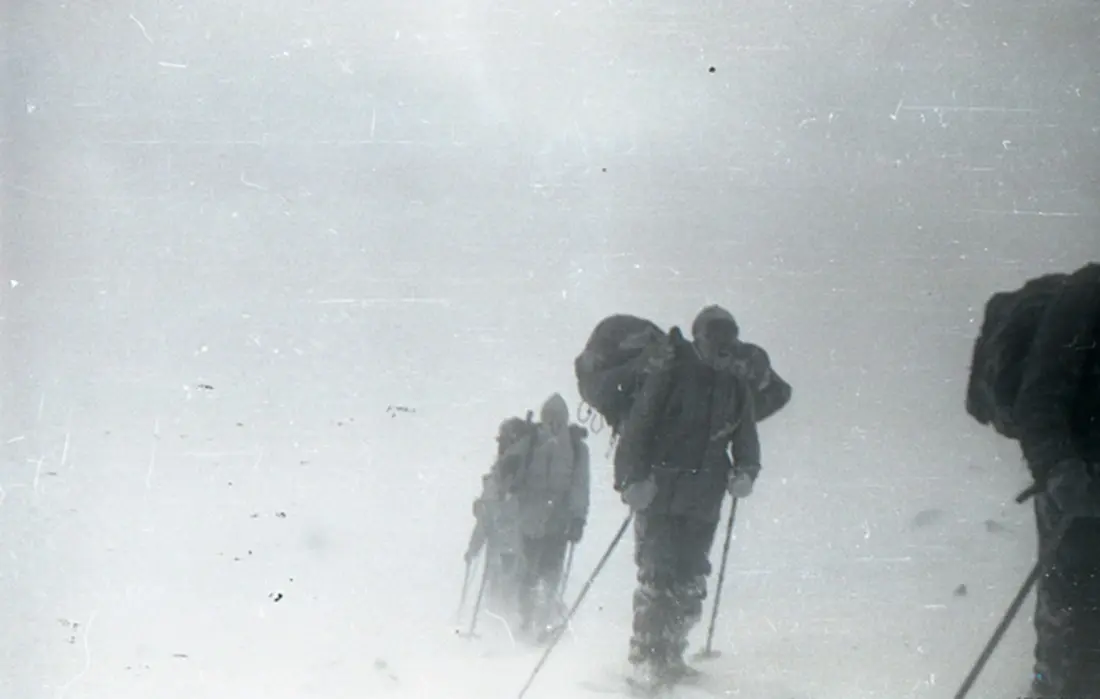
One photograph taken during the expedition appears to show a dark human-like figure standing in the distance. Although the image is blurry and of poor quality, some authors claimed it depicted an unknown humanoid creature.
Combined with the expedition's unexplained injuries and mysterious circumstances, the photograph fueled decades of speculation.
In reality, most researchers believe the figure is almost certainly another member of the expedition or simply an optical illusion created by the limitations of the camera.
No additional evidence has ever suggested the presence of an unknown creature.
UFOs
The extraterrestrial hypothesis follows a similar path.
Reports of unexplained lights in the sky, combined with Cold War secrecy and the absence of a definitive explanation, created fertile ground for stories involving unidentified flying objects.
Over the following decades, documentaries, television programs, and bestselling books devoted significant attention to the possibility.
Yet, once again, material evidence is absent.
Most astronomers and historians now believe the reported lights were likely caused by natural atmospheric phenomena or distant military activity unrelated to the hikers' deaths.
What Appears Most Likely Today?
After more than sixty years of investigation, most serious researchers agree on one essential point: none of the spectacular theories has been supported by convincing evidence.
There is no reliable indication that the hikers were killed by secret agents, unknown creatures, extraterrestrial visitors, or elaborate government conspiracies. Nor has any hidden plot emerged that satisfactorily explains every aspect of the tragedy.
At the same time, no single, simple explanation fully accounts for all of the evidence.
Today, the most plausible scenario combines several natural factors: a small slab avalanche or localized snow collapse, violent mountain winds, extreme cold, disorientation in darkness, and a sequence of decisions made under extraordinary pressure. Together, these elements may have triggered a chain of events from which there was ultimately no escape.
Even this explanation, however, leaves important questions unresolved.
And perhaps that is precisely why the Dyatlov Pass incident continues to fascinate scientists, historians, and the public alike. More than six decades later, the mountain has surrendered many of its secrets - but not all of them.
One of the most significant attempts to resolve those remaining mysteries came more than sixty years after the tragedy itself, when a new scientific investigation sought to provide what may be the most compelling explanation yet.
Has the Mystery Finally Been Solved?
For decades, the Dyatlov Pass incident remained trapped between speculation and uncertainty. The original Soviet investigation was brief; many documents remained classified for years, and the official conclusion - that the hikers had succumbed to an "unknown compelling natural force" - answered almost none of the questions that continued to trouble researchers.
As the Soviet Union dissolved and archives gradually became more accessible, investigators gained access to photographs, witness statements, forensic reports, expedition diaries, and previously unavailable case files. Although these newly released materials did not reveal a dramatic hidden conspiracy, they provided a far more complete picture of the expedition and allowed scientists to revisit the tragedy with modern analytical tools.
The most significant breakthrough came not from historians or conspiracy theorists, but from scientists.
In 2021, researchers from the Swiss Federal Institute for Snow and Avalanche Research, working with international collaborators, published a study that fundamentally reshaped the avalanche debate. Using sophisticated computer simulations and biomechanical models, they demonstrated that the terrain at Dyatlov Pass could indeed produce a small slab avalanche under very specific conditions.
For decades, critics had argued that the slope was simply too gentle for an avalanche. The Swiss team showed that this assumption overlooked several crucial factors. By cutting into the snowpack to create a level platform for their tent, the hikers had unintentionally weakened the stability of the slope. Strong winds continued depositing additional snow above the campsite throughout the evening. Hours later, the accumulated pressure may have been enough for a compact slab of hardened snow to break loose and slide onto one side of the tent.
It would not have resembled the massive avalanches familiar from documentaries or alpine disasters. Instead, it could have been a relatively small but extremely dense block of compressed snow capable of causing serious internal injuries while leaving little visible damage after subsequent snowfall and weeks of exposure to harsh weather.
The researchers also used crash-test simulation techniques, similar to those employed by the automotive industry, to estimate the forces acting on the victims' bodies. Their calculations suggested that such a snow slab could plausibly explain the severe chest and skull injuries found on several members of the expedition without producing extensive external wounds, one of the case's greatest mysteries for more than sixty years.
Yet the avalanche model explains only the beginning of the tragedy.
Once the hikers escaped from the tent, a second battle began - one against nature itself.
The conditions on the mountain were exceptionally severe. Temperatures were estimated between –25 and –30 degrees Celsius (–13 to –22°F), while powerful winds dramatically increased the risk of hypothermia by stripping away body heat. In such an environment, even experienced mountaineers have only a limited amount of time before their physical and mental abilities begin to deteriorate.
Many researchers now believe that, after reaching the nearby forest, the group attempted to organize a rescue strategy rather than simply flee. Evidence supports this interpretation. They managed to build a small fire beneath the cedar tree. Some members apparently climbed the tree to regain visual contact with the campsite or assess conditions on the slope. Others seem to have attempted the difficult journey back to the tent to recover clothing and equipment essential for survival.
None succeeded.
As the cold intensified, exhaustion set in, visibility remained poor, and every decision became more difficult than the last. What may have begun as a controlled emergency evacuation gradually evolved into a fatal sequence of events from which there was no realistic escape.
This combination of factors - a localized snow collapse, violent mountain winds, extreme cold, darkness, and a series of desperate decisions made under immense pressure - is today considered by many experts to be the most convincing explanation for the tragedy.
In 2020, Russia's Prosecutor General's Office reopened the case and conducted a new official review using modern methods. The investigation ultimately concluded that an avalanche had triggered the evacuation and that the hikers later died from exposure after becoming disoriented in severe weather.
For many scientists, that conclusion aligns closely with the evidence now available.
And yet, not every question has been answered.
Some researchers continue to debate whether the injuries could have resulted solely from a snow slab. Others point to uncertainties surrounding the exact weather conditions, the group's precise movements after leaving the tent, or the sequence in which individual decisions were made. There are also aspects of the original investigation that remain imperfectly documented, making absolute certainty impossible.
Perhaps that is inevitable.
Historical mysteries rarely disappear completely. Instead, they evolve as each generation examines the evidence through the lens of new technology, new scientific methods, and a deeper understanding of human behavior under extreme conditions.
The enduring fascination of Dyatlov Pass lies precisely there.
It is not simply a story about death in the mountains. It is a story about the limits of human knowledge, about how fragile even the best-prepared people become when confronted by nature at its most unforgiving, and about our enduring need to find certainty in the face of unanswered questions.
The mountains have revealed much since that winter night in 1959. Scientific advances have brought us closer than ever to understanding what happened on the eastern slope of Kholat Syakhl.
But they have not erased the mystery entirely.
And perhaps they never will.
That is why, more than six decades later, the Dyatlov Pass incident continues to inspire books, documentaries, scientific studies, and endless debate. Not because it is the greatest unsolved mystery in history, but because it reminds us that even in an age of satellites, artificial intelligence, and advanced forensic science, nature can still keep some of its secrets.