

We Drove the Oldest Car in Bosnia and Herzegovina: The Story of a 1921 Dodge

![[object Object]](https://api.hedonistmagazine.net/storage/images/2026/06/25adcc5a-07ed-47ff-b070-1a923e930f4f.webp)
Imagine driving a convertible powered by a 3.5-litre gasoline engine, worth more than 100,000 BAM, yet equipped with no seat belts, no radio, and no turn signals. The HEDONIST Magazine team had exactly that privilege, thanks to the hospitality of Miladin Savičić from Laktaši, owner of the oldest and perhaps most unusual automobile in Bosnia and Herzegovina.
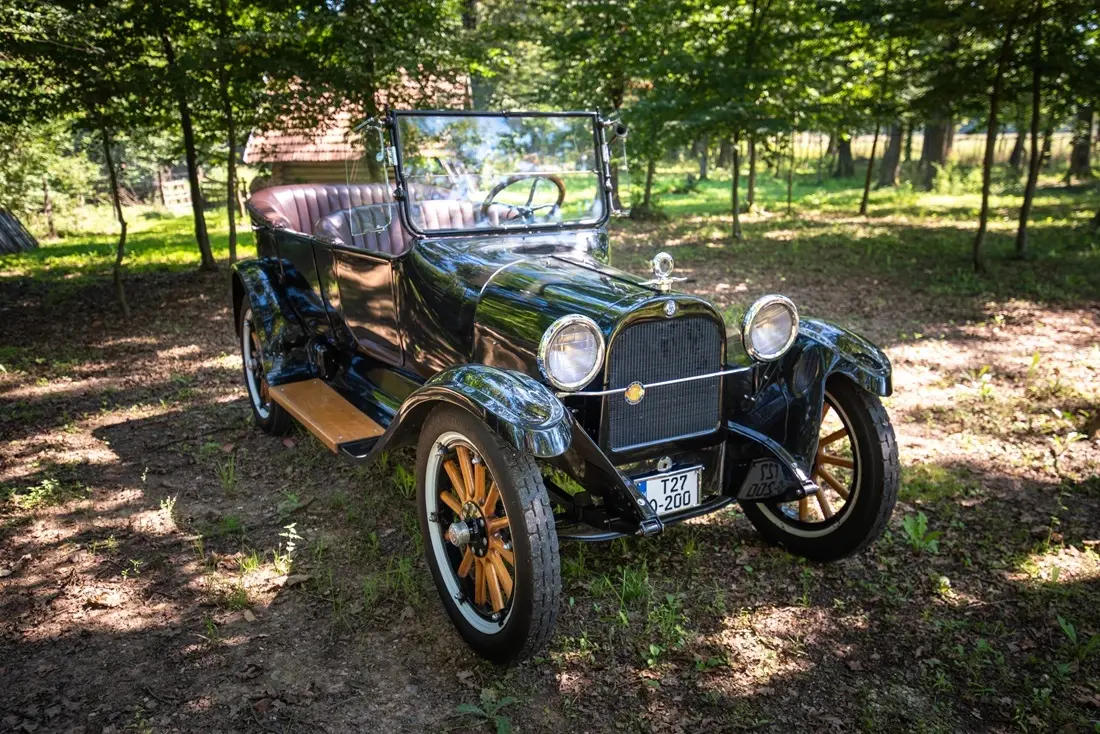
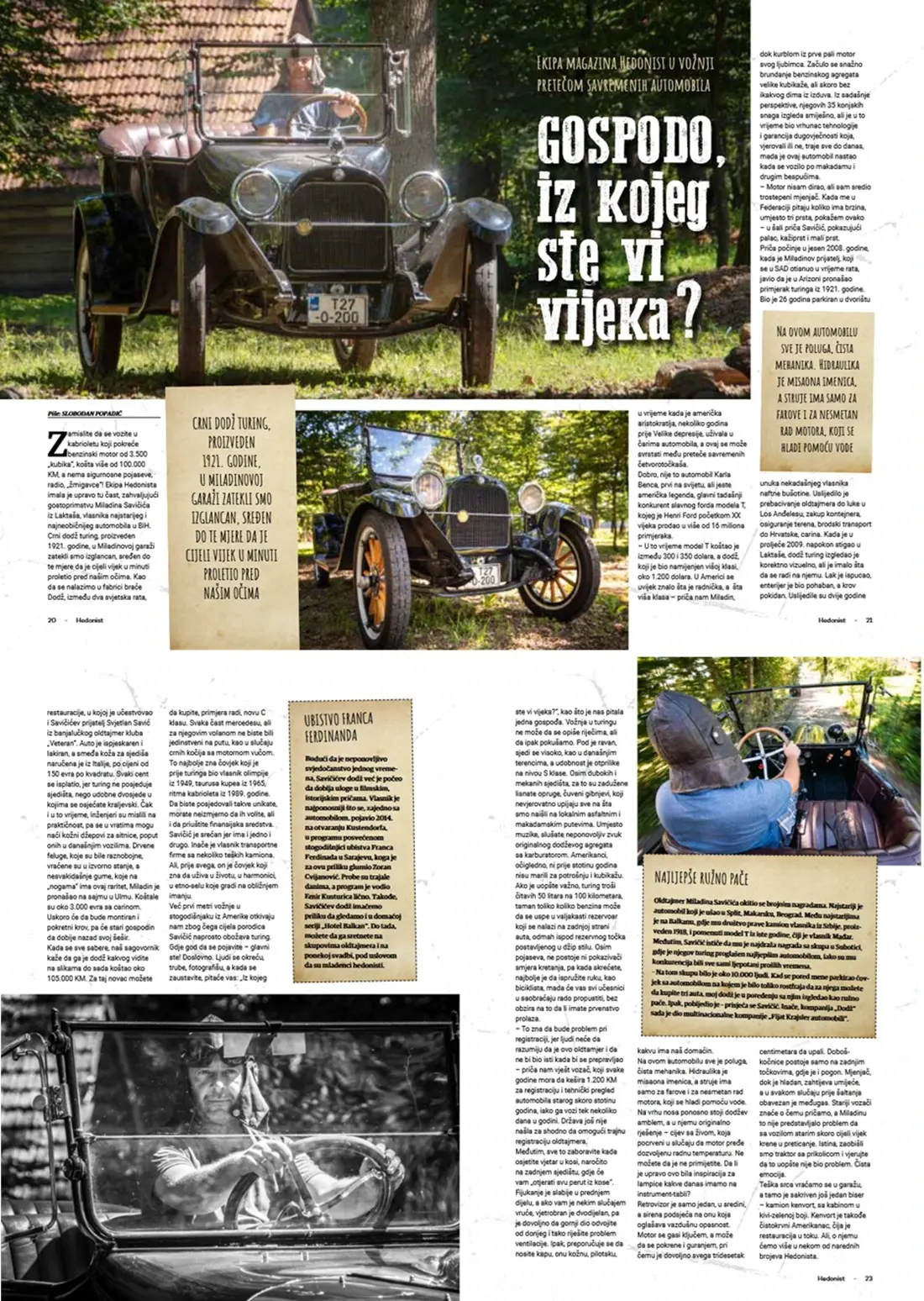
The black Dodge Touring, built in 1921, greeted us in Miladin’s garage, polished to perfection, as if an entire century had folded into a single moment. Standing beside it felt like stepping into the Dodge Brothers factory between the two World Wars, back when the American upper class enjoyed the pleasures of motoring just a few years before the Great Depression. In many ways, this automobile can be considered a pioneer of the modern car.
True, it was not the world’s first automobile built by Karl Benz, but it was an American legend and one of the main competitors of the famous Ford Model T, which Henry Ford sold in more than 16 million units during the early decades of the twentieth century.
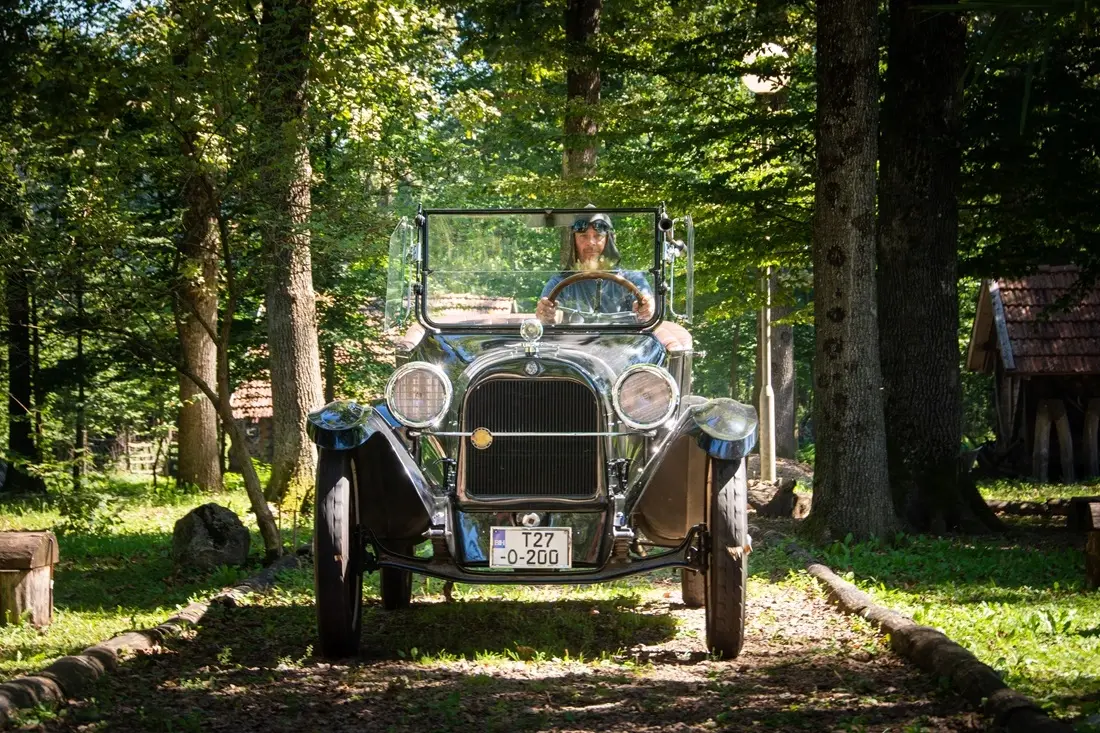
Editor's Note: This article is part of the HEDONIST archive and was originally published in the second print edition of the magazine in 2020.
“At the time, a Model T cost between 300 and 350 dollars, while the Dodge, intended for wealthier buyers, cost around 1,200 dollars. In America, people always knew the difference between working class and upper class,” Miladin tells us as he starts the engine with a hand crank on the very first attempt.
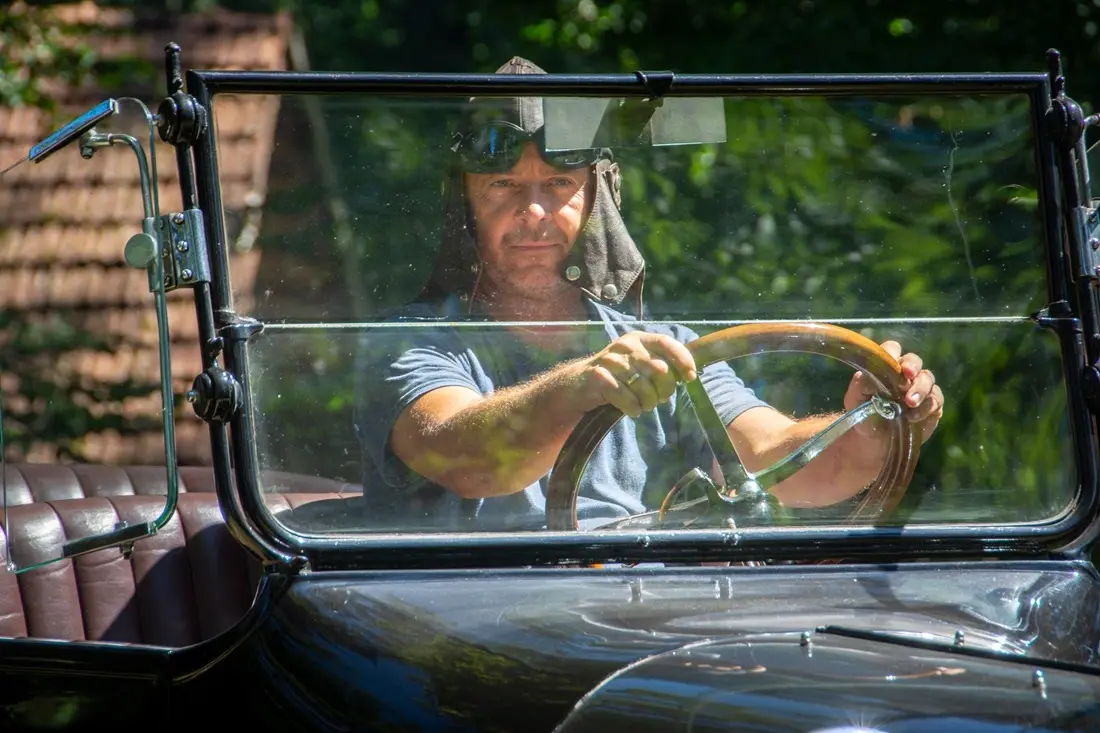
A deep growl emerges from the large-displacement engine, remarkably clean and almost free of exhaust smoke. From today’s perspective, its 35 horsepower sounds modest, but a century ago it represented cutting-edge technology and a promise of durability that, unbelievably, continues to this day. After all, this car was built for an era of dirt roads and untamed landscapes.
“I never touched the engine, but I restored the three-speed gearbox,” says Savičić.
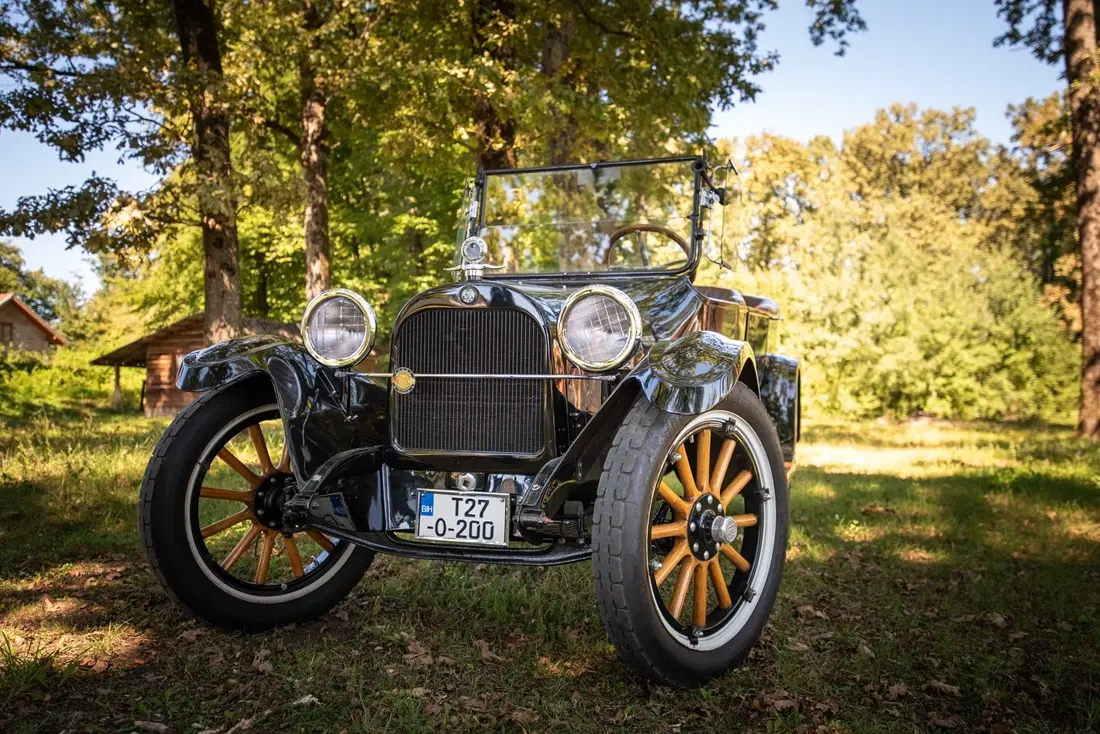
From Arizona to Laktaši
The story began in the autumn of 2008, when a friend of Miladin’s who had emigrated to the United States during the war informed him that he had found a 1921 Dodge Touring in Arizona. The car had spent 26 years parked in the yard of the grandson of a former oil well owner.
What followed was a complex journey: transport to the Port of Los Angeles, container rental, insurance, sea freight to Croatia and customs procedures. When the Dodge finally arrived in Laktaši in the spring of 2009, it looked respectable from a distance, but there was still plenty of work to be done. The paint had cracked, the interior was worn, and the roof was torn.
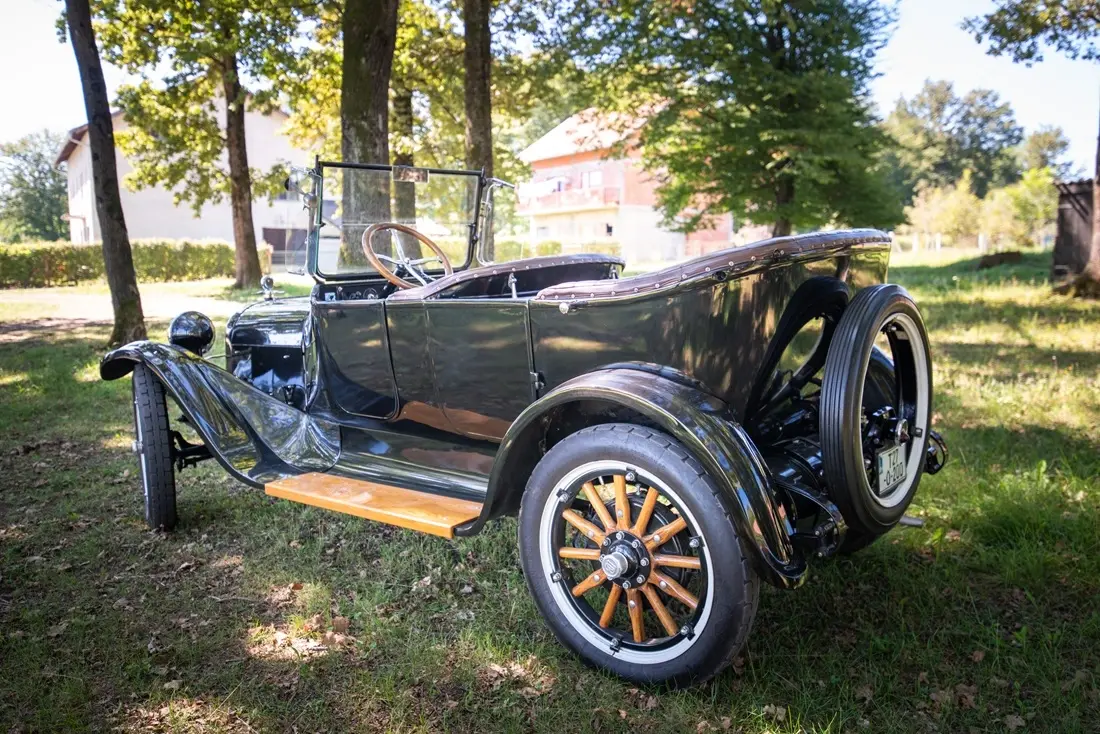
Two years of restoration followed, with assistance from Miladin’s friend Svjetlan Savić of the Veteran Classic Car Club in Banja Luka. The car was sandblasted and repainted, while the brown leather upholstery was imported from Italy for €150 per square metre.
Every cent was worth it. Instead of ordinary seats, the Touring features luxurious bench seats that make passengers feel almost royal.
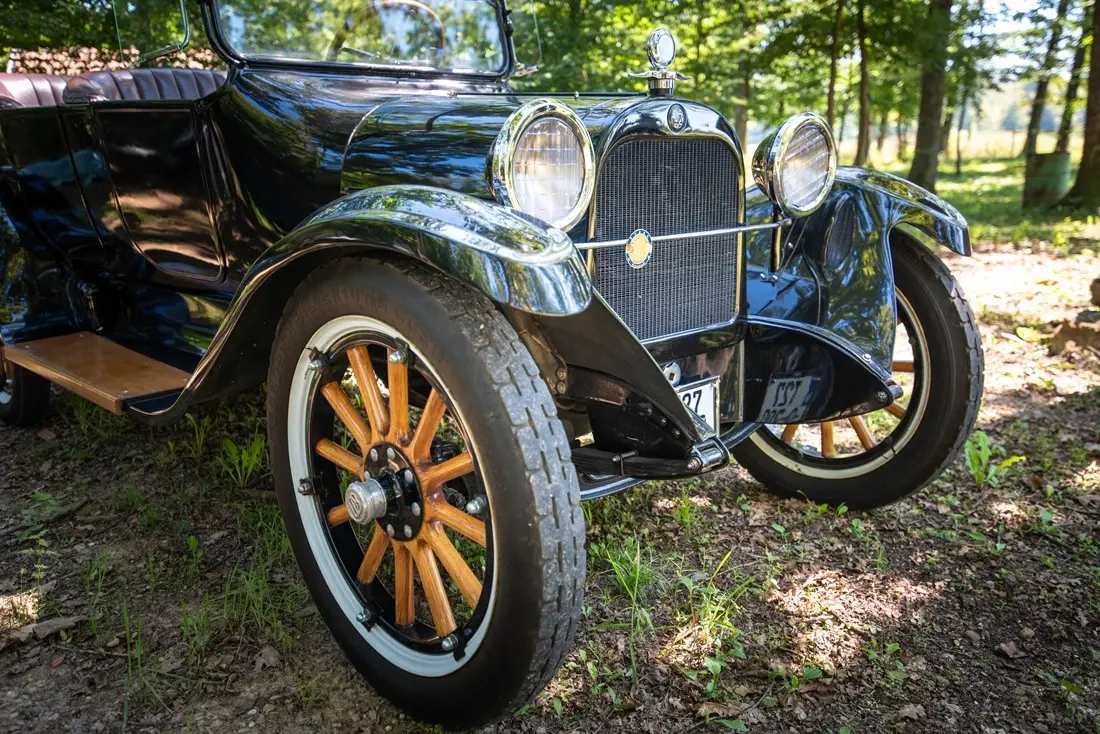
Even in the 1920s, engineers thought about practicality. Leather storage pockets inside the doors resemble those found in modern vehicles. The wooden wheels were restored to their original appearance, while the rare tyres were sourced at a classic car fair in Ulm, Germany, at a cost of around €3,000, including customs duties. A folding roof was also scheduled to be installed, allowing the old gentleman to regain his hat.
A Passion Worth More Than Money
Miladin estimates that the Dodge in its current condition has cost him approximately 105,000 BAM.
For that amount, one could easily purchase a new Mercedes-Benz C-Class. Yet while the Mercedes is undoubtedly an excellent automobile, it would never make its owner as unique on the road as these black motorised carriages.
Savičić knows this well. Before the Dodge, he owned an Olympia from 1949, a Taurus Coupe from 1965 and a Fiat Ritmo Cabriolet from 1989.
Owning such machines requires both financial resources and genuine passion. Fortunately, he possesses both. Besides being the owner of a transport company with several heavy trucks, Miladin is also a man who appreciates life’s pleasures, from playing the accordion to building an ethno-village on his nearby property.
What It Feels Like to Drive a Century-Old Automobile
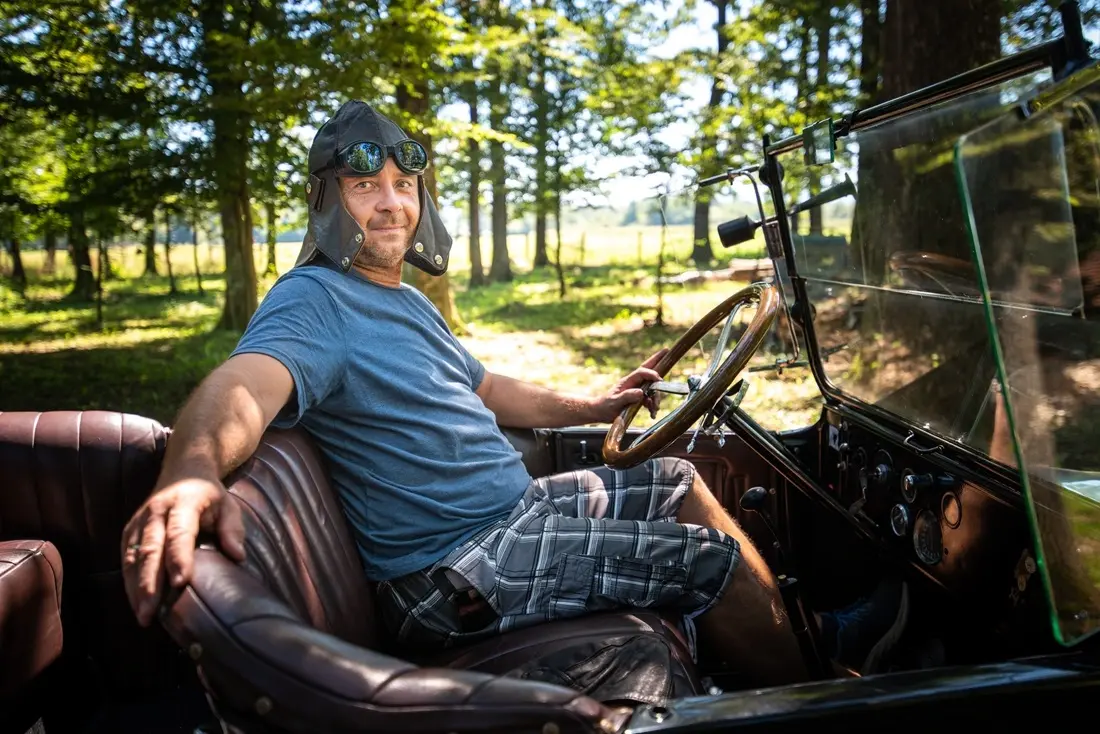
The first few metres behind the wheel quickly reveal why the entire Savičić family adores the Touring.
Wherever you appear, you become the centre of attention. People turn around, honk, take photographs and ask questions. One woman even stopped us to ask:
Which century are you from?”
Describing the driving experience is difficult, but we will try.
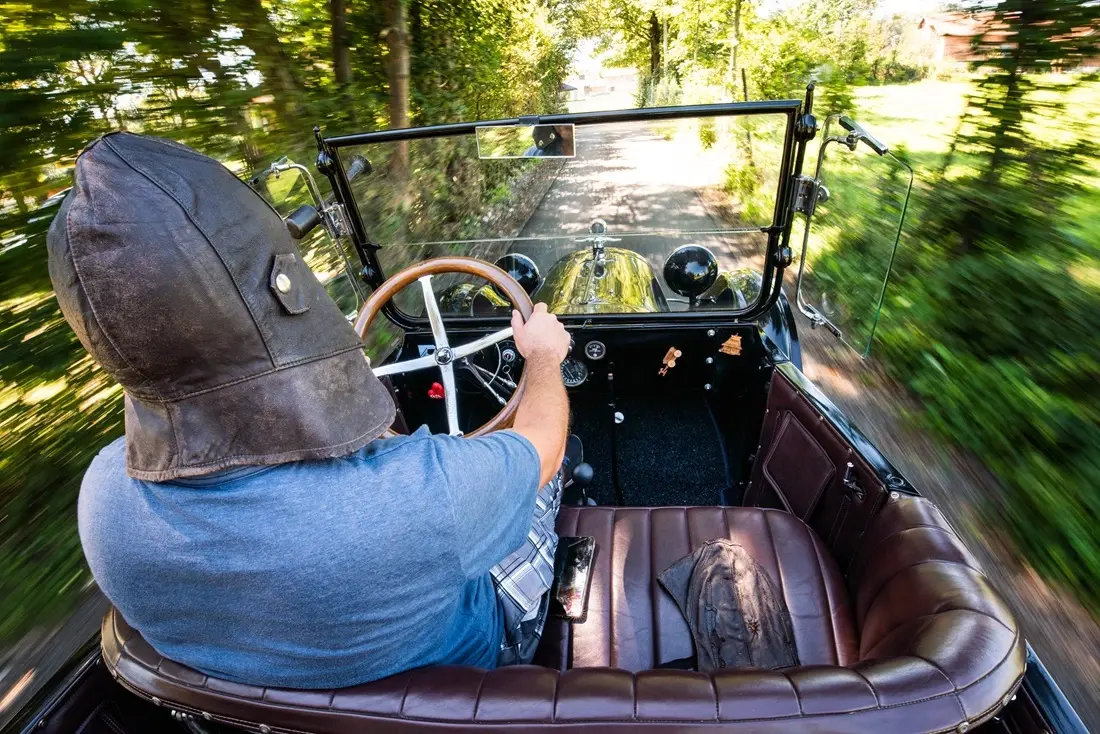
The floor is completely flat, the seating position is high like that of a modern SUV, and comfort rivals that of a luxury sedan. Deep, soft seats and traditional leaf springs absorb bumps on both paved and gravel roads with surprising ease.
Instead of music, passengers enjoy the unmistakable sound of the original carburetted Dodge engine. Americans, it seems, cared little about fuel economy even a century ago. The Touring consumes an astonishing 50 litres of fuel per 100 kilometres, exactly matching the capacity of its cylindrical fuel tank mounted beneath the spare wheel at the rear.
There are no seat belts and no turn indicators. When turning, the driver is best advised to signal by hand, much like a cyclist. Fortunately, other road users tend to yield respectfully.
“That can be a problem during registration inspections because people don’t understand that it’s a classic car and wouldn’t be the same if it were modified,” Miladin explains.
Every year he pays approximately 1,200 BAM for registration and technical inspection, despite driving the vehicle only a few days annually. Bosnia and Herzegovina still does not offer permanent registration for classic cars.
Pure Mechanics
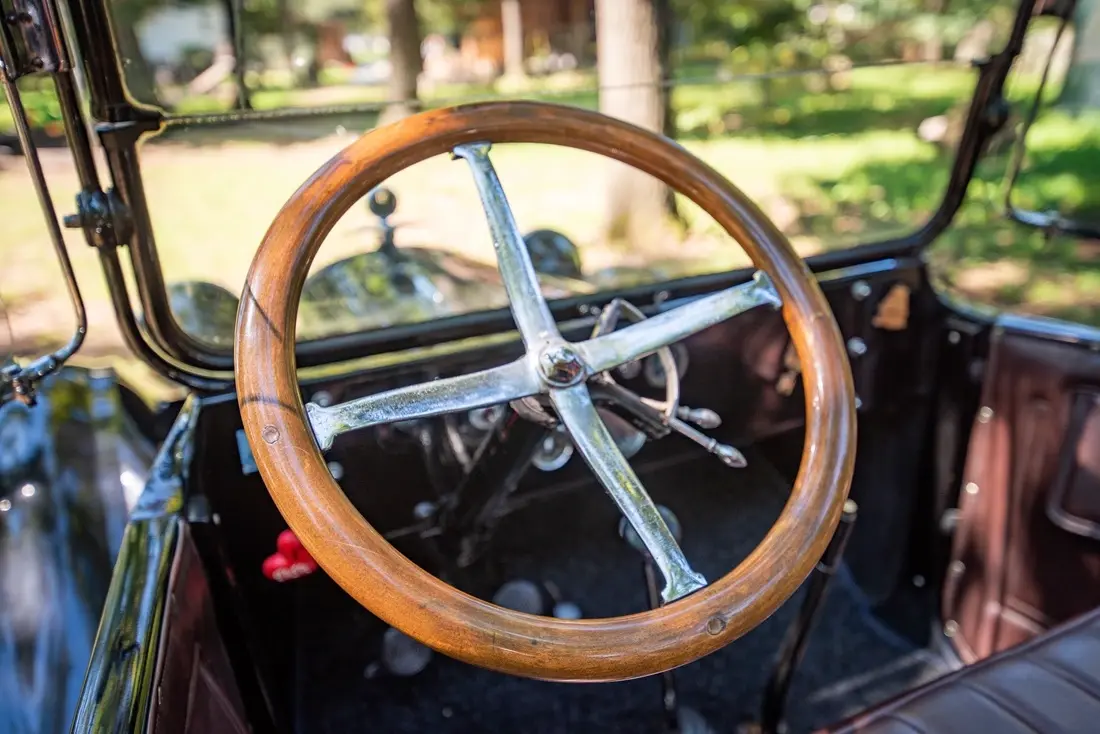
Everything on this automobile operates through levers and mechanical systems. Hydraulics are practically nonexistent. Electricity powers only the headlights and supports the operation of the water-cooled engine.
Proudly mounted atop the radiator is the Dodge emblem featuring a fascinating original solution: a mercury-filled temperature indicator that turns red if the engine overheats. It is impossible to miss and may well have inspired the warning lights found on modern dashboards.
There is only one rear-view mirror, mounted centrally, while the horn sounds more like an air-raid siren than a car horn. The engine can be started with a key or simply by pushing the vehicle a short distance.
Drum brakes are fitted only to the rear wheels, which also provide propulsion. The gearbox requires skill when cold, and double-clutching is essential when shifting gears. Veteran drivers will understand exactly what that means.
Yet none of this prevented Miladin from confidently overtaking slower traffic. In our case, it was a tractor pulling a trailer. Surprisingly, it was no challenge at all.
Pure emotion.
From History to the Big Screen
Because it represents such a remarkable witness to another era, Savičić’s Dodge has already appeared in several films and historical productions.
The owner is particularly proud of its appearance at the 2014 opening ceremony of the Kustendorf Film Festival, during a programme marking the centenary of the assassination of Archduke Franz Ferdinand in Sarajevo. Actor Zoran Cvijanović portrayed the Archduke, while the event itself was hosted by filmmaker Emir Kusturica.
The Dodge can also be seen in the television series Hotel Balkan, as well as at classic car gatherings and occasionally at weddings - provided the newlyweds happen to be true hedonists.
The Most Beautiful Ugly Duckling
Miladin’s Dodge has collected numerous awards over the years. It is the oldest automobile ever to participate in events in Split, Makarska and Belgrade. It is also among the oldest vehicles regularly displayed in the Balkans.
Yet his favourite award came at a classic car gathering in Subotica, where the Touring was named the most beautiful automobile despite competing against some of the most glamorous machines ever built.
“There were around 10,000 visitors. A man parked beside me with a car containing so much stainless steel that you could buy three automobiles for its value. Compared to it, my Dodge looked like an ugly duckling. Yet it still won,” Miladin recalls with a smile.
Today, Dodge is part of the multinational automotive group Stellantis, but cars like this one remind us of a time when motoring was less about transportation and more about adventure.
- By Slobodan Popadić / HEDONIST
- Originally published in HEDONIST Magazine, Issue 02, 2020.
Related articles
Porsche: The Mediterranean Side of German Discipline
On paper, Porsche seems like the perfect definition of German discipline: precision, engineering obsession with detail, and an almost mathematical devotion to driving. Yet the most beautiful Porsche moments rarely have anything to do with discipline.
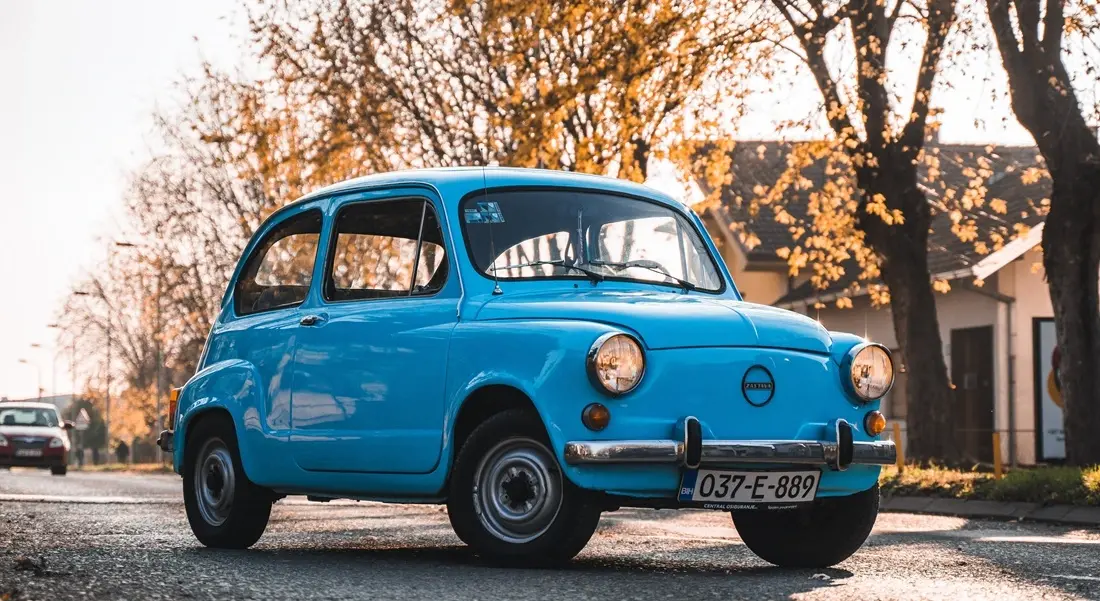
The Little Giant That Refuses to Retire
It has been branded with many slogans: “All cars are driven, only the Fićo is loved,” “Our fathers learned to drive in it,” “The car that motorized Yugoslavia.” It has always remained modest, unique, and unmistakable. Simply put - the Fićo.
Cars That Became Art
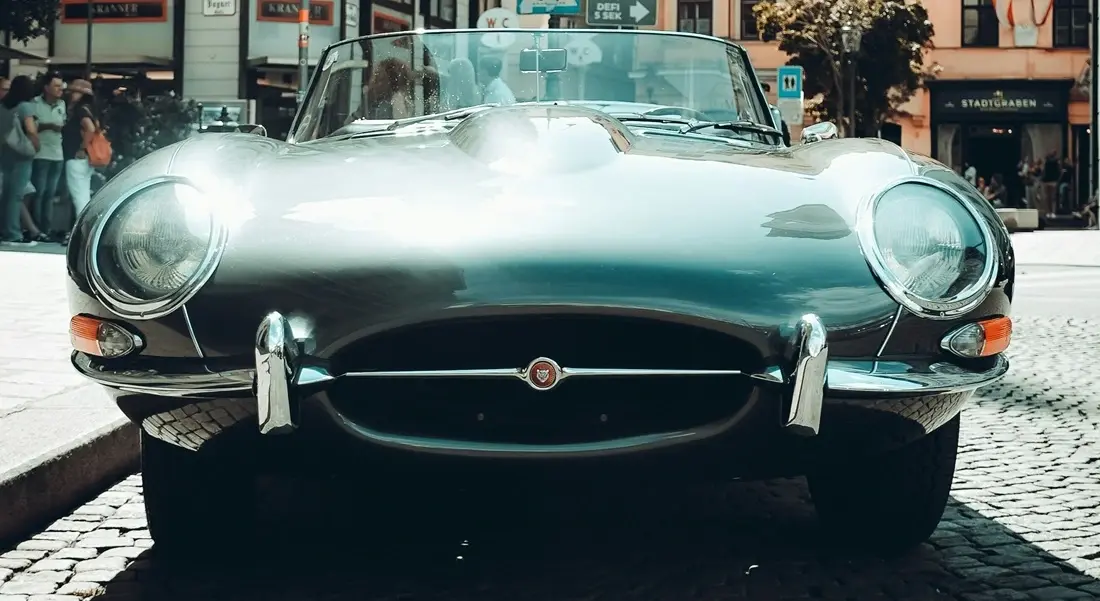
There are cars built to last. And there are those built to be remembered. The classics in this story have long left the garage and entered the history of design. Their lines, proportions, and details are not just technical solutions - they are pure aesthetics. They are not seen merely as transportation, but as sculptures on wheels.
When a Car Becomes a Work of Art
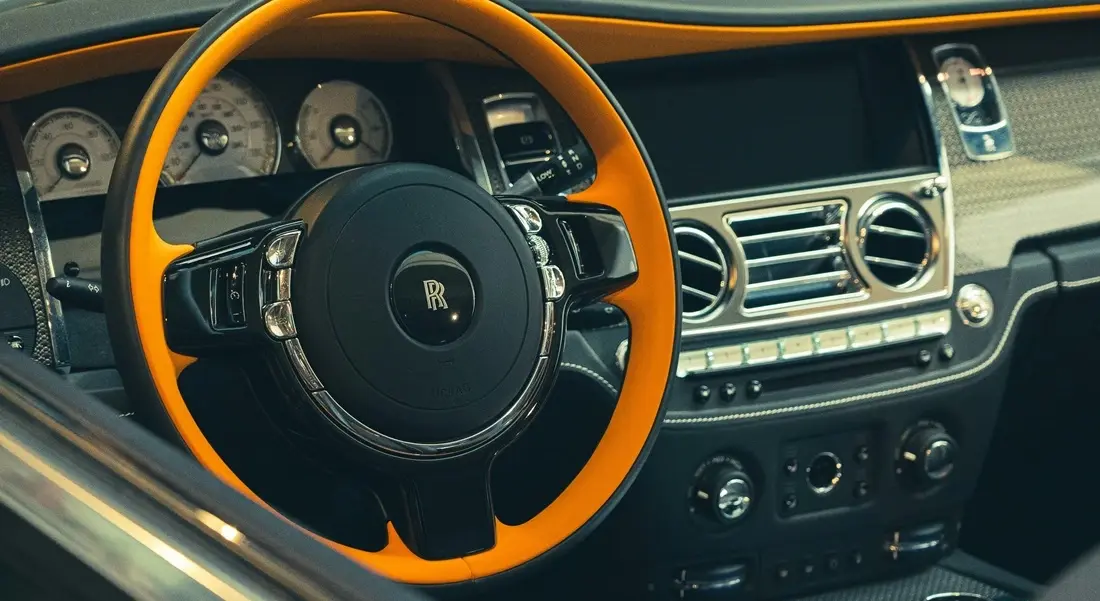
In a world where luxury is no longer defined by necessity but by experience, there are cars that are not simply bought - they are created. They do not wait for their owners in showrooms; instead, they emerge through conversations, sketches, and months of handcrafted work, shaped according to the desires of individuals for whom price has never been the deciding factor.