

The Mountain That Still Keeps Its Secret: What Really Happened at Dyatlov Pass? (Part 1)

![[object Object]](https://api.hedonistmagazine.net/storage/images/2026/07/e66d1622-b219-4c23-8c56-bd4b6ce6d230.webp)
Snow blanketed the northern Ural Mountains that night, just as it had for thousands of years before. Relentless winds swept across the barren slopes, carrying curtains of ice through a landscape where temperatures had plunged far below freezing.
There were no roads, no villages, no signs of civilization - only endless white wilderness, towering ridgelines, and nine young mountaineers who believed they possessed the experience and determination to conquer one of the Soviet Union's most demanding winter expeditions.
Sometime during the night of February 1–2, 1959, something happened that would become one of the greatest mysteries in the history of mountaineering. The nine members of the expedition suddenly abandoned their tent, escaping through slashes they had cut from the inside with knives. They stepped into the darkness wearing little more than their underwear or light clothing, leaving behind their boots, heavy winter jackets, food, cameras, and nearly all of their survival equipment. Outside, temperatures were estimated to be between –25°C and –30°C (–13°F to –22°F). Some fled toward the nearby forest; others attempted to return, but none survived.
When rescue teams finally reached the campsite weeks later, they found a scene that raised far more questions than it answered. The tent had been ripped open from within. Boots, warm clothing, supplies, and personal belongings remained neatly inside. Footprints led away from the campsite, descending the mountainside as though the hikers had left deliberately rather than in blind panic. The first bodies were discovered beneath a towering cedar tree, while the remaining members of the expedition were found only after the spring thaw. Some had died from hypothermia. Others had suffered devastating fractures to the skull and chest without the external wounds one would normally expect from such injuries.
More than six decades later, the Dyatlov Pass Incident remains one of the twentieth century's most enduring mysteries. Over the years, countless explanations have been proposed - avalanches, violent katabatic winds, secret military weapons tests, classified Soviet operations, radiation, escaped prisoners, unidentified flying objects, and even mythical creatures roaming the Ural wilderness. Some theories appear scientifically plausible; others belong more to popular folklore, yet none have completely silenced the debate that has persisted for more than sixty years.
Lost beneath those competing theories is one important fact. Before they became the protagonists of one of history's greatest mysteries, the members of the Dyatlov expedition were simply young people - students, engineers, athletes, and passionate mountaineers whose lives were only beginning.
The People Behind the Mystery
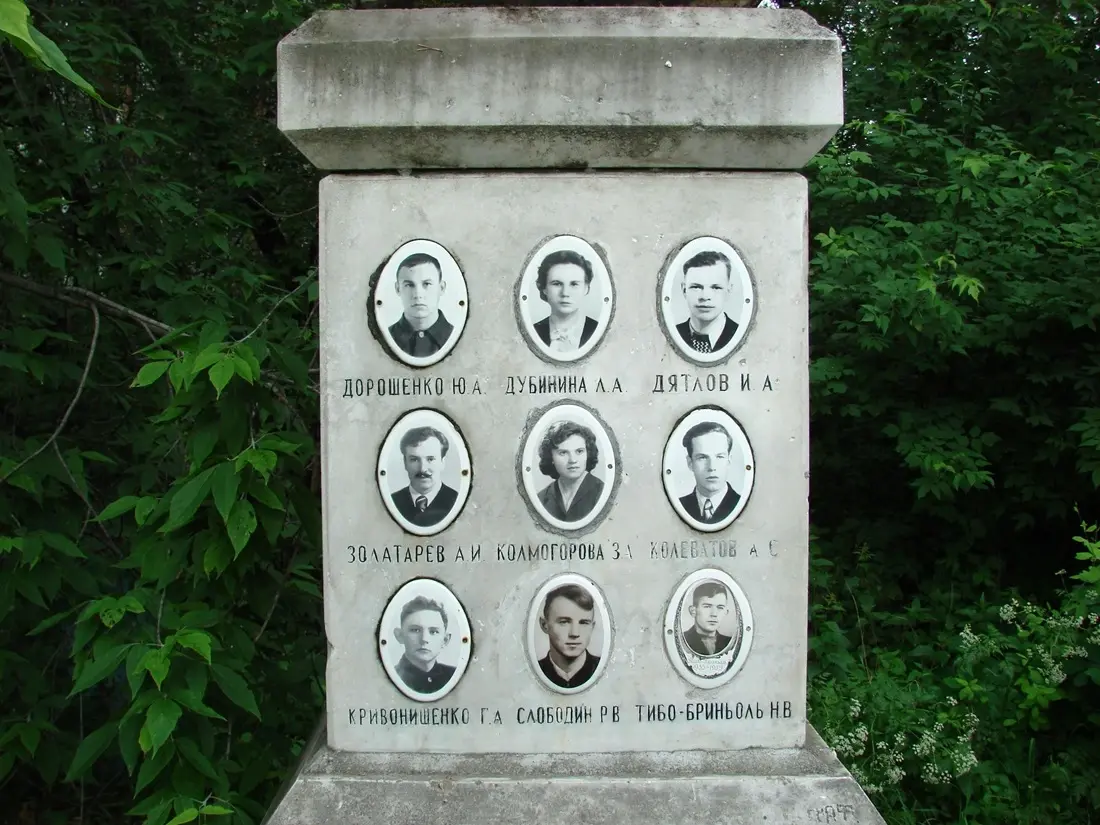
The expedition was led by Igor Dyatlov, a twenty-three-year-old radio engineering student at the Ural Polytechnic Institute in Sverdlovsk, today's Yekaterinburg. Among his peers, he was respected for his calm temperament, meticulous planning, and remarkable mountaineering skills. He had already completed numerous demanding winter expeditions and was known for designing and building lightweight camping equipment himself, always looking for practical improvements that could make long journeys easier. In time, the remote mountain pass where the tragedy unfolded would forever bear his name.
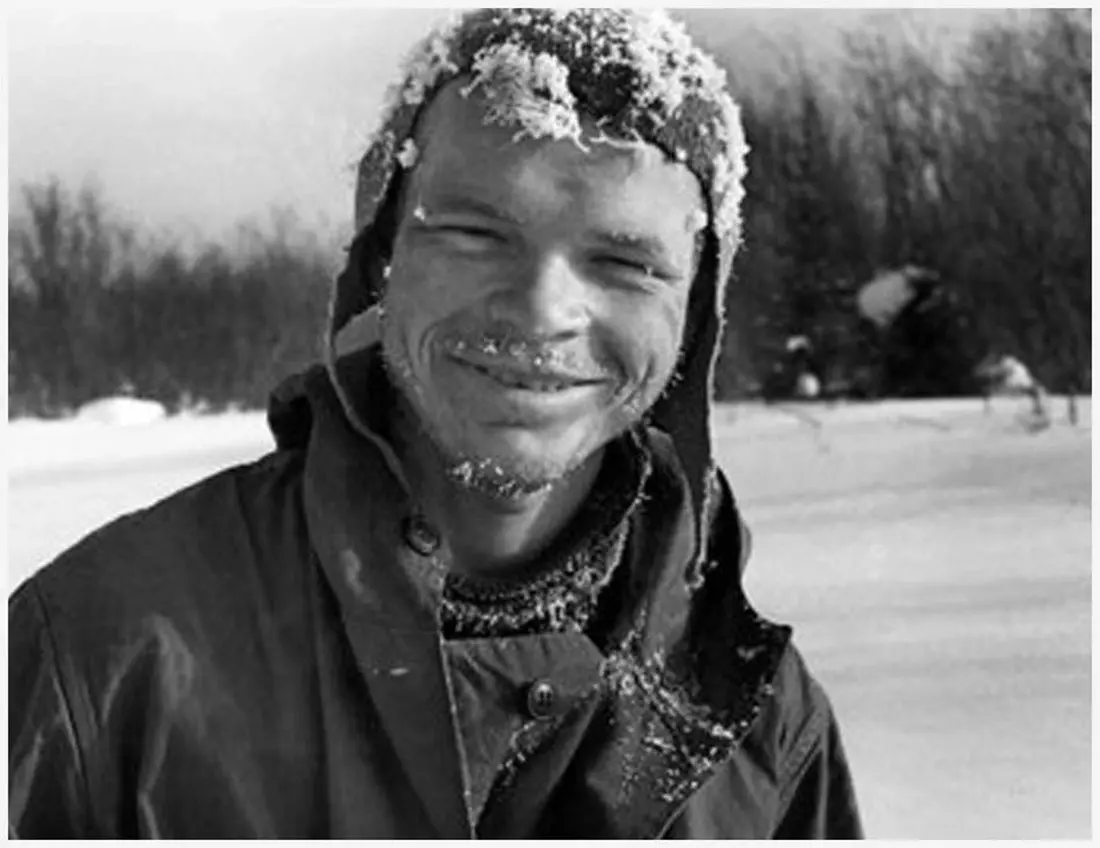
The rest of the group consisted primarily of students and recent graduates from the same institute, most of them in their early twenties. Zinaida Kolmogorova was remembered as cheerful and endlessly optimistic, the kind of person whose energy lifted everyone around her. Rustem Slobodin, a mechanical engineer, was admired for his exceptional physical fitness and competitive spirit. Yuri Doroshenko, strong, confident, and experienced in harsh winter conditions, had already completed several difficult expeditions, as had his close friend Georgy Krivonishchenko, a young civil engineer who had worked on one of the Soviet Union's most important industrial projects.
The team also included Alexander Kolevatov, a physics student with experience in the Soviet nuclear industry; Nikolai Thibeaux-Brignolle, a talented civil engineer of French descent; and Lyudmila Dubinina, one of the group's most experienced hikers, renowned for her determination and extraordinary resilience. Completing the expedition was Semyon Zolotaryov, a thirty-seven-year-old World War II veteran and certified mountaineering instructor. Considerably older than the others, he brought extensive experience leading challenging expeditions in extreme environments.
Although they came from different backgrounds, they shared the same passion. In the Soviet Union, mountaineering was far more than a recreational pastime. It was regarded as a test of character, endurance, discipline, and self-reliance. Young people willingly spent days crossing remote wilderness, carrying everything they needed on their backs, sleeping in tents through the depths of winter, and traversing vast stretches of uninhabited terrain.
The route Dyatlov had planned belonged to the highest Category III of winter hiking, one of the most demanding levels recognized by Soviet mountaineering authorities. The expedition aimed to reach Mount Otorten, deep in the northern Urals, an isolated region where weather conditions could deteriorate within minutes. Completing such a journey required exceptional physical conditioning, extensive experience, and the ability to make sound decisions under extreme pressure.
That is precisely why the tragedy appeared so incomprehensible from the beginning. These were not reckless adventurers who had underestimated the mountains. They were highly trained hikers who understood the dangers of winter wilderness better than most.
The Man Who Turned Back
No account of the Dyatlov Pass Incident is complete without mentioning one more name.
Yuri Yudin was twenty-one years old and originally one of the expedition's ten participants. Like the others, he had trained for the journey and departed alongside his friends. However, only a few days into the expedition, chronic rheumatic pain became increasingly severe. Every kilometer proved more difficult than the last, and it eventually became clear that he would be unable to continue.
On January 28, the group reached the final inhabited settlement before entering the remote wilderness. There, Yudin made what seemed at the time to be one of the greatest disappointments of his life. He embraced his friends, redistributed part of his equipment among them to lighten their loads, and began the journey back alone.
He would become the last person to see all nine of them alive.
For decades afterward, Yudin spoke openly about the survivor's guilt that haunted him. While the families of his friends waited desperately for news that would never come, he understood that only chance had determined who would return home.
He spent much of the rest of his life trying to understand what had happened on that mountain. He participated in investigations, studied official documents, spoke with researchers, and remained convinced almost until his death that the full truth had yet to be uncovered.
The illness that had once seemed like a cruel stroke of bad luck ultimately became the reason he survived.
The Journey Into the Mountains
The expedition departed from Sverdlovsk on January 23, 1959. They traveled first by train to the town of Ivdel before continuing by truck and local transport toward the small mining settlement of Vizhay, the last significant outpost before the untouched wilderness of the northern Urals.
From the very beginning, the atmosphere among the group was relaxed and optimistic. The photographs they left behind show smiling young people posing at railway stations, laughing during the journey, and embracing the adventure ahead. Nothing in those images hints that only days later they would become part of one of modern history's most enduring mysteries.
After leaving the last inhabited settlement, the expedition members kept detailed journals. They recorded weather conditions, daily distances, campsite locations, and small moments of humor that punctuated the hardships of winter travel. Those diaries have since become invaluable historical documents, offering a vivid glimpse into a journey that, at least initially, unfolded exactly as expected.
They wrote about forcing their way through deep snow, the exhaustion that followed hours of hiking, and the jokes that kept morale high each evening. Their photographs show them repairing equipment, preparing meals outdoors, skiing across frozen landscapes, and smiling together against the dramatic backdrop of the Ural Mountains. There is an unmistakable sense of camaraderie - a group of friends united by the excitement of a demanding challenge.
As they advanced toward Mount Otorten, conditions gradually worsened. Snowdrifts grew deeper, winds became increasingly violent, and visibility often deteriorated to only a few meters. Even so, nothing suggested serious trouble. Dyatlov continued to lead the group methodically, adjusting the pace to match the terrain and the weather.
On the final day of January, worsening conditions caused the hikers to drift slightly west of their intended route, bringing them onto the slopes of Kholat Syakhl, a mountain whose name in the language of the indigenous Mansi people is commonly translated as "Dead Mountain." Although that name would later inspire countless sensational stories, it was simply an old geographical designation and carried no mystical significance for the expedition itself.
By the afternoon of February 1, strong winds and poor visibility convinced the group not to descend into the shelter of the nearby forest. Instead, they chose to pitch their tent on the exposed mountainside, reasoning that remaining on higher ground would spare them from having to regain the lost elevation the following morning before continuing toward Otorten.
It was the final decision all nine members of the expedition would ever make together.
The Tent Was Slashed from the Inside
When the expedition set out for the northern Urals, Igor Dyatlov left behind a clear itinerary. Upon completing the route, the group was expected to send a telegram from the settlement of Vizhay, informing their families and the Ural Polytechnic Institute that the journey had been completed. In winter mountaineering, delays of a day or two were not unusual, so during the first days of February, no one expressed serious concern.
As the days passed without any word, however, unease began to spread among relatives and friends. Dyatlov and his companions were known as disciplined, highly experienced mountaineers. They were not the kind of people who would casually alter their plans or neglect to send the message they had promised.
Once it became clear that something had gone wrong, the Ural Polytechnic Institute organized the first search party, made up of students and faculty members. Experienced mountaineers soon joined the effort, followed by military personnel, local guides, and eventually aircraft and helicopters that combed the vast snow-covered wilderness of the northern Urals from the air.
The search was anything but easy. Winter conditions remained almost as unforgiving as they had been when the expedition disappeared. Deep snow, powerful winds, and the immense remoteness of the region slowed every step of the rescue teams. It was not until February 26, nearly a month after the group's last known contact, that their tent was finally spotted from above.
It stood alone on the exposed slope of Kholat Syakhl.
At first glance, the campsite did not appear to be the scene of a catastrophic disaster. The tent had not been crushed beneath a massive avalanche nor buried under deep snowdrifts. But as investigators approached, it quickly became obvious that something was terribly wrong.
The canvas had been slashed open from the inside.
The cuts bore no resemblance to damage caused by wind or falling debris. They clearly indicated that the occupants had deliberately sliced through the fabric to escape rather than using the tent's only entrance. It was the first - and perhaps the most baffling - of many mysteries.
Why would a group of experienced mountaineers abandon the safety of their shelter in the middle of the night, in temperatures far below freezing, by cutting their way out through the side of the tent?
The answers were not waiting inside.
Nearly all of their boots remained on the floor. Heavy winter jackets, spare clothing, gloves, backpacks, food, cooking equipment, cameras, and diaries were still exactly where the hikers had left them before going to sleep. Nothing suggested hurried packing or preparations to abandon camp. On the contrary, it appeared as though everyone had left in such haste that they had not even taken the most basic equipment necessary to survive.
In the conditions that prevailed on the mountain that night, such a decision was almost certainly a death sentence.
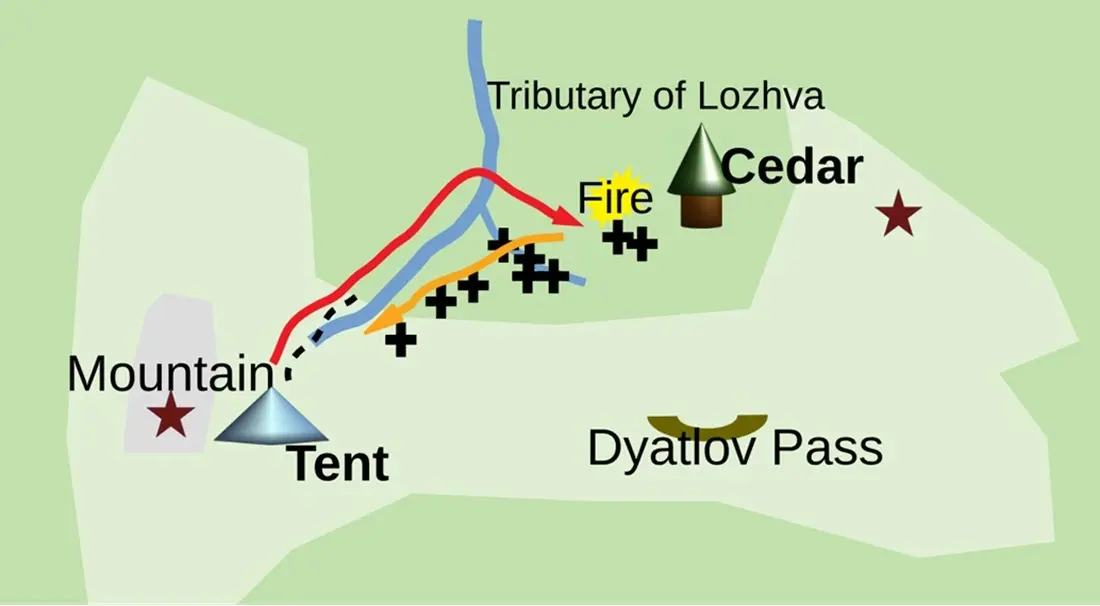
Outside the tent, investigators discovered another puzzling clue. The snow had preserved a trail of footprints leading downhill toward a forest approximately one and a half kilometers away. Analysis showed that some members of the group had been barefoot, others wore only socks, and only a few had managed to put on partial footwear before leaving.
Even more remarkable was the nature of the tracks themselves.
They did not suggest a frantic escape. The footprints were neither deeply pressed into the snow nor scattered chaotically in different directions. Instead, they appeared orderly, indicating that the group had descended the slope together in a relatively calm and controlled manner.
The discovery only deepened the mystery. If something had forced them out of the tent, why had they not run? If they had not been panicking, why had they left without boots and winter clothing?
The answers did not await investigators at the end of the trail.
The first two bodies were discovered beneath a large Siberian cedar at the edge of the forest. They belonged to Yuri Doroshenko and Georgy Krivonishchenko. Both were found wearing almost no clothing, strongly suggesting that they had spent their final hours struggling to survive the brutal cold. Nearby lay the remains of a small campfire, evidence that they had managed to gather branches and keep a flame alive for at least a short time.
Investigators also noticed broken branches several meters up the cedar's trunk. They concluded that one of the hikers had likely climbed the tree, perhaps hoping to see the tent or assess what was happening higher on the mountainside.
Shortly afterward, three more bodies were found.
Between the cedar and the abandoned tent lay Igor Dyatlov, Zinaida Kolmogorova, and Rustem Slobodin. Their positions made a profound impression on investigators. All three were located along the direct route back toward the campsite, leading search teams to conclude that after reaching the forest, they had attempted to return to retrieve their clothing and equipment.
They never made it. Autopsies later determined that most members of this group had died from hypothermia.
The search, however, was still far from over. Four members of the expedition remained missing. It was not until early May, when melting snow allowed rescuers to conduct a more thorough search, that the remaining bodies were discovered in a snow-filled ravine roughly seventy meters from the cedar tree.
At that moment, the case took an entirely new turn.
Lyudmila Dubinina, Semyon Zolotaryov, Alexander Kolevatov, and Nikolai Thibeaux-Brignolle had suffered injuries dramatically different from those of the others. Thibeaux-Brignolle had sustained a catastrophic skull fracture. Zolotaryov and Dubinina both suffered multiple fractured ribs.
According to the forensic experts of the time, the force required to inflict such injuries was enormous - comparable to the impact experienced in a severe automobile collision. Yet remarkably, their bodies displayed almost no external wounds corresponding to such devastating internal trauma.
For decades, this single fact became one of the strongest arguments fueling alternative theories about the tragedy.
Particular attention was focused on the case of Lyudmila Dubinina. During the autopsy, investigators noted that her tongue, along with portions of the soft tissue inside her mouth, was missing. Over the following decades, this detail became one of the most frequently cited "pieces of evidence" in countless conspiracy theories.
Subsequent forensic analyses, however, offered a far more ordinary explanation. Dubinina's body had been recovered from a snow-filled stream several months after the tragedy, and experts concluded that natural decomposition combined with the effects of water, ice, and scavenging animals could fully account for the condition of the remains. Today, most forensic specialists do not regard this finding as evidence of foul play.
Another detail sparked years of speculation.
Tests detected elevated levels of radioactivity on portions of clothing worn by several members of the expedition. For many years, this discovery fueled stories about secret military experiments and hidden Soviet nuclear tests. Later investigations, however, suggested far more plausible explanations. Some members of the expedition had previously worked in laboratories and industrial facilities where they could have come into contact with radioactive materials. Moreover, the measured radiation levels were relatively low and nowhere near high enough to indicate an extraordinary or otherwise inexplicable event.
The official investigation concluded in 1959 with an explanation that has become almost as famous as the mystery itself.
According to the final report, the hikers had died as a result of "an overwhelming natural force which they were unable to overcome."
It was an unusually vague conclusion. It did not explain why the tent had been cut open from the inside. It did not explain why experienced mountaineers had stepped into the freezing darkness without proper clothing. It did not explain the origin of the severe internal injuries suffered by some members of the group.
Nor did it answer perhaps the most fundamental question of all: What compelled nine experienced hikers to abandon the only shelter that could have saved their lives?
Those unanswered questions ensured that the case did not end when the investigation was officially closed.
In many ways, it was only the beginning. Only then did the theories begin to emerge - an extraordinary collection of explanations, speculations, and controversies that will be explored in the next chapter of this story.