

How Film Tastes Changed Through the Decades (3): From Disney to Superheroes

![[object Object]](https://api.hedonistmagazine.net/storage/images/2026/08/8af91dfe-4aa2-4a98-8e04-5ac8c8415afa.webp)
In the first two instalments of this series, we traced the journey from the gangsters of the Great Depression, through Hitchcock’s thrillers and the rebellion of the 1960s, to the moment when Spielberg and Lucas discovered that a film could become an event larger than the story itself - and Hollywood in the 1980s turned that idea into an industrial model.
In this final chapter, we arrive at a decade when that model exploded in so many directions that it became almost impossible to say any single genre had truly “won” - until, eventually, one did.
The 1990s: The Decade When Almost Anything Could Become a Hit
The 1990s may have been the most diverse decade in popular cinema history. Thrillers, crime films, romantic comedies, animated features and independent cinema all managed to flourish at the same time. Hollywood continued to produce enormous blockbusters, but audiences also showed a growing appetite for films that were stranger, darker and more unmistakably personal.
With Pulp Fiction, Quentin Tarantino demonstrated that a crime film could possess a structure, dialogue and energy capable of turning it into a pop-cultural phenomenon. David Fincher brought a darker strain of psychological thriller into the mainstream with Se7en and Fight Club, while The Silence of the Lambs, The Usual Suspects and The Sixth Sense showed just how much audiences enjoyed stories that refused to reveal all their answers at once.
At the same time, romantic comedies became a defining part of popular culture. Pretty Woman and Sleepless in Seattle confirmed that audiences still wanted stories about love that ended better than they began, extending a wave that had already taken shape with When Harry Met Sally... in 1989 and would later reach another peak with films such as Notting Hill.
Animation followed a similar trajectory. The Disney Renaissance, which had in fact begun with The Little Mermaid in 1989, reached full force during the 1990s with Beauty and the Beast, Aladdin and The Lion King - films that were never simply “for children”. They became family events. Their soundtracks escaped the cinema and entered everyday life, while their characters moved into toys, television and an entire consumer-products industry.
Alongside Disney, Pixar’s Toy Story in 1995, the first feature-length film created entirely through computer animation, quietly announced a technological revolution whose full impact Hollywood would only feel years later.
In short, the 1990s were the last great era in which the cinema could simultaneously belong to Tarantino, Disney, the romantic comedy and the traditional Hollywood spectacle.
The 2000s: Fantasy Enters the Real World
The beginning of the new century brought something that had previously been expensive, technically difficult or almost impossible to put convincingly on screen. Fantasy became one of the decade’s great winners. The Lord of the Rings, Harry Potter, Pirates of the Caribbean and The Chronicles of Narnia transformed imaginary worlds into global film franchises. The Lord of the Rings, in particular, proved that a sprawling, multi-hour fantasy epic could become a genuine mass-market cinematic phenomenon.
But an even more important transformation was taking place in the background: the superhero film was beginning its journey from niche genre to one of Hollywood’s central pillars. X-Men in 2000 and Spider-Man in 2002 demonstrated that comic-book heroes could become major international hits. Later, The Dark Knight showed that a superhero film could be both a commercial event and a work taken seriously as cinema.
Then, in 2008, Iron Man quietly laid the foundations for something far larger - the first film in what would become the Marvel Cinematic Universe. At the time, few could have imagined the scale of the experiment that had just begun. The history of the genre is therefore often discussed in terms of a before and after: the early 2000s marked the moment when superheroes began moving towards the centre of Hollywood’s economic and cultural landscape.
At the same time, Gladiator revived interest in the historical epic, Kill Bill fused action, martial arts and auteur sensibility, while animation entered a new era driven by rapidly advancing digital technology.
The 2010s: Superheroes Become a Cinematic Ecosystem
If the 2000s prepared the ground, the 2010s belonged to superheroes. The Marvel Cinematic Universe did more than produce a succession of successful films. It created something considerably more ambitious: a continuous shared world. A film no longer had to function entirely as a self-contained story. It could become one chapter in a much larger narrative, and audiences were willing to follow dozens of characters, films and interconnected events.
The Avengers, Guardians of the Galaxy, Black Panther, Wonder Woman, Spider-Man: Homecoming and Avengers: Endgame demonstrated the extraordinary power of combining recognisable characters, established franchises and long-form storytelling.
The transformation of the superhero genre from a collection of individual films into the concept of an interconnected cinematic universe was one of the defining shifts in the history of popular cinema. But the 2010s were hardly just about Marvel. Horror entered one of its most interesting modern phases, while films such as Get Out, Hereditary and The Witch demonstrated that fear could also function as social commentary, psychological drama and auteur cinema.
Meanwhile, streaming began to reshape the way audiences consumed film. Cinema was slowly ceasing to be the automatic destination for a new release. A new question emerged: was a film primarily a theatrical event, or was it simply another piece of content waiting to be discovered at home?
The 2020s: When There Is No Single King
The 2020s are not over, but one thing is already clear: something has happened that would have been difficult for previous generations to imagine. Popular cinema no longer has a single dominant genre in the way gangsters, westerns, blockbusters or superheroes once did.
The pandemic brutally disrupted the rhythm of theatrical exhibition, while streaming accelerated changes in viewing habits. Audiences became increasingly divided between enormous franchises, auteur cinema, horror, animation and films whose cultural momentum often begins online before they ever become conventional box-office phenomena.
Superhero films remain a huge industry, but they no longer possess the almost untouchable dominance they enjoyed during the previous decade. At the same time, films have emerged that are difficult to reduce to a single genre. Barbie combined comedy, satire, nostalgia and spectacle; Oppenheimer demonstrated that a historical drama could become a global cinematic event; horror continues to produce major hits on comparatively modest budgets, while animation increasingly crosses the boundaries between children’s and family entertainment.
Franchises, meanwhile, have become so important that it is now difficult to discuss genre popularity without also discussing brands. Among the films that have surpassed $1 billion at the global box office are superhero titles, Star Wars, Jurassic World, Fast & Furious, animated films and major original hits - evidence of just how dependent contemporary cinema has become on familiar worlds, characters and franchises.
So What Does the History of Genres Tell Us?
Perhaps the most interesting thing is that cinematic tastes never really change completely. What changes is the form in which old desires are expressed. The gangster of the 1930s was a man seeking power. The superhero of today also possesses extraordinary power, but carries a far greater burden of responsibility. The noir protagonist of the 1940s was trying to uncover the truth in a world he could not trust. The modern psychological thriller often does much the same. Audiences in the 1950s watched aliens because they feared the unknown; contemporary horror continues to use monsters in remarkably similar ways.
And the greatest blockbusters of every era have one thing in common: they offer audiences something everyday life cannot.
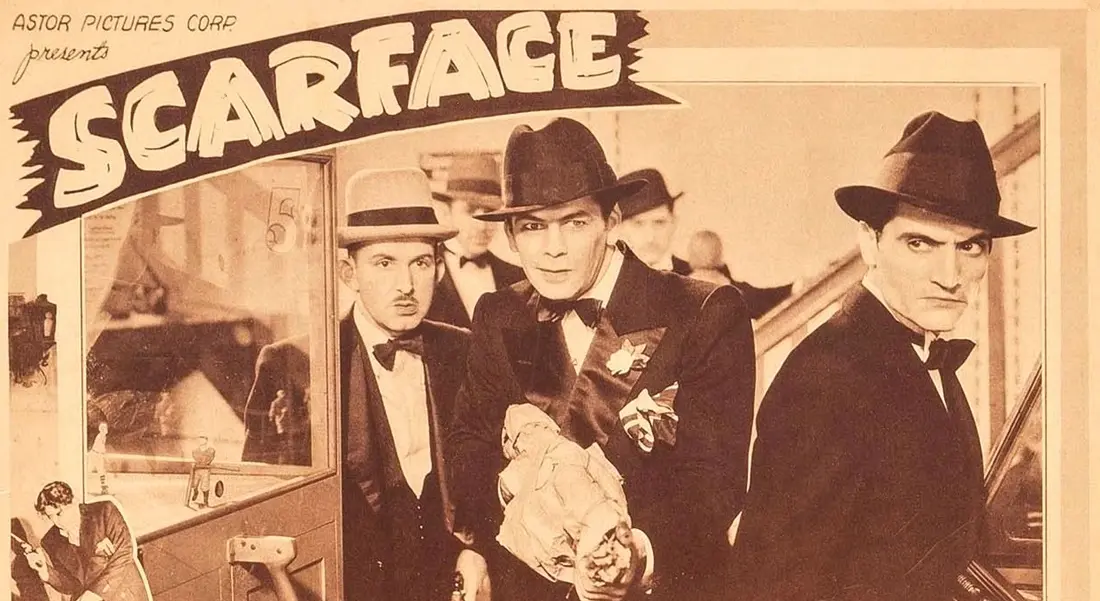
Once, it was the gangster’s car, penthouse and power. Then came spaceships, archaeological adventures, dinosaurs, wizarding schools, superpowers and entire fictional universes. Technology advanced, budgets grew, and visual effects became increasingly convincing, but the underlying need remained the same - to enter, for a few hours, a world that is not our own.
Perhaps that is why the history of film genres is about much more than changing trends. It is a kind of collective diary. When we look at what people wanted to watch ninety years ago, we can glimpse what they feared, what they hoped for and what they were trying to escape.
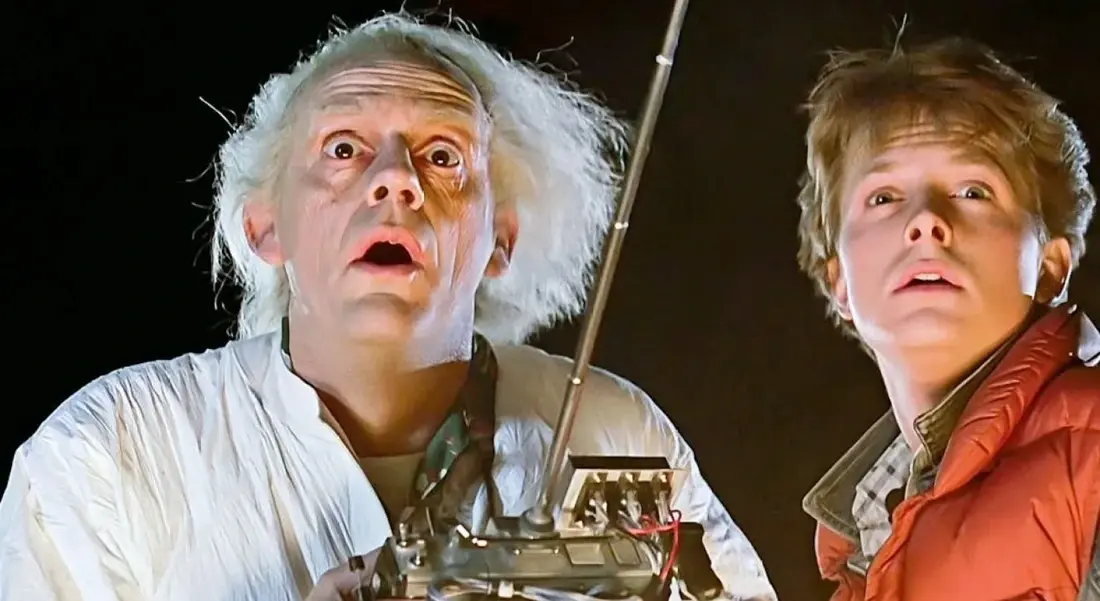
And when we look at the cinema of today, the question is no longer simply which genre is the most popular. The more revealing question is what our simultaneous appetite for superheroes, horror, nostalgia, spectacle and ever-expanding cinematic universes tells us about the age in which we live.
Because film may be changing faster than ever, but the reason we still sit in the dark and look towards a large screen remains almost exactly what it was a century ago: we want, for a little while, to live another life.
Related articles
How Film Taste Has Changed Through the Decades (Part 2): From Rebellion to the Blockbuster
In the first part of this series, we traced Hollywood's path from the gangsters of the Great Depression, through the noir of the postwar years, to Hitchcock's psychological games with audiences in the 1950s - watching an entertainment system take shape into something we'd still recognize today. But that system, however stable it looked, already carried the seed of its own upheaval.
How Film Taste Has Changed Through the Decades (Part 1): From Gangsters to Hitchcock
Movies change alongside their audience. Look back at the history of popular film from the 1930s to today, and it becomes clear that genres don't rise and fall by accident. In times of crisis, audiences look for escape. In uncertain periods, they turn to darker stories. In eras of technological upheaval, they want spectacle. And whenever the way people watch films changes, what the film industry produces changes along with it.