
Ten Colours, Ten Moments We Carry in Our Minds

![[object Object]](https://api.hedonistmagazine.net/storage/images/2026/10/d4bcfad3-a11e-474a-94fe-29e995226131.webp)
Ask someone to think of red, and they will rarely think of red itself. They will think of something specific: a little light, a particular sound, an afternoon in November. We do not store colours in our memory as colours, but as scenes in which we once encountered them. And behind almost every such scene there is a real, verifiable story: about physics, coincidence, or a glue that would not hold.
Here are ten colours, ten random images that appear in the mind before we have time to think, and the stories behind them.
Red: The Little Light That Says Someone Is Watching You
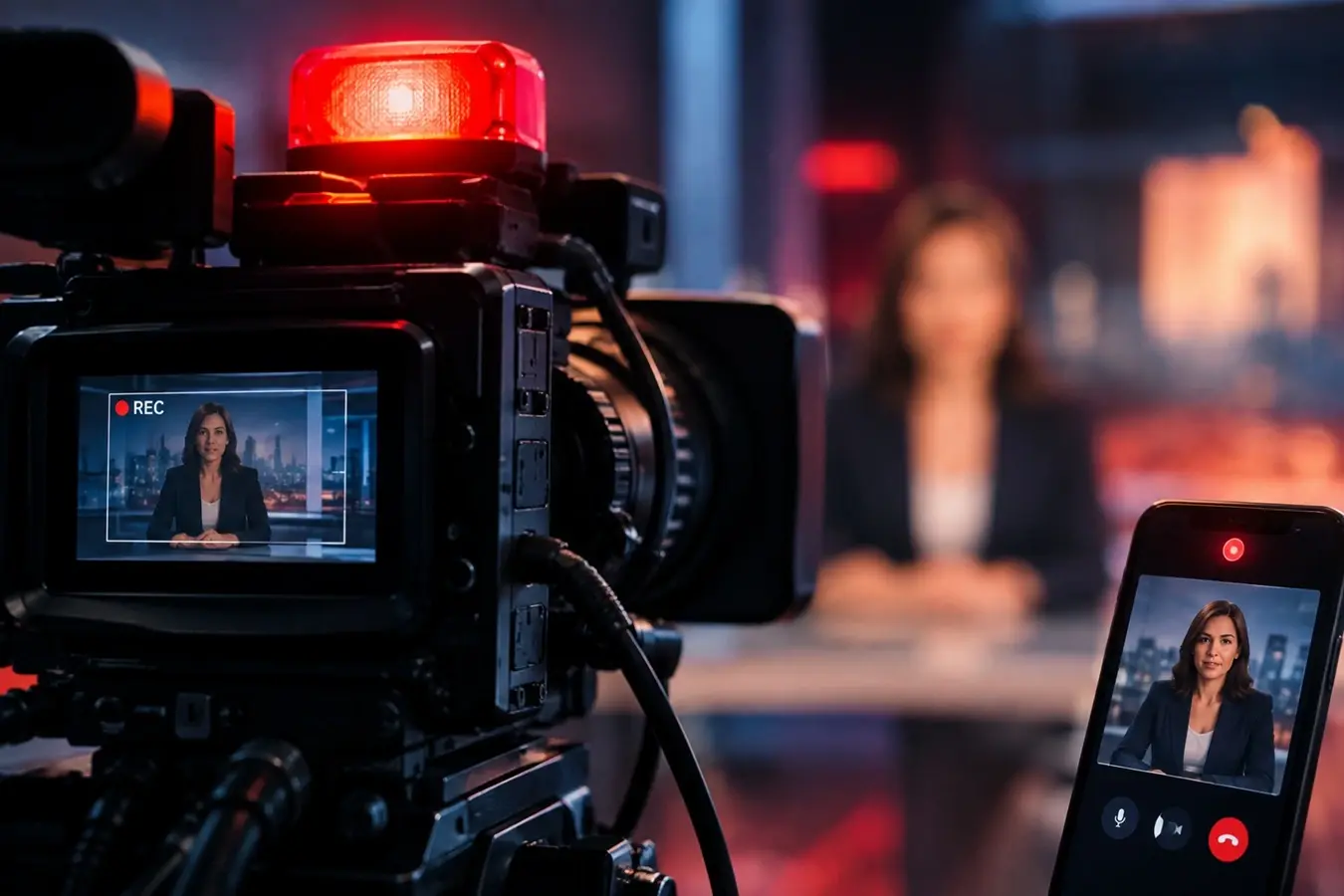
The small red light above a camera lens has a name. In television jargon, it is called a tally light, and its purpose is simple: to tell both the camera operator and the person in front of the camera that the camera is currently live. Early systems used simple, manually operated red bulbs mounted on top of cameras; in the 1980s, brighter, more durable LEDs replaced them.
Red was not chosen by accident. It has the longest wavelength in the visible spectrum, so smoke and fog scatter it less, and it remains visible from farther away. That is also the physical reason red became the standard colour for warning signals. Today, the same little point of light lives in the corner of a smartphone screen and inside video-calling apps, and anyone who has seen it switch on knows the reflex it triggers: straighter posture, a slightly different voice, an awareness that everything that follows is being recorded.
Blue: A Twenty-Minute Hour
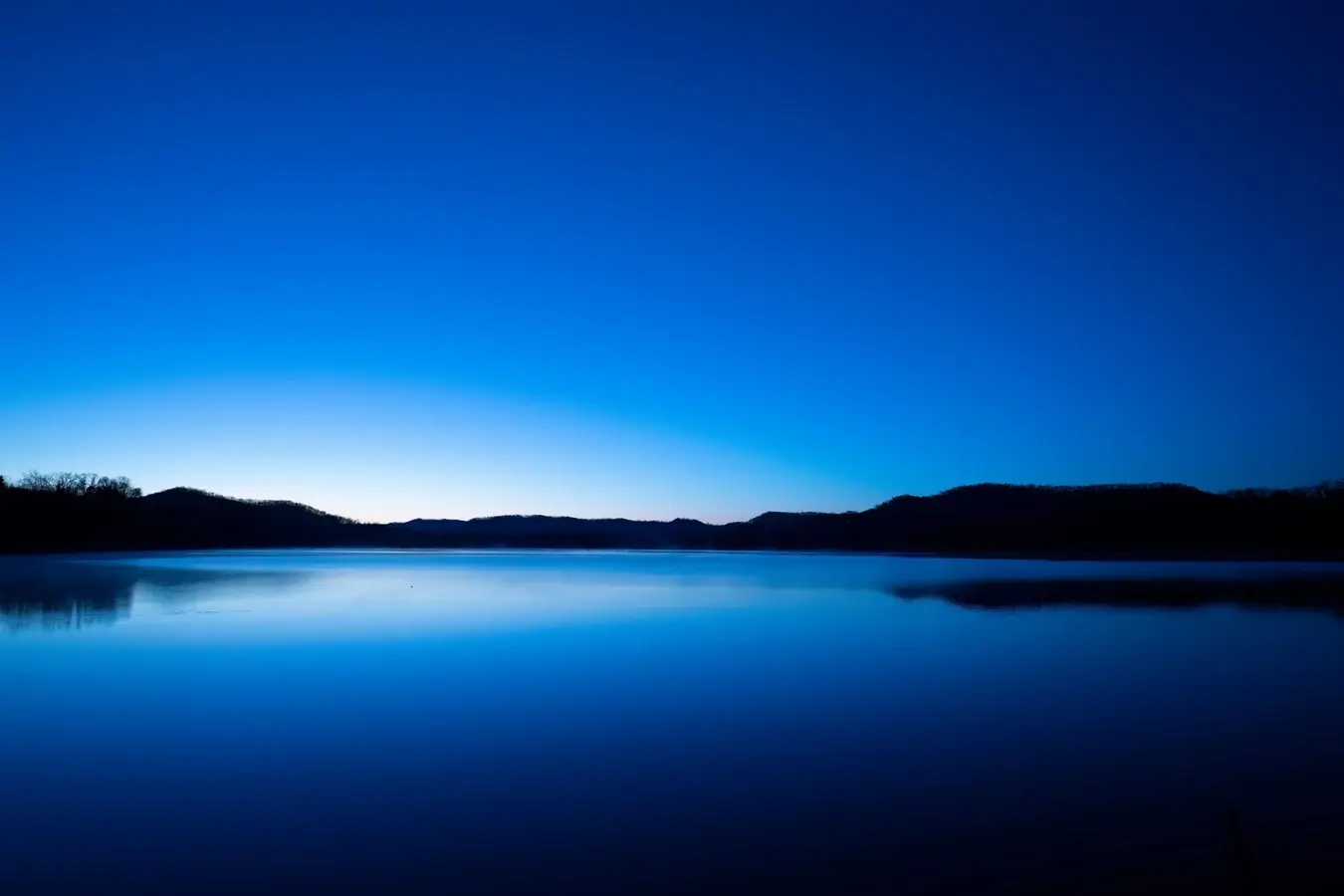
The blue hour, known in French as l'heure bleue, is the brief period after sunset when the sky is already darkening but not yet black, and city lights are just beginning to come on. The name is misleading: at mid-latitudes it lasts roughly twenty to forty minutes, with the blue becoming most pronounced while the Sun is between four and eight degrees below the horizon.
The more interesting question is why it is blue. The most common explanation is that the atmosphere scatters blue light, but that is not quite correct. The characteristic blue of this period is produced by the ozone layer, which absorbs part of the red light through what is known as the Chappuis absorption. The closer you get to the poles, the longer the blue hour lasts, and in places where winter brings polar night, it can continue for hours.
Yellow: The Glue That Failed and the Colour Nobody Chose
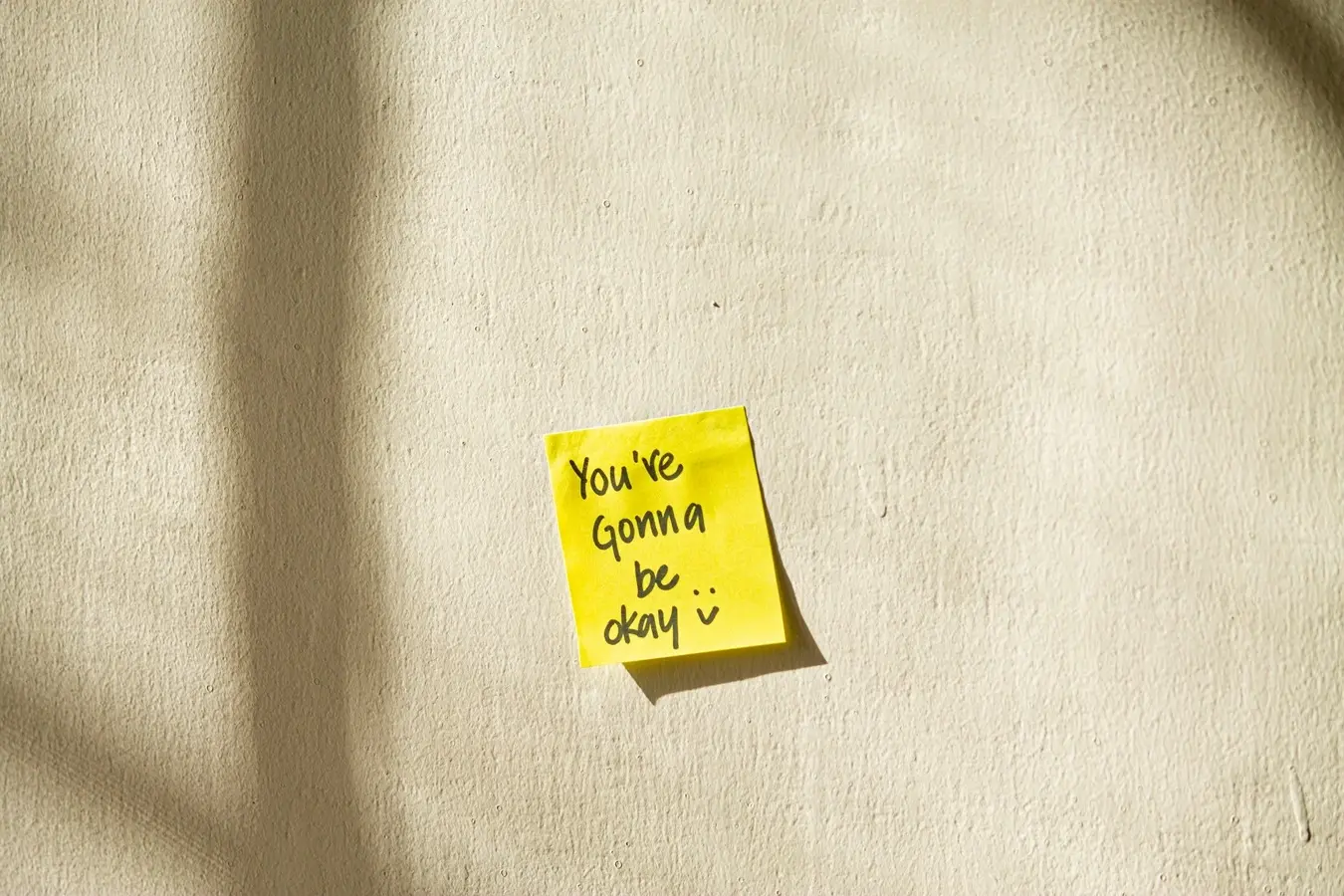
A yellow note stuck to the edge of a monitor, carrying a message someone once wrote to themselves and stopped noticing long ago, exists in almost every office.
Its story begins in 1968, when 3M chemist Spencer Silver was trying to create an adhesive stronger than anything that had come before, for use in the aerospace industry. Instead, he produced the opposite: an adhesive that stuck only lightly and could be peeled off and reapplied. For five years he had no idea what to do with it, describing it as a solution in search of a problem.
Then, in 1974, his colleague Art Fry was singing in a church choir when he realised the adhesive could be used to hold a bookmark in his hymnal, which kept falling out.
The yellow colour, meanwhile, was nobody’s decision. The laboratory next door had a surplus of yellow paper, so they used it for the first test notes. When the surplus ran out, they simply bought more. Today, that accidental shade is a registered 3M trademark - and the colour of almost everything we do not want to forget.
Green: The Blackboard That Stopped Being Black
The sound of chalk, dust on a sleeve, a damp cloth: the green school board is remembered through the senses before it is remembered as a colour. And green only acquired its place in the classroom after a long time.
Around 1801, James Pillans, a headmaster in Edinburgh, created one of the first large classroom blackboards by joining several pieces of slate together. He needed larger maps for his geography lessons. The term blackboard was not recorded until 1815.
Black remained the standard for more than a century. Green enamelled steel surfaces began appearing around 1930 and became widespread in the 1950s and 1960s because they reduced glare under classroom lighting and made chalk dust less noticeable. Only once black was no longer the only option did the term chalkboard begin to enter common use.
The chalk itself, incidentally, is often not chalk at all, but gypsum. By the turn of the century, whiteboards were already outselling green boards by four to one. Yet green remained the colour most of us associate with the classroom.

Purple: The Chocolate That Owned a Colour
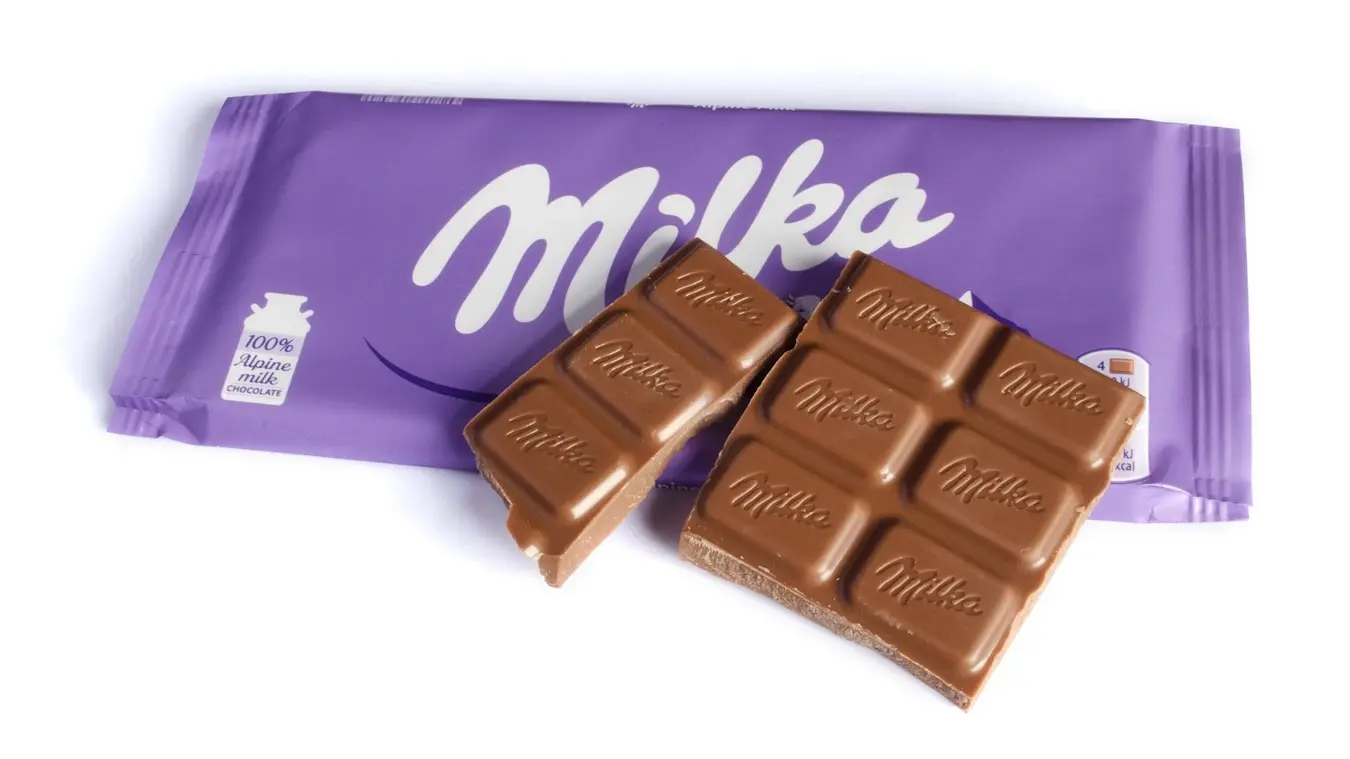
For many people, the first thing that comes to mind when they think of purple is the wrapper of a chocolate bar.
For centuries, purple was the most expensive colour humans knew how to produce. It was extracted from sea snails and worn by emperors. Milka turned it into something that could be bought for a few marks.
The brand was founded in 1901 by Carl Russ-Suchard, the son-in-law of the founder of the Suchard chocolate company. Its first chocolate was already wrapped in lilac packaging, while the name was created from two German words: Milch (milk) and Kakao (cocoa).
The final piece of the identity arrived in 1972, when a purple cow named Lila - the German word for purple - became the face of the brand's advertising campaigns.
The result is one of the rare examples of a colour that, in the minds of millions of people, stopped being a colour and became a product.
Orange: The Smell That Arrived Before the Words
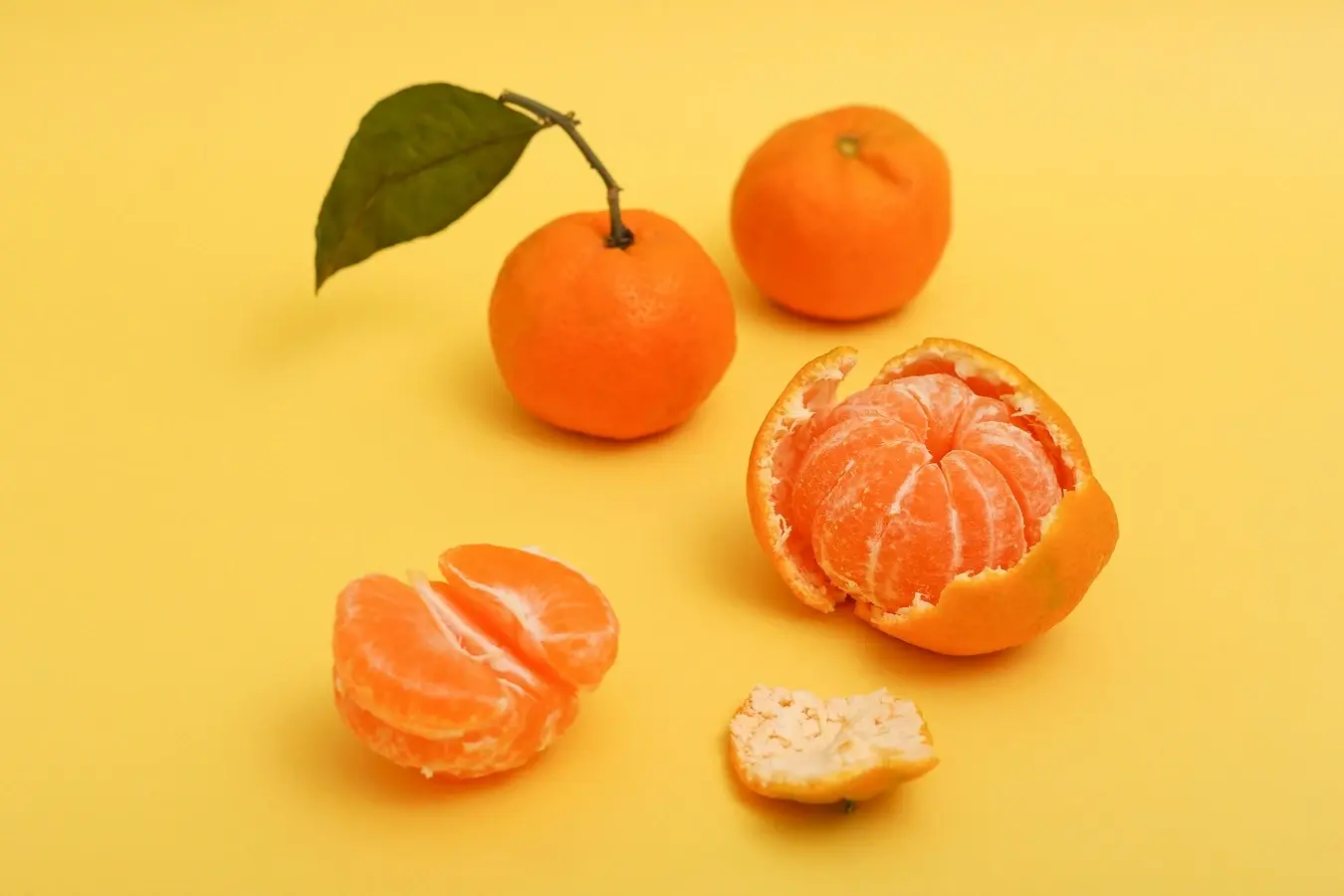
A tangerine peeled in December, and the scent that stays on your fingers for hours.
Smell is the only sense whose neural pathway bypasses the thalamus and reaches the amygdala and hippocampus - the centres associated with emotion and memory - after only one or two synapses. That is why, according to neuroscientist Rachel Herz of Brown University, memories triggered by smell are experienced as more emotional and vivid than those prompted by other stimuli.
One peeled tangerine can therefore bring back an entire December from childhood, with details that no photograph could have preserved.
The colour we see on the fruit, meanwhile, owes its name to its relative, the orange. In English, the word for the fruit was recorded in the fourteenth century, while the word for the colour appeared only in the sixteenth. Before that, orange was described as geoluhread - literally, yellow-red.
The word travelled from the Sanskrit nāraṅga through Persian and Arabic and into European languages, including our own word narandža.
Black: The Second Before the Film Begins
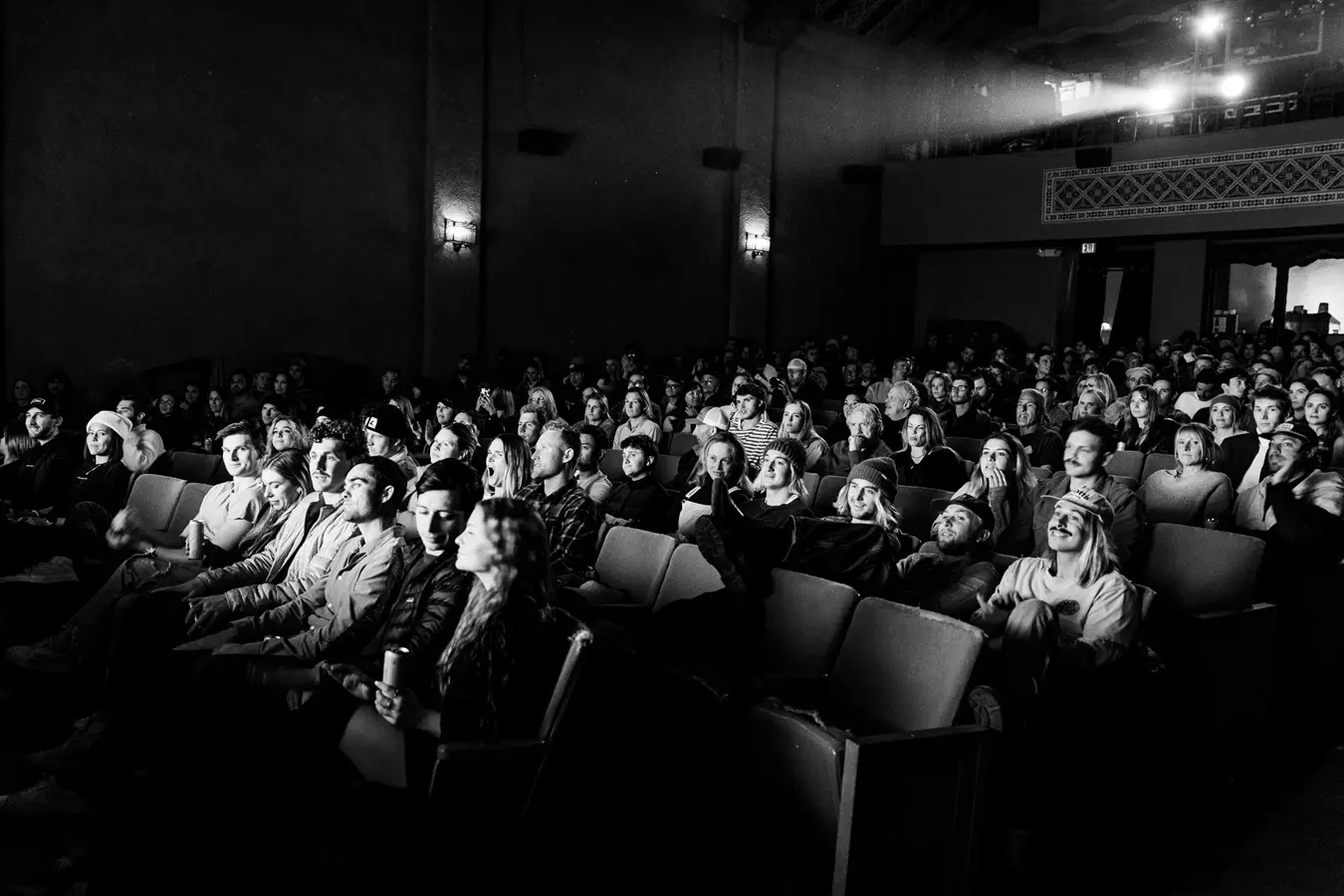
A cinema auditorium at the moment the lights go out, when the film has not yet started.
The real surprise comes once the projection begins. Film is shot and displayed at 24 frames per second, and the projector has to block the light every time the film advances to the next frame so that the movement of the strip itself is not visible on the screen.
To prevent flicker, the shutter closes an additional time, meaning that each frame is shown twice. In one second, the viewer therefore receives 48 flashes separated by 48 intervals of complete darkness.
The eye does not consciously register those intervals. Yet in a traditional film projection, without knowing it, the viewer spends a considerable portion of the film in darkness - according to some sources, as much as half of it.
Digital projectors work differently, but the darkness of the cinema has remained part of the ritual.
White: The Page That Blinks
A cursor blinking on an empty page.
A white surface can easily be mistaken for emptiness, but on a screen it is almost the opposite: white is light produced when all three subpixels are operating at full intensity, while in physics white is the combination of all colours.
Meanwhile, the cursor keeps counting. In Windows, it changes state by default every 530 milliseconds - almost twice a second - and most people never touch that setting.
The rhythm exists simply to show where the next letter will appear. But in front of a blank page, everyone hears it as a kind of tick-tock.

Turquoise: The River That Builds Its Own Staircases
The Una in summer: water that looks as though someone has poured camera dye into it.
The river flows through limestone karst, and mineral-rich water deposits calcium carbonate around rapids and obstacles, gradually creating travertine - sedimentary rock that allows the Una to build its own living, growing terraces and waterfalls. The best known is Štrbački Buk, more than twenty metres high and covered in moss.
The waterfall complex at Martin Brod is on UNESCO's tentative list.
Turquoise, incidentally, means Turkish. The stone reached Europe through Turkey, and the French turquoise - literally “Turkish stone” - eventually gave both the gemstone and the colour their name.
This year, that colour also came with a serious warning. At Una Science Week, held in early June, scientists pointed to the fragmented protection of the river and the large number of illegal constructions along its banks.

Grey: November at Four
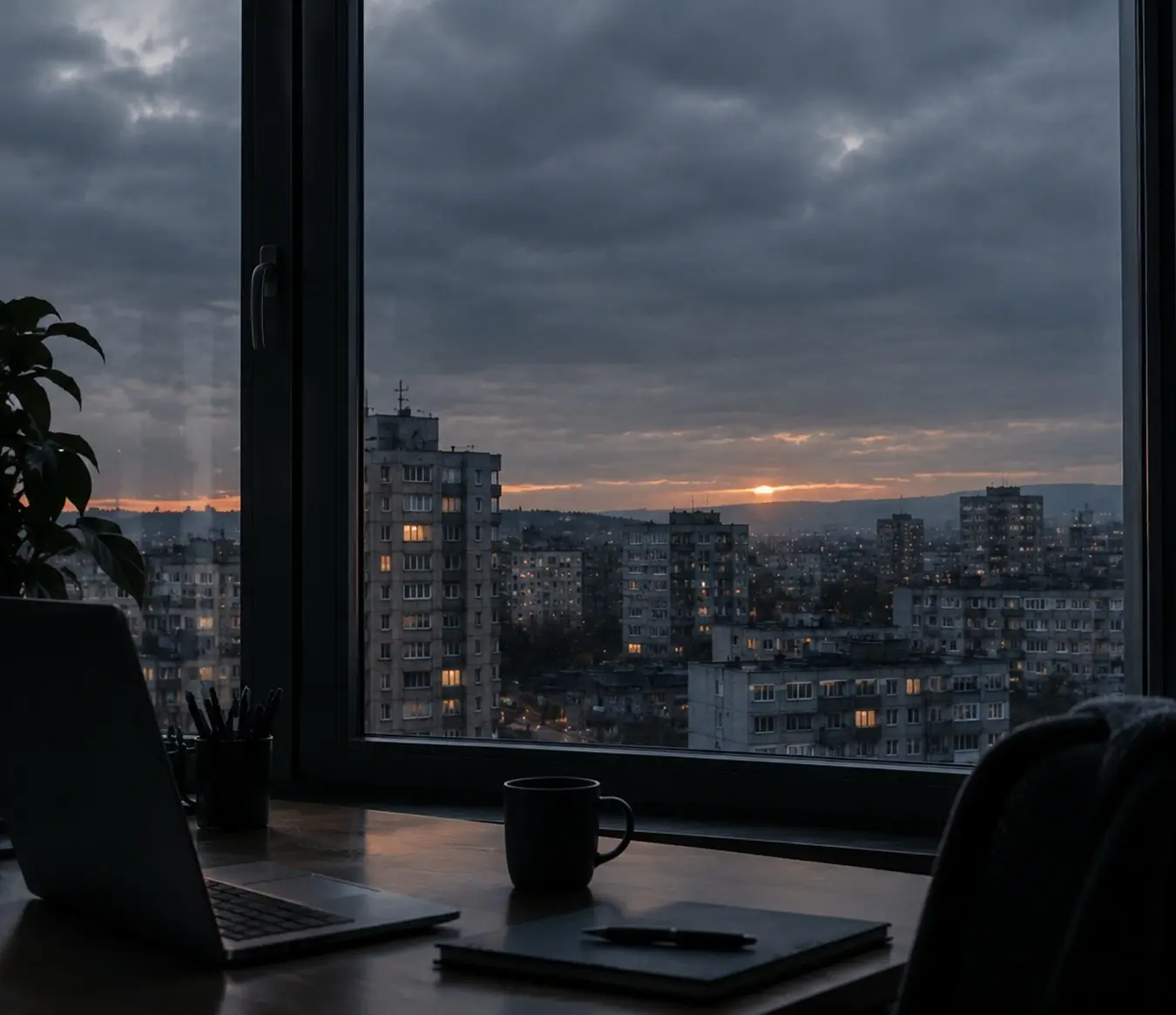
A November afternoon above apartment blocks, around four o'clock, when darkness is already falling, but nobody has turned on the lights yet.
Here, in the second half of November, the Sun sets at around 4:15 p.m., leaving just over nine hours of daylight. Most people spend half of those hours behind the windows of an office or classroom.
The blue hour described earlier is usually muted by then. Clouds extinguish it before it properly begins, leaving between sunset and darkness only grey - a colour without a hue, carrying only the amount of available light, and in November there is very little of it.
If you have made it this far, you have probably already thought of an entirely different image for at least one of these colours.
Write it down somewhere - preferably on a yellow note. That colour, although chosen entirely by accident, has long since become the colour of the things we do not want to forget.