The Dragon of Herzegovina’s Caves: The Animal That Can Survive for Years Without Food

![[object Object]](https://api.hedonistmagazine.net/storage/images/2026/10/d6ae2867-4203-496e-a3bc-88c53c1ad860.webp)
Somewhere in the underground waters of eastern Herzegovina, in darkness that sunlight has never reached, an animal was found after 2,569 days in precisely the same place where it had first been recorded. That is more than seven years.
For eight years, researchers repeatedly dived at the same site, documenting and relocating marked individuals. Most had moved less than ten metres over the course of several years. It sounds like a description of a stone. In fact, it tells the story of the world’s longest-lived amphibian: the olm.
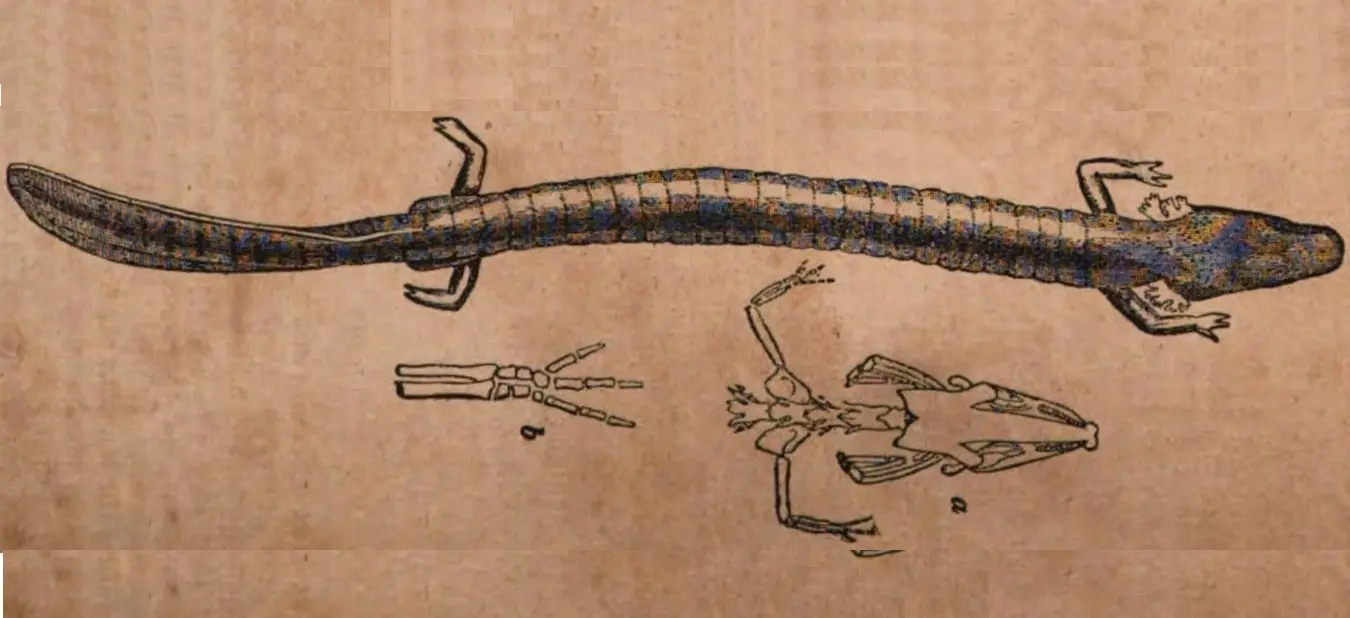
The olm, or Proteus anguinus, is Europe’s only exclusively cave-dwelling vertebrate. It grows to around 20 centimetres in length, occasionally reaching 30, and weighs roughly 15 to 20 grams. Its skin contains no pigment, giving it a pinkish hue as blood vessels show through the translucent surface. That colour, reminiscent of human skin, is what earned it the name “human fish”. Its eyes are underdeveloped and covered by skin, though they can still detect light. It has three toes on each forefoot and two on each hind foot. The species inhabits the subterranean waters of the Dinaric Karst, from the Soča River near Trieste, through Slovenia and Croatia, to Herzegovina.
Dragon Hatchlings Washed Out by Floodwaters
The olm first appeared in a written account in 1689, when Janez Vajkard Valvasor mentioned it in his work The Glory of the Duchy of Carniola. He recorded that after heavy rains, underground waters sometimes expelled strange, pale creatures that people believed to be the offspring of a cave dragon. Around Postojna Cave, the warm air rising from the depths was thought to be the dragon’s breath.
The first scientific description and name came in 1768, from Josephus Nicolaus Laurenti. There was a mistake, however: unaware of where the specimen had originated, he incorrectly listed Lake Cerknica as its habitat. He named the genus Proteus, after the Greek sea god capable of changing shape. The irony lies in the name itself. Unlike the shape-shifting god, the animal remains in larval form throughout its life, retaining its external gills well into adulthood.
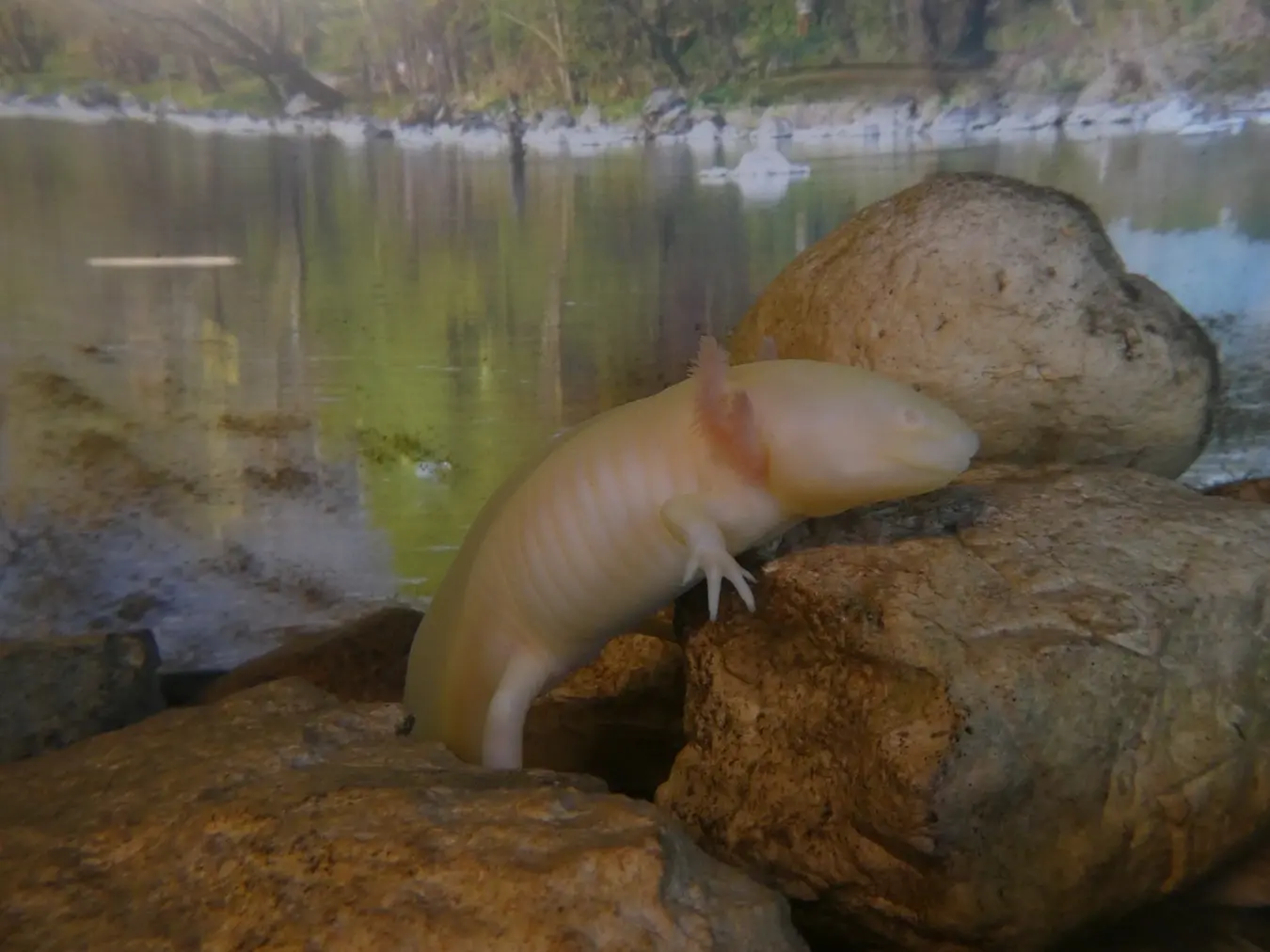
The dragon legend originated in Carniola, but the same karst landscape that gave rise to it stretches all the way to Herzegovina, with the olm moving through its subterranean waterways along the way.
Eight Years - or Ten
The claim most often repeated about the olm is that it can survive ten years without food, a figure cited by institutions including the Zoological Society of London. Scientific literature is more cautious, but no less astonishing. Research into its metabolism, drawing on a 2001 study, reports that the olm can withstand starvation for between 18 and 96 months - as long as eight years - without showing signs of illness. Slovenian biologists at the University of Ljubljana’s Biotechnical Faculty likewise cite a period of up to eight years.
The secret is an extraordinarily slow metabolism. In laboratory conditions, after 18 months without food, an olm had lost roughly half its liver glycogen reserves and a quarter of its fat stores, yet it continued to live. This is the price of survival in waters where food is almost nonexistent: the olm has learned to spend virtually nothing.
A Hundred Years Without Hurrying
That slowness has a remarkable payoff in years. French biologist Yann Voituron and his colleagues analysed more than 50 years of records from a colony of around 400 olms at the CNRS research station in Moulis, France. Their calculations suggested that the species can live for more than a century, with an average adult lifespan of about 68 years.
Sexual maturity comes only after the age of 15, and a female lays an average of around 35 eggs every 12 and a half years. Other long-lived amphibians fall well short of those figures: the Japanese giant salamander lives for up to 55 years, the African bullfrog for up to 45, and the common toad for up to 40.
The mystery remains unresolved. The study’s authors argue that the olm challenges conventional theories of ageing, making it a promising model for investigating the mechanisms that protect vertebrates against the effects of time. Its genome, estimated at around 50 billion base pairs, is roughly 16 times larger than the human genome.
A Hunter That Cannot See
In absolute darkness, the olm relies on its other senses. It tracks prey through smell and taste, has hearing sensitive enough to detect movements in the water, and possesses electroreceptors that pick up the weak electrical fields produced by living organisms. There is also evidence that it may orient itself using the Earth’s magnetic field.
Its skin is not white because it lacks the ability to produce pigment. When exposed to light, it begins to darken, as though it had simply been waiting for a reason to do so. In 1986, a dark-skinned olm was discovered in Bela Krajina, Slovenia. Known as the black olm, it was described as a separate subspecies, Proteus anguinus parkelj.
No one has ever observed the olm reproducing in the wild, and the process has rarely been witnessed in captivity. That is why excitement swept through Postojna Cave in 2016, when a female in an aquarium laid eggs. The first egg was noticed on 30 January; at 10:48 a.m. on 30 May, the first young olm hatched - exactly four months later.
An Address in Herzegovina
In Bosnia and Herzegovina, the olm inhabits the subterranean waters beneath Popovo Polje, a karst field stretching for around 65 kilometres and traversed by the Trebišnjica, one of the world’s largest sinking rivers.
Its best-known address is Vjetrenica Cave, near the village of Zavala in the municipality of Ravno. On 26 July 2024, Vjetrenica was inscribed on the UNESCO World Heritage List, becoming Bosnia and Herzegovina’s first standalone natural property to receive the designation.
Its seven kilometres of passages, 135 lakes, constant temperature of 11°C and more than 200 animal species - around 90 of them found exclusively underground - make it one of the richest cave habitats on the planet. Among its inhabitants is Marifugia cavatica, the world’s only known subterranean tube-dwelling worm. But the olm remains its most famous resident.
This summer, while temperatures in southern Herzegovina climbed to 40°C, the cave became a refuge for people, too. According to Davor Baković, director of the Vjetrenica public institution, more than half of the approximately 21,000 visitors recorded the previous year arrived during the summer months. Visitor groups are limited to no more than 80 people at a time. Anyone planning a visit should bring a jacket, whatever the season.
The Vulnerability of Staying Still
Researchers studying the Herzegovinian population have concluded that the olm’s extraordinary attachment to a particular location, combined with its slow reproduction, makes it highly vulnerable - and a sensitive indicator of human disturbance in its habitat. The IUCN Red List classifies the species as Vulnerable, while Slovenia has protected it by law since 1922.
If the quality of the groundwater changes, the olm cannot simply move elsewhere in search of better conditions. It has evolved to stay put, a strategy that has served it remarkably well for millions of years - until the water around it begins to change.
The seventeenth-century legend imagined a dragon rising from the depths to emerge into the world above. Reality has offered something stranger: an animal that chose the depths once and for all, and that, if we leave it undisturbed in clean water, may still be there a century from now.