

The Mouse Who Taught the World to Whistle

![[object Object]](https://api.hedonistmagazine.net/storage/images/2026/10/ac653265-1943-464f-b99f-8271f32811ea.webp)
New York, Sunday, November 18, 1928. It is cold outside, and in the Colony Theatre on Broadway the smell of damp overcoats mixes with cigarette smoke and poster paint. The audience has come for the feature film. Before it comes a short cartoon, seven and a half minutes that most viewers will forget by the time they reach the coat check.
On the screen is a steamboat, but not one from any maritime novel. Its smokestacks sway like the neck of a drunken rooster, and a mouse stands at the wheel, wearing trousers with buttons. He whistles.
That whistle was the first moment people realized something had changed. The sound did not come from a piano in the corner of the hall, as in every silent film until then. It came from the drawing itself, perfectly matched to the movement.
A Mouse Born of Desperation
The story of Mickey begins with a defeat. In that same year, 1928, Walt Disney lost the rights to Oswald the Lucky Rabbit, his most successful character, because the contract turned out not to protect what he believed was his. The producer took the character away from him and led most of his animators off with him.
One man stayed at Walt’s side: Ub Iwerks, a quiet and brilliant draftsman. According to tradition, Walt conceived the sketch of the new character on the train back to California. He called him Mortimer. Lillian, his wife, said that sounded too serious and suggested the name Mickey.
Iwerks gave the character his body: circles for the head and ears, tubes for limbs, gloves that made hands easier to draw. The design was calculated to save effort, and it turned out to be one of the most recognizable silhouettes of the century.
Mickey’s first two cartoons found no distributor because they were silent, and that summer the world was already talking about the film that could speak. The Jazz Singer had come out the year before. What remained was to make something that had not been seen before.
A Film You Can Hear
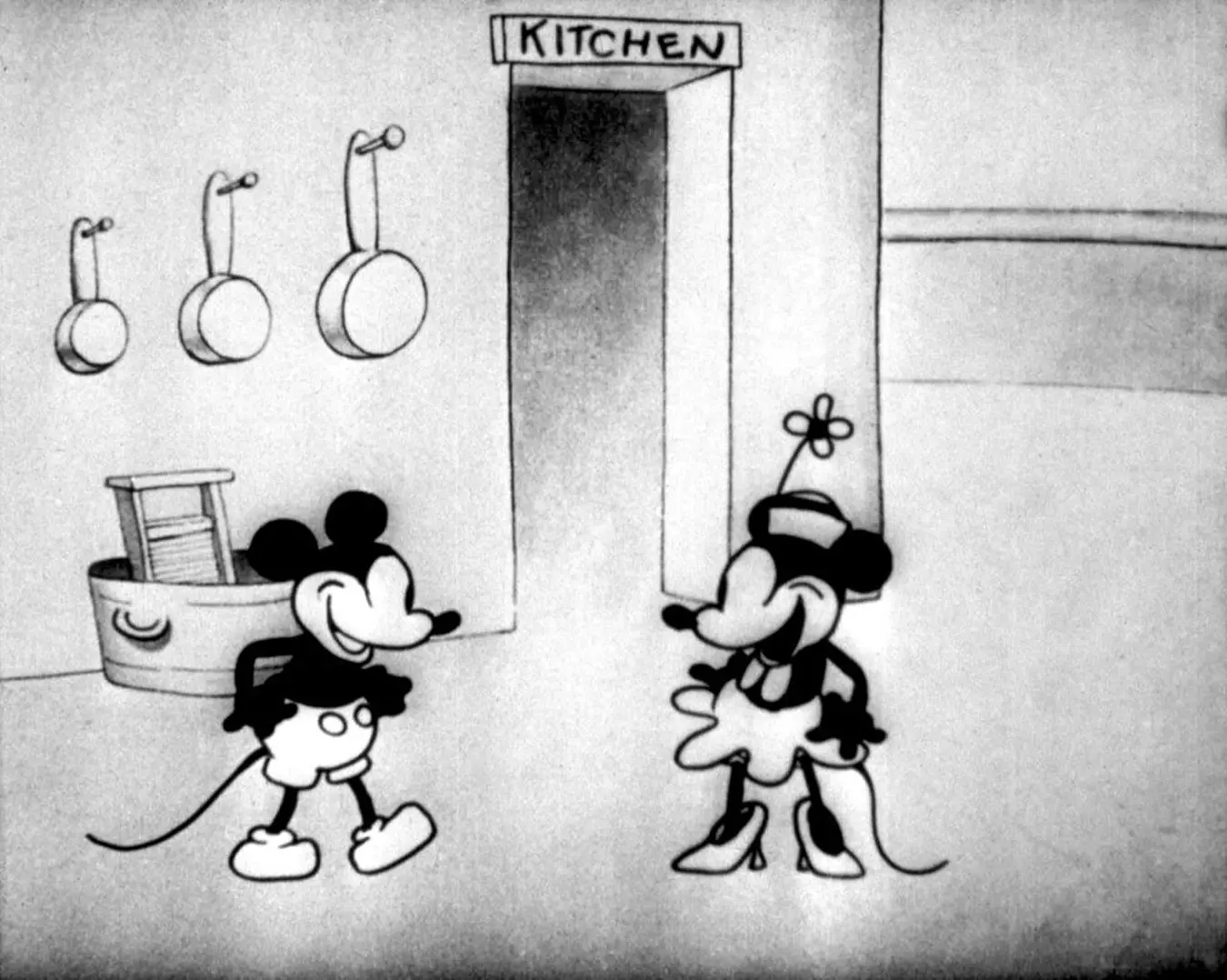
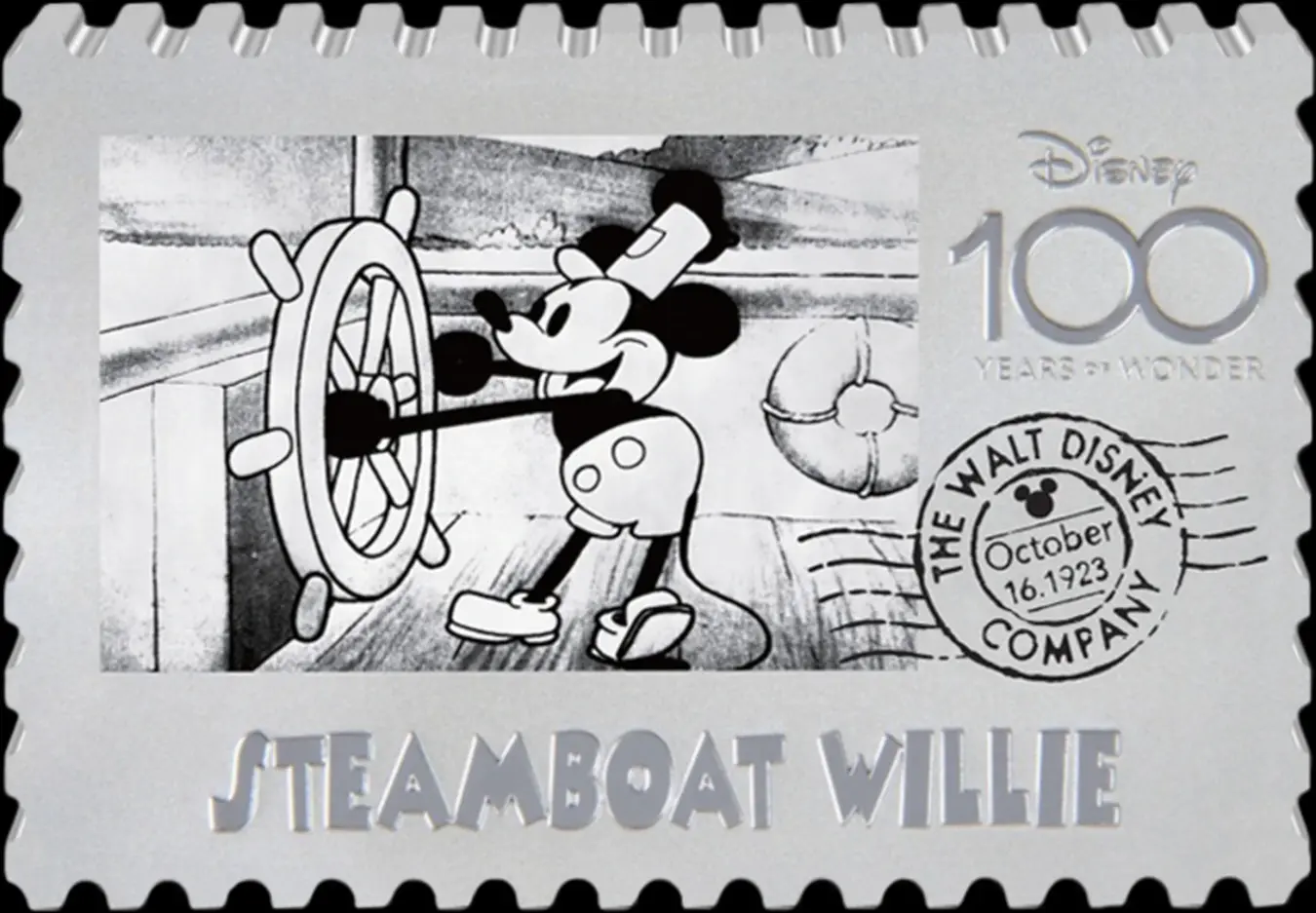
Steamboat Willie was not the first cartoon with sound, but it was the first in which the sound was the joke itself. Mickey doesn’t follow the melody; he makes it. He plays a cow’s teeth like a xylophone, turns a goat into an accordion, and transforms pots and barrels into drums. The whole steamboat becomes an orchestra, and every creature aboard an instrument.
Today it would seem cruel, and partly it is. The Mickey of 1928 is not the kindly mascot of later decades. He is a rascal, a troublemaker and petty anarchist, a hero who seizes the wheel from the captain, torments the animals and enjoys it. He has no morals and no message, only rhythm.
So, if we are honest, the first Mickey is the first true hedonist of animated film. He doesn’t think about tomorrow. He has a steamboat, potatoes to peel, a parrot that mocks him, and the pleasure of turning everything into music.
The Sound That Came at a Price
What the viewer doesn’t see is how hard it was to make. Iwerks, by legend, drew at an incredible pace, hundreds of drawings a day. The sound was recorded in New York with an orchestra, the musicians playing to a metronome and to a rhythm tracked with a bouncing ball on the screen. The first attempt at synchronization failed, and the second had to be paid for out of a pocket Walt barely had.
The price was high, but it paid back a hundredfold. The audience demanded that the cartoon be shown again and again. From that evening on, Mickey Mouse was no longer a character; he was a phenomenon.
Related articles
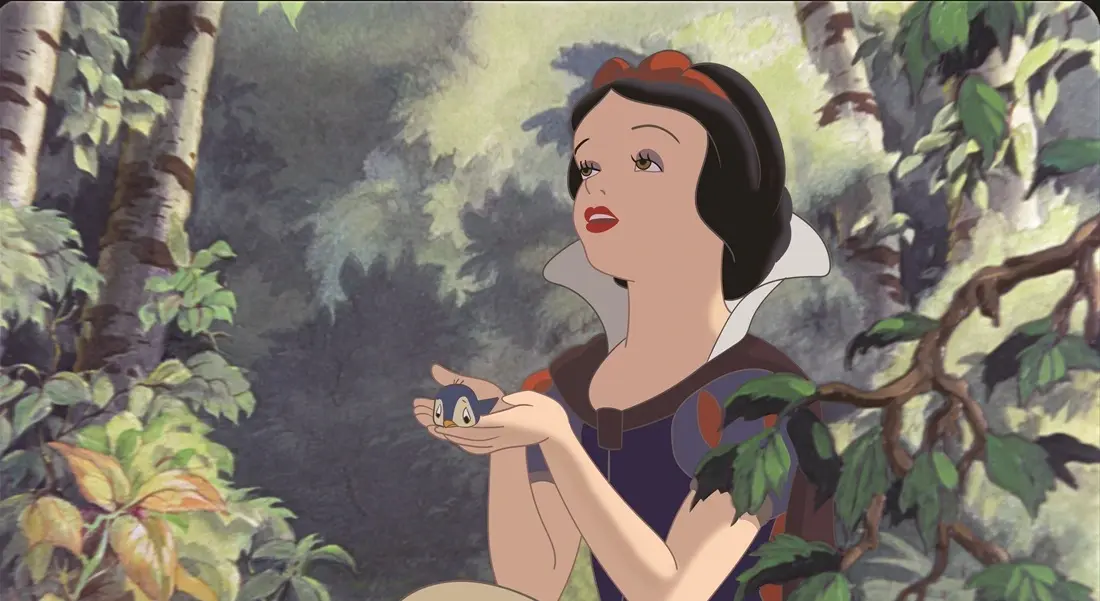
The Five Disney Animated Films That Changed the World
For more than a century, The Walt Disney Company has created far more than animated films. Its stories have shaped generations, influenced popular culture, transformed filmmaking, and redefined what animation could achieve. While dozens of Disney classics have become beloved worldwide, only a handful have fundamentally changed the history of cinema.
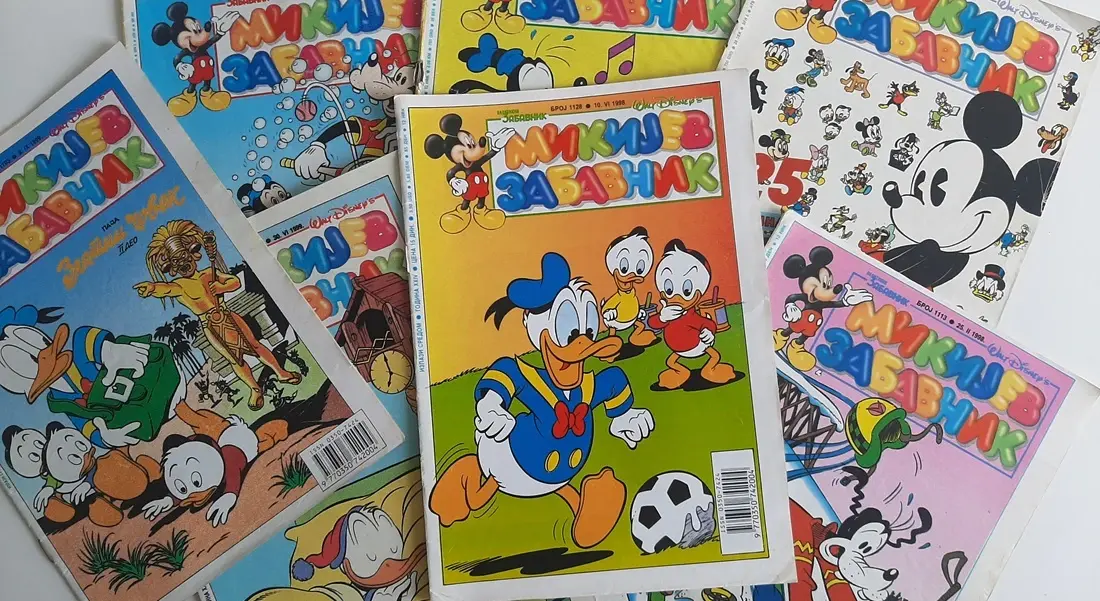
Mikijev zabavnik: Childhood Between the Pages
There are things that never truly disappear, even when they’ve long vanished from newsstands. They no longer carry the scent of fresh print, nor do they wait for us on shelves next to sweets and stickers, yet they live somewhere deeper – in memory. One of those things is Mikijev zabavnik, the magazine generations grew up with.