

How Milena and Nenad Discovered Asia: Bangladesh Without Filters
![[object Object]](https://api.hedonistmagazine.net/storage/images/2026/03/6798cb98-2224-48b9-bbca-6cc33f8db1af.webp)
Five years of life in Asia, two in Bangladesh, two in the Philippines, and one in Sri Lanka, shaped the travel story of Milena and Nenad from Bijeljina, whose journey to the Far East began with Nenad’s job. For HEDONIST, they turned their impressions into a personal guide through countries that rarely become a traveler’s first choice, accompanied by photographs that best capture everyday life far from European habits.
Bangladesh is no one’s first love among long-distance destinations. Mostly, only the crazy, the brave, or the uninformed go there - or all three at once. Still, that does not mean it lacks beauty worth mentioning. And if it happens to be your first destination outside Europe, the surprises never end. A multi-million Muslim country, with a “frog-like” humid climate and crowds that simply cannot be described.
A City Moving on Three Wheels
The most common means of transport is the rickshaw - a colorful bicycle with an even more colorful carriage attached. The driver is skinny, dressed in a shirt and a vibrant lungi (loosely speaking, a traditional long male skirt).
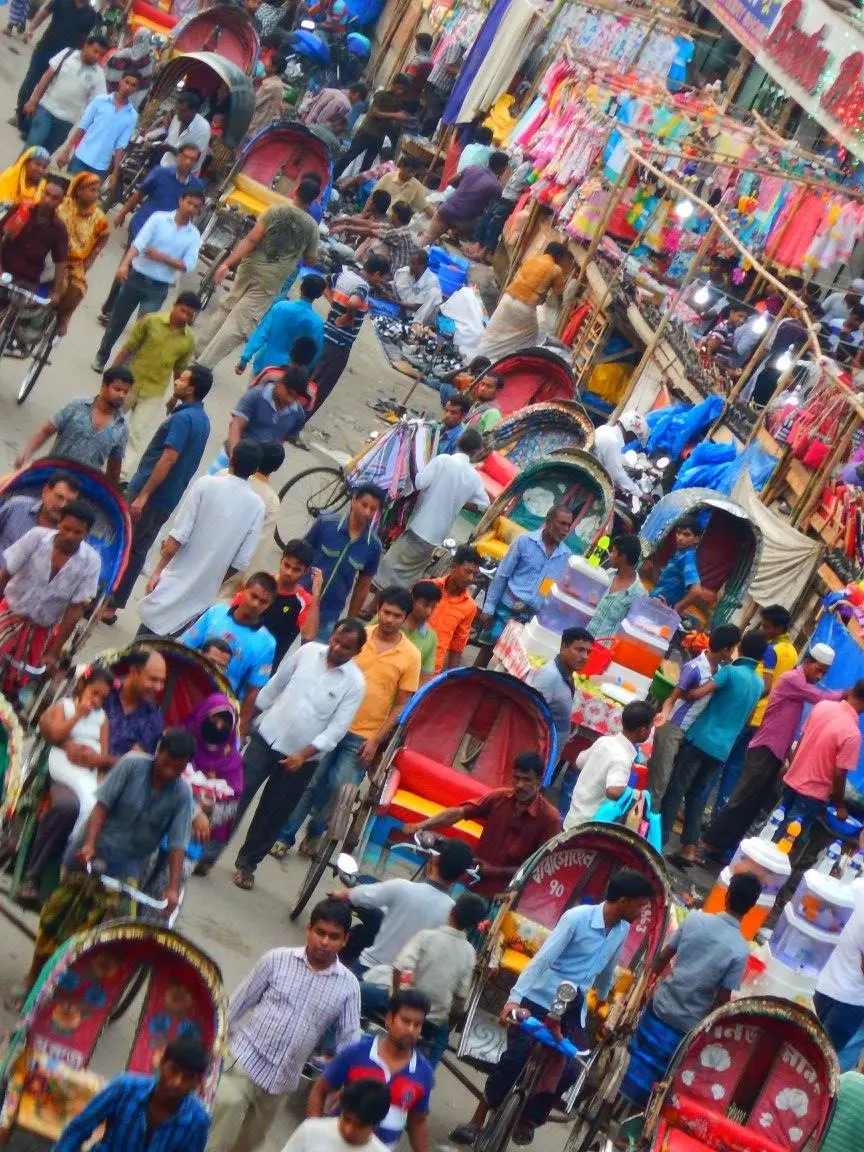
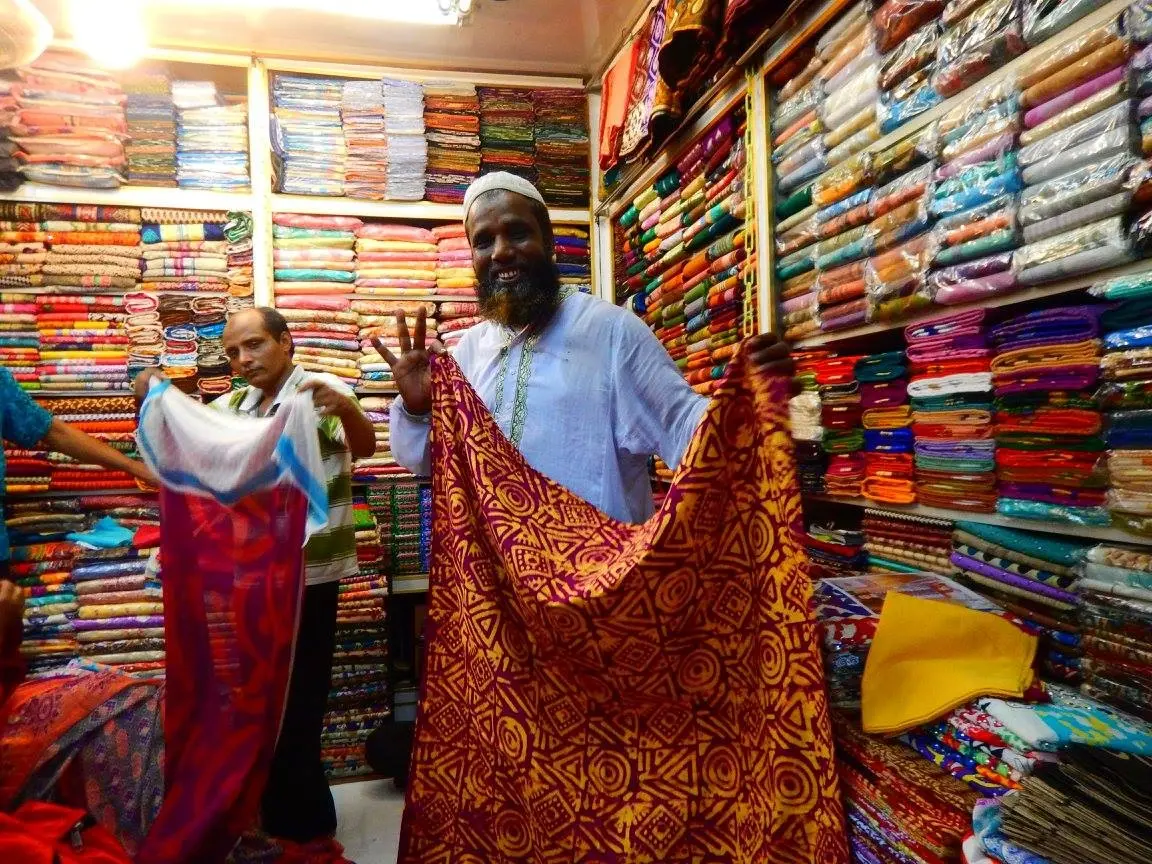
The fabrics you can see here in a single day - often even on a single person - combine every imaginable and unimaginable pattern and all the colors of the rainbow.
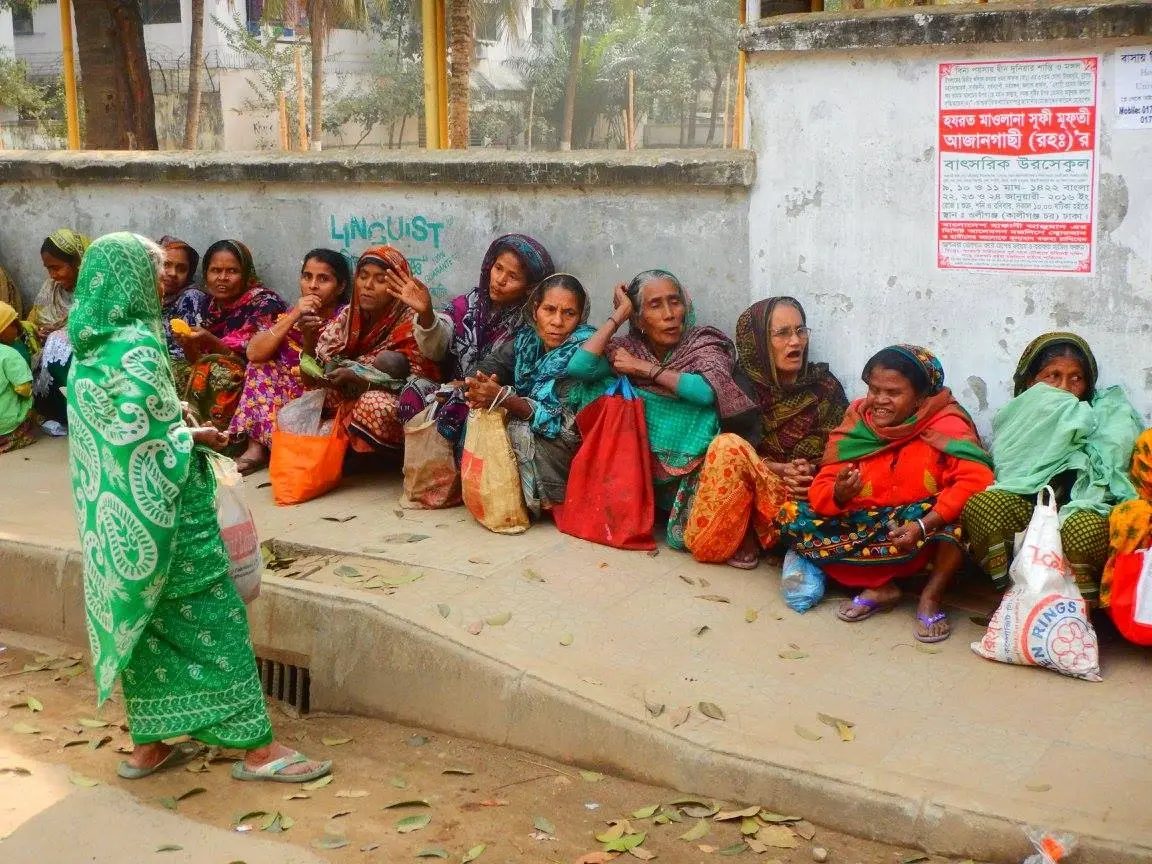
And the best day for an idle foreign woman is Friday. More precisely, Fridays in front of mosques. Women do not enter them, so they sit outside waiting for their relatives. A multitude of colorful women - love at first sight, and forever.
Dhaka - Between Chaos and Luxury
The capital, Dhaka, together with its surrounding areas, has approximately 21 million inhabitants, while the population density within the city itself reaches 50,000 people per square kilometer (these are estimates, as the exact number is difficult to determine precisely).
Urban neighborhoods range from extremes of wealth to deep hardship - from areas where entire families sleep outdoors because of the climate, to Gulshan and Banani, where German, Spanish, and English clubs can be found, serving alcohol freely, although it is otherwise strictly prohibited throughout most of the country.
The Road Toward the Rivers
The most surreal experience is leaving the capital in any direction, preferably southward toward the great rivers. The city’s river port resembles an enormous beehive floating on water. Boats and masses of people constantly arrive and depart, deep into the night.
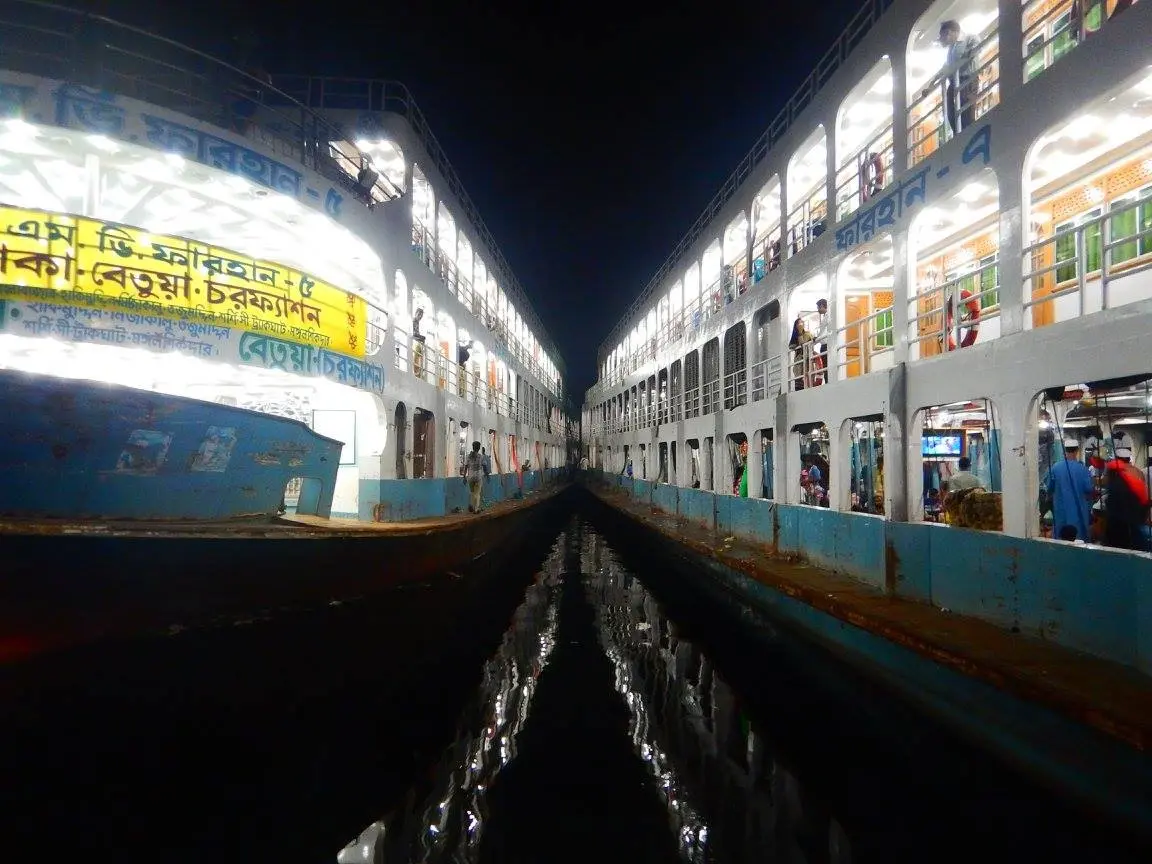
A cruise along the Padma River (the Bengali name for the Ganges) is a once-in-a-lifetime experience. For us, it was a cruise; for them, everyday life. The boat departed south around midnight. At dawn, we felt as if we had reached the edge of the world. If the Earth were flat, this would be where it ended.
Crowds, traffic, and pollution were replaced by an endless river, silence, and villages filled with children. Perhaps not the middle of nowhere - but the closest thing to it.
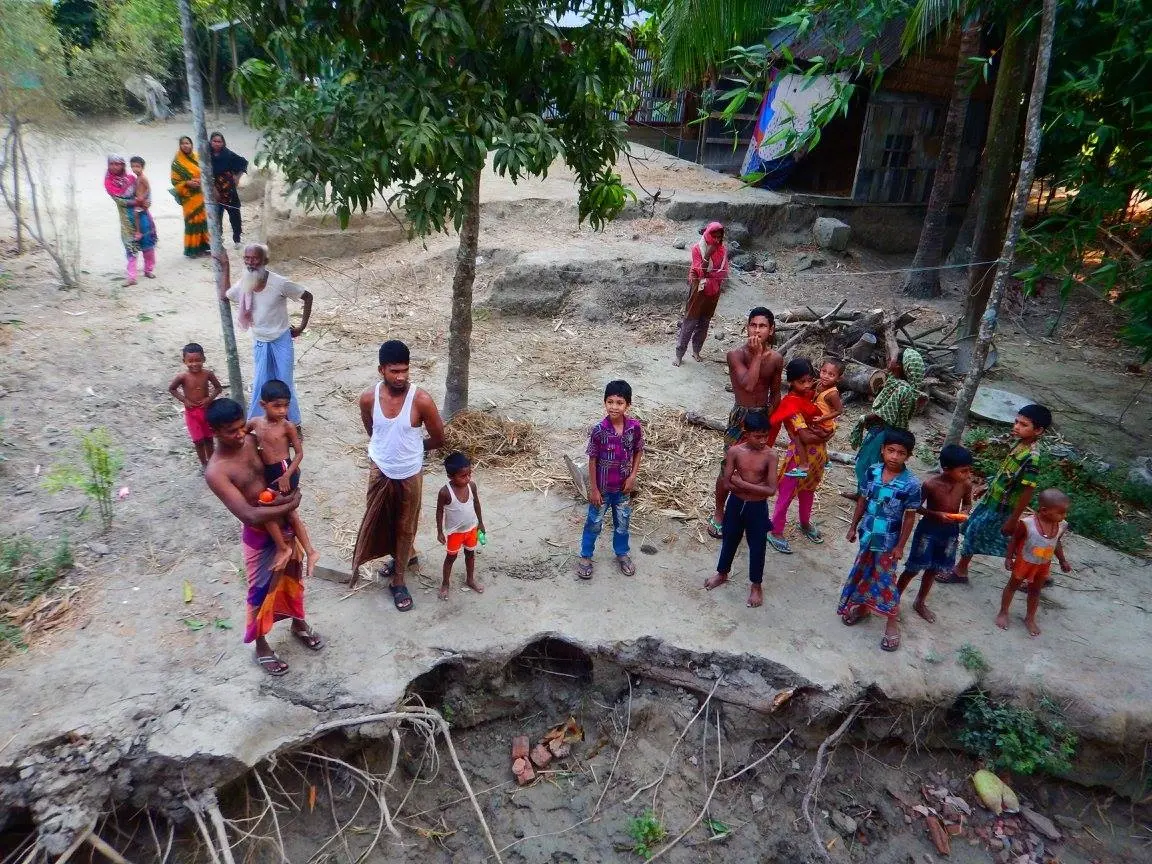
Where the Soul of the Country Reveals Itself
Visits to rural villages left an equally strong impression, where the soul of the people becomes visible in the simplest and most beautiful way - through their modest living conditions and everyday life.
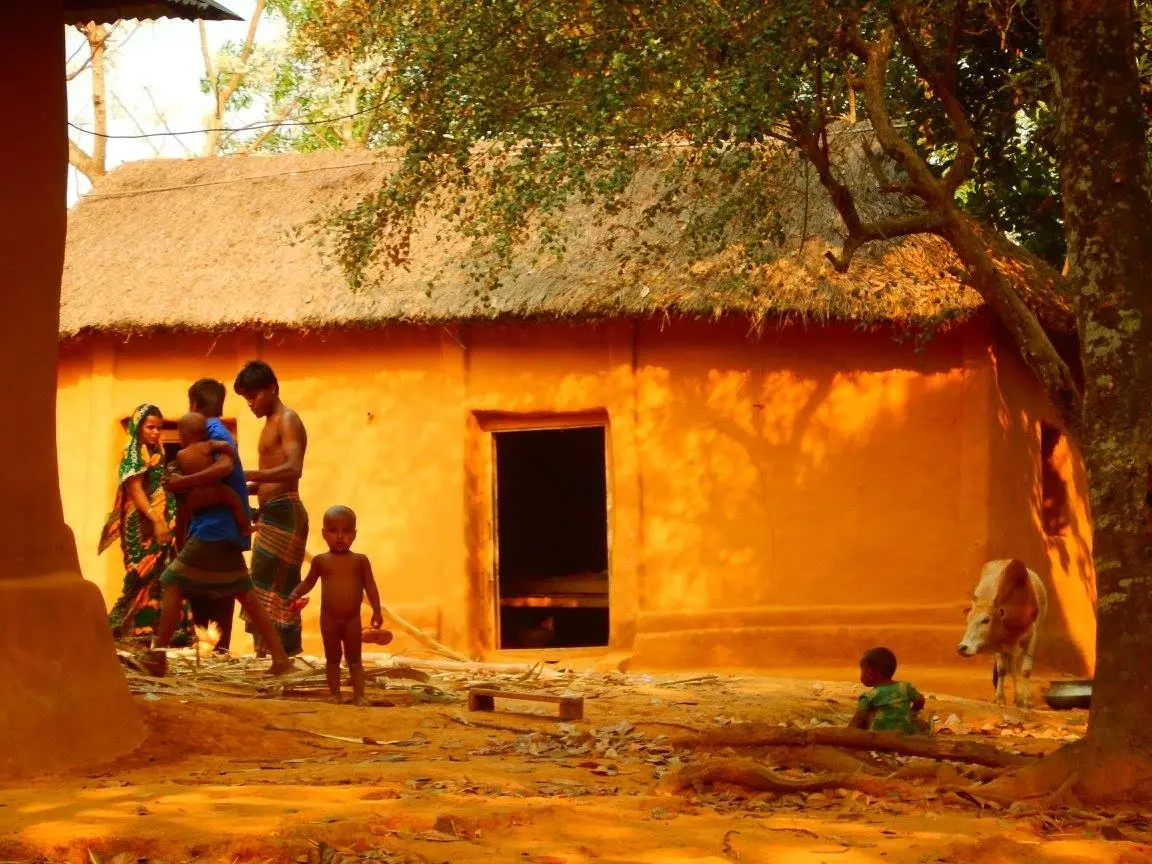
There, we realized that grandmothers are the same everywhere in the world: they may not have much to offer guests, but they will give everything they have, wholeheartedly. Straight from their yards, they will gather handfuls of tropical fruit whose aromas are impossible to fully capture or describe.
Flavors Remembered for a Lifetime
The birthplace of the mango lies precisely in this region, filled with such sweetness, fragrance, and flavor that even those who do not usually like fruit cannot remain indifferent. And pineapples - of every size imaginable. Best of all, they are sold on the street already peeled, sparing you the trouble. Of course, locals season them with salt and chili - but then… it is no longer pineapple as you know it.
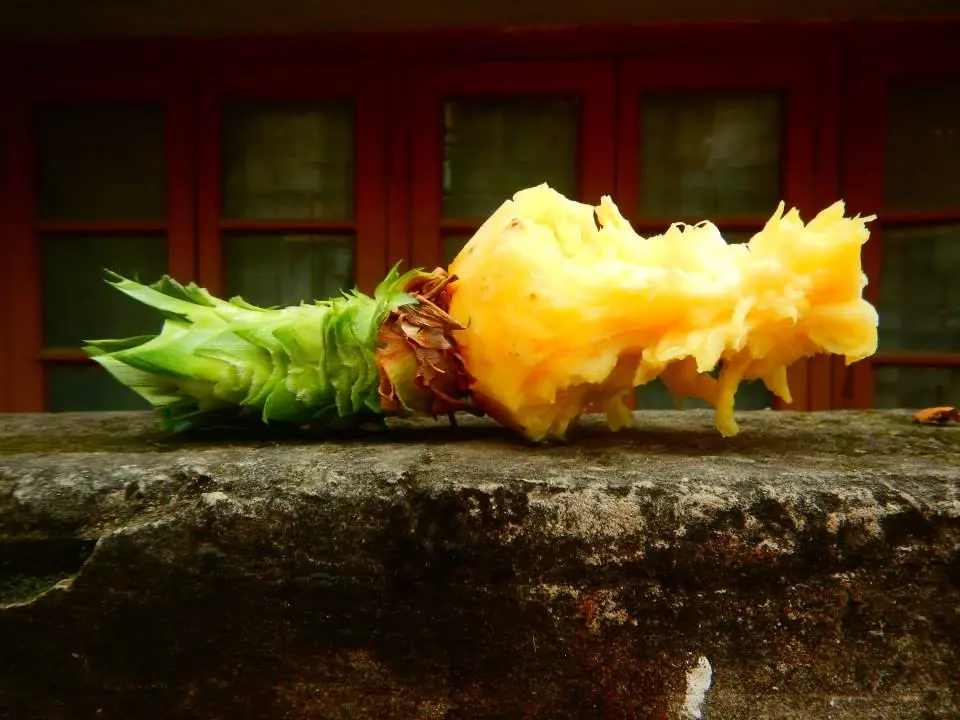
And if you believe you are a fan of spicy food, do not say that in front of them. Even when you ask for it not to be spicy - and even when they resist adding extra heat - it will still bring tears to your eyes and clear your sinuses instantly. Meanwhile, they happily snack on chili peppers as if they were chips. We suspect that such a diet gives them pearl-white teeth, although perhaps at the expense of a shorter lifespan.
The dish you can find on every corner around lunchtime, for just a euro or two - and the one that won us over for life - is biryani. Years later, still under its spell, we search for it around the world, but nothing compares. Biryani is essentially rice and meat, a kind of pilaf, yet the aromas and flavors are extraordinary, the meat tender beyond words.
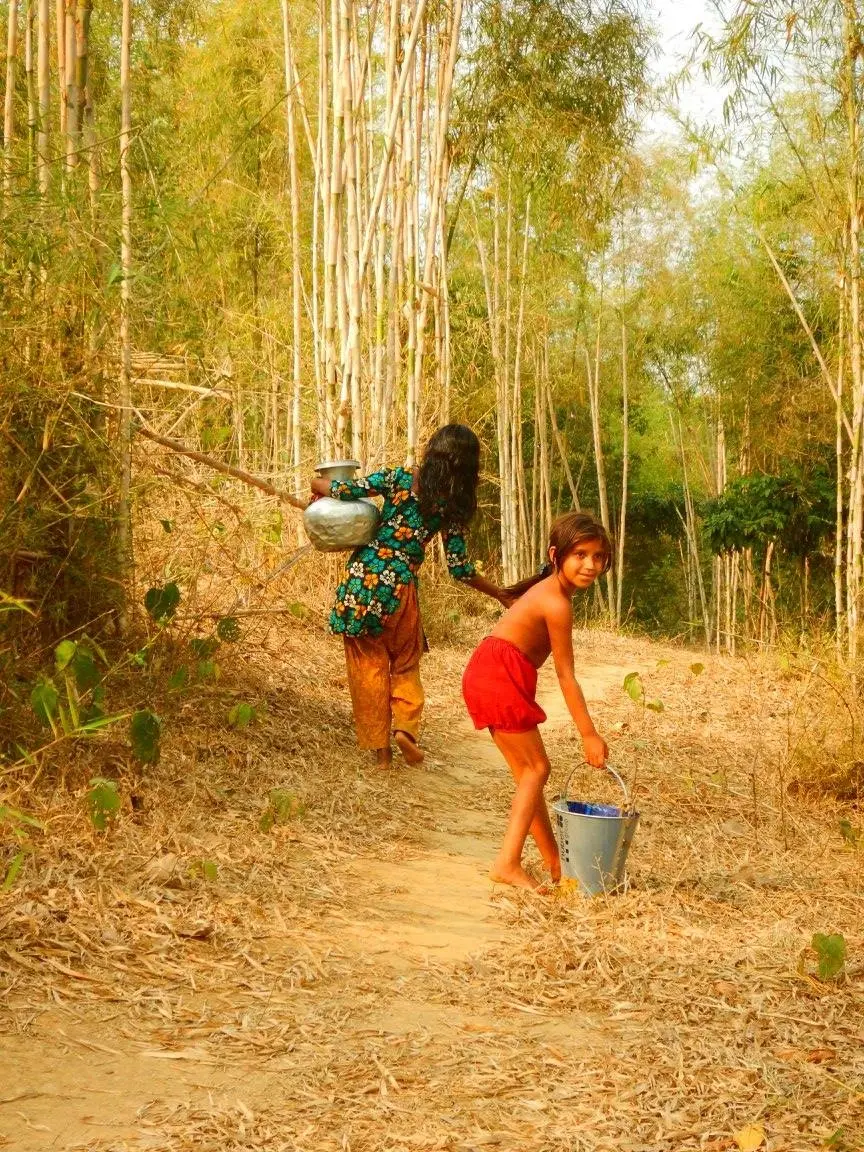
People are simple and kind, sociable and warm-hearted. Not many foreigners visit Bangladesh. Most people may never see a white foreigner in their entire lifetime - perhaps only one or two. So do not be surprised if they want to walk alongside you, talk to you, or take a photo together.
- Interview by: Ognjen Tešić / HEDONIST
Related articles

Milena and Nenad in the Philippines: From the Concrete Jungle to Paradise Islands
Five years of life in Asia - two in Bangladesh, two in the Philippines, and one in Sri Lanka - shaped the travel story of Milena and Nenad from Bijeljina, whose journey to the Far East began with Nenad’s job. For HEDONIST, they turned their impressions into a personal guide through countries that rarely become a traveler’s first choice, accompanied by photographs that best capture everyday life far from European habits.
Milena and Nenad in Sri Lanka: From Ancient Cities to Ocean Waves
Five years of life in Asia - two in Bangladesh, two in the Philippines, and one in Sri Lanka - shaped the travel story of Milena and Nenad from Bijeljina, whose journey to the Far East began with Nenad’s job. For HEDONIST, they turned their impressions into a personal guide through countries that rarely become a traveler’s first choice, accompanied by photographs that best capture everyday life far from European habits.