

Cola Wars (Part 1): How Coca-Cola Won the Greatest Marketing Battle of All Time

![[object Object]](https://api.hedonistmagazine.net/storage/images/2026/07/674030c8-dc4c-41e9-8814-8a84d28e2399.webp)
Few corporate rivalries have influenced modern marketing as profoundly as the battle between Coca-Cola and Pepsi. For more than a century, the two soft drink giants have fought a war unlike any other - not with armies or weapons, but with billion-dollar advertising campaigns, celebrity endorsements, supermarket shelves, and, ultimately, consumers' taste buds.
On one side stood Coca-Cola, a brand that evolved into a symbol of the American way of life. On the other hand was Pepsi, the perennial challenger determined to prove that even the world's most iconic beverage could be dethroned.
Their conflict became so legendary that it earned its own name: the Cola Wars. Over the decades, billions of dollars were poured into advertising, some of the world's biggest celebrities became brand ambassadors, and bold business decisions were made that continue to be studied in leading business schools today.
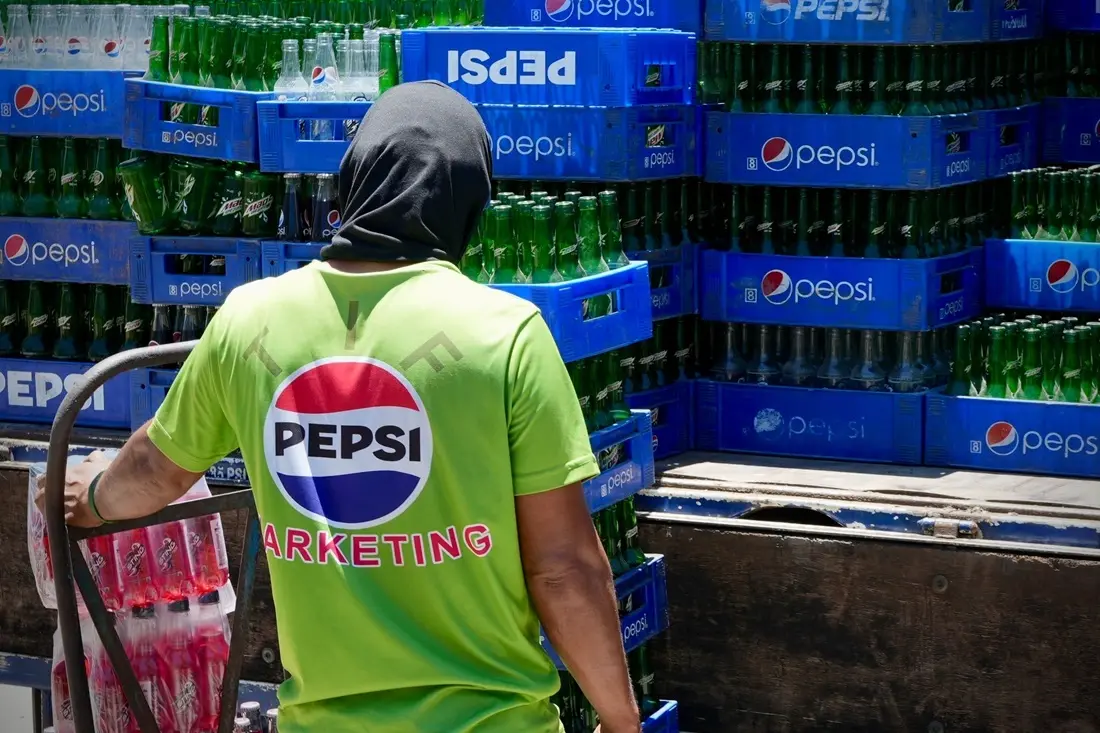
The greatest irony of the story is that there was a time when Pepsi genuinely appeared to be winning. Throughout the 1970s and 1980s, blind taste tests consistently favored Pepsi. Younger consumers embraced it as the cooler, more modern choice, while its advertising campaigns became defining moments of popular culture.
Yet only a few decades later, Coca-Cola had not only preserved its position at the top of the global soft drink market but had strengthened it even further. How did a company responsible for one of the biggest marketing blunders in history emerge even stronger? To answer that question, we have to go back to the late nineteenth century, long before television commercials, celebrity endorsements, and billion-dollar marketing budgets.
Two Pharmacists Who Changed the World
In the late 1800s, carbonated drinks were not marketed as refreshments. They were sold in pharmacies as medicinal tonics believed to relieve headaches, improve digestion, and restore energy. Their recipes often included herbal extracts, stimulants, and ingredients unimaginable in a modern soft drink.
In 1886, Atlanta pharmacist John Stith Pemberton began experimenting with a syrup intended to ease headaches, fatigue, and digestive discomfort. Mixed with carbonated water, the syrup produced a refreshing beverage unlike anything available at the time.
Pemberton created the drink, but it was his bookkeeper, Frank Mason Robinson, who gave it a name - and an identity. Convinced that two capital "C"s would look striking in print, Robinson coined the name Coca-Cola and personally designed the elegant Spencerian script logo that remains one of the world's most recognizable trademarks nearly 140 years later.
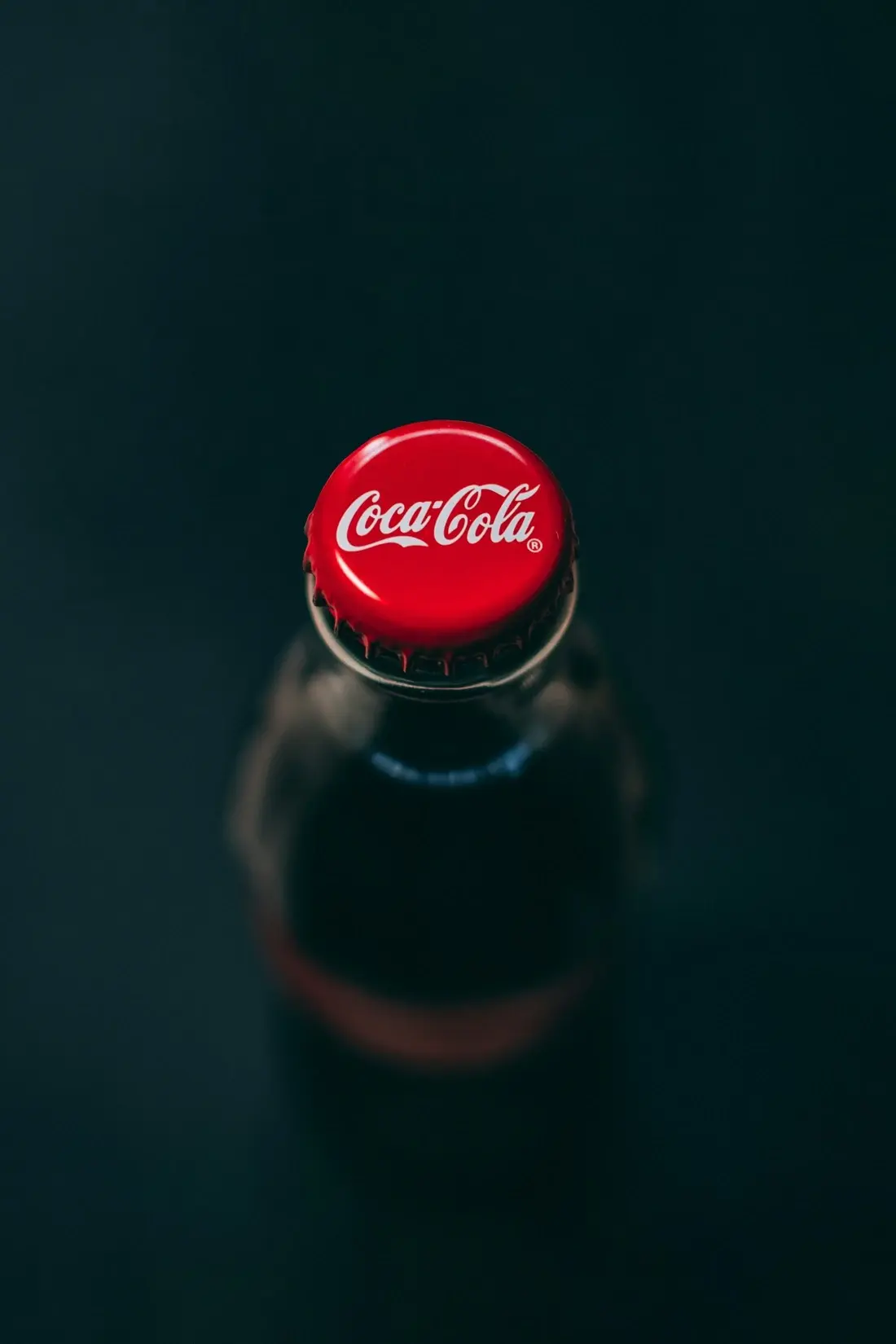
The first servings were sold for just five cents at Jacobs' Pharmacy in downtown Atlanta. Sales were modest, with only a handful of glasses sold each day. No one could have imagined that this modest pharmacy drink would eventually become the most recognized consumer brand on Earth.
Cocaine, Kola Nuts, and the World's Best-Kept Recipe
One of the reasons Coca-Cola occupies such a unique place in business history is its original formula.
The earliest version contained extracts from coca leaves, the source of cocaine, as well as caffeine-rich kola nuts. At the time, cocaine was neither illegal nor socially unacceptable. It was commonly used in medicines and widely believed to possess therapeutic properties.
By the beginning of the twentieth century, Coca-Cola had completely removed the psychoactive component from its formula while retaining the name that reflected its original ingredients.
Another mystery has surrounded the brand for generations: the legendary secret formula known as Merchandise 7X. Although countless books, journalists, and enthusiasts have claimed to uncover its contents, Coca-Cola insists that the complete recipe remains known to only a handful of people.
Whether that secrecy is genuine or simply brilliant marketing hardly matters anymore. The mystery itself has become part of the brand's mythology.
The Entrepreneur Who Built an Empire
Had Coca-Cola remained merely an interesting pharmaceutical curiosity, it would likely be remembered today only by historians.
Its future changed dramatically when entrepreneur Asa Griggs Candler acquired the rights to the drink in the late nineteenth century. More importantly, Candler understood something that many businesses still struggle to grasp today: consumers rarely buy a product alone - they buy a brand.
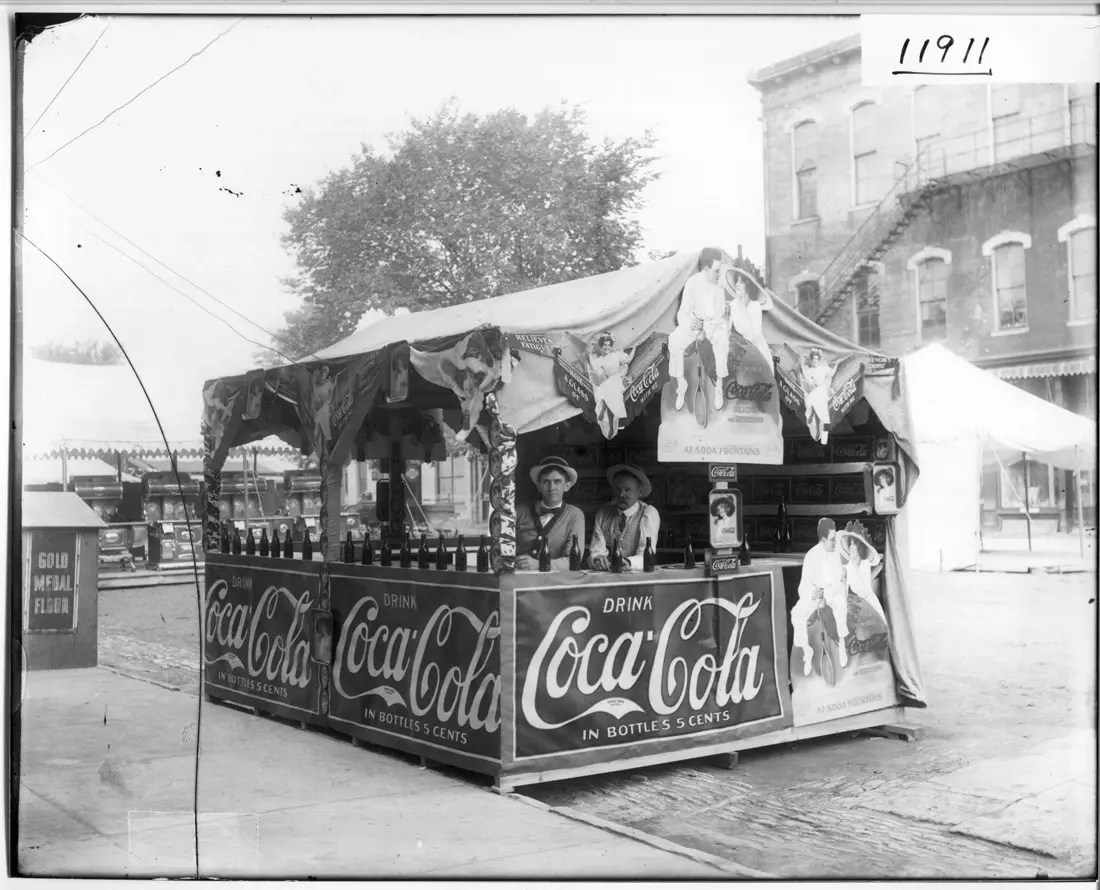
Long before marketing became an academic discipline, Candler pioneered techniques that are now standard practice. He distributed free coupons, produced branded calendars, clocks, serving trays, mirrors, wall signs, and virtually every promotional item imaginable, ensuring that the Coca-Cola logo became impossible to ignore.
Even more importantly, he created a habit.
People did not simply try Coca-Cola; they developed a routine of returning to it. That emotional familiarity would become one of the company's most valuable assets and, decades later, one of the key reasons competitors struggled to replace it.
Pepsi Was Born from Failure
While Coca-Cola was steadily expanding across the United States, another pharmacist several hundred miles away was working on a beverage of his own.
In 1893, Caleb Bradham, the owner of a pharmacy in North Carolina, introduced a drink known simply as Brad's Drink. Like Coca-Cola, it was promoted primarily as a digestive aid.
Five years later, Bradham renamed it Pepsi-Cola, drawing inspiration from the word dyspepsia, the medical term for indigestion.
Unlike Coca-Cola, however, Pepsi's early years were anything but smooth.
Following the First World War, sugar prices soared. Expecting them to rise even further, Bradham invested heavily in massive sugar reserves at record prices.
His gamble failed spectacularly.
The sugar market collapsed almost overnight, prices plummeted, and Bradham was forced into bankruptcy. Pepsi filed for bankruptcy for the first time.
Remarkably, it would not be the last.
The Brand That Refused to Die
Over the following decades, Pepsi changed ownership several times and repeatedly found itself facing financial collapse. Many industry observers believed the company would eventually disappear.
Instead, it survived thanks to a surprisingly simple idea.
While competitors continued selling standard-sized bottles for five cents, Pepsi introduced bottles containing nearly twice as much soda for the same price.
During the Great Depression, value mattered more than brand loyalty. Millions of Americans suddenly discovered they could get almost twice as much soft drink without spending an extra cent.
Pepsi reinforced that message with one of the earliest advertising jingles to become a nationwide phenomenon. The catchy "Nickel, Nickel" campaign repeated a promise that every consumer could understand: more for the same money.
For the first time, Coca-Cola faced a challenger capable of appealing not only to consumers' taste buds but also to their wallets.
It was the first significant blow in what would later become the greatest marketing rivalry in history - but it was only the beginning.
How Coca-Cola Became a Symbol of America
Coca-Cola's greatest strength was never just its taste. From an early stage, the company understood that people weren't simply buying a soft drink - they were buying a feeling.
In the early 20th century, Coca-Cola invested heavily in its visual identity. That effort gave rise to the iconic contour glass bottle, designed to be instantly recognizable even in the dark or if shattered into pieces.
It became one of the first globally recognizable packages in the history of industrial design. But the company's defining moment came during World War II.
Company president Robert Woodruff made what would later be regarded as one of the most consequential business decisions of the 20th century: every American serviceman, wherever he was stationed, should be able to buy a bottle of Coca-Cola for five cents. To make that possible, the company built bottling plants across Europe, Asia, and the Pacific, following the advance of U.S. forces.
When the war ended, those plants didn't close. They stayed in operation, giving Coca-Cola, almost overnight, a global distribution network that no competitor could hope to match.
The Drink That Became Part of the American Dream
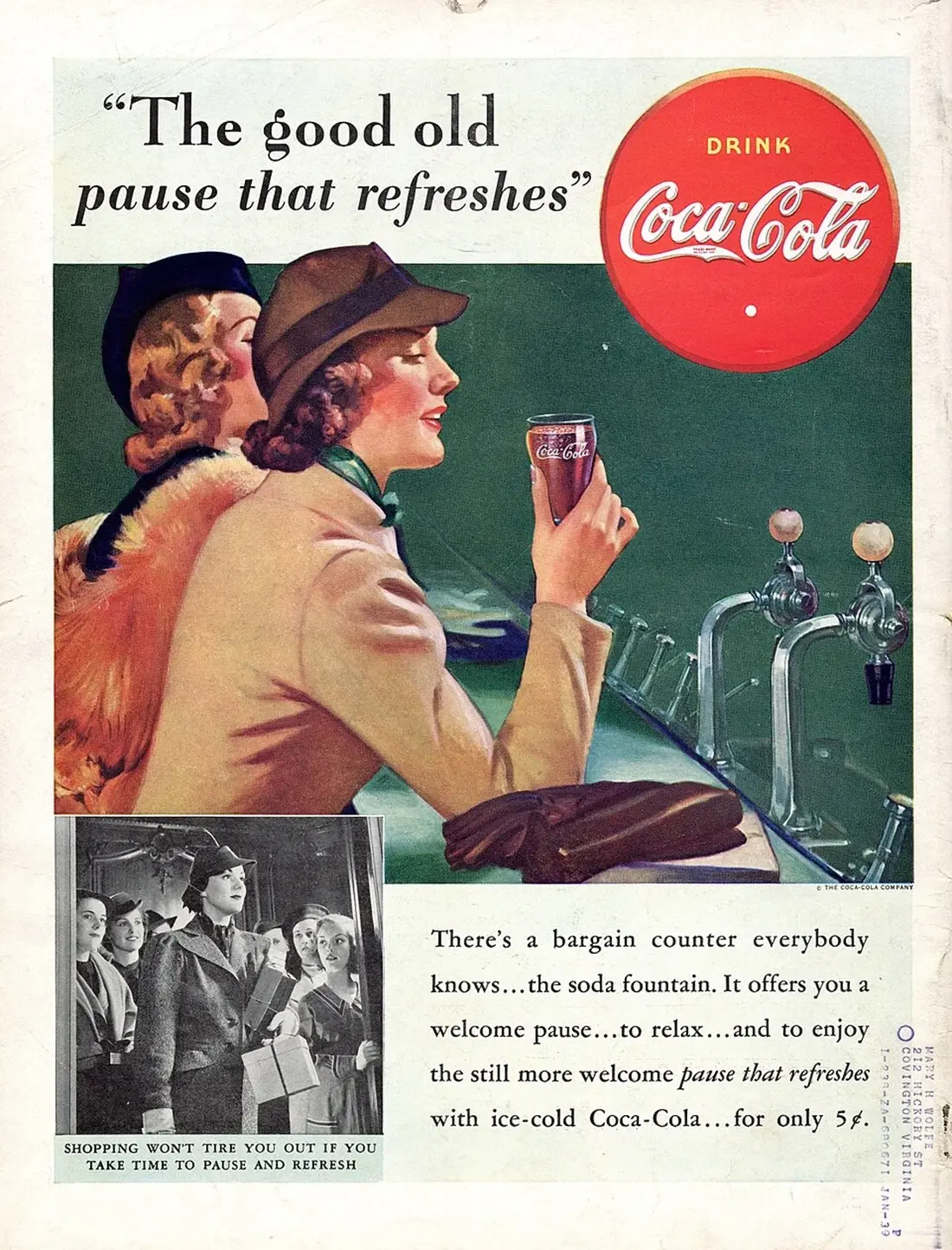
The postwar decades marked Coca-Cola's golden age. Its advertising is no longer focused on flavor but on family, summer vacations, friendship, first loves, Christmas, and the American Dream.
For decades, the company carefully cultivated an emotional connection with consumers. One of its most enduring cultural contributions was helping shape the modern image of Santa Claus. While Coca-Cola did not invent the character, its advertising campaigns of the 1930s, featuring a warm, cheerful Santa dressed in a red-and-white suit, cemented that version as the one recognized around the world.
Coca-Cola had become far more than a carbonated beverage. It had evolved into a cultural icon. And that, more than anything else, would explain why Pepsi, despite scoring numerous victories over the years, could never quite claim the top spot.
While Coca-Cola Built a Legacy, Pepsi Waited for Its Moment
By the 1960s, the gap between the two brands seemed almost impossible to close. Coca-Cola had become virtually synonymous with soft drinks. In many countries, its name had entered everyday language.
Pepsi was a successful challenger, but it remained well behind the market leader. Then, at Pepsi's headquarters, an idea emerged that would ignite the greatest marketing rivalry in business history: if Coca-Cola couldn't be beaten by playing its game, then the game itself had to change.
In the next installment, discover how that strategy led to the creation of the Pepsi Generation campaign, the legendary Pepsi Challenge, the signing of Michael Jackson, and the chain of events that pushed Coca-Cola into one of the most infamous decisions in corporate history - the launch of New Coke.