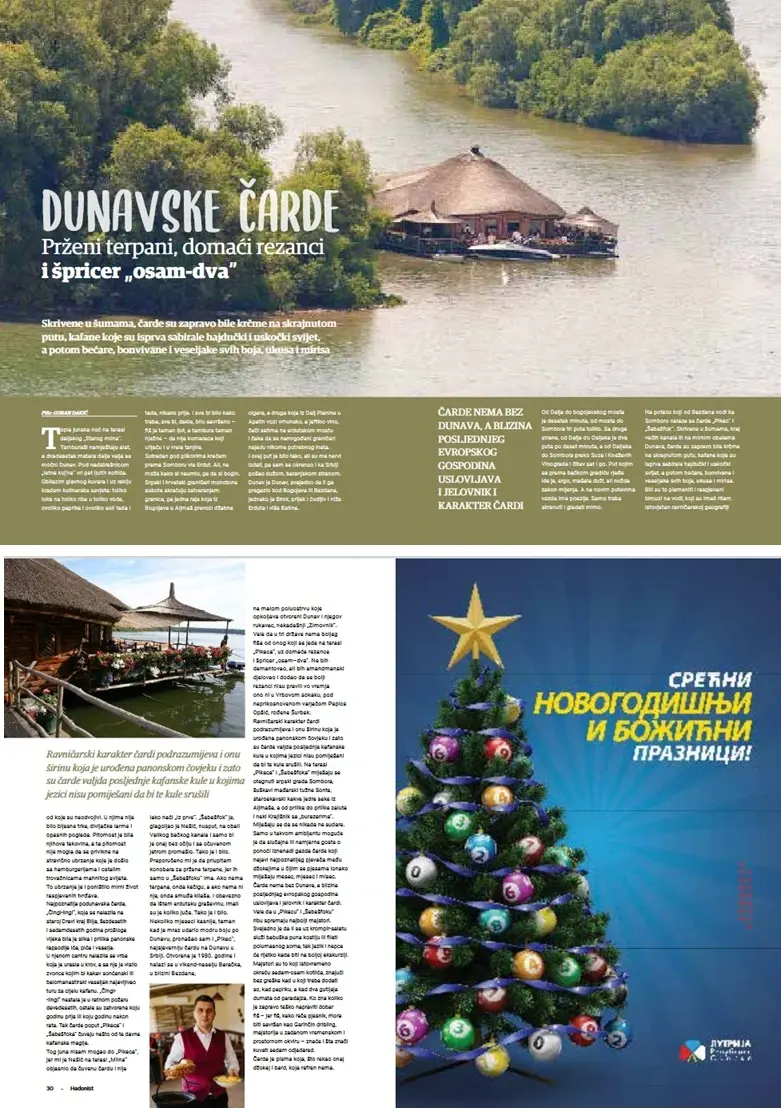
Danube Čardas: Fried Terpan Fish, Homemade Noodles and an “Eight-Two” Spritzer
![[object Object]](https://api.hedonistmagazine.net/storage/images/2026/05/6df50fb2-1e40-4d52-919e-939f975537a2.webp)
A warm June night on the terrace of the “Stari mlin” in Dalj. Tamburitza musicians tune their instruments while, barely twenty meters away, the mighty Danube rolls past in the dark. Beneath the roof of the summer kitchen, five fiery cauldrons boil at once. I circle the head chef and, over a glass of rakija, steal a few culinary secrets: this much onion for this much fish in this much water, this much paprika and this much salt at precisely the right moment - never earlier.
And everything would have been exactly as it should have been, everything would have been perfect - the fish stew just spicy enough, the tamburitzas soft enough - if not for the mosquitoes diving straight into the steaming bowls.
The next morning, covered in bites and blisters, I set off toward Sombor via Erdut. But things rarely go the way one plans. Serbian and Croatian border guards shortened their monotonous Saturday by closing the crossing, leaving one group smuggling cheap cigarettes from Bogojevo to Aljmaš and another transporting excellent yet inexpensive wine from Dalj Planina to Apatin stranded for hours on the Erdut bridge, waiting for the sour-faced officials to satisfy their pointless stubbornness. That day was no different. Eventually, my patience gave out, so I turned back and headed toward Serbia by the longer route through Baranja.
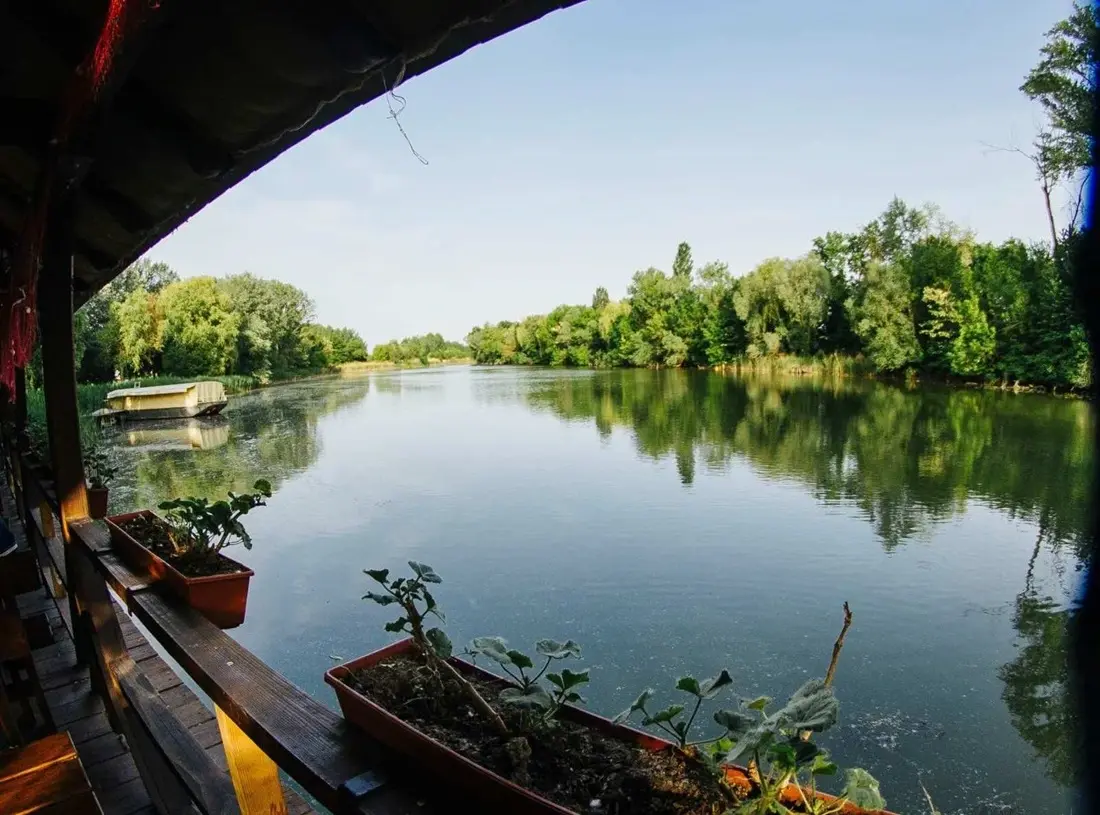
The Danube is the Danube, whether you cross it near Bogojevo or Bezdan - equally wide, temperamental, and untamed below Erdut as above Batina.
From Dalj to the bridge at Bogojevo takes barely ten minutes, and from there to Sombor another thirty. But from Dalj to Osijek is twenty minutes, and from Osijek to Sombor, through Suza and Kneževi Vinogradi, is nearly an hour and a half. The road less travelled toward the Bačka town is, therefore, much longer - but necessity changes the rules. And there is always poetry on unfamiliar roads. One only has to turn aside and look beyond the obvious.
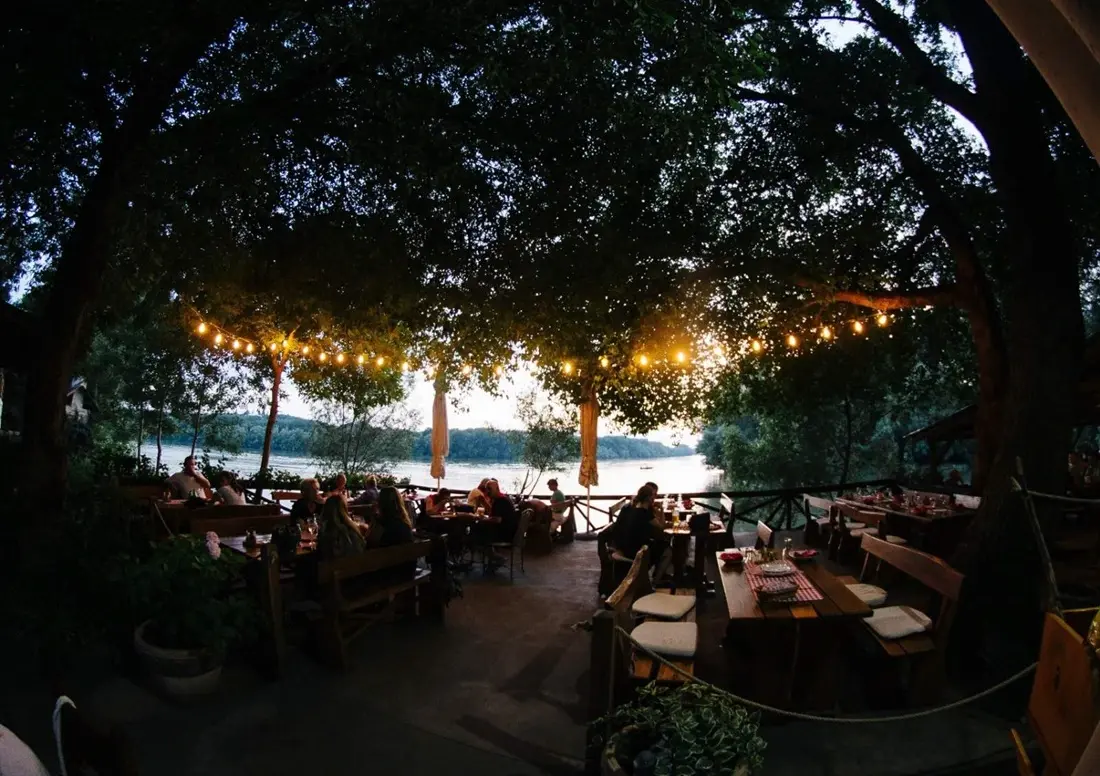
Along the stretch between Bezdan and Sombor lie the čardas “Pikec” and “Šebešfok.” Hidden in forests beside quiet canals or resting along calm Danube shores, čardas were once roadside taverns gathering hajduks and river outlaws, later becoming gathering places for bon vivants, merrymakers, and wanderers of every kind. These were noble and musical waterside inns whose rhythm perfectly matched the flatlands surrounding them. There was no frantic rush there, no savage noise or dangerous glances. Gentleness was their inheritance - and that gentleness could never adapt to the violent acceleration brought by fast-food chains and the madness of the modern world. That acceleration ultimately erased the slow life of these singing fortresses.
The most famous Danube čarda, “Čingi-lingi,” once stood on the old Drava near Bilje. During the 1960s and 1970s, it embodied the full rhapsody of the Pannonian plain - food, drink, and music. At its centre grew a willow tree piercing through the roof itself, and from one of its branches hung a bell rung by some cheerful soul from Sonta or Beli Manastir to announce another round for the entire tavern. “Čingi-lingi” disappeared in the fires of the wars of the 1990s, while most of the others closed shortly before or after the conflict. Only places such as “Pikec” and “Šebešfok” still preserve fragments of that long-lost tavern magic.
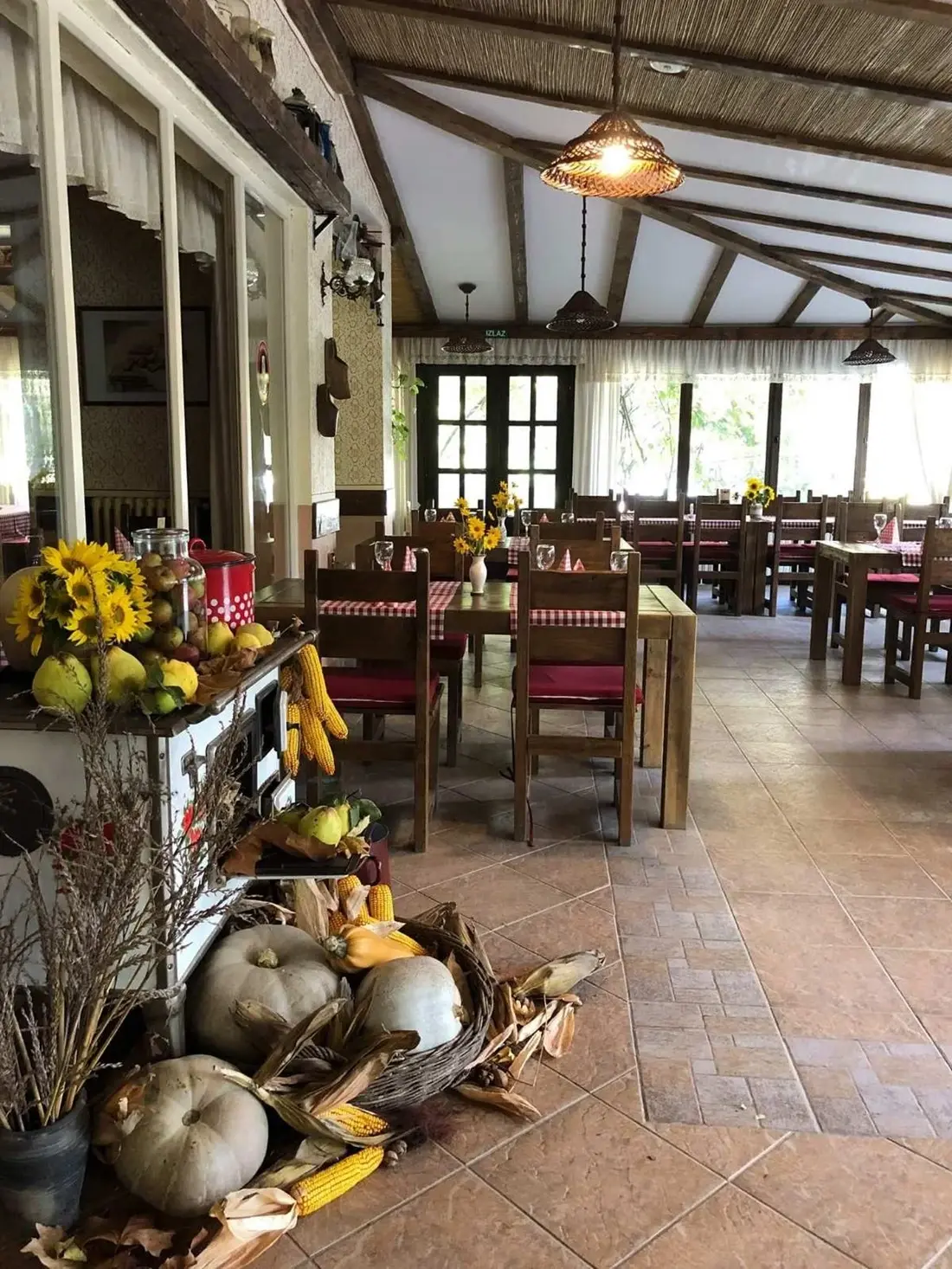
That June, I could not reach “Pikec,” because Nešić had explained to me over drinks on the terrace of the “Mlin” that the famous čarda was not easy to find “on the first try.” “Šebešfok,” he mumbled, meanwhile, stood along the bank of the Great Bačka Canal and could only be missed by a blind man with an undamaged liver. He was right.
I was advised to ask the waiter for fried terpan fish, because only “Šebešfok” served them properly. If there were no terpans, then sterlet; if no sterlet, then at least a kilogram-sized pike perch. And I was told to insist on Graševina wine from Erdut - they had it just the other day. And indeed, they did.
Several months later, just as frost painted the Danube in shades of blue, I finally found “Pikec,” the northernmost čarda on the Danube in Serbia. Opened in 1950, it lies in the weekend settlement of Baračka near Bezdan, on a small peninsula embraced by the open Danube and its branch once known as the “Winter Harbour.” They say there is no better fish stew in all three countries than the one served on the terrace of “Pikec,” accompanied by homemade noodles and an “eight-two” spritzer. I would not argue with that claim, though I would add one amendment: not even in the old days of Vrbov Sokak, under the unrivalled wooden spoon of Pepica Opšić, née Šurbek, were better noodles ever made.
There can be no čarda without the Danube, and the closeness of Europe’s last true gentleman shapes both the menu and the character of these riverside taverns.
The flatland spirit of the čardas also carries the openness so natural to the Pannonian people, which is perhaps why these taverns remain the last places where languages blend without conflict. On the terraces of “Pikec” and “Šebešfok,” one hears the drawn-out Serbian of Sombor, the rustling Hungarian of melancholy Sonta, the old Ekavian speech of the sturdy women from Aljmaš, and occasionally some Krajina man arriving with his “brothers.” The languages mix without ever colliding.
Only in such an atmosphere can midnight guests be surprised by the owner of the čarda announcing “the most famous singer among jockeys,” whose songs already blend mesec, mjesec, and misec into one.
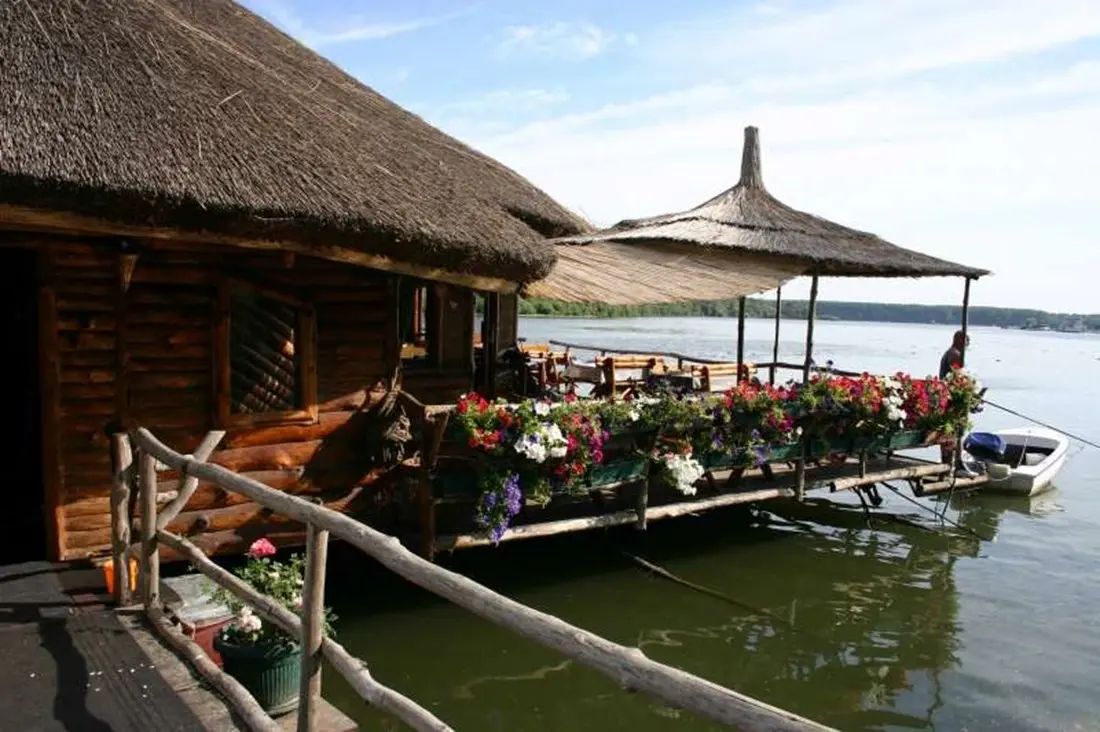
A čarda cannot exist without the Danube, and the presence of Europe’s last true gentleman shapes both the menu and the character of these taverns. They say the finest fish masters cook at “Pikec” and “Šebešfok.” Whether it is a bony crucian carp served with potato salad or fillets of half-fat catfish, the tongue and palate rarely embark on a finer journey.
These are masters capable of tending seven or eight cauldrons at once, instinctively knowing when to add salt, when paprika, and when two sips of thick tomato sauce. Anyone who understands how difficult it truly is to make a perfect fish stew - because fiš, as the poet once said, must be as flawless as Garinča’s dribble, a masterpiece created within the strict limits of time and space - will understand what it means to cook seven kettles simultaneously.
A čarda is a song which, as that jockey and bard once said, has no refrain.
- Written by Goran Dakić / HEDONIST
- Originally published in HEDONIST Magazine Issue 03, 2021