

How Zagor and Tex Outlived Their Era: Dinosaurs That Never Had to Evolve

![[object Object]](https://api.hedonistmagazine.net/storage/images/2026/09/b0812fa8-1164-4f22-a7cc-baa06736a9d8.webp)
When Italian writer Gian Luigi Bonelli was coming up with a name for his new cowboy in 1948, inspired by the honest, open features of actor Gary Cooper, he first chose “Tex Killer.”
His wife, who also published the project, felt the name was too violent for post-war Italian audiences. After a brief discussion, “Killer” became “Willer” - a one-letter change that, quite by accident, created a name that would still appear on the cover of one of the world’s longest-running comic series seventy-five years later.
It is the kind of detail that tends to disappear when the story of Zagor and Tex is reduced to mere nostalgia. The reality is that, alongside Superman and Batman, these two characters belong to a remarkably small group of comic-book heroes whose stories have continued to be published uninterrupted for decades - more than 780 regular issues for Tex, and more than 730 for Zagor. No other European comic can quite match that kind of longevity, and sentimentality alone cannot explain it.
The Supporting Character Who Swallowed the Lead
When Bonelli and artist Aurelio Galleppini, better known as Galep, created Tex in 1948, they intended him to be a supporting character. The real star was supposed to be Occhio Cupo, a dark swordsman in the tradition of Alexandre Dumas.
Readers, however, had a very different idea from the very first issue. Occhio Cupo disappeared after just a handful of episodes, while the Wild West ranger became so popular that he grew into a family business passed from father to son. When Bonelli died in 2001 at the age of ninety-two, his son Sergio Bonelli had already been running the publishing house that would eventually bear his name for decades.
It was that same Sergio Bonelli, just thirteen years later and writing under the pseudonym Guido Nolitta, who created Zagor together with artist Gallieno Ferri - a character conceived from the beginning to push beyond the boundaries of a single genre.
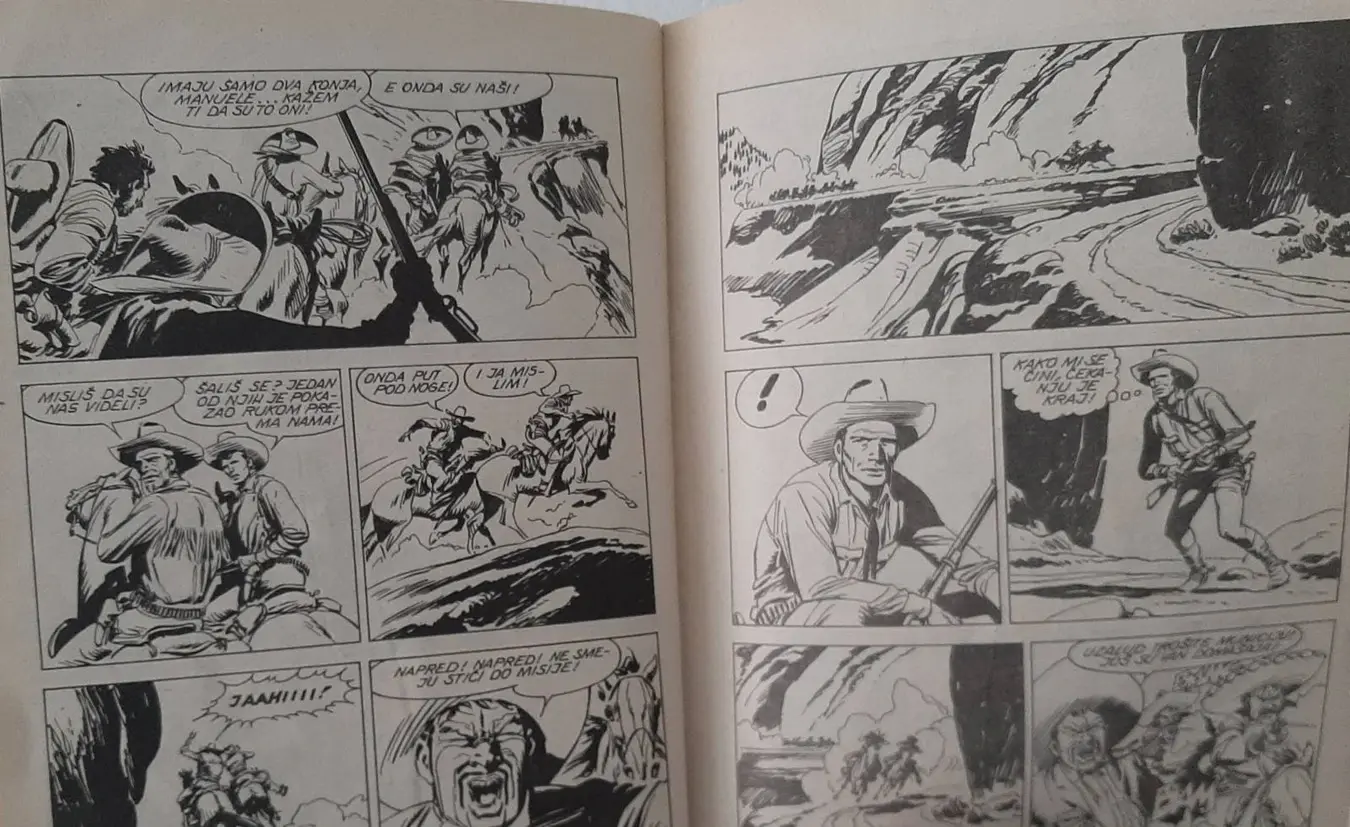
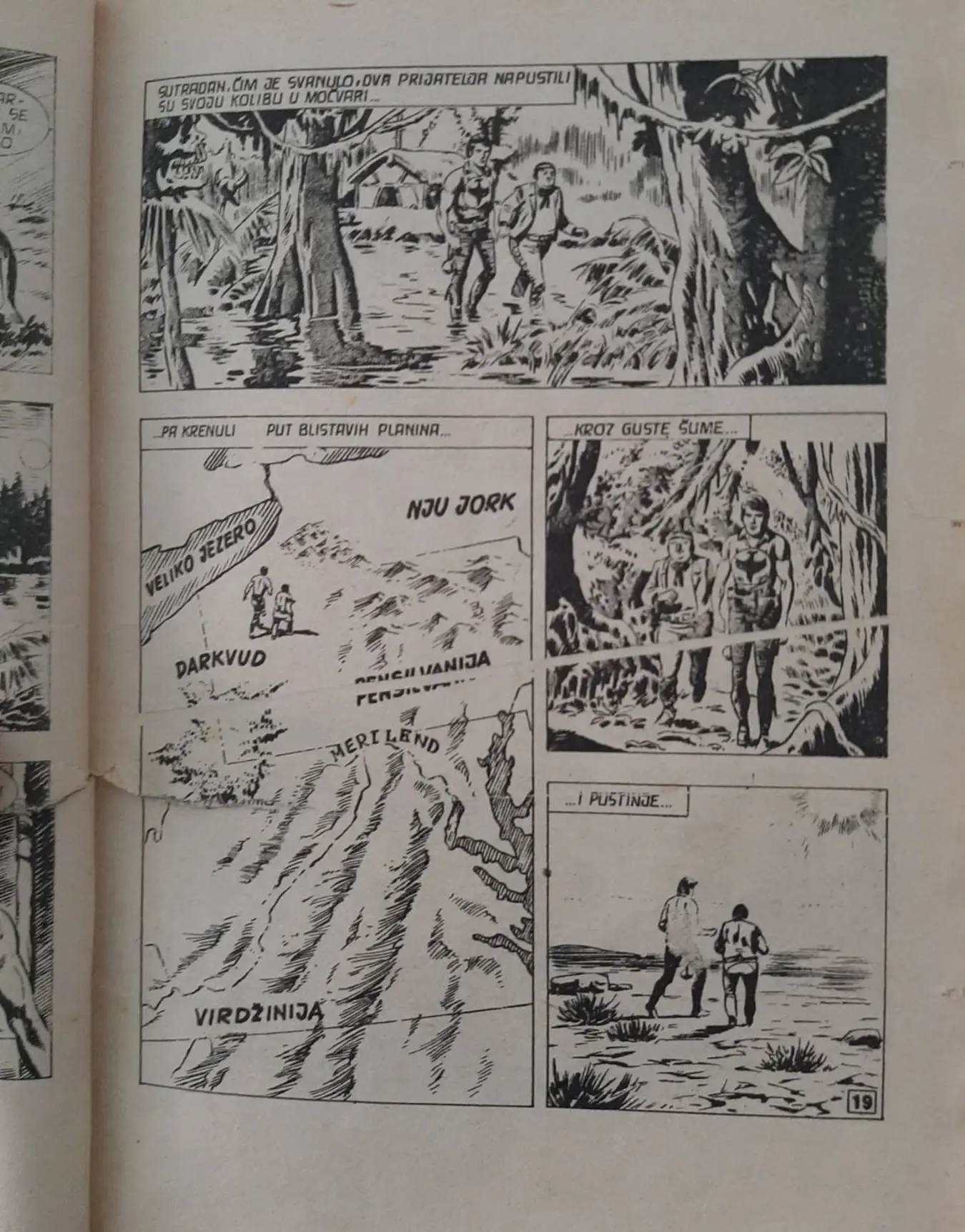
Darkwood, the fictional forest somewhere between Pennsylvania and Michigan, became a world where classic Western motifs could collide with werewolves, aliens, or characters inspired by Cervantes and Tolkien. Ferri’s visual interpretation of Zagor remained remarkably consistent for half a century until he died in 2016. At his funeral, fans brought a wreath shaped like a stone axe - Zagor’s unmistakable symbol.
A Password for the Real Fans
For those who grew up with these comics across the former Yugoslavia, Zagor and Tex were never simply fictional heroes. They became part of the language through which generations of readers recognized one another.
Chico’s full name - Felipe Cayetano Lopez Martinez y Gonzales - functioned for decades as an unofficial password among readers: if you knew it by heart, you were a real fan.
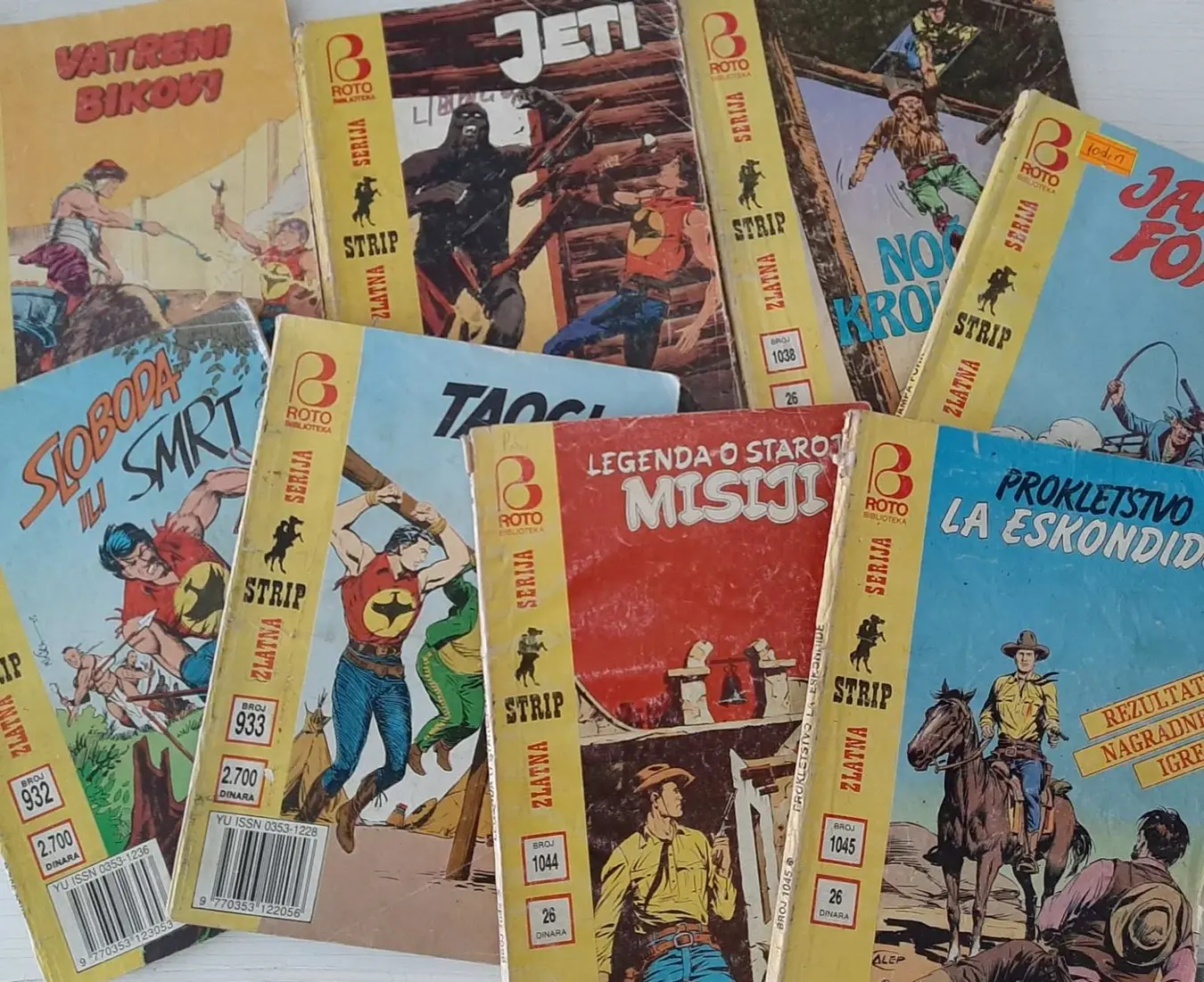
A similar obsession with detail surrounded Tex, whose popularity, according to international sources, became particularly strong in Scandinavia, Brazil, Greece and Turkey - and across the Balkans, where both Tex and Zagor reached readers through Zlatna serija and Lunov Magnus Strip, the legendary comic-book editions published by Dnevnik.
These comics were not special editions carefully selected in a bookshop. They were bought at newsstands, passed from hand to hand among entire groups of children, and treasured for years because nobody knew when a particular issue might appear on a kiosk again.
That publishing culture created a far broader audience for Italian comics across the region than one might expect, considering the thousands of kilometres separating Darkwood from Belgrade, Sarajevo or Zagreb.
Why the Formula Still Works
The answer to why these two characters survived is not simply nostalgia. Nostalgia may bring an old comic back onto the shelf, but it is hardly enough to sustain a monthly series for six or seven decades.
With Tex and Zagor, something more subtle is at work: the simplicity of the central concept, solid enough for readers to know exactly what kind of hero they are meeting when they open a new issue, yet flexible enough to allow each story to move in an entirely different genre direction.
Then there is the question of continuity.
Unlike many contemporary franchises, which often require audiences to know decades of previous stories before a new instalment can fully make sense, a reader can pick up almost any issue of Tex or Zagor and understand everything necessary to follow that particular story.
And finally, there is craftsmanship. The Bonelli publishing model, built around carefully developed scripts and consistent storytelling, was never dependent on whatever happened to be fashionable at the time. That gave it something increasingly rare in popular culture: the ability to survive several major shifts in audience taste without having to reinvent itself.
The Fate They Managed to Avoid
Contemporary popular culture is almost obsessed with finding ways to make old characters feel new - new origins, new costumes, radically different versions of familiar stories.
Zagor and Tex have largely escaped that fate.
Their fundamental identities have remained almost untouched through successive generations of writers, artists and readers. At the same time, everything around them - the format, the publishing industry and the way audiences consume entertainment - has changed dramatically.
That is why it is still perfectly natural for a father and son, whose tastes in film or music may have almost nothing in common, to talk about the same Zagor story. One may remember a copy bought from a newsstand forty years ago; the other may be reading an episode published this month.
Between those two points lies more than seventy years of comic-book history - and a character who almost ended up being named after a killer, but instead became one of the rare heroes in the world who never had to grow younger to stay alive.
Related articles
When Comics Smelled Like Adventure: Childhood with Zlatna Serija
Some childhoods are remembered for games in the yard, first bicycles, or long summer evenings. Others are remembered for their thin, colorful comic book issues, which smelled of fresh printing ink and promised adventure on every page.
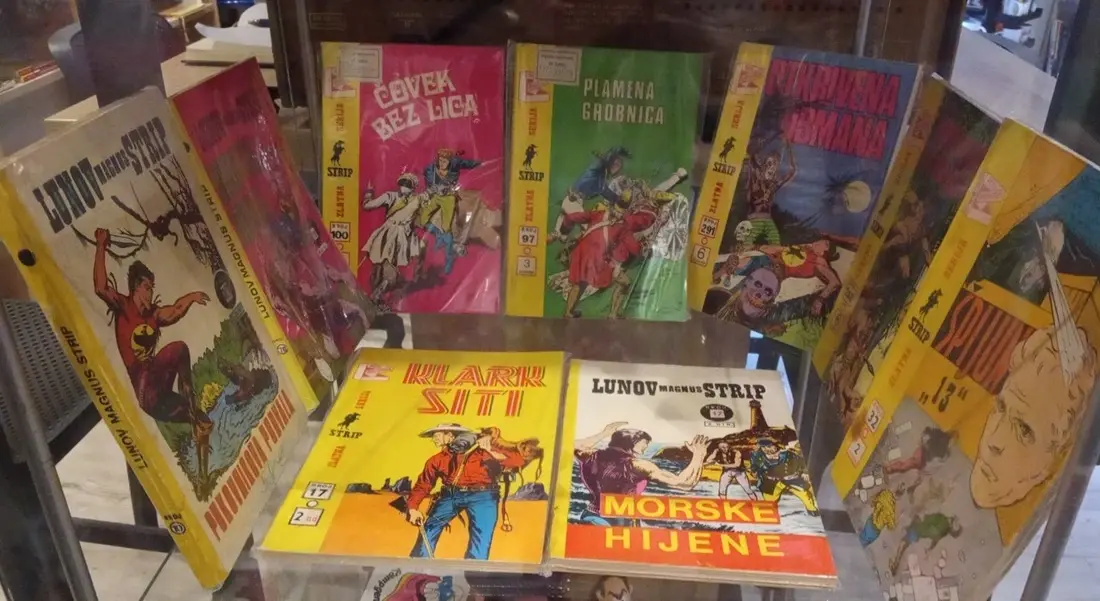
Banja Luka Comic Shop: A Reminder of Childhood
Mister No is a New Yorker, a World War II veteran, and a pilot who, in the late 1950s, leaves everything behind to seek a different life in South America - settling in the Brazilian town of Manaus. He is a man running from the pressures of modern life, a charming drifter who skillfully avoids the trap of marriage. However, “Mister No” is also the name of a comic shop in Banja Luka, which was recently opened in the Nova Varoš neighborhood.
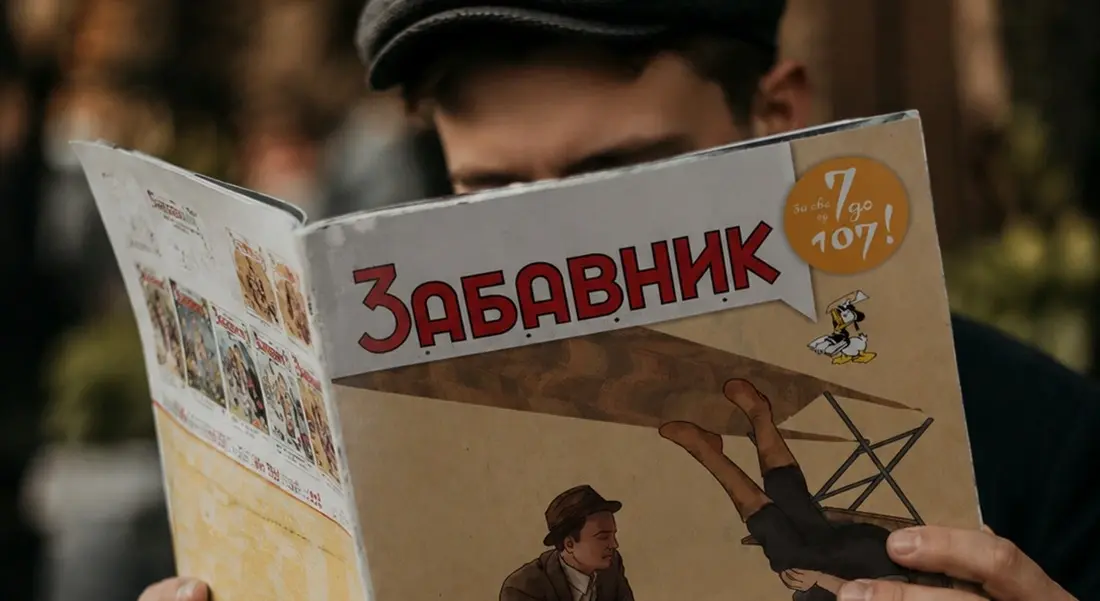
Politikin Zabavnik: The Magazine That Taught Generations to Be Curious
At a time when the answer to almost any question is only seconds away, one long-running weekly magazine continues to preserve something the digital world struggles to create: the feeling that a small discovery is waiting just beyond every page. Politikin Zabavnik has long been more than a magazine for children and adults.
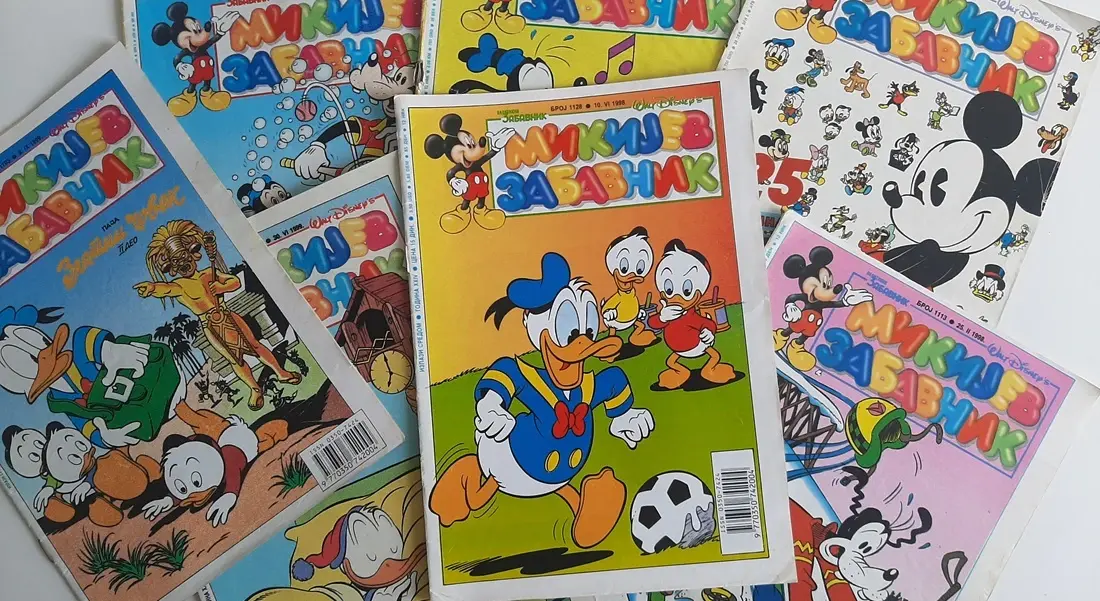
Mikijev zabavnik: Childhood Between the Pages
There are things that never truly disappear, even when they’ve long vanished from newsstands. They no longer carry the scent of fresh print, nor do they wait for us on shelves next to sweets and stickers, yet they live somewhere deeper – in memory. One of those things is Mikijev zabavnik, the magazine generations grew up with.