

The Train in the Shape of an Eight: The Story of the Railway That Beat Šargan

![[object Object]](https://api.hedonistmagazine.net/storage/images/2026/10/bac545a8-61df-4814-94bf-84e76a098458.webp)
Fifteen and a half kilometers of narrow-gauge track, 22 tunnels, and an eight-shaped loop. It once linked Belgrade with Sarajevo and the Adriatic; today it is a tourist train through Mokra Gora that many people still don’t know about.
It looks best from Krst station, and it seems like a mistake. Two tracks, one above the other, seem to head off in opposite directions. In fact, it is a single line. It is called the Šargan Eight, and it takes its name from the loop that gains 300 meters of altitude over 15.44 kilometers. The route winds and crosses over itself, so that in places the train passes through the same point twice, only at a different level.
It Began with a War
The railway was started by the Austrians in 1916, in a hurry, because Šargan lay just nine kilometers from the prewar border. Russian and Italian prisoners of war did the work. That year, in the tunnel beneath Budim hill, a ceiling collapsed and buried an entire shift: according to available accounts, between 150 and 200 men were killed. The Austrians halted construction, and the spot is still called Deveti Kilometar, the Ninth Kilometer, because that was how much track had been laid. The route in Markovo Polje cut a village cemetery in two, and it has remained that way ever since.
After the war, work resumed on March 1, 1921, in the new state, and that was when the eight was conceived. The first train reached Vardište on January 25, 1925. The project employed some 500 people from the surrounding area, and the villages thrived because everything from meat to timber could be sold. The line had 22 tunnels, five major bridges and the longest tunnel, named Aleksandar I, at 1,666 meters, then the longest on the narrow-gauge line between Belgrade and Sarajevo.
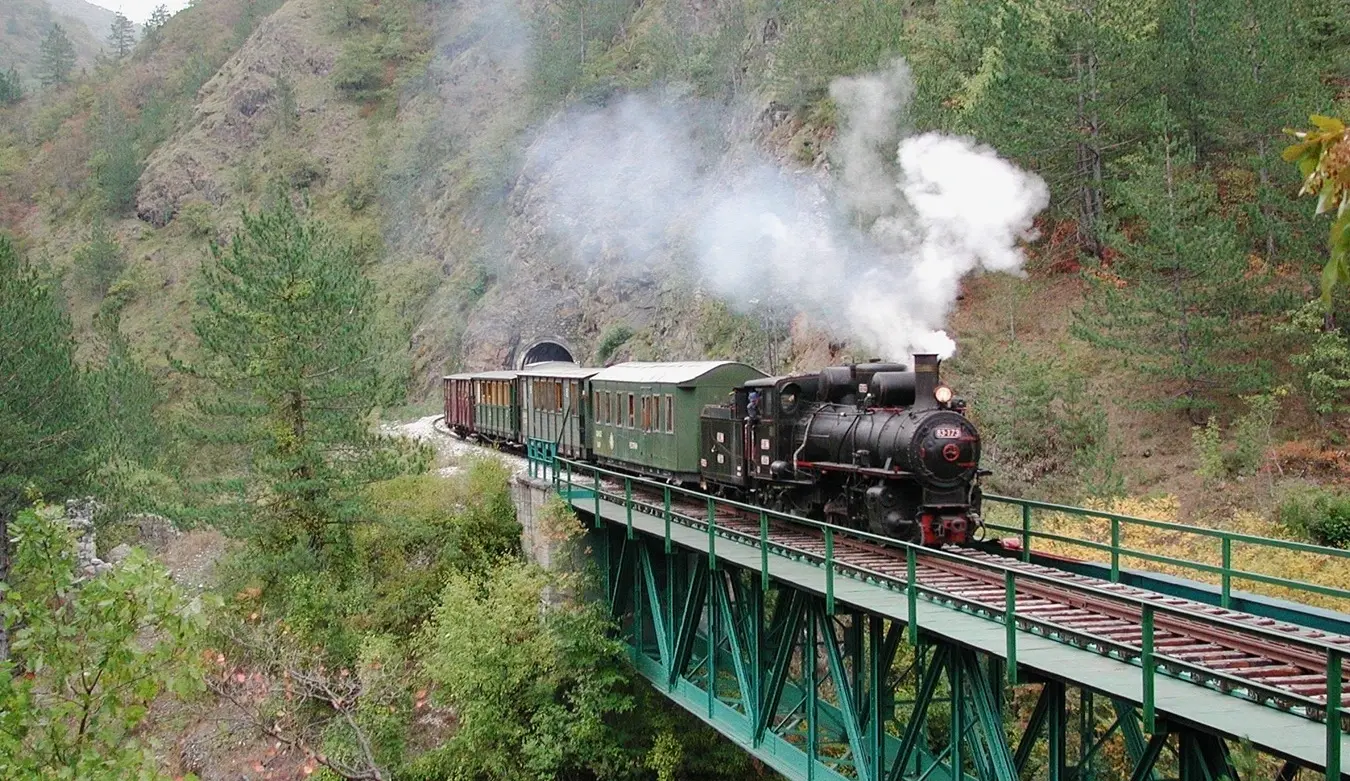
The railway ran for almost half a century. From 1925 to 1974, the train linked Belgrade with Sarajevo, Dubrovnik and Zelenika, and because the gauge is narrow (760 millimeters), the journey was slow, through tunnels and over bridges, in a constant smell of steam-engine smoke. The line was closed on February 28, 1974.
The Return
It all started with one society. The Mokra Gora Homeland Society was founded in 1994, and in 1997 and 1998 it organized campaigns to clear the route and the tunnels. In 1999, the state added the line to its restoration plan, and that same year the first train passed through. In 2001, after a ride on the restored train, Zoran Đinđić said, “This is Switzerland.” The line has been in full operation since September 1, 2003.
Emir Kusturica built Drvengrad nearby for the film Life Is a Miracle, and the Golubići station was part of the set. In 2021, Mokra Gora was named one of the best tourism villages in the world (UNWTO). In 2017, the Eight carried 75,000 passengers, 25,000 of them foreigners, and in 2019, a record 88,000.
What the Ride Is Like
The train is called Nostalgia, but everyone knows it as Ćira. It passes through 22 tunnels and over five bridges, and water seeps down the walls inside them. According to the newspaper Politika, there are 365 known springs along the route, which explains the name Mokra Gora, “Wet Mountain.” At the Šargan station, there is a restaurant carved into the rock. The Jatare station is notable for the fact that, as of 2022, not a single ticket had ever been sold there.
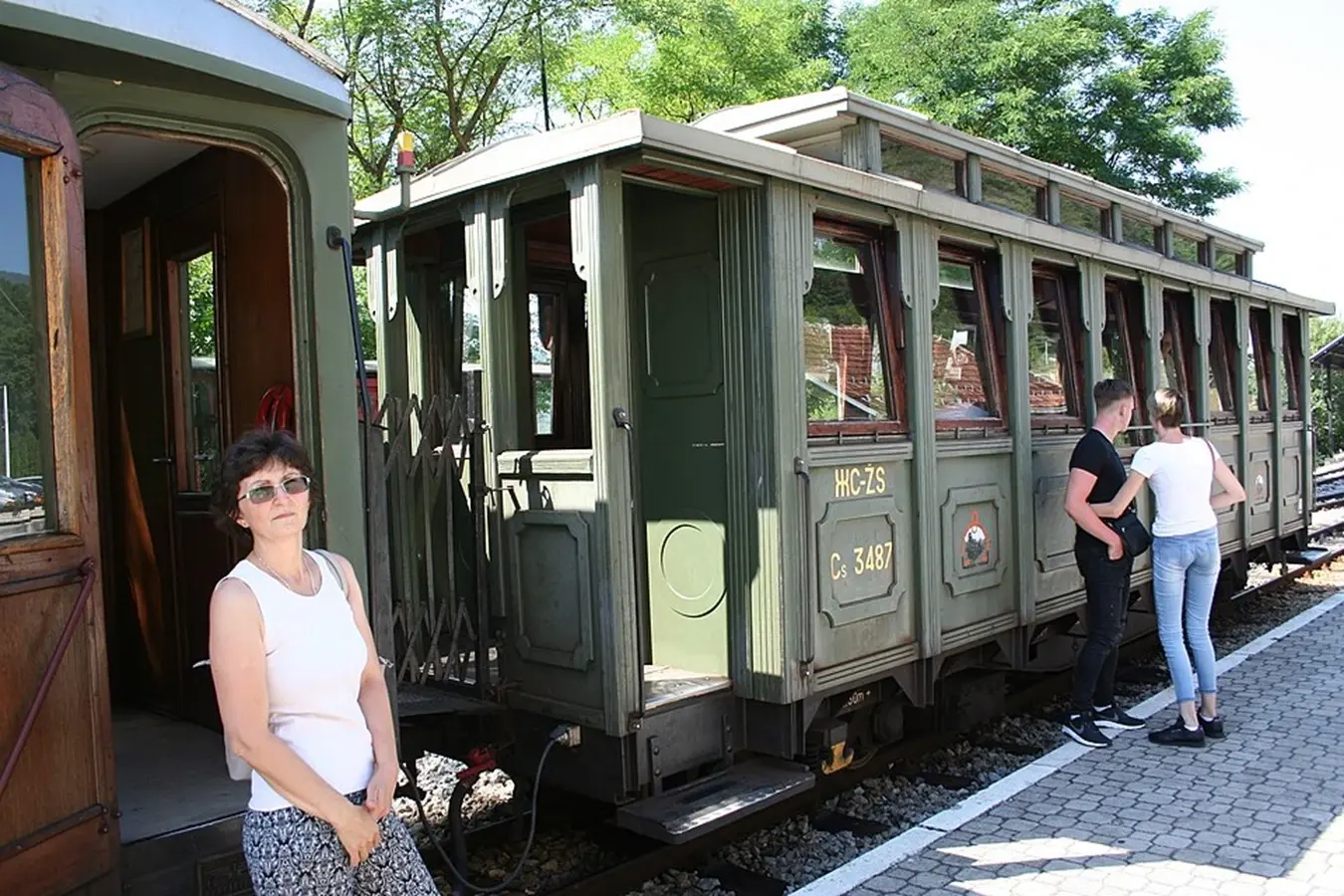
One thing is worth knowing in advance: the regular trains are pulled by a diesel locomotive. The steam locomotive, JŽ 83-173, runs only on request, as an option.
Practical Information
The summer season runs until the end of October. The train leaves Mokra Gora at 10:30 and 13:30, and from June 15 to the end of August also at 16:10. From November 1 to 15, it goes only as far as Jatare, at 11:45. An adult ticket costs 1,500 dinars (since February 1, 2026), and 750 for children over six; younger children ride free if they don’t take up a seat of their own. Tickets are sold at the box office in Mokra Gora or by phone at 031/800-003, and in advance up to a month ahead.
The line waited 29 years for someone to give it a train again. If you don’t make it this fall, it can wait one more spring.