

Clocks Back: Who Invented Changing the Time?


The most common answer is Benjamin Franklin, and it is wrong. The real story involves a joke, a beetle collector, a builder and a war, and this autumn its sequel is playing out in Brussels.
On the night between Saturday and Sunday, October 25, at three in the morning, the clocks go back to two. We won’t lose that hour; we’ll live it twice. If it has ever made you wonder who came up with this, the answer you’ll hear most often is Benjamin Franklin. That answer is wrong.
A Joke from Paris
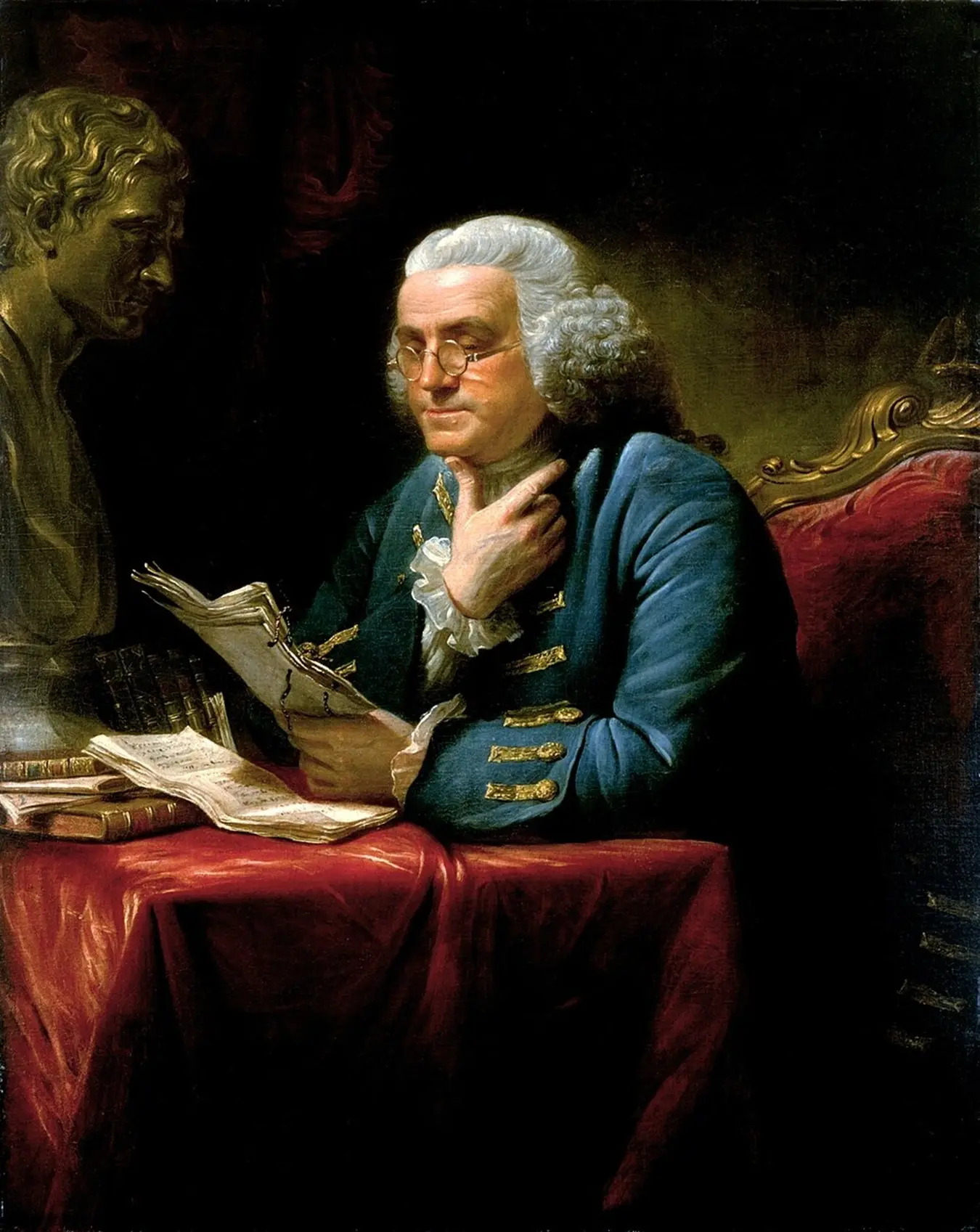
In 1784, Franklin was living in Paris as an American diplomat. On April 26 of that year, he anonymously published a letter in the newspaper Journal de Paris. In it, he pretends he was woken at six in the morning by a noise and, to his great astonishment, found his room full of light. He went to the window and saw the sun rising. He claims his readers, like him, had never seen the sun before noon. He calculated that Paris could save 96,075,000 livres a year on candles if people woke up with the sun.
The letter was satire. To get people out of bed, Franklin proposed a tax on houses with window shutters, a limit of one pound of candles per family for seven days, the ringing of every church bell at sunrise, and, should that fail, cannon fire in the streets. He never once suggested moving the clocks. The legend was made later, by his readers.
The Insect Collector and the Builder
The first serious proposal came more than a hundred years later, from the opposite side of the world. George Hudson, an entomologist in New Zealand, worked shifts and spent his free time collecting insects, so it mattered to him to have daylight after work. In 1895, before the Wellington Philosophical Society, he proposed moving the clocks by two hours: forward in October, back in March. The idea went nowhere, even when he repeated it in 1898. His own country passed a law only in 1927.
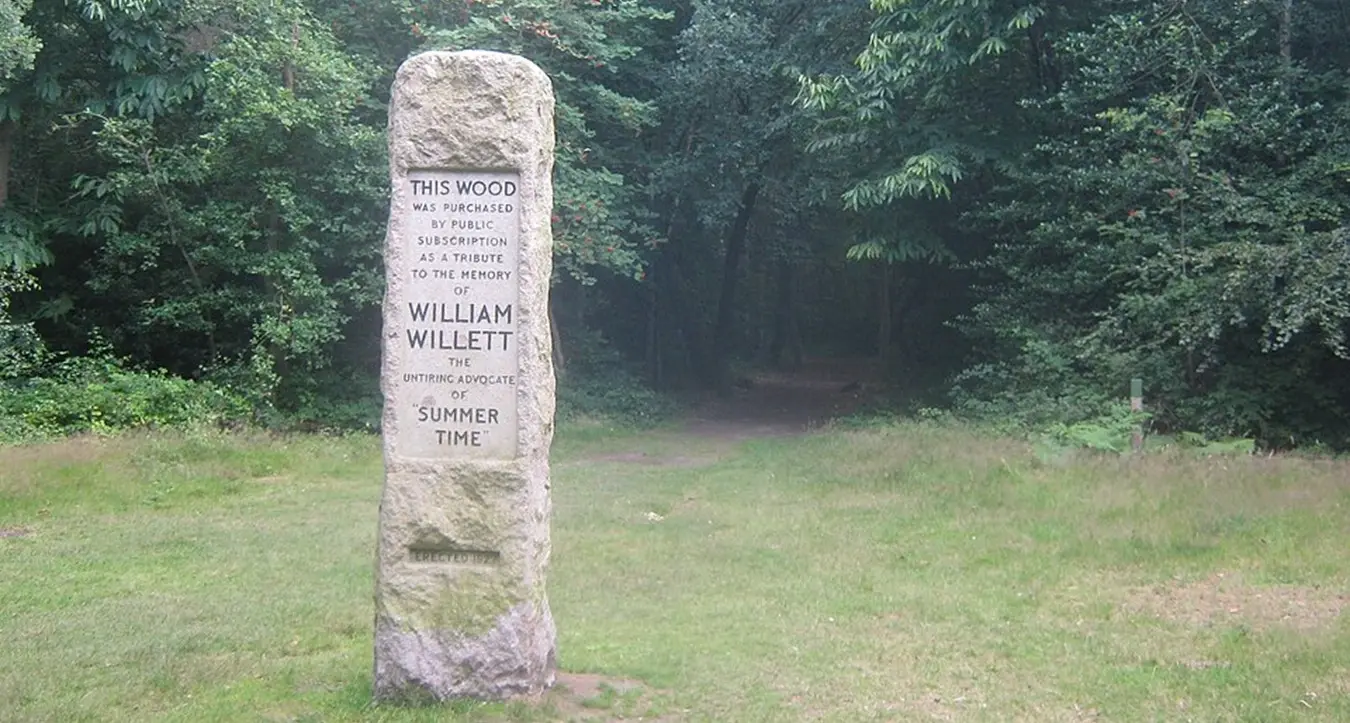
The British builder William Willett arrived at the same idea independently. The story goes that one summer morning in 1905 he was riding through Petts Wood and noticed that most houses still had their blinds down, even though the sun had been up for hours. In 1907 he published, at his own expense, a pamphlet called The Waste of Daylight. He proposed advancing the clocks by 80 minutes in April, in four weekly steps of 20 minutes, and putting them back in September. Parliament rejected the proposal in 1908 and 1909. Willett died in 1915. In Petts Wood there is a memorial to him: a sundial permanently set to summer time.
The War That Moved the Clocks
What Willett couldn’t achieve in peacetime, war accomplished overnight. On April 30, 1916, at 11 p.m., Germany and Austria-Hungary moved their clocks to midnight to save coal. They were the first countries in the world to do so. The British Parliament, which had rebuffed Willett for years, passed the law on May 17, and on May 21 the clocks were moved. Britain, in other words, adopted the idea of its enemy, a year after the death of the man who had been repeating it in London. Its allies and many neutral countries followed, and the United States adopted it in 1918 with the Standard Time Act and abolished it as early as 1919. In the state of Iowa in the 1950s and 1960s, there were as many as 23 different ways of switching to summer and winter time, and the rules were standardized only in 1966.
Yugoslavia introduced summer time on March 27, 1983, citing longer days and lower electricity consumption. Until 1995, the clocks went back on the last Sunday in September, and then, in order to align with European Union regulations, they began going back on the last Sunday in October. Since 1980, the European Community has gradually harmonized national schedules, and today Directive 2000/84/EC applies: summer time begins on the last Sunday in March and ends on the last Sunday in October. Serbia’s Ministry of Economy has said that Serbia will follow every change in the European Union.
Why We Might Abolish It
There are two main arguments: health, and a saving that has proved dubious. A Swedish study covering the period from 1987 to 2006 found that heart attacks rise by about five percent in the first three working days after the spring change, and fall on the Monday after the autumn one. A 2024 meta-analysis confirmed an increased risk after the spring change, but not after the autumn one. The American Academy of Sleep Medicine advocates permanent standard time, that is, winter time.

The savings are more complicated. In 2008 the US Department of Energy calculated that a four-week extension of summer time saved about 0.5 percent of electricity per day. A study from Indiana, however, found that summer time raised household electricity use by about one percent, costing the state nine million dollars a year.
Why We Haven’t Abolished It
In 2018, the European Commission held a public consultation: about 4.6 million responses came in, and 84 percent favored ending the clock changes. The survey wasn’t representative, but on September 12, 2018, the Commission proposed a directive. On March 26, 2019, the European Parliament backed it by 410 votes to 192, with a deadline of 2021 and the freedom for each country to choose permanent summer time or permanent winter time.
That is where the story stalled. The Council of the European Union, where the governments of the member states sit, has not reached agreement: no one knows which time to keep, and there is a fear of a patchwork in which neighboring countries would be on different times. In October 2025, Spain raised the issue again, backed by Poland and Finland. In February 2026, the Commission launched a new study, carried out by Ecorys, Capgemini, Stratec and CE Delft, which should be finished by the end of the year. At the same time, it published the schedule of clock changes through 2031, so the next change falls on March 28, 2027.
In Serbia, the astronomy popularizer Branko Simonović proposes a third option: that the country permanently stay on winter time, while working hours and schools are moved an hour earlier.
The caution is not unfounded. The United States tried permanent summer time in 1974. It began on January 6, and by February support had fallen from 79 to 42 percent, because children were going to school in the dark. On October 5, Ford signed its repeal.
Until then, on Sunday you have an extra hour. Franklin, of course, would suggest that you not sleep through it.