

Politikin Zabavnik: The Magazine That Taught Generations to Be Curious
![[object Object]](https://api.hedonistmagazine.net/storage/images/2026/08/2b4eab5f-489e-473e-9e46-74ffdd689198.webp)
At a time when the answer to almost any question is only seconds away, one long-running weekly magazine continues to preserve something the digital world struggles to create: the feeling that a small discovery is waiting just beyond every page. Politikin Zabavnik has long been more than a magazine for children and adults.
For generations of readers, it has become part of personal history, a family ritual and a piece of cultural memory. Its story, stretching across almost nine decades, raises a fascinating question: how did a paper magazine survive into an age when the internet seemed destined to make its very existence unnecessary?
A magazine born into another world
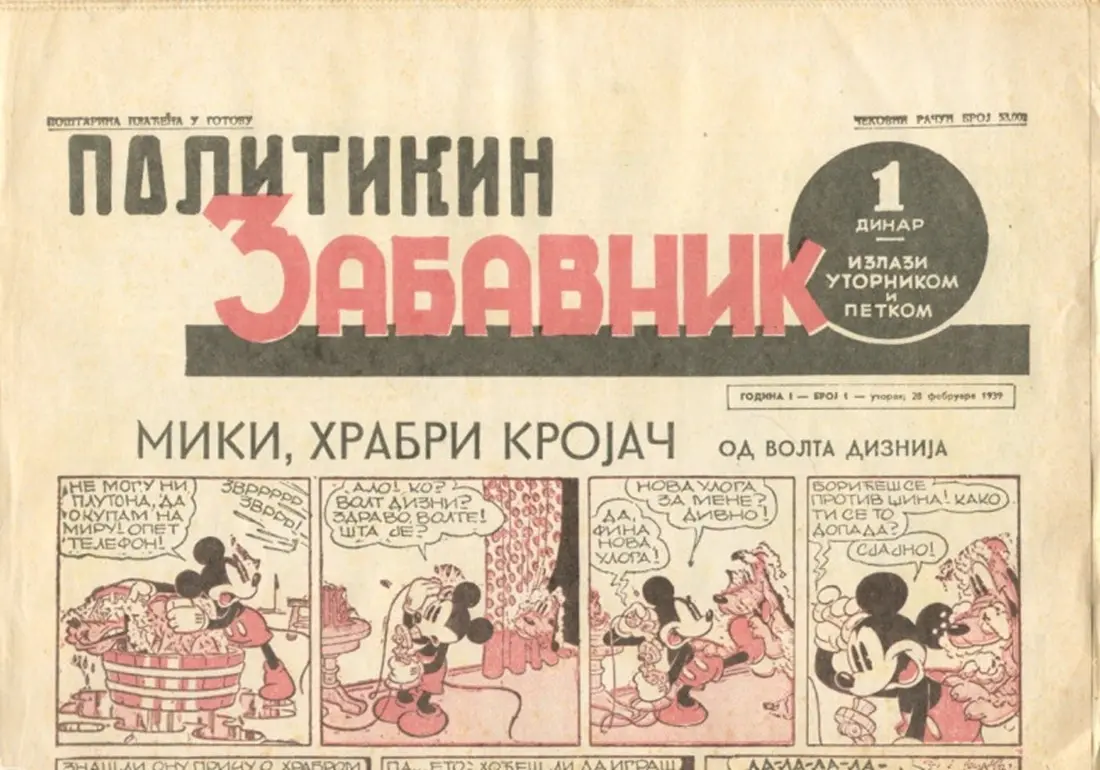
When the first issue reached newsstands on 28 February 1939, the world looked very different. Television had not yet become part of everyday life, radio was one of the main windows onto the wider world, and newspapers and magazines possessed an influence that is difficult to imagine today.
Yet the idea behind the new publication was remarkably modern: bring together comics, literature, science, history, facts and entertainment in a magazine serious enough to teach its readers something, but playful enough never to become tiresome.
That combination would become its defining characteristic.
A name chosen by its readers
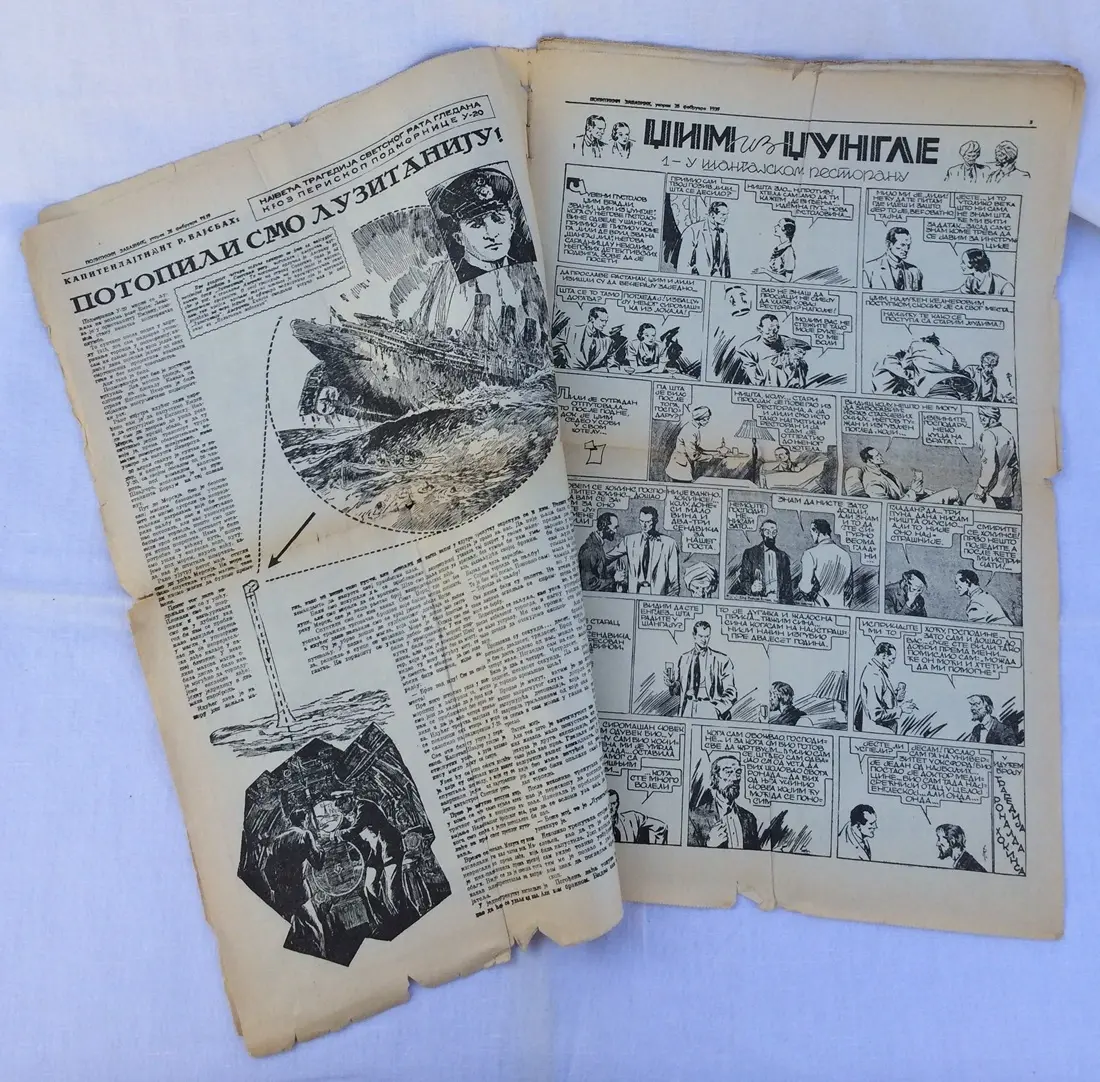
The editorial team did not create the name. In late 1938, the newspaper Politika invited its readers to submit suggestions for the title of a new publication featuring novels, stories and comics. More than 35,000 proposals arrived, and Politikin Zabavnik appeared in roughly one-fifth of them. The first prize went to nine-year-old Antonija Savić from Novi Sad, after a draw among the entries carrying the same name.
The first issue contained just 12 pages and was published twice a week, on Tuesdays and Fridays. Even then, its concept extended far beyond what might have been expected from a publication aimed at younger readers. Comics shared its pages with literature, facts, stories from around the world and articles encouraging readers to look beyond the boundaries of everyday life. Among its important early contributors was Đorđe Lobačev, one of the artists who would leave a lasting mark on the magazine’s visual identity.
The magazine quickly surpassed a circulation of 40,000 copies, an exceptional result for the time. Its first chapter, however, was short-lived. The Second World War interrupted publication, and the final pre-war issue appeared on 4 April 1941.
Seven years later, Zabavnik returned.
A second beginning - and a generation waiting for it
On 5 January 1952, the magazine reached readers once again, now as a weekly. One of the most important periods in its history was still to come.
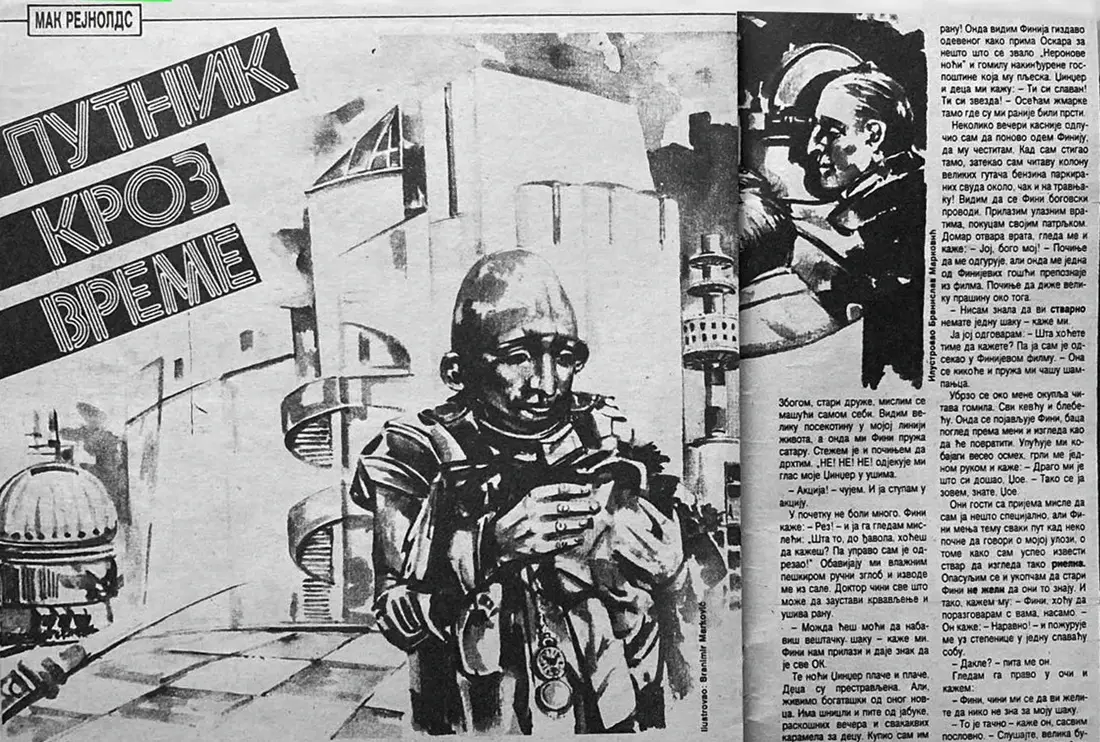
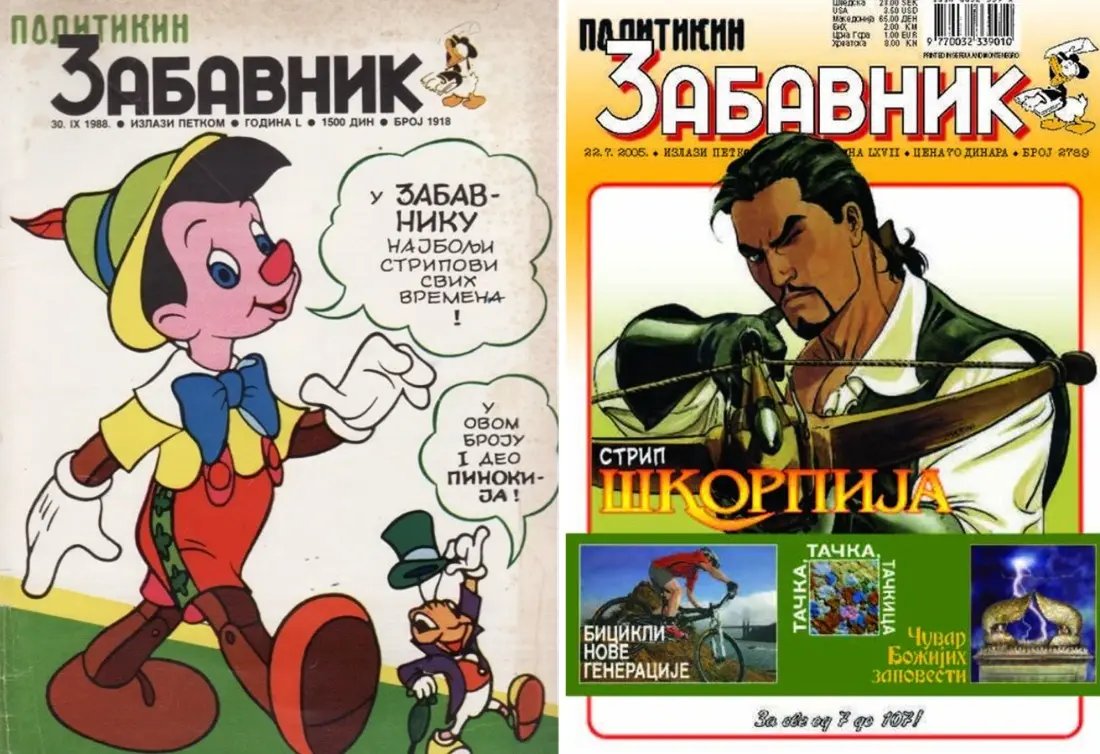
A major turning point arrived in 1968, when Politikin Zabavnik adopted a magazine format and began appearing in full colour. It was then that it acquired the visual identity that would remain familiar to generations of readers. This was not merely a technical transformation. It was the moment when the magazine found a form modern enough to travel across generations without losing what made it distinctive.
Comics remained one of its foundations, but Zabavnik never allowed itself to be defined by comics alone. Its true subject was curiosity.
A reader could move from the adventures of a comic-book hero to an article about ancient civilisations, from a historical story to a natural phenomenon, and then to an almost unbelievable fact about the everyday world. The variety never felt like editorial confusion. On the contrary, it was carefully constructed so that every new page opened a door to something unexpected.
“For everyone from 7 to 107”
One of the magazine’s most enduring ideas survives in its famous description: “For everyone from 7 to 107.” Few phrases explain its character better.
A parent might buy an issue for a child and then keep it for an article about history. A child might begin reading because of a comic and finish with a story about a distant country, an animal or a scientific phenomenon. The boundary between young and adult readership was deliberately blurred.
In that respect, Zabavnik was much closer to a thoughtfully curated magazine than a conventional children’s publication. Its purpose was not simply to entertain a child, but to show that the world was far larger than the world immediately around them.
Columns that became part of the language
Some elements of Zabavnik have not merely survived the decades; they have become part of collective memory. Columns such as Believe It or Not and Did You Know That…? rank among its oldest features and have been present since the magazine’s early years.
Their appeal was based on a simple editorial principle: a short piece of information should create enough curiosity for the reader to want to know more. Interestingly, that is precisely the principle that works so effectively on the internet today.
Headlines promising an unusual fact, brief stories designed to surprise, and easily shareable pieces of information have become fundamental to digital media. Zabavnik was using that logic long before anyone could have imagined that a screen would one day replace the newsstand.
When Zabavnik was a mass cultural phenomenon
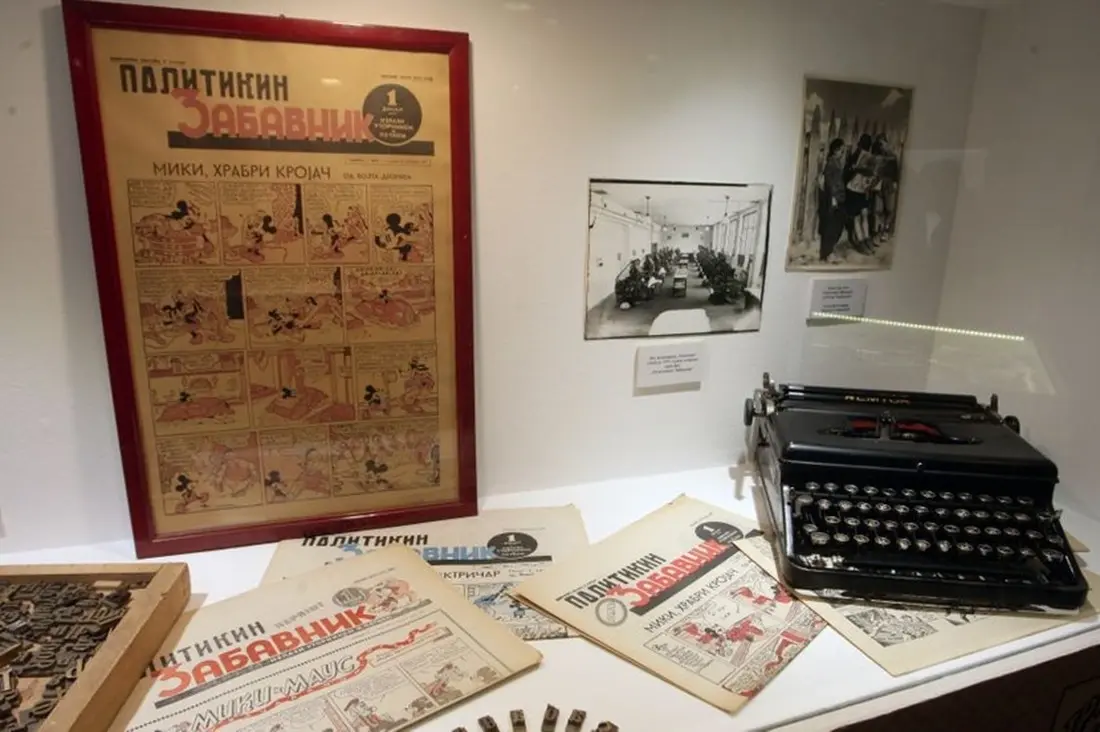
For today’s audiences, it may be difficult to explain just how much cultural space this magazine once occupied. Its highest average circulation was recorded in 1976, when it reached an extraordinary 345,910 copies.
That was more than the success of a magazine. It was evidence that Zabavnik had become a shared experience for an enormous number of people.
Its readers grew up with the same comics, the same columns and the same illustrations. Stories from its pages became subjects of conversation at school, among friends and within families. The magazine possessed something that digital content rarely manages to create on the same scale: a shared moment of reading.
An issue would arrive on Friday, and its stories would linger in people’s conversations for days.
The artists who created a world on paper
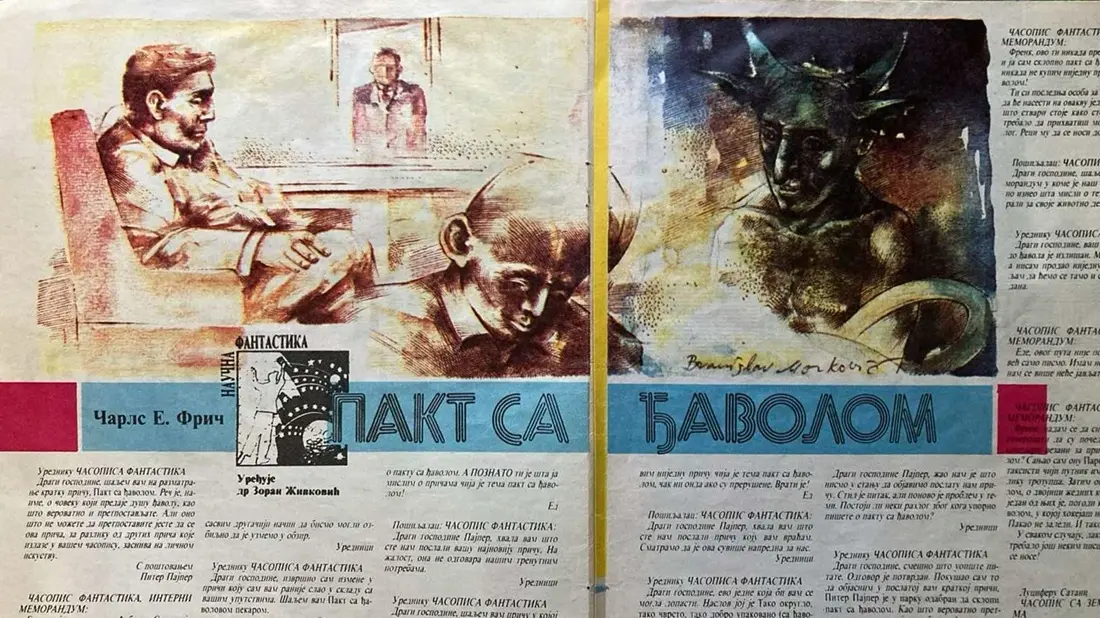
The history of Politikin Zabavnik cannot be told without its illustrators. Đorđe Lobačev left a profound mark during the magazine’s earliest years, while generations of artists followed, each bringing a distinctive visual language to its pages.
Among them was Lazo Sredanović, creator of the beloved comic character Dikan, alongside numerous other artists whose work helped shape the magazine’s visual universe. An exhibition dedicated to Zabavnik illustrators in 2007 featured 367 works by 104 artists.
This is an important part of its legacy because Zabavnik was never merely a medium for transmitting information. It helped shape taste.
For generations of children, its pages offered a first encounter with the idea that illustration could be art, that a comic could tell a serious story and that a piece of science writing did not have to resemble a school lesson.
What the internet was supposed to change
Then came something that transformed almost every aspect of the reading experience.
The internet made available what had once been hidden behind editorial choices, libraries and encyclopaedias. If you wanted to see what a particular animal looked like, you no longer had to wait for the next issue. If you were interested in Roman history, you did not have to search for a book. If you wanted a comic, a story or a photograph of a distant place, it was only a few taps away.
In that world, Politikin Zabavnik seemed, at first glance, to have lost its greatest advantage. But something more interesting happened. The internet made information virtually infinite, while Zabavnik remained deliberately limited by the boundaries of editorial choice. And that is precisely where its contemporary value lies.
When you open the internet, almost everything is in front of you. When you open a good magazine, someone has already chosen for you. The difference is enormous.
Zabavnik does not need to be faster than Google. It does not need to contain more information than the internet. Its value lies in transforming information into a story, giving it context and placing it beside another story you might never have thought to search for yourself. The internet answers the question you asked. A good magazine sometimes asks the question you did not know you wanted to hear.
Nostalgia is not enough
It would be easy to explain its survival through nostalgia. And nostalgia undoubtedly matters. Many of today’s readers received their first copy from their parents, bought it as children or associate it with a period of life that can never return.
But nostalgia alone is not a strong enough business model to sustain a magazine for almost nine decades. Survival on that scale requires something more: the ability to change without abandoning your identity.
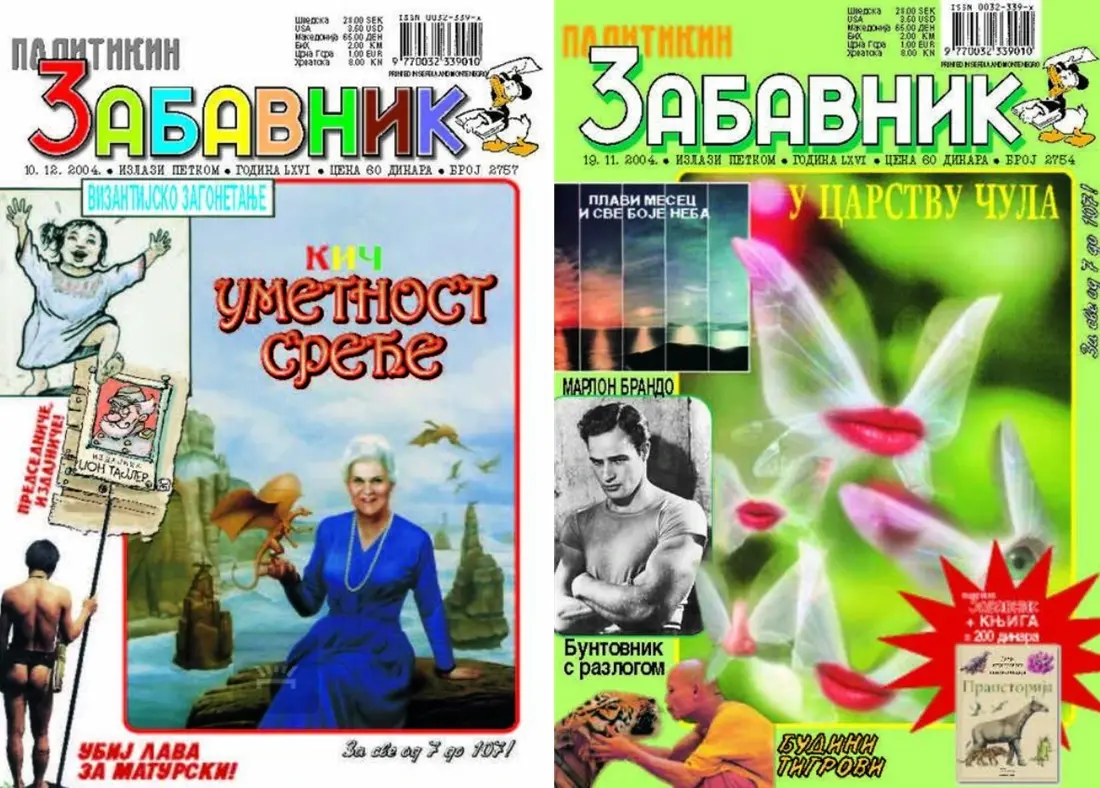
Politikin Zabavnik has done exactly that. It has changed its format, printing technology, subjects, generations of contributors and ways of communicating with its audience, while preserving its central idea: knowledge can be entertaining, and entertainment can be intelligent.
Even social media eventually became part of its story. More than a decade ago, Zabavnik already had a remarkably strong Facebook community which, around the time of its 75th anniversary, numbered more than 267,000 likes. Interestingly, the Facebook page was initially created by a reader before becoming part of the magazine’s official presence online.
Perhaps that is one of the most beautiful details in the entire story. Readers did not simply buy Zabavnik. In a sense, they continued to create it.
Paper finds its place in a digital world
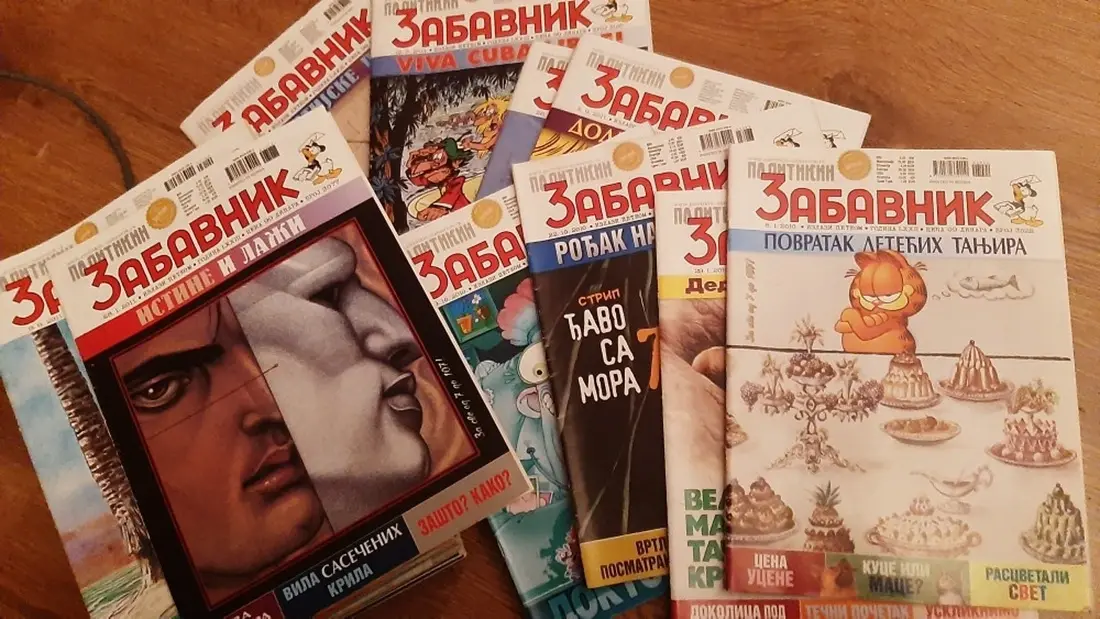
Today, Politikin Zabavnik no longer has to choose between paper and the screen. The contemporary media landscape allows its print edition to remain an object of ritual, collecting and physical reading, while digital channels provide accessibility, communication with readers and new life for its content.
It is a model shared by many major magazines around the world: paper is no longer the only way to read, but precisely because of that, it becomes something more valuable.
When everything is digital, a physical object acquires a different kind of appeal. Paper cannot be scrolled. A cover does not need to load. A page does not refresh. A magazine remains on the table, waiting to be picked up again, saved and perhaps discovered years later among old belongings.
At that point, it stops being merely a medium. It becomes an object of memory. The magazine that never tried to become the internet. Perhaps that is the real answer to how Politikin Zabavnik survived the digital revolution. It did not defeat the internet. It never tried to. Instead, it preserved what the internet cannot completely replace: editorial selection, the physical experience of reading, illustration, continuity, ritual and the feeling of belonging to a story that stretches far beyond a single click.
At the same time, it embraced new ways of communicating and continued speaking to generations growing up with screens. Politikin Zabavnik remains a weekly magazine, while Politika and its associated digital platforms have also embraced electronic publishing.
That may be the clearest illustration of its longevity: it did not survive by remaining unchanged, but by changing just enough to remain itself.
- Written by Ognjen Tešić / HEDONIST
Related articles

Can Pleasure Save Print?
The intoxicating scent of paper. The soft rustle beneath one’s fingers. A feeling of satisfaction. Inspiration. Creation. An indescribable force without which there can be no pleasure in thinking itself. These are the words magazine and newspaper lovers - or, as we would say today, lovers of print - use to describe something they still consider timeless and deeply valuable.
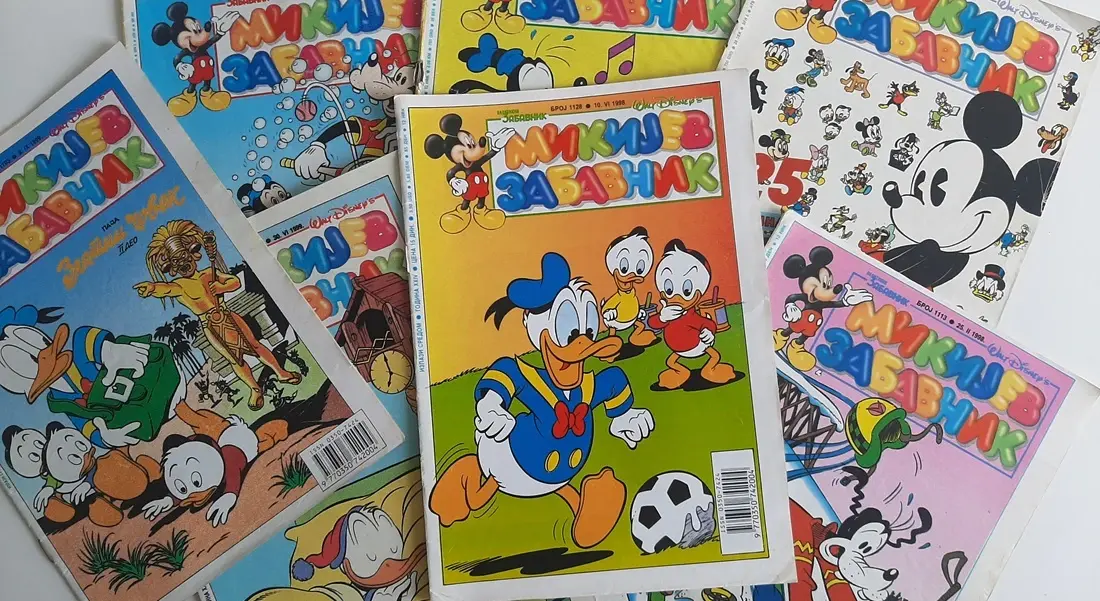
Mikijev zabavnik: Childhood Between the Pages
There are things that never truly disappear, even when they’ve long vanished from newsstands. They no longer carry the scent of fresh print, nor do they wait for us on shelves next to sweets and stickers, yet they live somewhere deeper – in memory. One of those things is Mikijev zabavnik, the magazine generations grew up with.