

Fifty Years of Rocky: How Much Truth Is in the Greatest Success Story?

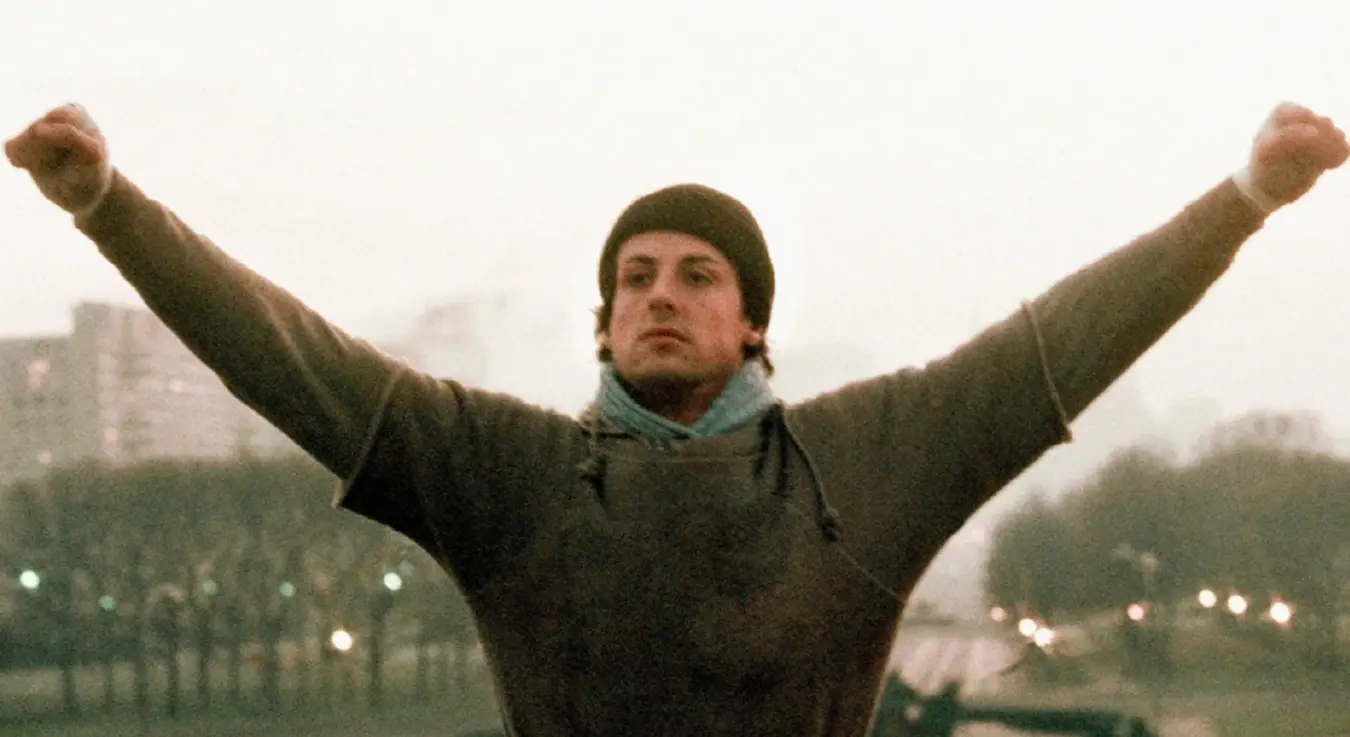
An actor with no money writes a screenplay in three and a half days and refuses to sell it without the lead role. Fifty years on, nearly every part of that story has a second version.
On paper, it is the perfect success story. An unknown actor writes a screenplay in three and a half days, turns down an offer to sell it without a role, makes a film for a little over a million dollars, and watches it win three Oscars and gross $225 million. This Saturday marks half a century since its New York premiere, held on November 20 and 21, 1976. A biopic, Peter Farrelly’s I Play Rocky (Anthony Ippolito plays Stallone, Matt Dillon his father), goes into wide release on November 20. The film doesn't ask how much of the story can actually be verified.
Three and a Half Days and One Fight
This is the best-documented part. Stallone wrote the screenplay in three and a half days, not long after watching a closed-circuit broadcast of the Muhammad Ali-Chuck Wepner fight in a movie theater on March 24, 1975. Few expected Wepner to last. He knocked Ali down in the ninth round and went down only in the fifteenth. Stallone told the New York Times that he had watched the fight and thought about dreams going down the drain, but he has always denied that Wepner was the model for Rocky. Wepner sued him anyway, and the dispute ended in a settlement for an undisclosed sum.
The speed itself rests on Stallone’s own word.
The Story the Marketing Department Wrote
The rest of the legend is more contested ground. In the usual version, the producers and the studio praised the screenplay but wanted a known face, Redford, O’Neal, Reynolds, or Caan, so Stallone turned down offers that climbed higher and higher, from roughly $300,000 to $360,000, depending on the source. The producer Irwin Winkler confirms that the studio wanted a star.
In 2006, Alex Ben Block published a report in which former United Artists executives told a different story. Gabe Sumner, the studio’s head of marketing at the time, said that the tale of an unknown actor refusing to sell his script without a role was a deliberate publicity campaign, complete with an invented figure of $18,000 that was used in the press. According to Block, no one at the studio objected to Stallone playing the lead, and some executives had never even met him before filming began. Eric Pleskow, the studio’s president at the time, added that the story suited Stallone, and that over the years he came to believe it himself. Stallone’s representatives answered that they stood by his account as accurate.
There is no way to establish who is right, but one fact is undisputed and speaks for itself. Rocky cost about $1,075,000 to make, and its advertising campaign cost $4.2 million. The studio, in other words, put almost four times as much into selling the story as into the film itself. The bet paid off: Rocky grossed $117 million in the United States and Canada and $225 million worldwide, a return of more than 11,000 percent.
The Dog
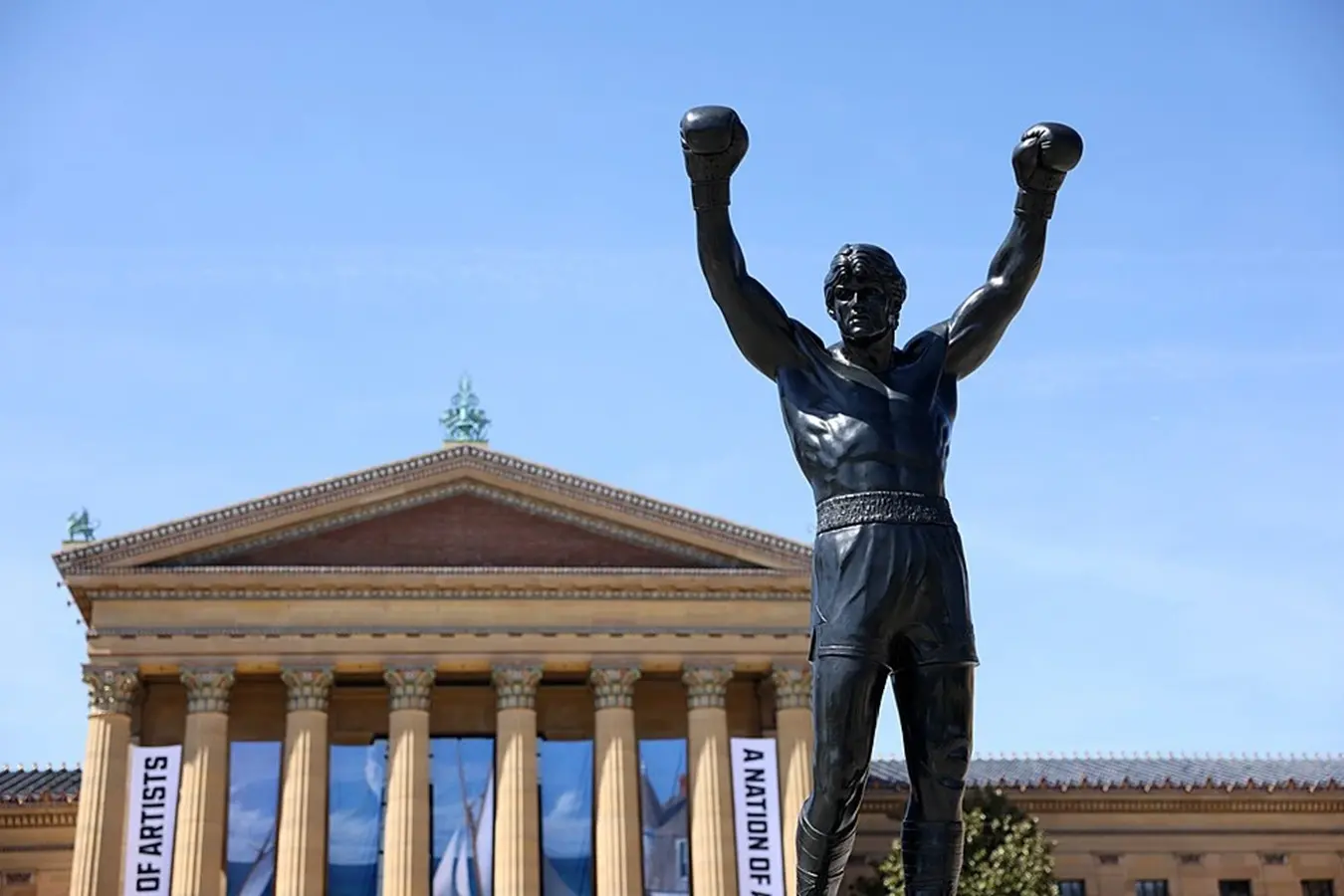
The best-known detail is the dog. Stallone has told many times how he had to sell his bullmastiff, Butkus, before the screenplay and bought him back afterward. The details changed with each telling. On Instagram in 2017, he wrote that he sold the dog for $40 outside a 7-Eleven and that the new owner, knowing he was desperate, charged $15,000 for his return. In a 2013 interview, the dog went for $50 and came back for $3,000 “and several threats.”
In that version, the buyer is “Little Jimmy.” That is Jimmy Gambina, the son of a well-known California boxing trainer, Stallone’s trainer for the film, and the actor who plays Mickey’s assistant, Mike.
The journalist Mike Sielski, in his book Going the Distance (St. Martin’s, 2026), also excerpted on Slate, gives Gambina’s account. There was no sale on the street. During the shoot in Philadelphia, the dog stayed in the hotel, and Gambina walked him while the crew and Stallone worked twelve to fourteen hours a day. Later, Stallone, worried about the travel ahead and a newborn child, gave him the dog. When Rocky II began in 1978, Stallone called to say he needed the dog, and Gambina told him he could have him back only if his son agreed. Gambina says the story has made him “the guy who took Sly’s dog,” and that he and Stallone have not spoken since 2005.
Stallone told Sielski in an email that he cast Gambina as a favor to his father, a genuine trainer. In the excerpt available, there is no reply from Stallone to the claim about the dog.
Slate called the whole story fiction. That is too strong. Gambina’s account is the testimony of a man with reason for bitterness, and there are no documents. All that can be said for certain is that the figures change with every retelling and that the buyer was no chance passerby but a man from Stallone’s own crew. One more thing is known: Stallone wanted Rocky to carry Butkus up the steps of the art museum, but the dog was too heavy.
What Remains
Rocky was not the first film shot with a Steadicam, but the third, after Bound for Glory and Marathon Man. The original screenplay was darker, with a racist Mickey and an ending in which Rocky deliberately throws the fight. The film beat Taxi Driver, Network, and All the President’s Men, and in 2015 Academy members said they would give the prize to the last of these today.
Each of these legends has a verifiable side. That is exactly why the story of the dog is the best of them: nobody knows what is true, and everyone wants it to be.
In the film, Rocky does not win. He loses the fight on a split decision and gets what he asked for: to stay on his feet to the end. The story of how it was made never loses, and that is reason enough to read it carefully and to love it anyway.