

Ugly Is Expensive: How Crocs and Dad Sneakers Became Status Symbols

![[object Object]](https://api.hedonistmagazine.net/storage/images/2026/10/1f29ffd1-d171-486b-af7b-a62acc142d0e.webp)
It began in 2002 at a boat show in Florida, with 200 pairs of footwear that even their founders thought were ugly. Some fifteen years later, similar shoes were selling out in hours at hundreds of dollars a pair. Here is what science has to say about it.
Florida, 2002. At the Fort Lauderdale boat show, a stand is stacked with foam clogs, perforated with holes and fitted with a strap around the heel. Two hundred pairs were brought. By the end of the show, not one was left.
The irony is that not even the founders believed they were beautiful. Lyndon Hanson and George Boedecker, two of the three partners, thought they were exceptionally ugly. The third, Scott Seamans, wouldn't give up; he kept insisting they were comfortable and useful.
Ugly That Does Its Job
Seamans had been working on a clog design for a Canadian company, but it wasn’t selling. He was convinced it was perfect for sailing: comfortable, slip-resistant and, as he claimed, buoyant on water. The strap around the heel, to keep the shoe from slipping off, was also his idea. After a few days, the skeptics came around, for the same reasons. The first model was called the Beach.

Who bought them is the interesting part. Not only boat owners, but gardeners, kitchen staff, and healthcare workers. Nobody was buying style. They were buying feet that wouldn’t hurt.
When Ugly Is Everywhere
Then came what business books call success. Revenue jumped from $108.6 million in 2005 to $354.7 million in 2006, the year the company went public and raised about $200 million. The following year, sales reached roughly $850 million, with a net profit of $168 million.
The fall was just as swift. On October 31, 2007, the shares were worth $74.75; on November 20, 2008, just $0.94, a drop of almost 99 percent. In the third quarter of 2008 alone, the company reported a net loss of $148 million, along with write-offs of inventory worth tens of millions.
The lesson is simple: when ugly is everywhere, it stops being a statement and becomes a uniform.
Back Through the Side Door
And then ugly came back, by way of the runway. Christopher Kane was the first designer to show Crocs at his spring/summer 2017 show in London. In October 2017, Demna Gvasalia of Balenciaga followed with a clog on a 10-centimeter platform. Preorders opened on February 1, 2018, on the Barneys website, at $850, and sold out within hours. Gvasalia has said he is pleased when people think his clothes are ugly, because he takes it as a compliment.
That same designer unveiled the Triple S in 2017, hulking sneakers with a triple-layered sole, priced at around $900. According to the Wall Street Journal, they sold out in half an hour at the brand’s Manhattan boutique. They are credited with the flood of so-called dad sneakers, though their model is much older. The New Balance 990 came out in 1982 as the first $100 sneaker, which was a lot of money at the time, and it became a status symbol. The best-known wearer of that family of models was Steve Jobs. The dad sneaker, then, was once a luxury, and it has become one again, only now at $900.
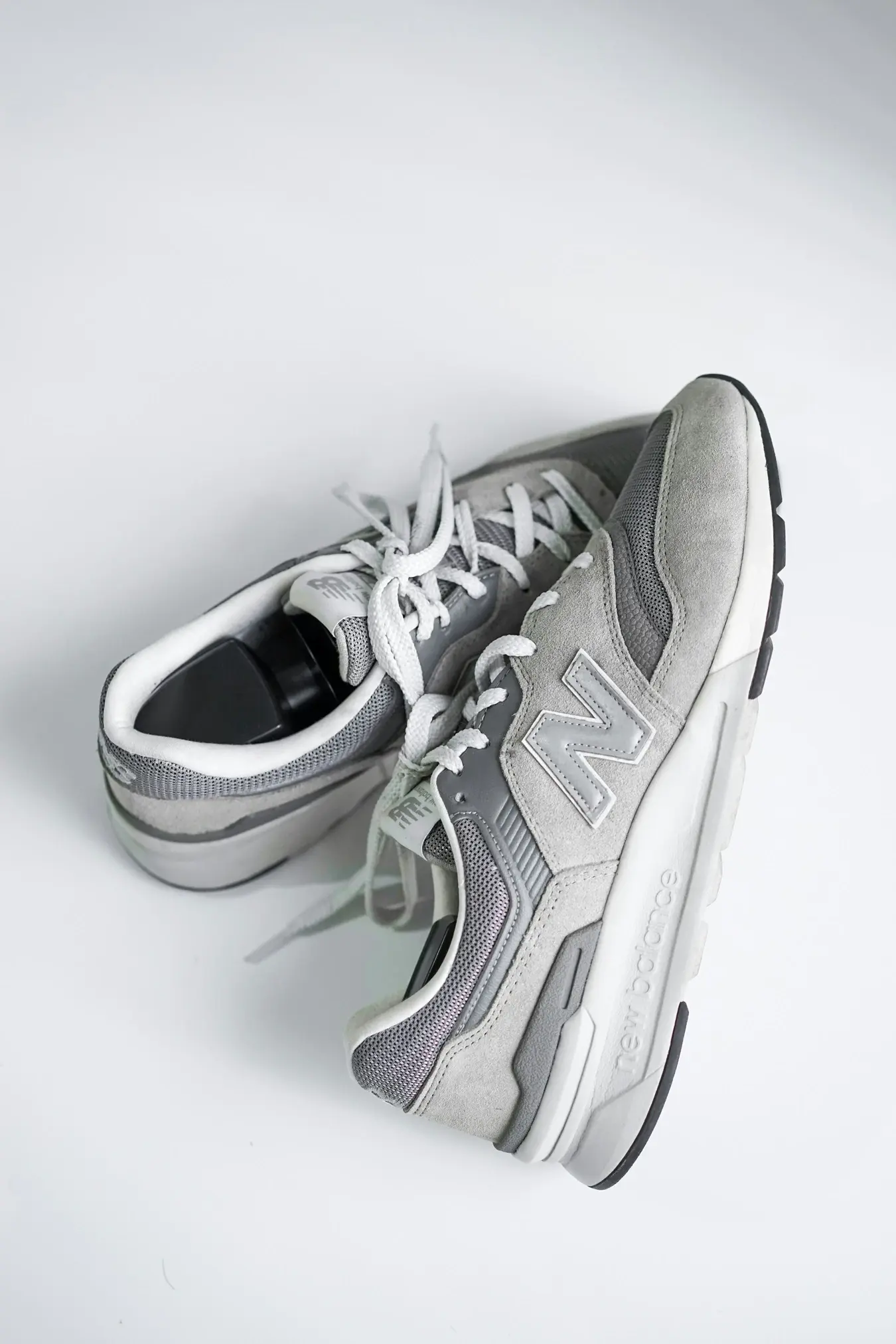
Why Ugly Is Worth It
Research by Ludovica Cesareo and colleagues from Lehigh University, the University of Miami, and the Hong Kong University of Science and Technology (Hideous but Worth It, 2022) showed that there is an “ugly luxury premium.” Not just any ugliness will do; it has to be striking. And it holds only for luxury brands: with ordinary brands, people still choose the pretty option, while with luxury brands they choose the strikingly ugly one as often as the beautiful one, precisely because of the ugliness.
The theory behind it is costly signaling. Whoever chooses to look ugly shows they have the confidence, the knowledge, and the money not to need to impress anyone with beauty. Miuccia Prada, whom researchers regard as a forerunner of the trend, claimed as far back as the 1990s that her chief achievement was making ugly appealing.
A similar mechanism was described in a 2014 study of the “red sneakers effect” (Bellezza, Gino and Keinan): people who break dress codes are judged to have higher status and competence, but only if the choice looks deliberate.
Ugly Has a Shelf Life
Silvia Bellezza of Columbia University points to a paradox: when we are exposed to something often enough, we begin to like it. That is why ugly luxury is more fleeting than other status symbols. The Triple S first drew ridicule, and then everyone copied it, from luxury houses to mass-market brands.

The Crocs numbers don’t prove this, but they don’t contradict it either. In 2025, the Crocs brand generated about $3.33 billion in revenue, up 1.5 percent. In North America, revenue fell 6.8 percent, while international sales rose almost 12 percent.
The first two hundred buyers in Florida weren’t buying a fashion statement. They were buying dry feet. Perhaps that is the best lesson of the whole story: ugly is a status symbol only as long as someone else thinks it’s ugly.