
Ola and Mladen, Hunters of the Forest's Gold

![[object Object]](https://api.hedonistmagazine.net/storage/images/2026/08/dadf9a55-cf17-40ef-b14a-e4aadcf0c885.webp)
You don’t always go into the forest for firewood, mushrooms, or wild fruits. Sometimes you go in search of something that cannot be seen, has no scent until it ripens, can fit in the palm of your hand, and is worth its weight in gold. Mladen Kalamanda enters the forest with his most important companion, Ola.
Ola is a Lagotto Romagnolo, an Italian breed developed almost exclusively for one purpose: finding truffles. Her younger partner, Alba, is just beginning the same apprenticeship. Together with Mladen, the two dogs form the heart of a story that, as he tells it, began entirely by accident.
How a Dog Knows a Truffle Is Ripe
Without a dog, truffle hunting would amount to little more than digging at random. A man might, on rare occasion, spot a truffle himself - but he has no way of knowing whether it's ripe, and an unripe truffle carries none of the scent or flavour it's prized for.
"You might come across a truffle by chance, but you won't know if it's ripe. When a dog finds it by scent, though, you know for certain it's the real thing," Mladen says.
Truffles grow in symbiosis with the roots of certain trees, most often oak and hazel, and belong to a genus of underground fungi that runs to hundreds of species - though only a handful hold any real culinary value. Mladen finds most of his in the hills around Banja Luka, home to several varieties of black truffle, while the white truffle, far rarer and more expensive, is considerably harder to come by.
"We have truffles across all of Bosnia and Herzegovina," he explains. "White truffles are the exception - they're more particular, and harder to find."
From Forest Floor to Gastronomic Luxury
In the world of gastronomy, the truffle ceased to be merely a fungus long ago. It's an ingredient whose presence, even in the faintest trace, can redefine an entire dish. A few paper-thin shavings are enough to transform a plate of pasta, a risotto, a cut of meat - and the price reflects exactly that: depending on variety, size, and season, a kilogram of truffle in Bosnia and Herzegovina can run anywhere from a few hundred to several thousand marks. From the fresh truffle come the products that carry its aroma beyond the season - carpaccio, oils infused with black or white truffle - and behind every bottle of it lies the same story: a forest, a dog, and a man who learned how to wait.
Every Truffle Has Its Own Story
A truffle's quality hinges on several factors - variety, ripeness, freshness, and exactly where it was found - which means no two are ever quite the same, nor are they worth quite the same. The hunt itself resists any guarantee. There is no formula in the forest; there is only experience, terrain, nature, and a dog whose nose alone decides the moment a man should stop.
For Mladen, that moment is its own reward. Asked whether a living can be made from this, he answers: "There's enormous satisfaction in it, of course."
From Hobby to a Way of Life
"It started as just a hobby, and now it's become a profession as well as a hobby," Mladen admits. Today he processes and sells truffle products from a small operation in Kotor Varoš, alongside breeding and training truffle-hunting dogs - work that demands nearly as much patience as the hunt itself, since a dog must learn to tell a ripe truffle from an unripe one by scent alone, with nothing to see.
The business, quite naturally, took its name from the dog who started it all: Ola. It's hard, he says, to imagine any of this without her.
Man, Dog, and Forest
By training, Mladen is a mechanical and architectural engineer - a world of precision, calculation, and blueprints that, at first glance, has little to do with forests or the fungi hidden beneath them. But perhaps that's exactly where the story's charm lies: one part of his life unfolds among projects and figures, while the other begins the moment he steps into the forest with Ola, where his precision no longer counts for much, and the rules of nature take over instead.
The truffle will surface when it's ready. The dog will find it when she smells it. All that's left for the man is to follow, to wait, and to trust - and that trust, in the end, is the whole art of truffle hunting. The dog must believe in the man, and the man must learn to read the dog: every pause, every glance, every sharp turn of the nose might mean that something worth the wait is hidden just beneath the surface.
- Written by: Anđelka Marković / HEDONIST
Related articles
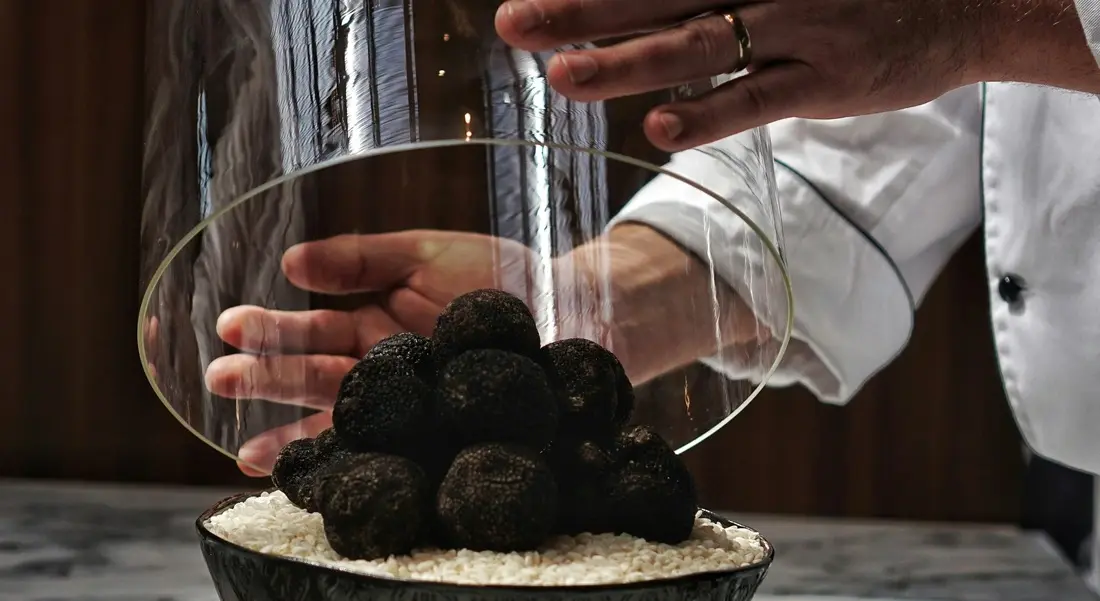
Chef Relja Dimitrijević: Truffles Are Gold on the Plate
They grow only underground, they are rare, and difficult to find. Much like gold, reaching them requires real effort - digging, knowledge, and a clear sense of what you are looking for. That is part of their undeniable allure.
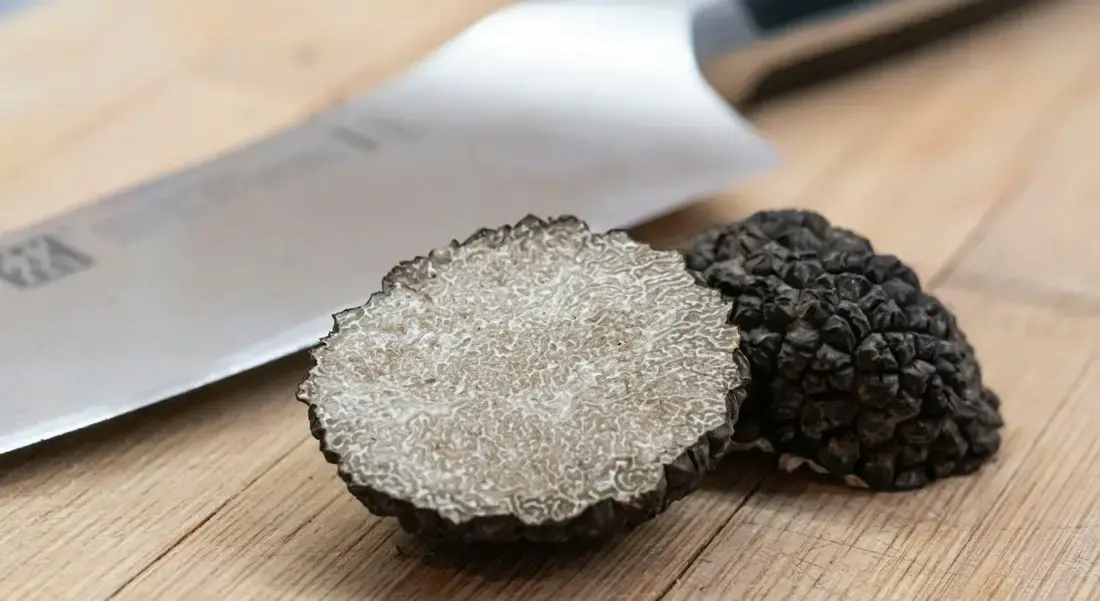
Why Are Truffles the Most Desired Ingredient of Autumn?
A truffle is not just an ingredient — it’s an experience. A fragrance that announces itself before you even see it, a texture that melts into warm pasta, and a touch of luxury that turns every bite into a ritual. Autumn is the season when this precious gem appears in its full glory, reminding us that nature saves its best gifts for last.