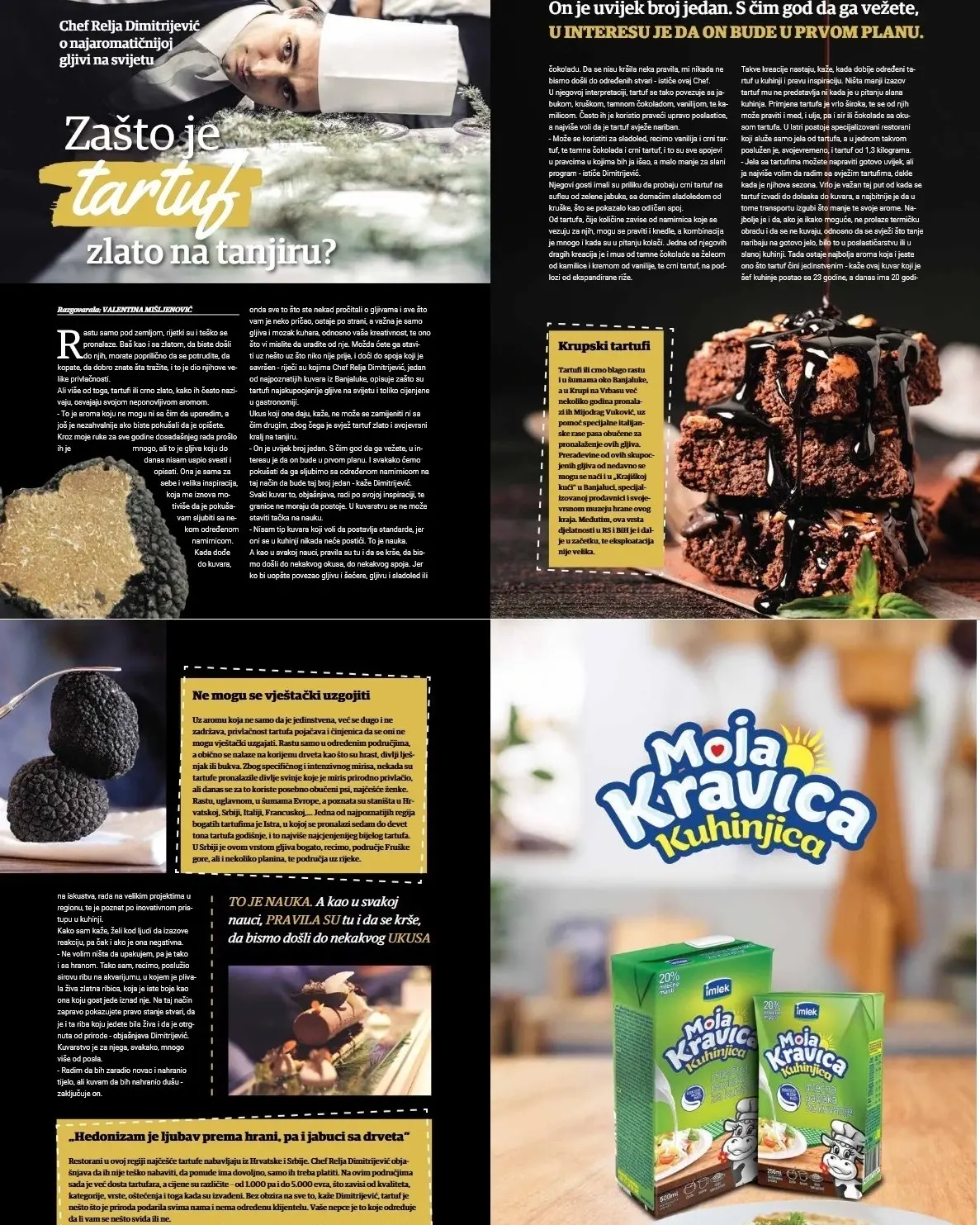
Chef Relja Dimitrijević: Truffles Are Gold on the Plate
![[object Object]](https://api.hedonistmagazine.net/storage/images/2026/03/99e5a6a5-4925-451f-a9d0-cb3880b13891.webp)
They grow only underground, they are rare, and difficult to find. Much like gold, reaching them requires real effort - digging, knowledge, and a clear sense of what you are looking for. That is part of their undeniable allure.
Editor’s note: This article is part of the HEDONIST archive and was originally published in 2021, in the sixth print edition of the magazine.
But beyond that, truffles, often referred to as black gold, captivate with their unmistakable aroma.
“It’s an aroma I cannot compare to anything else, and even less can I describe it. Over the years, many have passed through my hands, yet to this day, I haven’t managed to define this mushroom. It stands on its own - a great inspiration that constantly motivates me to pair it with different ingredients. Once it reaches a chef, everything you’ve ever read or heard about mushrooms becomes irrelevant. What matters is the mushroom and the chef’s mind - your creativity, and what you decide to create with it. You might pair it with something no one has tried before and arrive at a perfect combination,” says Chef Relja Dimitrijević, one of Banja Luka’s most renowned chefs, explaining why truffles are the most expensive mushrooms in the world and so highly valued in gastronomy.
The flavor they bring, he says, is irreplaceable - which is why fresh truffle is gold, a true king on the plate.
“It is always number one. Whatever you pair it with, the goal is to keep it in the foreground. We always try to combine it with other ingredients in a way that keeps it at the center,” Dimitrijević explains.
Each chef approaches this differently, guided by personal inspiration - boundaries, he says, do not exist in the culinary arts.
“I’m not the type of chef who likes to set standards, because they can never truly be achieved in the kitchen. Cooking is a science. And like in any science, rules exist to be broken - so we can discover new flavors, new combinations. Who would ever think to pair mushrooms with sugar, or with ice cream or chocolate? If rules had not been broken, we would never have discovered such things,” he emphasizes.
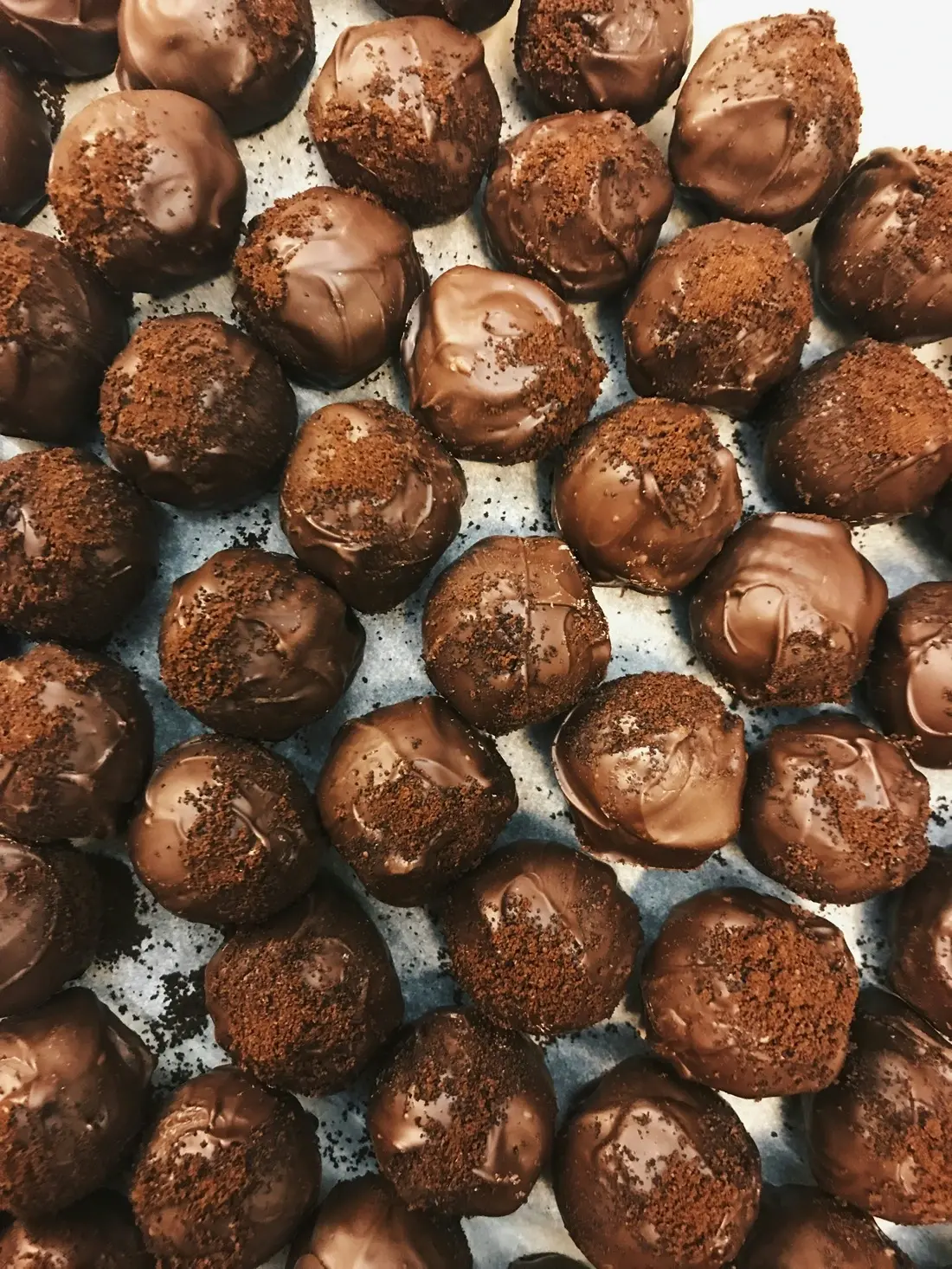
In his interpretation, truffles pair beautifully with apple, pear, dark chocolate, vanilla, and chamomile. He often uses them in desserts, preferring them freshly shaved.
“They can be used in ice cream - for example, vanilla with black truffle, or dark chocolate with black truffle. These are directions I personally lean toward, somewhat more than savory dishes,” he adds.
His guests have had the opportunity to try black truffle on a green apple soufflé with homemade pear ice cream - a combination that proved exceptional.
Truffles can also be used in dumplings, and the possibilities in pastry are numerous. One of his favorite creations is dark chocolate mousse with chamomile jelly, vanilla cream, and black truffle, served on a base of puffed rice.
Such creations, he says, emerge when a particular truffle arrives in his kitchen - along with the right inspiration. Truffles are no less of a challenge in savory cuisine.
Their application is wide-ranging: truffle honey, oil, cheese, and even chocolate are all possible. In Istria, specialized restaurants are serving exclusively truffle-based dishes, and one such venue once featured a 1.3-kilogram truffle.
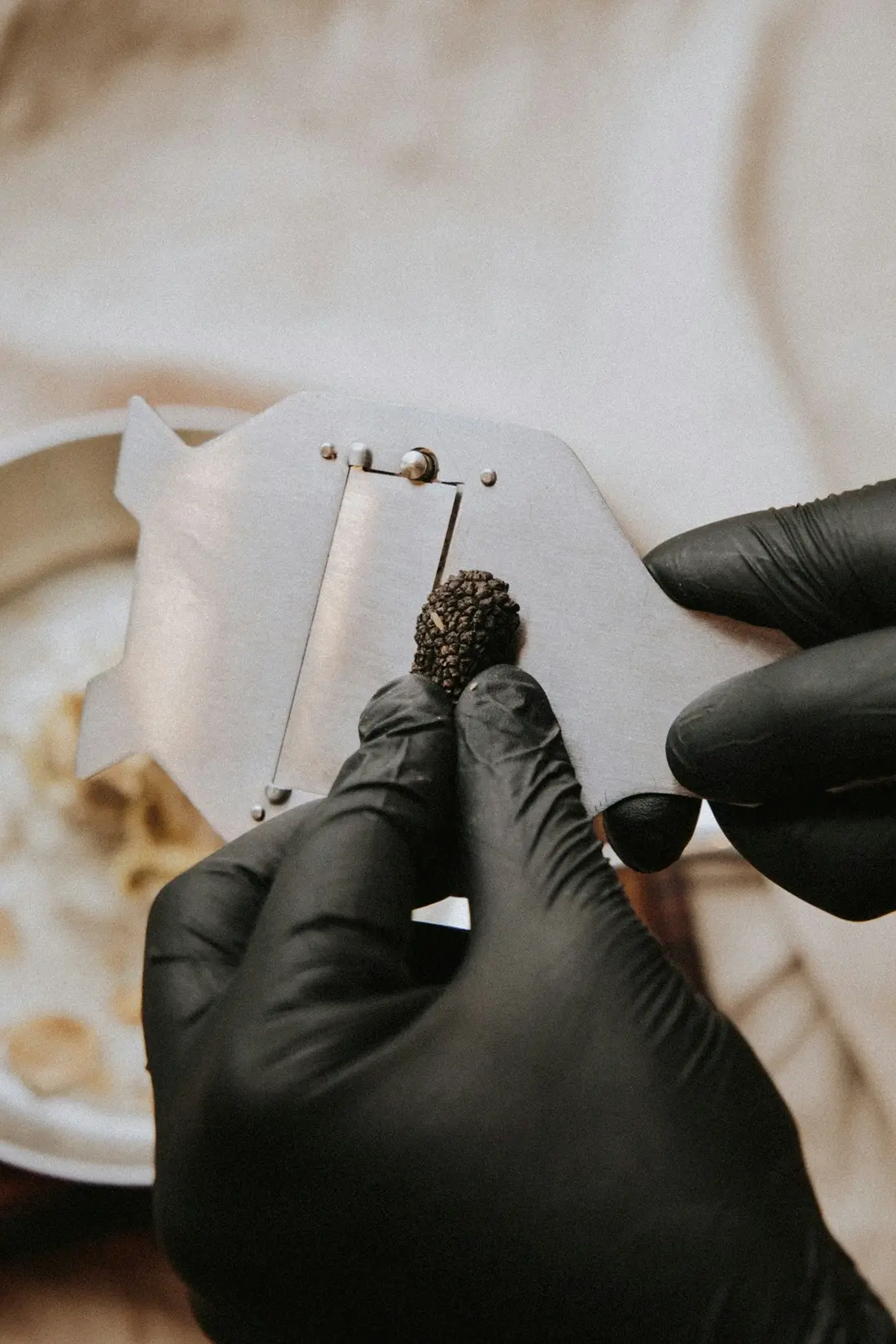
“You can prepare truffle dishes almost anytime, but I prefer working with fresh truffles during their season. The journey from the moment a truffle is unearthed to when it reaches the chef is crucial - the goal is to preserve as much of its aroma as possible. Ideally, they should not undergo heat treatment. Instead, they should be shaved thinly over a finished dish, whether sweet or savory. That’s when their aroma - the very essence of what makes them unique - remains at its best,” says the chef, who became a head chef at 23 and today brings over 20 years of experience, including major regional projects, and is known for his innovative culinary approach.
As he says himself, he aims to provoke a reaction - even a negative one.
“I don’t like to package things, and it’s the same with food. For example, I once served raw fish on an aquarium in which a live goldfish was swimming - the same color as the one the guest was eating above it. In that way, you reveal the reality: that the fish you eat was once alive and taken from nature,” Dimitrijević explains.
For him, cooking is far more than a job.
“I work to earn money and feed the body, but I cook to feed the soul,” he concludes.
Impossible to Cultivate Artificially
Along with their unique aroma, which is not only distinctive but also fleeting, the appeal of truffles is heightened by the fact that they cannot be artificially cultivated. They grow only in specific regions, usually near the roots of trees such as oak, wild hazel, or beech.
Because of their strong scent, truffles were once located by wild boars, naturally attracted to them. Today, specially trained dogs, most often females, are used instead. They are primarily found in European forests, with notable habitats in Croatia, Serbia, Italy, and France. One of the most famous truffle-rich regions is Istria, where between seven and nine tons are found annually, mostly the highly prized white truffle. In Serbia, areas such as Fruška Gora and several mountainous and river regions are also rich in these fungi.
White Truffle: The Most Valued and Expensive
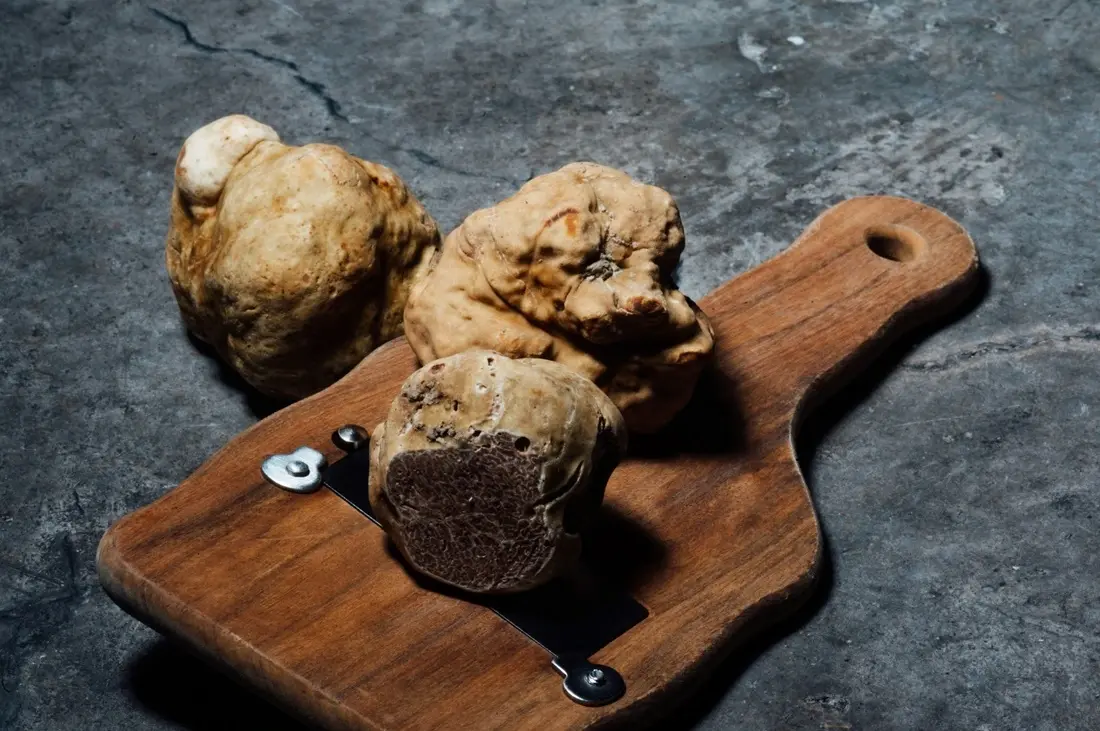
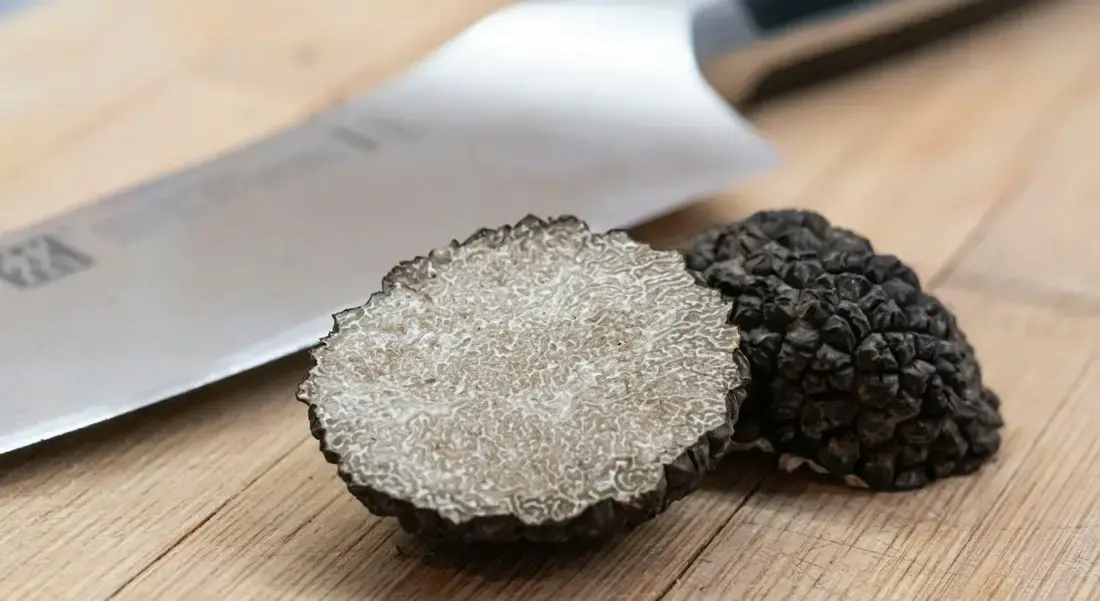
Nature has given us around 70 species of truffles, but only four are used in cooking. The most prized is the white truffle (Tuber Magnatum Pico), found only from October to mid-December. It is also the most expensive - top-quality specimens weighing over a kilogram are often sold at auctions, reaching extremely high prices.
If a truffle is damaged, it loses aroma more quickly, which reduces its value. Compared to black truffles, white truffles grow deeper underground - up to 50 centimeters, while black truffles are usually found at depths of up to 30 centimeters. Among black truffles, the most valued is Tuber Melanosporum, alongside Tuber Brumale and Tuber Aestivum, the summer truffle, which can be found from spring to autumn.
“The aromas of white and black truffles differ. You could say the white truffle is more intense, but each is so unique and beautiful that comparing them is hardly fair,” says Relja Dimitrijević.
“Hedonism Is Love for Food - Even an Apple from a Tree”
Restaurants in the region most often source truffles from Croatia and Serbia. Chef Dimitrijević notes that they are not difficult to obtain - there is plenty of supply, provided one can afford them. Prices range from €1,000 to €5,000, depending on quality, category, type, condition, and freshness.
Regardless of all that, he emphasizes that truffles are a gift of nature, available to everyone, without a specific clientele. It is your palate that determines whether you like them or not.
“Hedonism is, in essence, a love for food - regardless of its price or rarity. Sometimes, you can be more enchanted by an apple picked from a tree than by a lobster with truffles,” he says.
Truffles Around Banja Luka
Truffles, this “black treasure”, can also be found in the forests surrounding Banja Luka. In Krupa na Vrbasu, Mijodrag Vuković has been discovering them for several years with the help of specially trained Italian truffle dogs. Products made from these prized mushrooms are now available at the “Krajiška kuća” in Banja Luka, a specialty shop and a kind of culinary museum of the region.
However, this field of activity in Republika Srpska and Bosnia and Herzegovina is still in its early stages, and exploitation remains limited.
- Written by: Valentina Mišljenović / HEDONIST
- Originally published in HEDONIST Magazine, Issue 01, 2020