

How the Citroën DS Became a Work of Art on Wheels

![[object Object]](https://api.hedonistmagazine.net/storage/images/2026/09/609862c3-6afb-439d-9134-e0607019d682.webp)
Paris, October 5th, 1955. Under the vaults of the Grand Palais, where generations before had come to look at paintings and sculpture, a crowd gathers in silence around a car draped in cloth. When the cloth comes off, something happens in the hall that witnesses describe as a collective gasp - a shape none of them had ever seen before, on any vehicle, in any country in the world.
By the end of that same day, Citroën had taken in twelve thousand orders. The car was called the DS, and the French, through a play on letters pronounced almost exactly like the French word "déesse," immediately gave it the name it deserved to be remembered by: the Goddess.
Seventeen Years of Secrecy Before One Afternoon of Glory
What the audience that October day saw as a sudden reveal had, in reality, been seventeen years of quiet, closely guarded development. Since the late 1930s, Citroën had been working on a successor to the Traction Avant, a project codenamed VGD - Voiture de Grande Diffusion. The war slowed the work but never stopped it, and the car's final form was shaped by a team that brought together two entirely different disciplines.
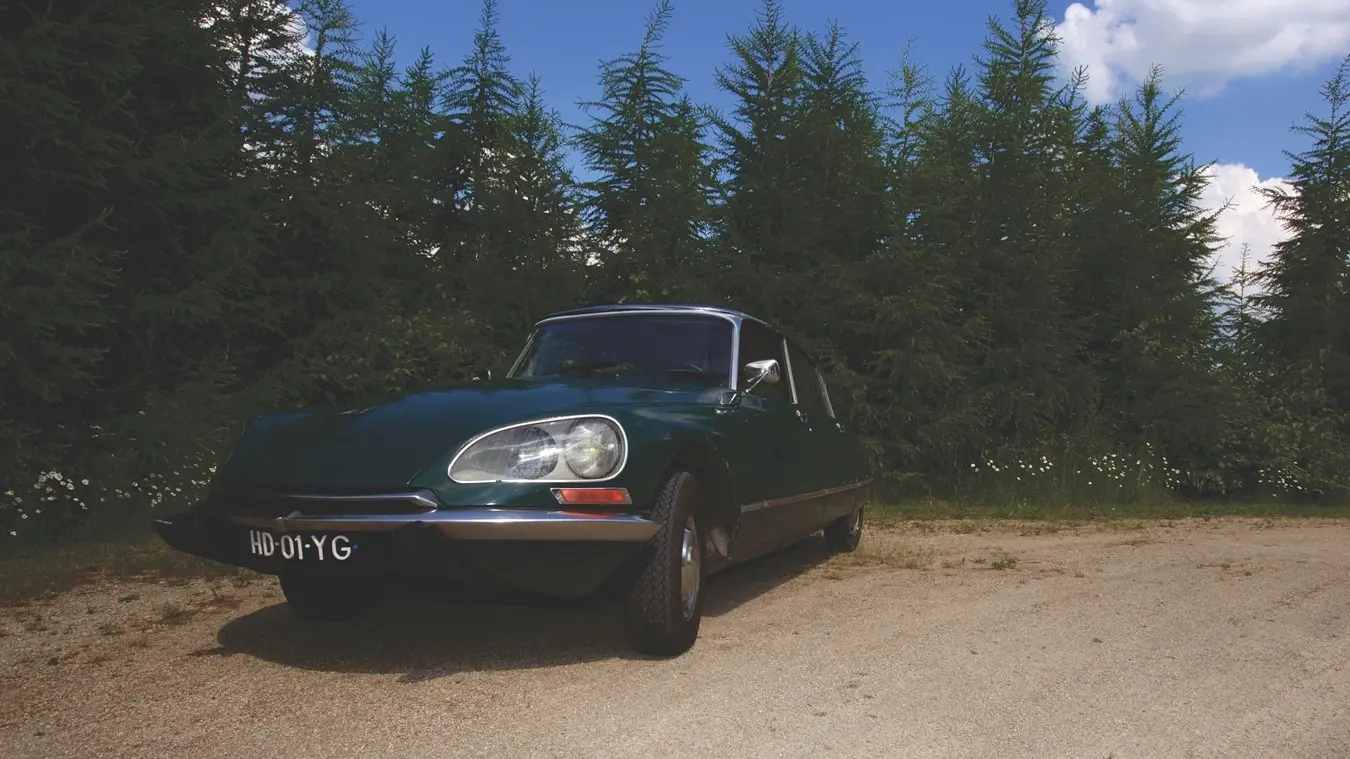
Italian sculptor Flaminio Bertoni, a man who had studied painting and sculpture before he ever started drawing cars, gave the DS its famous silhouette - a rounded, almost liquid form that resembled a drop of water more than anything else moving along European roads at the time. Working alongside him was French aeronautical engineer André Lefebvre, whose obsession with aerodynamics shaped every line of the body to speak of speed, not just appearance. Bertoni's final design wasn't officially approved until 1954 - less than a year before all of France would be left breathless.
A Car That Lifted Itself Off the Ground
But the DS didn't win over the crowd through its shape alone. What stunned the visitors at the show was the feeling they got the moment they sat behind the wheel: hydropneumatic suspension, developed by engineer Paul Magès, let the car level itself and adjust its ride height depending on load and terrain, creating a ride that journalists of the time described as flying on a magic carpet. Along with it came hydraulically assisted steering, clutch, and gearbox, as well as front disc brakes. This innovation reached a production car here before it reached almost any other vehicle of that era.
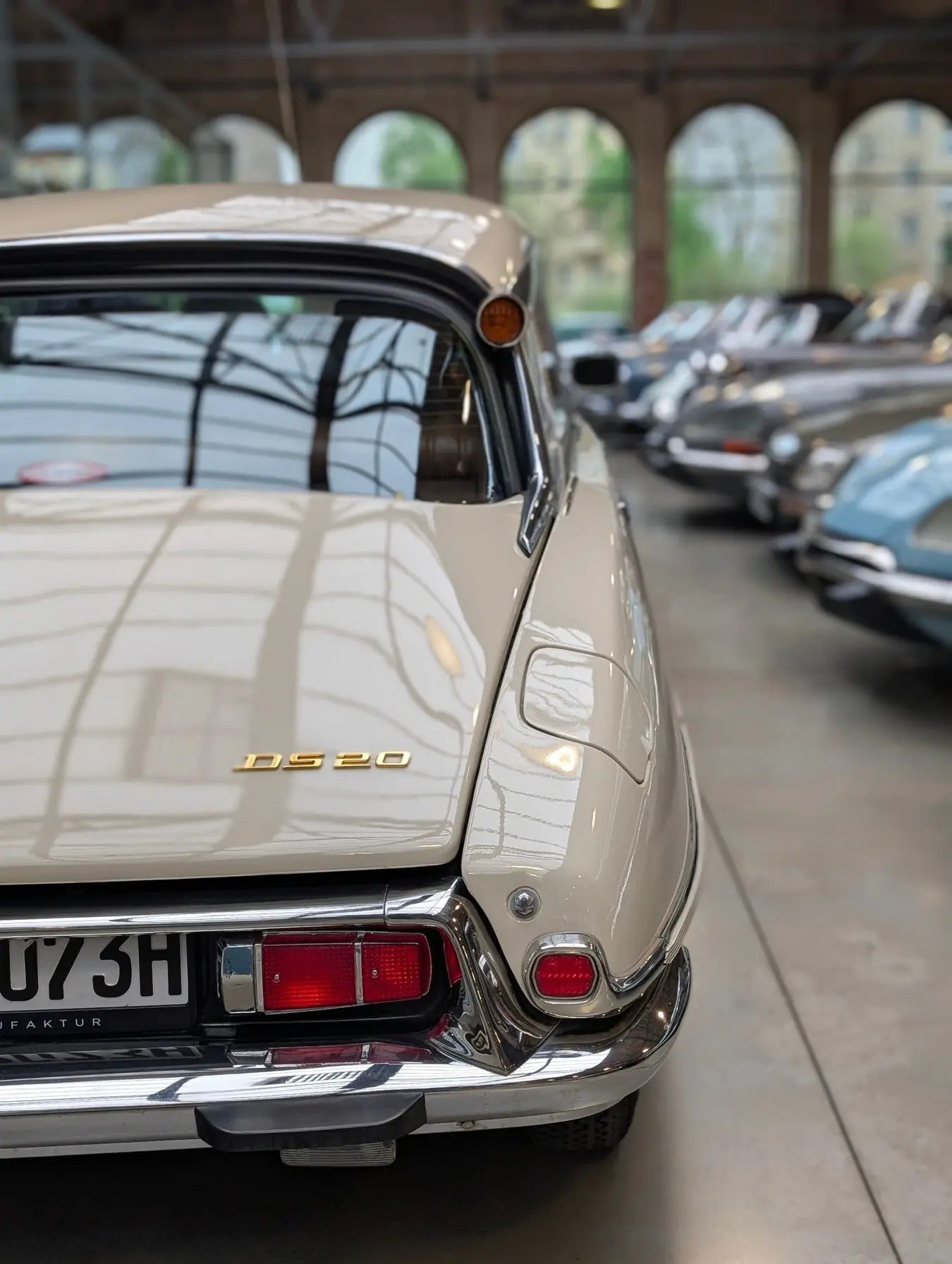
The result was so far ahead of its time that Chicago's Institute of Design included the DS among the "hundred most beautiful things in the world" not long after its launch. Nearly half a century later, in 1999, an international jury named it the third most influential car design of the century, and Classic & Sports Car magazine simply called it the most beautiful car of all time.
When a Philosopher Compared a Car to a Cathedral
Few products of the industrial age have drawn serious intellectual attention, but the DS did so within two years of its launch. French philosopher and semiotician Roland Barthes devoted an entire essay to the car in his 1957 collection Mythologies, describing it as something like a Gothic cathedral of its own era - the work of anonymous craftsmen, appropriated by an entire nation as an almost magical object. Barthes went a step further, describing how visitors at the show touched the car's bodywork and upholstery with an attention closer to religious ritual than ordinary shopping.

The Bullet That Couldn't Stop It
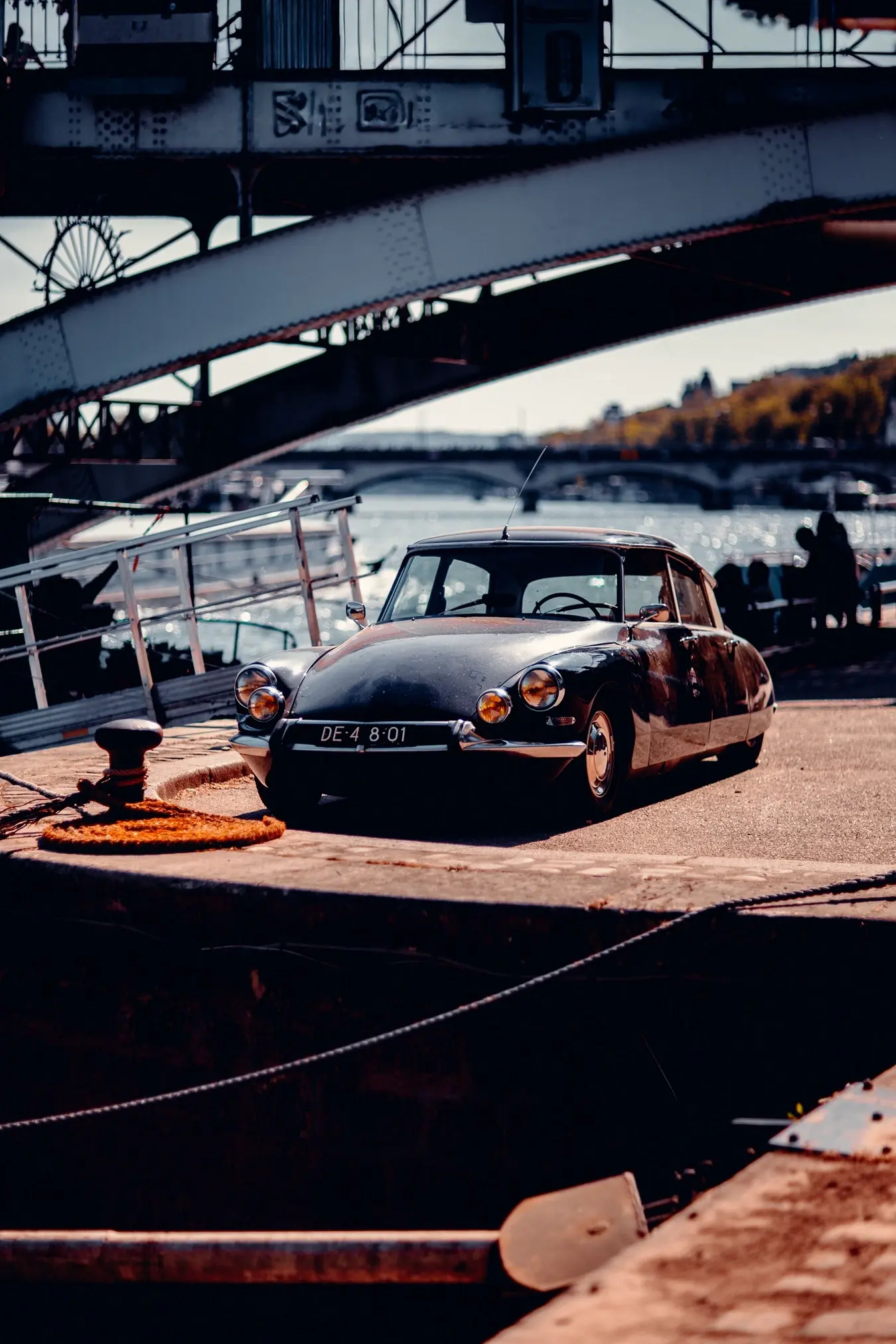
Still, the most dramatic moment in this car's history came on August 22nd, 1962, in the Paris suburb of Petit-Clamart. President Charles de Gaulle, travelling with his wife Yvonne, was on his way from the Élysée Palace to the airport when a group of twelve armed members of the secret organisation OAS opened fire on his black DS. More than a hundred rounds were fired; fourteen struck the presidential car itself, two blew out tyres, and one passed within a few centimetres of de Gaulle's head.
Driver Francis Marroux kept control of the car despite the two blown tyres, thanks to the hydropneumatic suspension that kept the body stable even as the tyres gave way beneath it, and drove the presidential couple safely to the airport. That evening, de Gaulle summed up the attackers dryly: "They shoot like pigs." What's less well known is how much of that failure, historians say, comes down to a car that simply refused to stop.
A Sculpture That Changed How We Build Cars
By the time DS production ended in 1975, after twenty years and more than a million and a half units built, the car had left behind something rarer than commercial success: proof that industrial design could be treated as a serious artistic discipline, worthy of philosophical analysis and museum exhibitions just as much as of driving from point A to point B. Today, examples of the DS sit in the permanent collections of design museums around the world, and its influence on aerodynamics, ride comfort, and safety technology can be felt in every modern car we drive - even though most drivers today have no idea they owe their disc brakes, or the system that levels their car over rough roads, to a French car from 1955 whose name, quite by accident, happened to sound like the word for goddess.