

Icefall Climbing: Into a World That Lasts Only One Winter

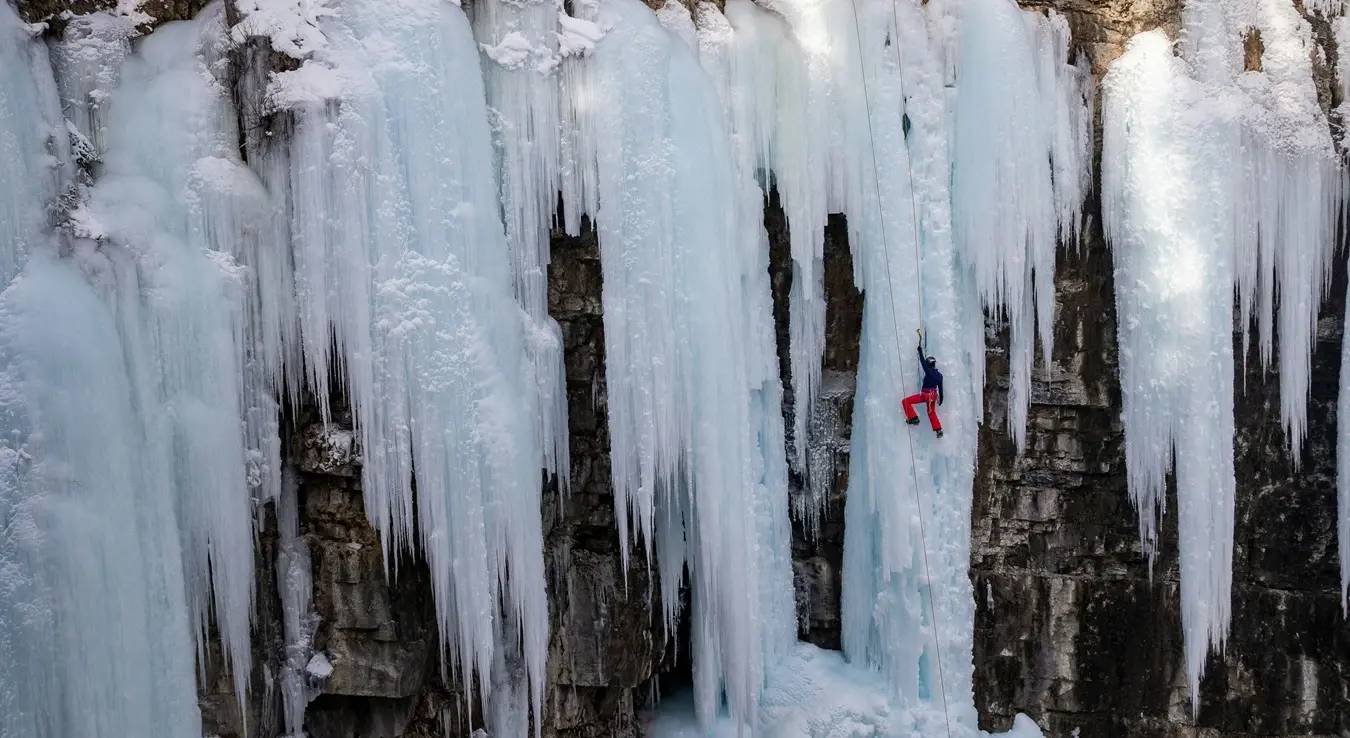
These formations provide the setting for ice climbing, one of the most technically demanding disciplines in mountaineering, in which climbers ascend using specialised ice axes, crampons, ropes and protection placed directly into the ice.
What looks from the valley like an immovable sculpture is, in fact, a constantly changing landscape, sensitive to temperature, sunlight, water flow, and every new cycle of freezing and thawing.
Unlike rock climbing, where climbers rely on holds and cracks formed over millions of years, an ice route can look entirely different from one season to the next. A thin stream of water may become a solid, almost perfectly formed column; elsewhere, cavities can lurk behind an opaque surface, while seemingly substantial sections remain brittle and unreliable. Technical skill alone is therefore not enough. Climbers must understand how the ice formed, how it behaves and how it may change over the course of a day.
Every Swing Has to Count
An ice climber uses two technical ice axes, driving their metal picks into the frozen surface, and crampons attached to their boots. The front points of the crampons provide purchase on steep or vertical ice, while the axes serve as the climber’s primary handholds. There is little room for guesswork in this sequence of movements: each swing must be precise enough to secure a reliable placement, yet not unnecessarily forceful, since a heavy blow can shatter the surface or dislodge chunks of ice.
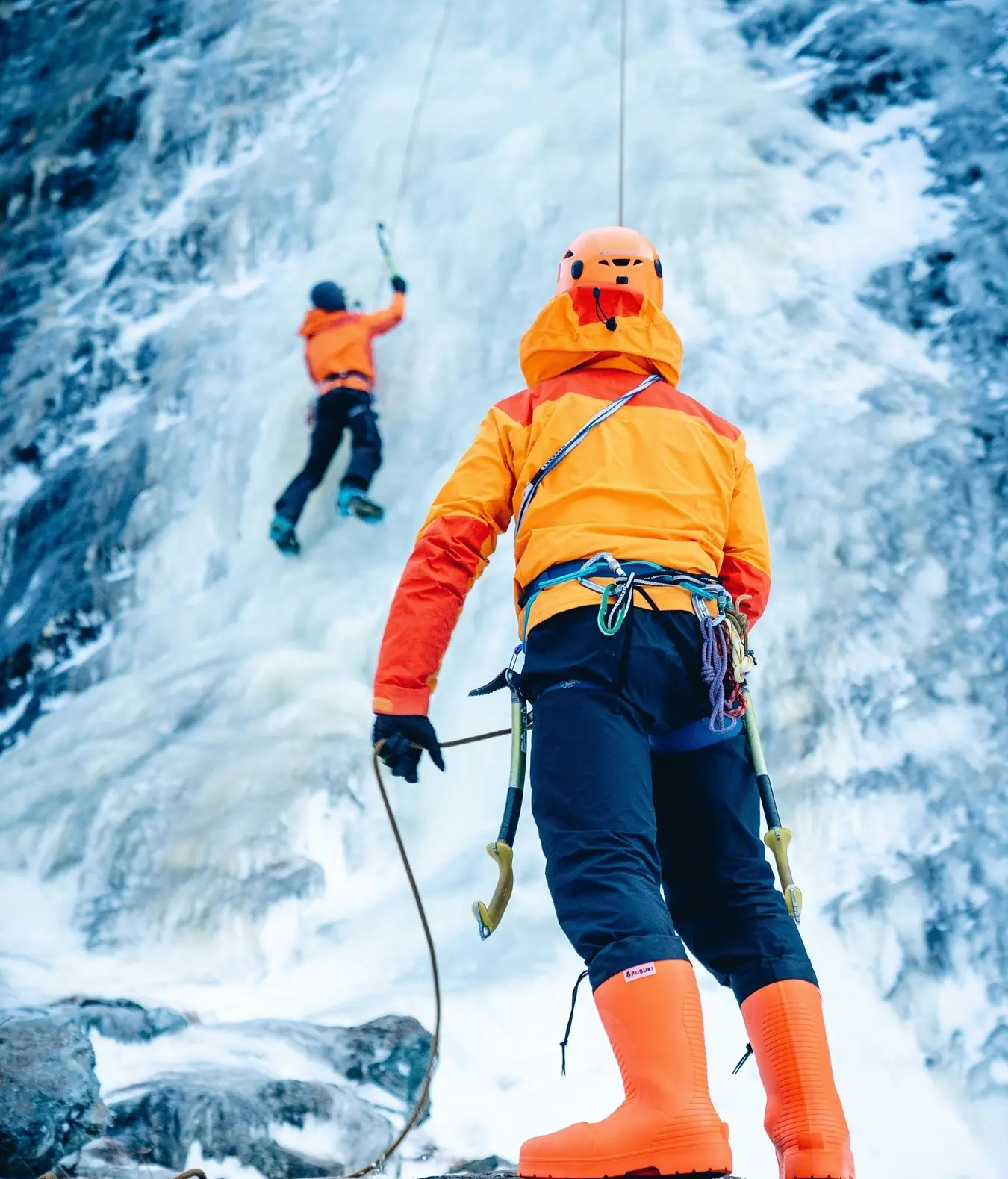
Experienced climbers do not try to overpower the ice through brute strength. Instead, they seek a rhythm that conserves energy and maintains balance. The legs support most of the body weight, while the arms provide stability and help with upward movement. When the body drifts too far from the surface, or the climber relies too heavily on arm strength, fatigue quickly sets in. This combination of precision, endurance and controlled movement is what makes ice climbing a discipline in which technique matters as much as courage.
Ropes, harnesses, helmets and protection systems are not optional extras; they are integral to the climb. The lead climber places specialised ice screws into suitable sections of the route while a partner belays from below. Depending on the terrain, the length of the climb and the configuration of the waterfall, the logistics can become considerably more complex. Yet even the best equipment cannot make unstable ice safe. Assessing conditions, choosing a route, and deciding when to turn back remain essential skills, not signs of inexperience.
From Natural Waterfalls to Purpose-Built Ice Parks
Several destinations have acquired almost legendary status in the world of ice climbing. Among them is Rjukan, a town in Norway’s Telemark region, where the deep valley setting allows numerous waterfalls to freeze into climbing routes during winter. The local tourism organisation lists more than 192 frozen waterfalls, with routes spanning a wide range of difficulty levels, as well as opportunities to take guided courses and hire equipment. For climbers from Europe and North America, Rjukan has become one of the key destinations for experiencing natural ice.
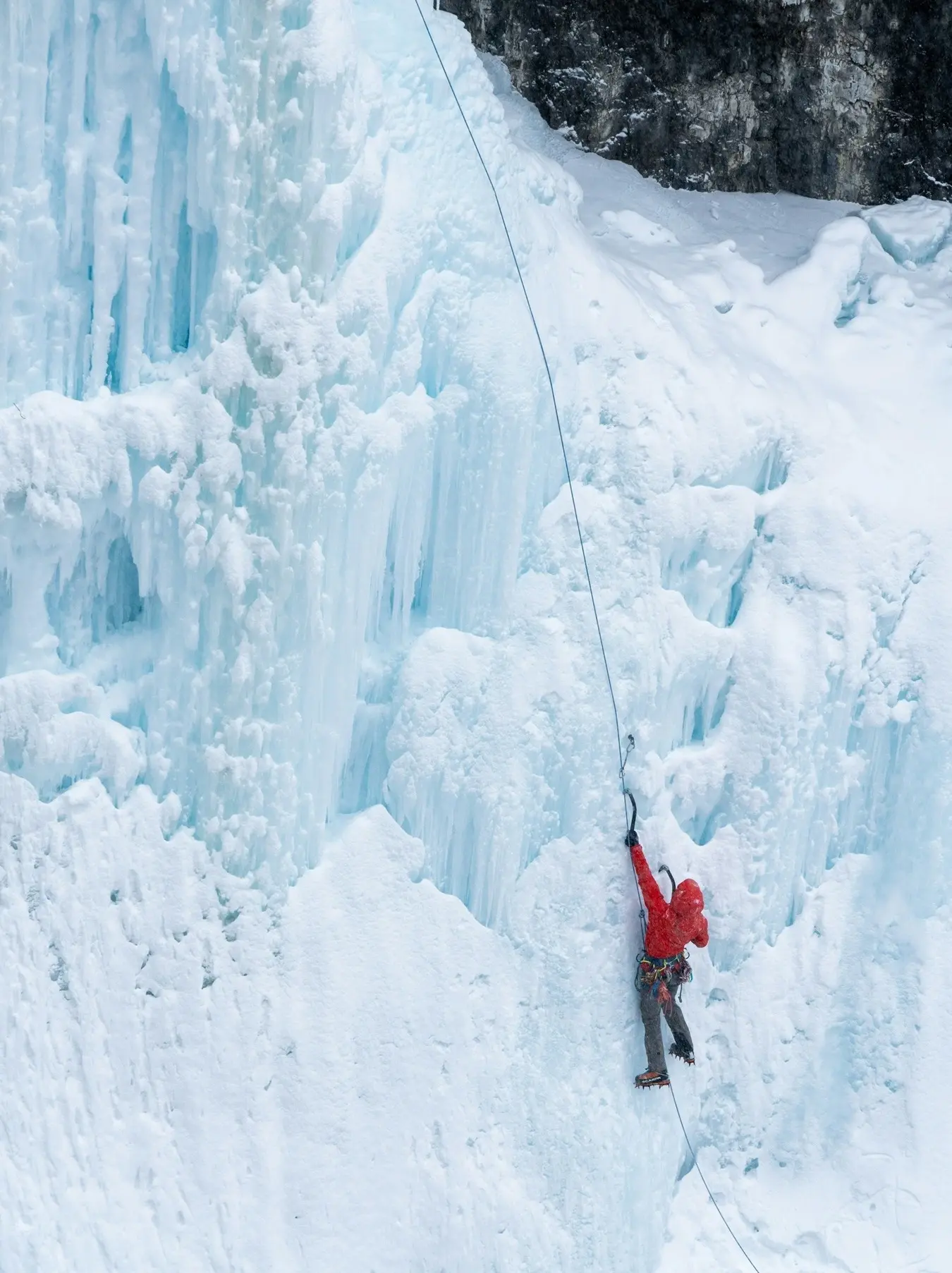
Across the Atlantic, the Colorado town of Ouray has developed a different model. In the narrow Uncompahgre Gorge lies Ouray Ice Park, a public climbing area where ice is deliberately formed and maintained each winter. Water is channelled over the rock to create routes of varying difficulty, allowing climbers to train on established lines without having to venture deep into the mountains each time. According to the park’s official website, the gorge contains more than 150 named routes for ice and mixed climbing.
These parks are not substitutes for the wilderness; they offer a more controlled environment in which to learn and refine technique. Beginners can master the fundamentals with an instructor, while experienced climbers use the established routes to prepare for longer, more remote ascents. Natural waterfalls, however, retain much of what draws climbers back to the sport: the ever-changing shapes of the ice, the uncertainty of conditions and the knowledge that the same route may never form in quite the same way again.
A Season Governed by Temperature
Ice climbing does not follow a fixed calendar that applies to every mountain. In many parts of Europe and North America, the main season runs from winter into early spring, but local climate, altitude, water volume and repeated freeze-thaw cycles determine when conditions are suitable. In Rjukan, more reliable conditions are generally associated with the winter months, while in Ouray the season and the state of individual routes depend on actual weather patterns. The park’s official condition reports warn that warmer temperatures and rain can degrade ice quality, increase the risk of falling ice, and lead to route closures.
Good preparation therefore begins well before the equipment is packed. It starts with checking conditions on the ground. Air temperature alone tells only part of the story: recent weather, exposure to sunlight, water flowing behind the ice, and the possibility of ice or snow breaking loose from above all matter. On a natural waterfall, even the traces of previous ascents are no guarantee that a route remains safe. Ice changes, and any assessment must reflect current conditions.
A Sport in Which Strength Is Assumed and Judgement Is Learned
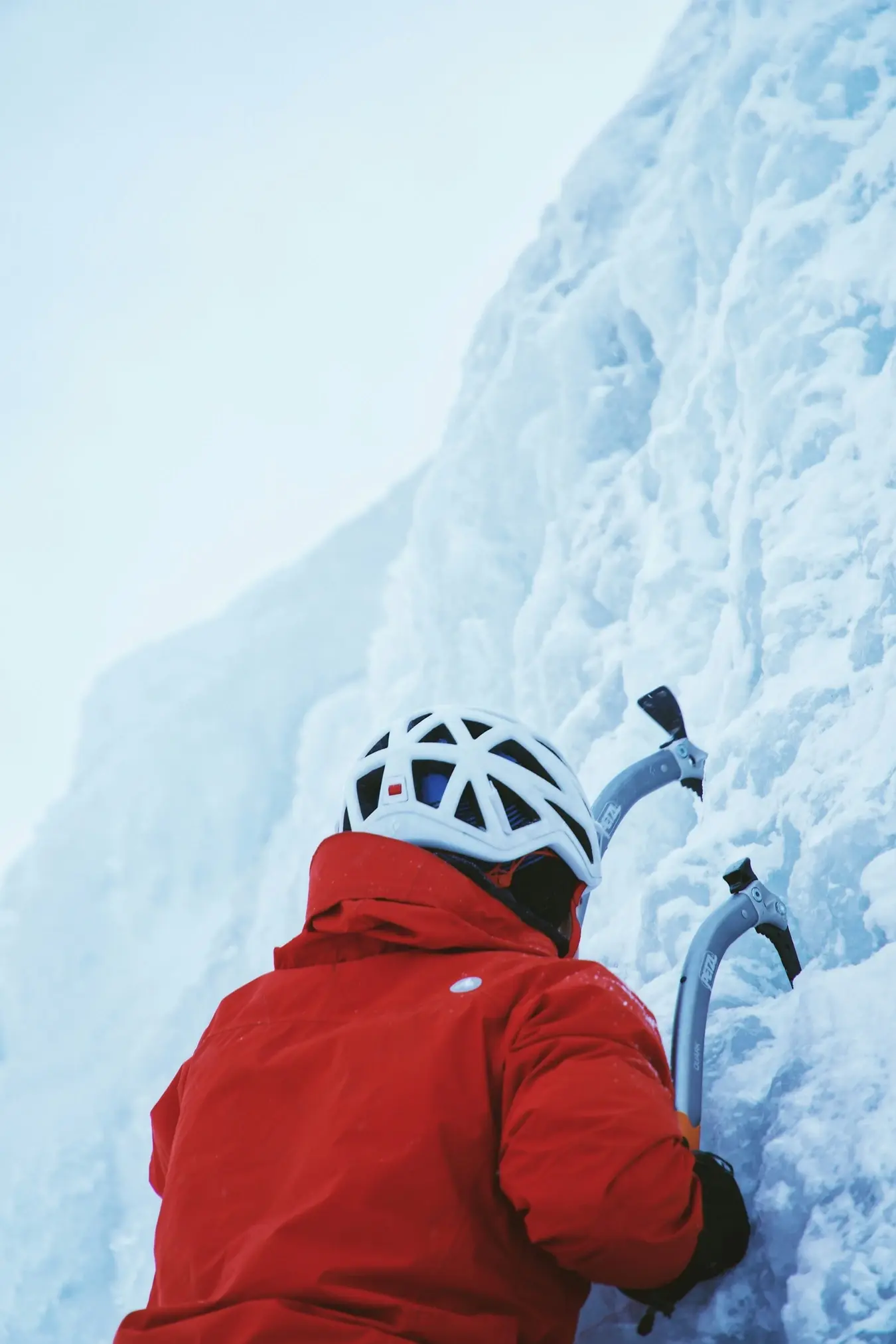
Although photographs often show a climber alone on a vertical wall of ice, the sport is, in practice, a team activity. The belayer, the choice of reliable protection points, clear communication, and familiarity with safety procedures are every bit as important as the ability to tackle a steep pitch. A helmet, harness, suitable crampons, ice axes, rope, and ice screws form the foundation of the technical equipment, but their effectiveness depends on proper use and the knowledge of the person using them. The International Climbing and Mountaineering Federation (UIAA) emphasises the need for appropriate training and experience when handling technical climbing equipment.
For anyone looking to try the sport for the first time, the most sensible starting point is a course with a qualified mountain guide at an established location, using equipment suited to winter climbing. Experience in mountaineering or rock climbing can provide a useful foundation, but it does not replace the specific knowledge required to assess and climb ice. The appeal of the sport lies precisely in this combination of physical challenge, technical skill and constant reading of the terrain. A climb is not won through the strength of arms and legs alone, but through the ability to recognise where progress is possible - and where it is wiser to stop.
Perhaps it is the fleeting nature of frozen waterfalls that makes them so compelling. A route that can be climbed today may change beyond recognition within weeks, then disappear entirely as warmer weather arrives. Unlike rock, which remains, ice presents a new set of conditions each winter, asking climbers to understand them before moving upwards. That is where the true character of the sport lies: not in a contest against nature, but in learning to read it with precision and respect.
Related articles
Above the Abyss: The Adventure That Gets Even the Bravest Hearts Racing
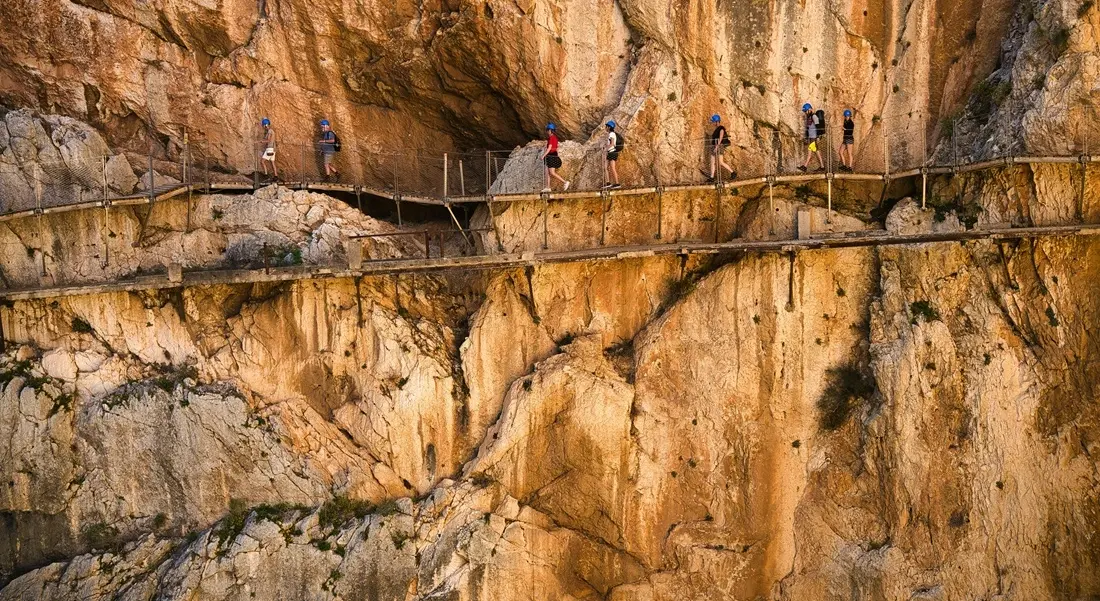
The first step feels completely ordinary. Just a few metres later, more than a hundred metres of empty space open beneath your feet, and a narrow wooden walkway clinging to sheer cliffs becomes the only link between the two sides of the canyon.

Why More and More Travelers Are Swapping Sun Loungers for Hiking Boots
There was a time when the perfect vacation meant seven days on the beach, a hotel pool, and a sun lounger reserved early in the morning. Today, that picture is changing. More and more people are choosing holidays that get them moving, taking them to mountain peaks, through canyons, along forest trails, and into untouched nature. Travel is no longer just an escape from everyday life - it has become an opportunity for new experiences, personal challenges, and memories that last far longer than a summer tan.
Via Ferrata: Between a Walk and an Expedition
Some people conquer peaks. And some want to feel the mountain - without extreme risk, heavy gear, or years of training. Between these two worlds, there is now a perfect middle ground: via ferrata.

A Step Beyond Fear: The Iron Paths of Kozara and Romanija
Republika Srpska offers adventure in all its forms, and rock climbing is certainly one of them, thanks to its remarkable nature, striking rock formations, and breathtaking landscapes, which together provide a truly unforgettable experience. Among the most popular destinations for this kind of adrenaline-filled activity are Kozara National Park and the Red Cliffs of Romanija.