

A Brief History of the Necktie: From Military Detail to Emblem of Style
![[object Object]](https://api.hedonistmagazine.net/storage/images/2026/09/80611c64-e53d-4b07-8dc5-8cea463fa5b2.webp)
Few garments have changed as much as the necktie while remaining so instantly recognizable. Four centuries after its first appearance, it still sits where it always has, between collar and lapel, though it no longer says what it said a hundred or three hundred years ago.
It began as a mark of military origin, became a court fashion, then the signature of a gentleman's elegance, and in the twentieth century something close to the uniform of the business world. Today it is once again a matter of choice, which, it seems, has opened up an entirely new kind of freedom.
From Croatian Soldiers to the French Court
Its origins are traditionally traced to the Croatian soldiers who fought in French service during the Thirty Years' War in the seventeenth century. They wore scarves knotted at the neck, a detail that did not escape the notice of the French court. The word cravate derives from Croates, the French name for Croats, and from there it travelled through the languages of Europe to become the name of one of fashion's most enduring accessories.
What is striking is how quickly a soldier's detail became a courtly fashion. By the second half of the seventeenth century, the cravat was being worn far from the battlefield, and pieces of silk, fine linen and lace were appearing at the throats of the aristocracy. In the wardrobe of the age, the neck was among the most visible parts of a man's dress, and therefore the ideal place to declare his standing.

When the Cravat Became a Matter of Taste
There was, at the time, no single cravat and no correct way of tying it. A gentleman could choose among different shapes, fabrics and arrangements of cloth at the neck. It was a small stage on which taste, wealth and social allegiance were performed.
From this period comes the story of the Steinkirk, a popular way of wearing the cravat in the late seventeenth century. According to tradition, French officers surprised by an attack at the Battle of Steenkerke in 1692 had no time to arrange their neckcloths properly. They simply wound them around the neck and pulled the ends through a buttonhole of the coat. The tale is good enough to have survived to this day, though fashion historians rightly caution that it is legend rather than fact. The fashion itself, however, was real, and it remained popular until the end of the century.
Such episodes reveal something essential about the cravat. It was never merely a piece of cloth. From the very beginning, it was inseparable from the way it was worn, and that manner could say as much as the clothes around it.
Beau Brummell and the New Elegance
The decisive turn came at the start of the nineteenth century, when the very idea of how a man should look began to change.
George Bryan "Beau" Brummell was among the most influential arbiters of British fashion of his day. His importance lay not in inventing any new garment, but in turning dress into a discipline in which value was no longer measured by the quantity of ornament. A well-cut coat, an immaculate shirt, polished boots and a carefully arranged cravat mattered more than the opulence that had once defined aristocratic wardrobes.
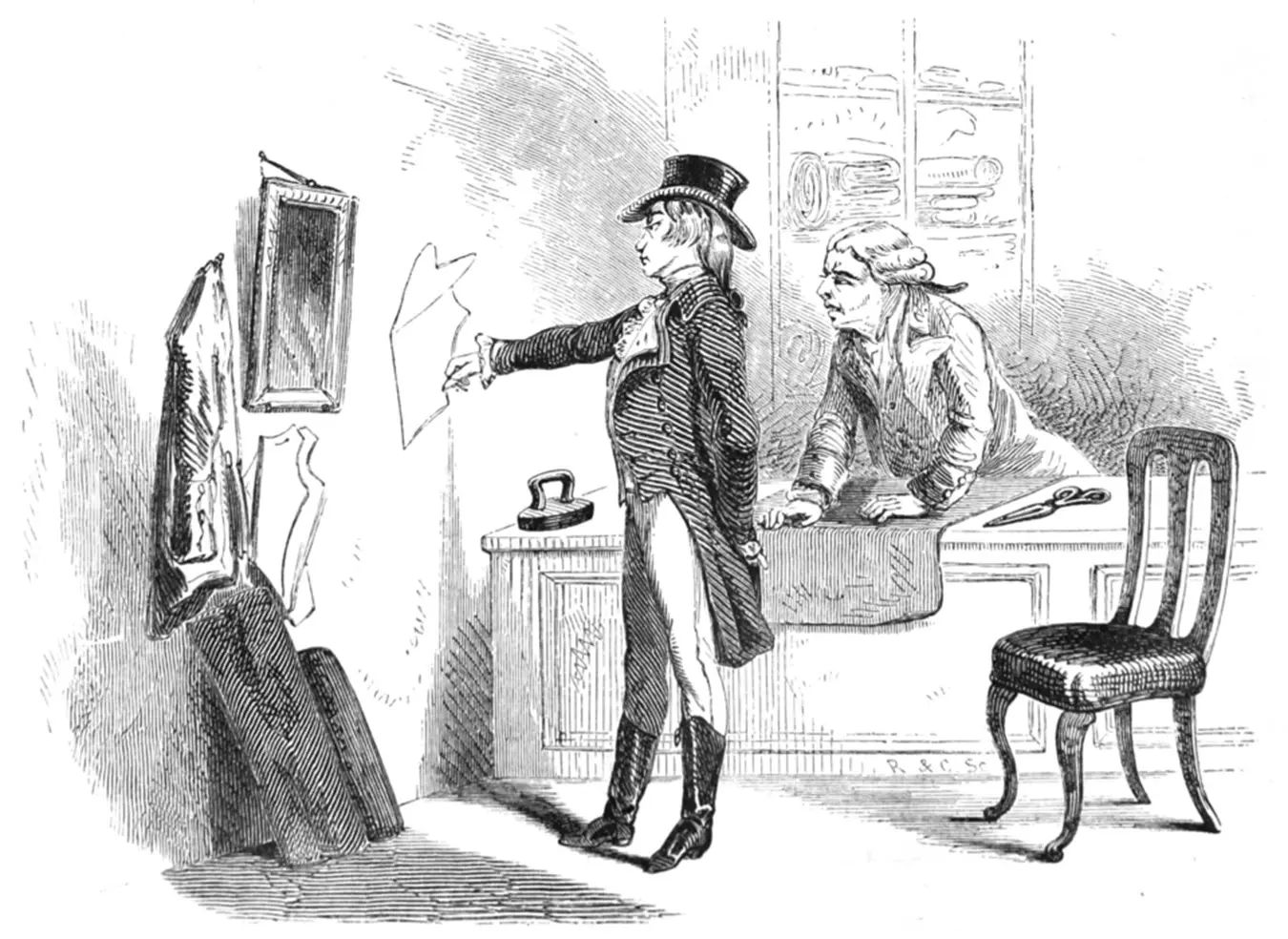
Brummell's cravat was close to an obsession. He wore starched neckcloths and devoted enormous attention to tying them, so much so that tales of his exactness became part of his legend. Fashion history regularly points to his influence as one of the key moments in the emergence of the more restrained masculine elegance that would define the nineteenth century.
The paradox of his style was that it demanded great effort to look effortless. A perfectly arranged cravat was meant to appear natural, almost accidental, though behind that apparent carelessness lay considerable precision. Already visible here is something that remains true of good style today: the most successful detail is often the one that does not draw attention to itself, but instead makes the whole ensemble cohere.
In the early decades of the century the cravat was still a substantial affair. It was worn as a broad square of muslin or silk, carefully folded and knotted in a variety of ways, and manuals of male dress offered entire systems of tying. It was a principal object of men's fashion and, among dandies in particular, a matter of serious personal conviction.
The Road to the Modern Tie
Over the nineteenth century, neckwear gradually grew simpler. The large cravats gave way to narrower silk ties and less elaborate knots, and by mid-century dark silk ties and slimmer shapes were increasingly common.
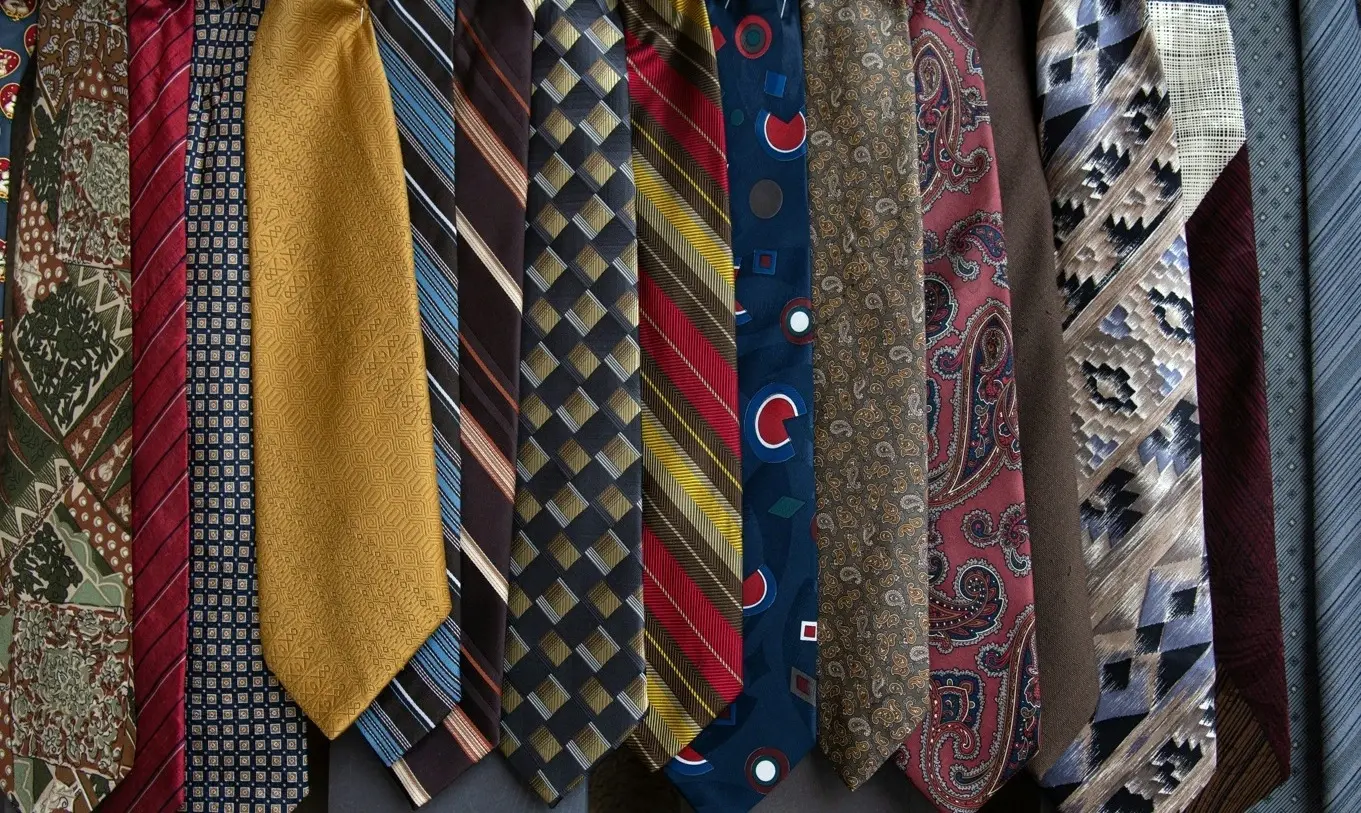
By the last quarter of the century the tie had begun to resemble the object we know today. The four-in-hand, named, according to one explanation, after a London club and, according to another, after the way coachmen knotted their scarves, fitted easily into a newer, more practical wardrobe. It was worn with a white shirt and the so-called lounge suit, a combination that became a foundation of the modern suit.
It was an important change. The tie ceased to be a grand ornament and became part of everyday dress. Its role was no longer to outshine the rest of the wardrobe, but to tie it together.
From Elegance to Uniform
Industrial society produced a new kind of man and a new way of dressing. The suit became the standard of public and professional appearance, and the tie slipped seamlessly into the system. It was not conspicuous enough to disturb the gravity of the suit, yet it left enough room for a man to express something of himself.
Colour, fabric and pattern could distinguish the man who had merely put on a suit from the man who knew what he was doing. A striped tie suggested a school, a club or an institution; a discreet solid colour, business seriousness; a bolder pattern, a readiness to step outside stricter rules. The tie thus acquired a curious double function: it became part of the uniform, and at the same time one of the few places within that uniform where individuality was permitted.
In the twentieth century the game only accelerated. Ties changed in width, length, material and pattern with almost every shift in men's fashion: narrow and severe one year, wide and flamboyant the next, at times nearly invisible, at others so dominant that they defined the entire look. Yet their essential position never changed. Between shirt and jacket, the tie remained a small territory in which a man could alter the whole impression he made.
When It Stopped Being Compulsory
The tie may have undergone its greatest transformation only when it stopped being obligatory.
With the spread of more relaxed business dress, particularly in the late twentieth and early twenty-first centuries, a suit no longer automatically implied a tie. The shirt could stay, the jacket could stay, but the knot at the throat was no longer necessary proof that one had taken the occasion seriously. Paradoxically, this returned to the tie some of the freedom it had enjoyed in its earliest days.

When it is required, it is part of a uniform. When it is chosen, it becomes a detail of personal style. That is why the same tie can look entirely different depending on who wears it. With a classically tailored suit it can express tradition and formality; with denim and a softer jacket it looks modern; with wider trousers and a loose shirt it can be a deliberate play on the old codes of menswear. And here it draws close again to its oldest role: no longer something one simply puts on, but something whose manner of wearing speaks about the person.
Four Centuries Around the Neck
From Croatian soldiers in French service to today's runways, the tie has travelled a road that few garments have completed without vanishing altogether. States, social classes, dress codes and ideals of elegance have all changed, and each time it has found a place in the new world.
In the seventeenth century it was a soldier's detail that caught the eye of the French court, and then a luxury of the aristocracy. In the age of Beau Brummell it became an instrument of precise, restrained elegance. In the nineteenth century it approached its present form, and in the twentieth it became one of the most recognizable symbols of the professional and formal man.
Today, for the first time since it became part of the business uniform, no one has to wear it. That is precisely why it has more opportunity to say something about the man who puts it around his neck. The tie is no longer merely a sign that someone arrived in a suit. It can signal respect for an occasion, devotion to classic style, belonging to a particular world, or simply a fine piece of silk that sits perfectly against a shirt.
And perhaps that is the best definition of its long life: the tie has endured because it was never quite the same thing twice. Each generation added something of its own, then left it to the next to decide what to make of it.
Tags
Related articles
Why the White Shirt Is a Timeless Style Icon
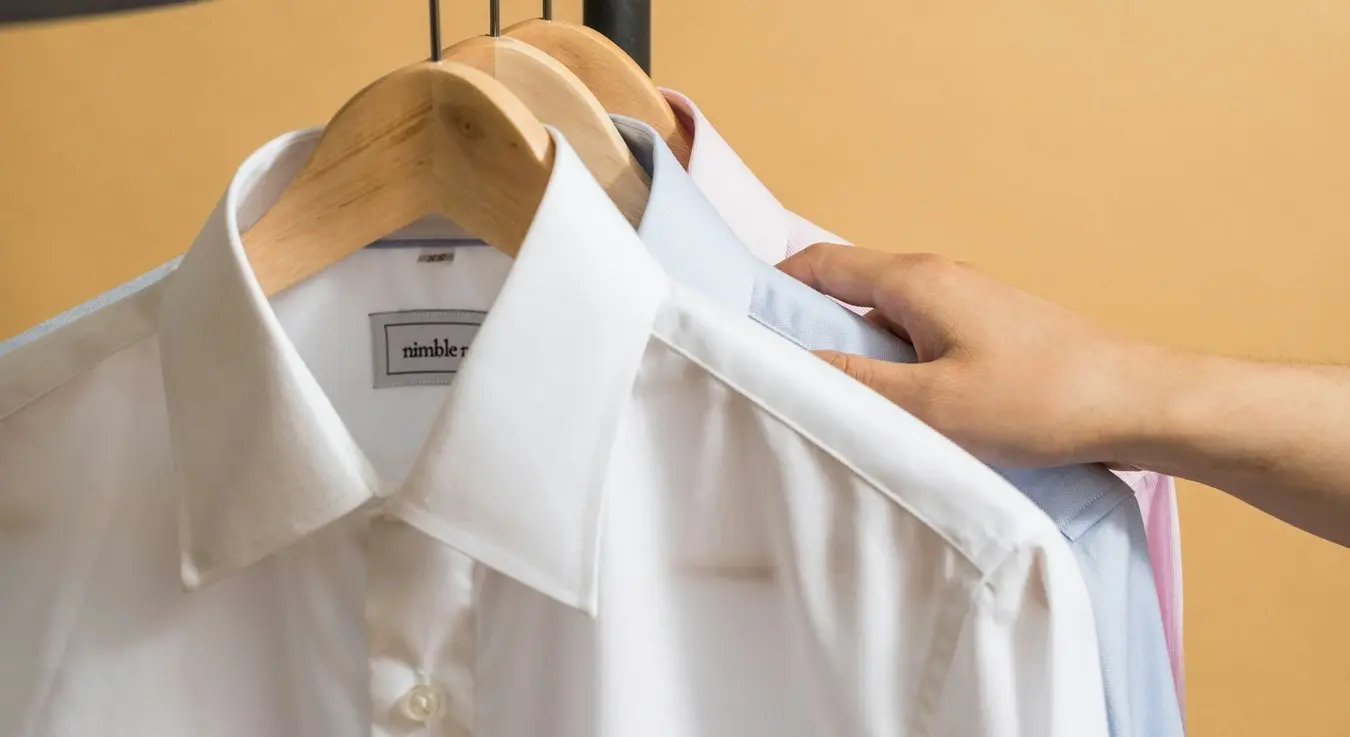
The white shirt was never elegant because it was white. It was elegant because staying white was almost impossible - and a man who managed to keep it that way, day after day, was proving something worth far more than good taste: that someone else washed, starched, and pressed his linen for him, and that he himself never had to do work dirty enough to soil his collar.

How Wayfarer Sunglasses Became a Pop Culture Icon
When James Dean walked the streets of Los Angeles, Tom Cruise danced across a living room in a white Oxford shirt, and the Blues Brothers stepped onto the stage in their signature black suits, audiences remembered more than their faces. They remembered the sunglasses.
Quiet Luxury on the Wrist: Watches Recognized Only by True Connoisseurs
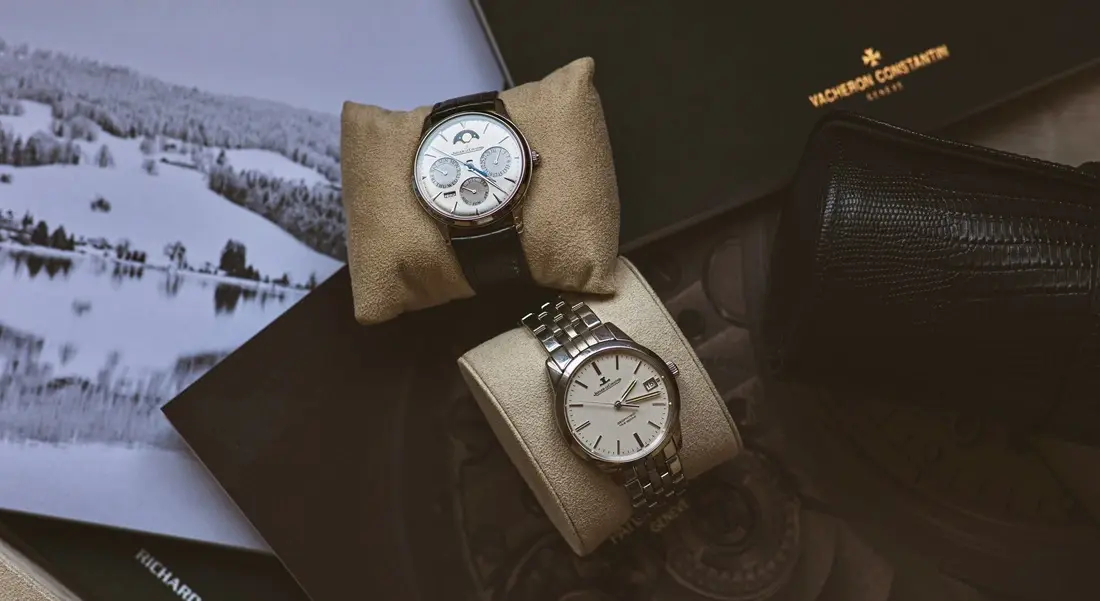
There comes a moment when luxury stops being a loud display of status and becomes something far more subtle. Something that does not ask for attention, yet still receives it. In the worlds of fashion, automobiles, and interior design, this trend has for years been known as “quiet luxury” - an aesthetic of discreet sophistication in which quality speaks louder than logos.