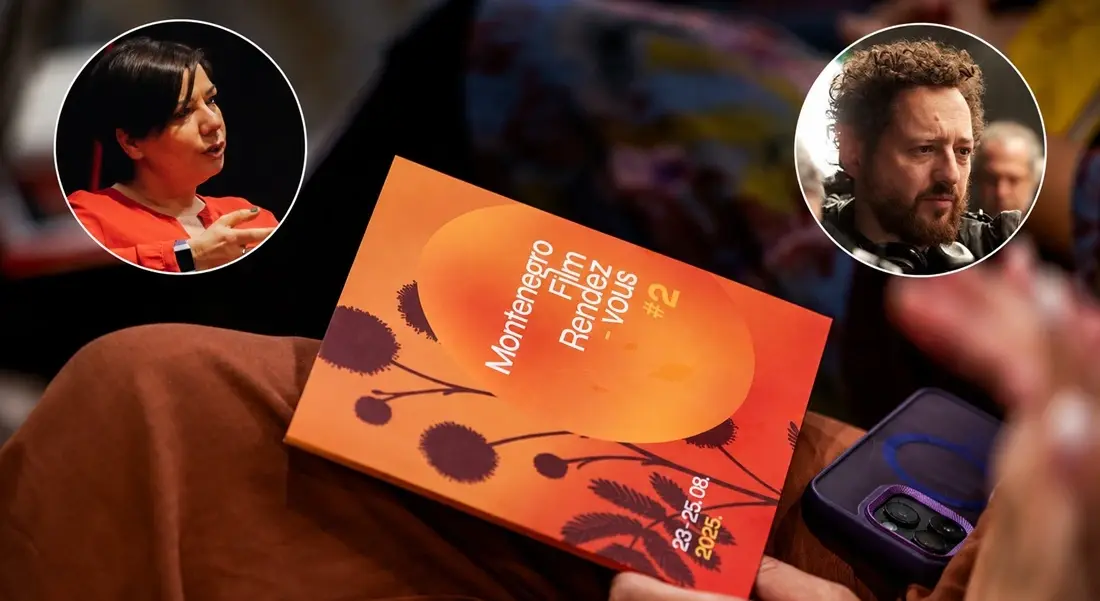
"You Have to Let Everyone Shine": Lars von Trier's Cinematographer Shares the Secrets of the Craft with Filmmakers

![[object Object]](https://api.hedonistmagazine.net/storage/images/2026/08/5003866d-c2b2-4247-a247-491639a8865a.webp)
Being a cinematographer, says Manuel Alberto Claro, is less a question of personal talent than one of balance. "You can be brilliant, but if you don't let your collaborators shine, the project will be bad," the Chilean-Danish artist told a packed room in Herceg Novi on the second day of the Montenegro Film Rendezvous. "This is, above all, about balancing different energies."
Claro, a longtime collaborator of Lars von Trier who worked with him on Melancholia, Nymphomaniac: Vol. 1, and The House That Jack Built, led a masterclass on cinematography and visual storytelling - one of the central moments of the day's program, putting Montenegrin filmmakers face to face with the experience of a man whose most recent work, Dom (Home), directed by Marijana Janković, opened this year's Herceg Novi Film Festival.
Speaking about his relationship with directors, Claro described the cinematographer's position as fundamentally contradictory: "You're expected to be an artist, an author, a storyteller - someone with your own perspective. But at the same time, you have to support the director and realize his vision. The whole time, you're first building up your own confidence, and then you have to bring yourself back down to earth. You need to get inside the director's mind and figure out how your art can find its way through his thoughts, and come out the other end looking like it was his idea all along."
Montenegrin films in front of the world's producers
Before Claro's masterclass, the day belonged to local filmmakers. Montenegrin directors presented their projects in development to international experts, producers, and representatives of film funds - an opportunity rarely available at this scale on home ground. Audiences got a first look at Fires by director Nina Tratnik, A Pu Rescue for All of Us by Andrija Mugoša, and Rooms by director Pavle Simonović.
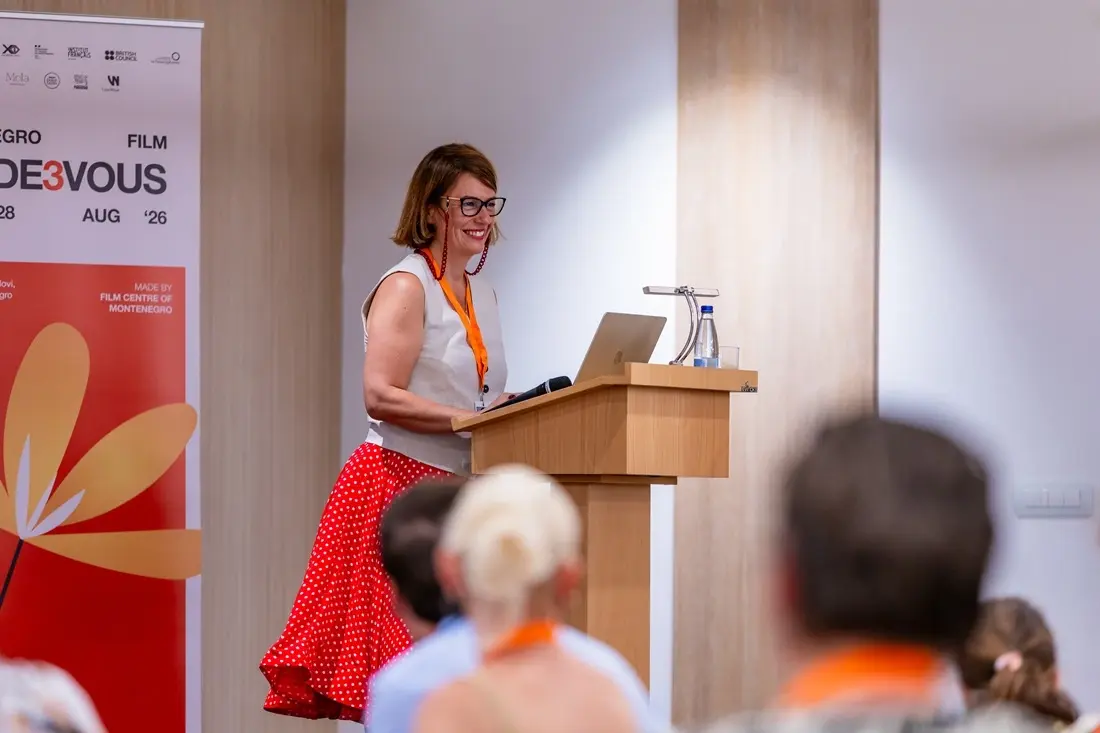
The day opened with remarks from Aleksandra Božović, Director of the Film Center of Montenegro, who reflected on how far the program has come since its first edition. "Three years ago, Montenegro Film Rendezvous ran for three days. This year it runs for seven. We didn't plan that growth on paper. It happened because people kept coming back, and because more and more partners wanted to be part of this platform," Božović said, adding that the focus of the program has always been on local filmmakers: "You didn't come here because Herceg Novi is easy to get to. You came because something is happening in Montenegrin cinema."
Co-productions as a shared language
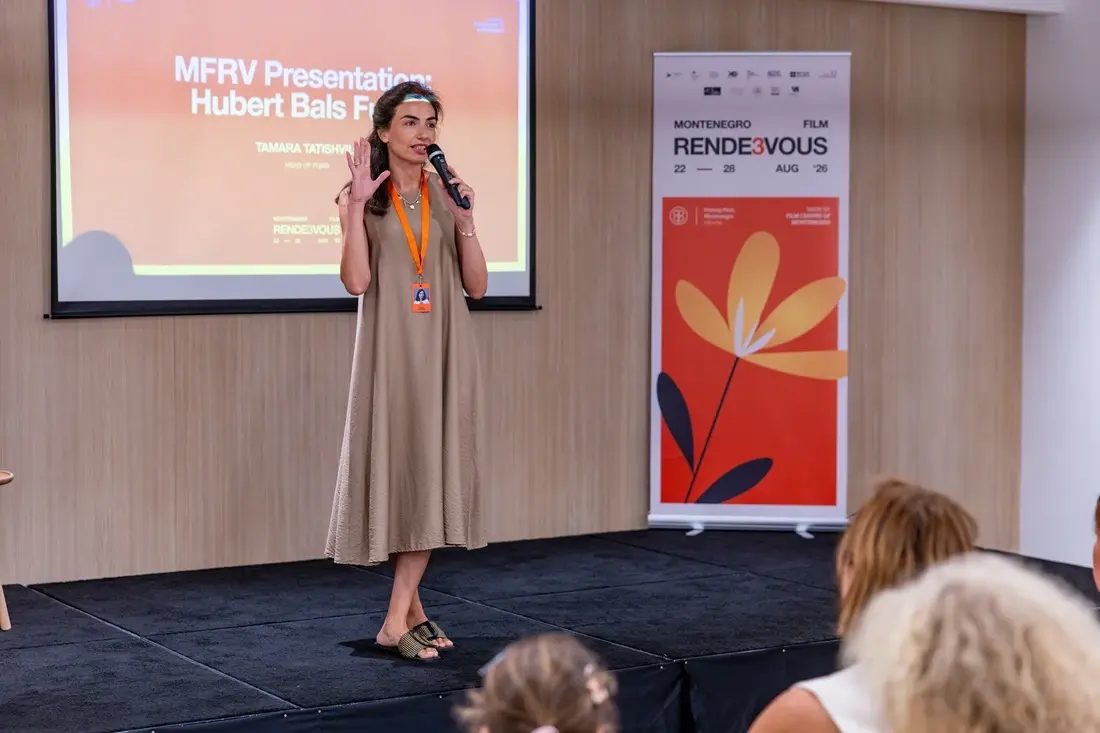
Part of the second day was devoted to a more fundamental question: how do small national cinemas reach audiences beyond their own borders in the first place? Tamara Tatishvili, director of the Hubert Bals Fund at the International Film Festival Rotterdam, spoke about her experience in financing and audiovisual policy, while two panels brought together representatives of film agencies from the Baltics and the wider European scene - from Latvia, Estonia, and Lithuania to Greece, Italy, Luxembourg, and Belgium - who traded notes on models of co-production partnership. The message running through both panels was much the same: in an industry where no single market is big enough on its own, the ability to find a partner in another country often decides whether a film gets made at all.
Two stories waiting for their premiere
The second day's program also included screenings of two Montenegrin documentaries in the final stages of post-production, each carrying a story strong enough to stand entirely on its own, outside the festival context. Montenegro Star: The Sample of Janko Nilović, directed by Nikola Vukčević, pays tribute to the 82-year-old cult composer whose work, though little known to the wider Montenegrin public, left its mark on the shaping of modern hip-hop. Rear Admiral, directed by Mladen Ivanović, tackles a far darker subject - the unresolved killing of Krsto Đurović, the Montenegrin rear admiral who, in 1991, refused an order to attack Dubrovnik.
The program continues on Monday, August 24, with presentations of the Montenegrin projects in development Echo by Ivica Vidanović, Fruit by Maša Šarović, and Balkan Maestro, directed by Altinaj Petrović Njegoš and François Fleury, alongside a masterclass by Nina Hartstone, an Academy Award winner for sound editing on Bohemian Rhapsody.
Montenegro Film Rendezvous 2026 is organized by the Film Center of Montenegro, in partnership with the Ministry of Culture and Media, the Municipality of Herceg Novi, and JUK Herceg Fest, and runs through August 28 in Herceg Novi.