

The Story of the Spritzer: A Song of Seasoned Cellar Masters

![[object Object]](https://api.hedonistmagazine.net/storage/images/2026/01/9d3f6e87-92b5-4713-bb14-132995124c33.webp)
Halfway between Aljmaš and Erdut lies Dalj Planina, a loess ridge that stretches approximately ten kilometers in length. In the middle of that route, near a spot where two Danubes can be seen, stands a two-story house with twin balconies. Below it, in two orderly rows descending toward the road, a fierce orchard and a fragrant vineyard race downhill.
Written by: Goran Dakić/HEDONIST
Beside the house is a garage where Grandpa keeps his tools and fishing gear, and next to it a cellar where ajvar, fruit preserves, and wine are cooled and protected from the sun.
In those years, I peeled peppers with my grandmother behind the house from morning until night. I stirred apricots and plums for hours with my mother in my uncle’s yard, which she then poured into warm jars. I clipped grape clusters with blunt scissors and barely sharpened knives, filled baskets with them — yet the truth is, I loved none of it. Ajvar and preserves, not under any circumstances. Wine was forbidden to me, locked away behind eight locks and a ninth Dubrovnik one.
To this day, I have tried to increase the distance between myself and preserves of all colors, smells, and tastes. I eventually made peace with ajvar halfway, with intermediaries such as strong flatbread or well-fried sausages. My journey toward wine was long and persistent, disrupted by other spirits at every possible bend. I knew that Slavonia — which I hold as dear as Krajina, perhaps even a touch more — is exclusively a wine region, more precisely a spritzer land. Still, my fragile body and stubborn spirit (or the other way around) were initially shaped by beer (first Jelen, then Nikšićko), followed by brandy (journalistic honor), and finally rakija (the spirit of Kočić watches over us).
Beer made me heavy as clay; brandy turned me sour and sharp. I eventually found my alcoholic balance: from St. George’s Day to St. Demetrius’ Day — spritzer; from St. Demetrius’ Day to St. George’s Day — rakija, the mother. Good plum brandy was easy to find — there is no bad one beneath Krajina — but for good wine, especially spritzer-worthy wine, I had to extend my step. And every step I extend inevitably leads me back to the place I fled some twenty years ago. There, over moderately spicy fish stew and fried babushka fish, I arrived at the essential philosophical question: what exactly is a spritzer, and how does an honest man come to terms with it?
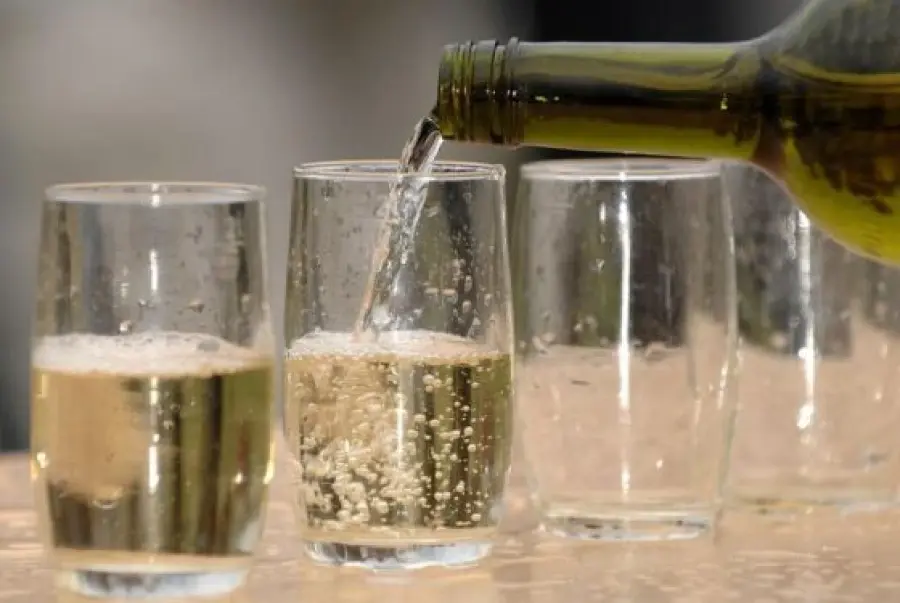
A spritzer, says the Slavonian poet, is a beloved Danube-region drink — wine mixed with soda water. Its younger and uglier brother is the gemišt, a spritzer substitute made with mineral water. As for bevanda — wine diluted with plain water — I am not inclined to speak of it or waste air. The truth is that homemade wine — at least in the regions considered the birthplace of the spritzer — is most often drunk neat, or with “just a little splash of soda,” merely “to scare it.” A spritzer can be drunk all day long, but only if consumed by a sensible person and made from a wine born for spritzing.
Experienced cellar masters and old Hungarians drink spritzers all day long, usually in a half-and-half ratio. With seasoned, fatty foods — sausages, hams, and kulen — spritzers can be enjoyed from Christmas to Christmas, because, as primary physicians and nutritionists claim, wine acidity helps neutralize fat. Those who dislike marathons, those calibrated for a hundred- or two-hundred-meter sprint, consider anything below an “eight-two” ratio (in favor of wine) mockery and provocation.
Spritzers are drunk on all occasions: in summer by the river, in spring while clearing gardens, in autumn during the harvest of Graševina and Riesling for new batches, in winter while rendering cracklings. The spritzer is present at a child's birth, when a daughter gets married, when a grandson is baptized, and when a son leaves for the army — more often nowadays in countries of the European Union.
Graševina is the soul of the spritzer. It can be made with Rhine Riesling, even with Tamjanika, but the one prepared from Graševina and soda water in a “seven-three” ratio (those less resilient are advised to reduce the wine and increase the soda) is the song of songs, the drink of all drinks — proof that the Greek gods fell only because they drank their Olympian wine neat. Along the stretch from Aljmaš to Erdut, made up of rolling hills facing south and the Danube, the finest Graševina ever to touch this palate is produced — and, consequently, the finest spritzer ever to slide down a thirsty throat.
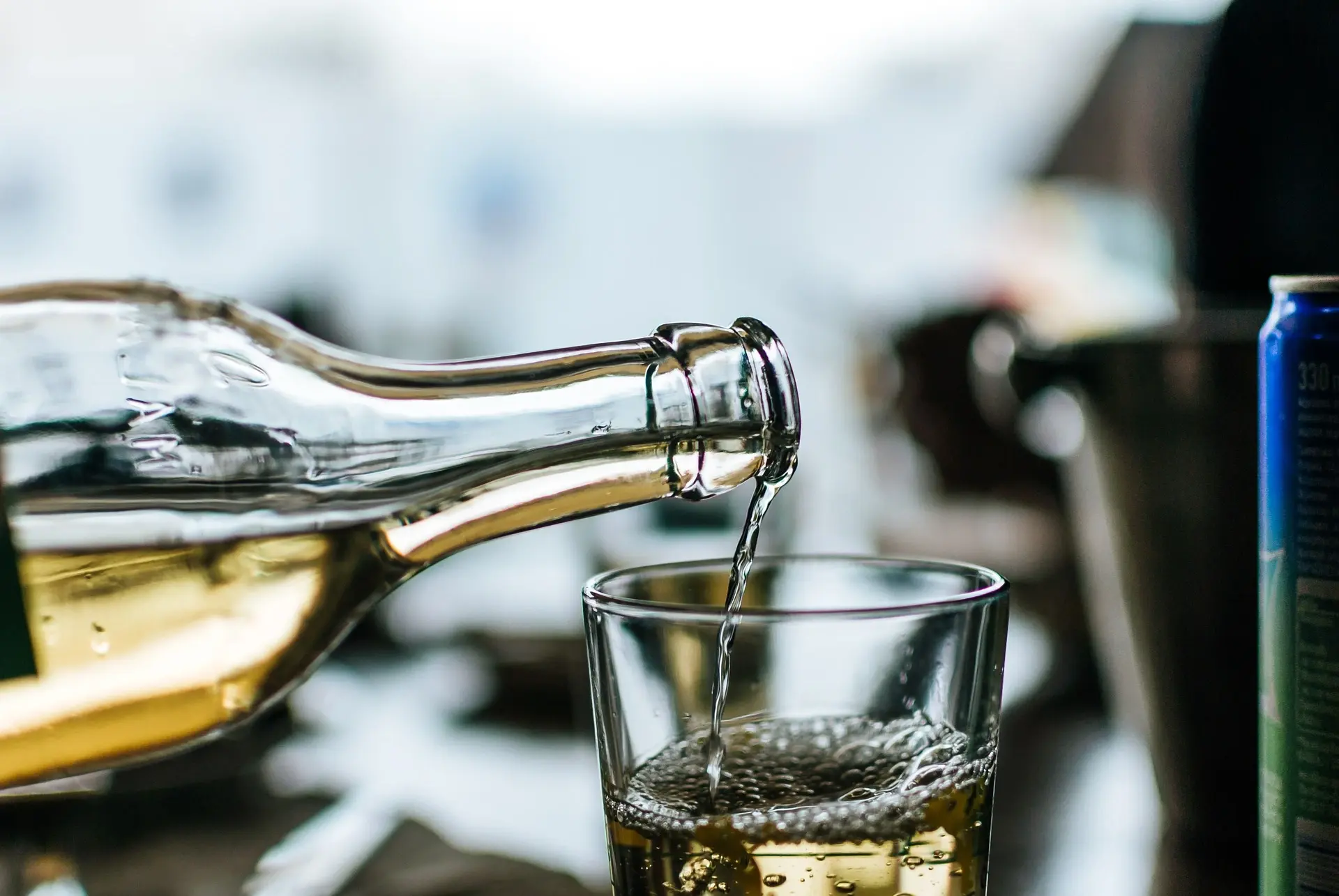
The spritzer is not an evil drink. It was created for celebration, weddings, and song. The spritzer is the drink of bachelors, revelers, bon vivants. If the wine rests in a good barrel and contains no sulfur, if the diligent host has done everything by the rules of winemaking, the head will not be heavy the next day, and the stomach will be ready at dawn for another round.
The spritzer tolerates no competition. Beer can accompany rakija, brandy, or cognac — but the spritzer is a gentleman who sings alone. Combining spritzer and rakija guarantees days-long vows before the household saint’s icon that the sinner will never again think of mixing distillation and fermentation.
During long tavern nights (address known to the editorial office), there always comes a moment when my journalist brother-in-arms, known by his theatrical nickname, attacks me over my unusual spritzer preparation. “I swear to my mother,” he says, “I don’t know in which vineyard you sprouted or with what wine you were baptized — but would you ever consider being normal? Who fills a spritzer to the brim? How are you supposed to drink that? Can you even tilt it without drenching yourself?”
A fair question — followed by an answer. During my early spritzer lessons, my uncle drilled into me the most important winemaking commandment: a spritzer is always poured to the very top of the glass, right to the rim — not a millimeter below! Why so, ask the Russian brothers and my journalist friend. Because the servant of the spritzer (and we all serve this great and noble master) must bend toward the glass and bow before the drink.
And then, a second before dipping one’s mustache into the spritzer, one must do the following: smell what is about to be drunk and understand one thing — the soul of the spritzer lives in that second before the first sip. In the aroma of perfect harmony created by wine and soda. In a scent that conjures a dappled vineyard and a long-ago October Saturday when a young worker, guided by the advice of elders, cut his first cluster of tightly packed Graševina with blunt scissors or a barely sharpened knife…