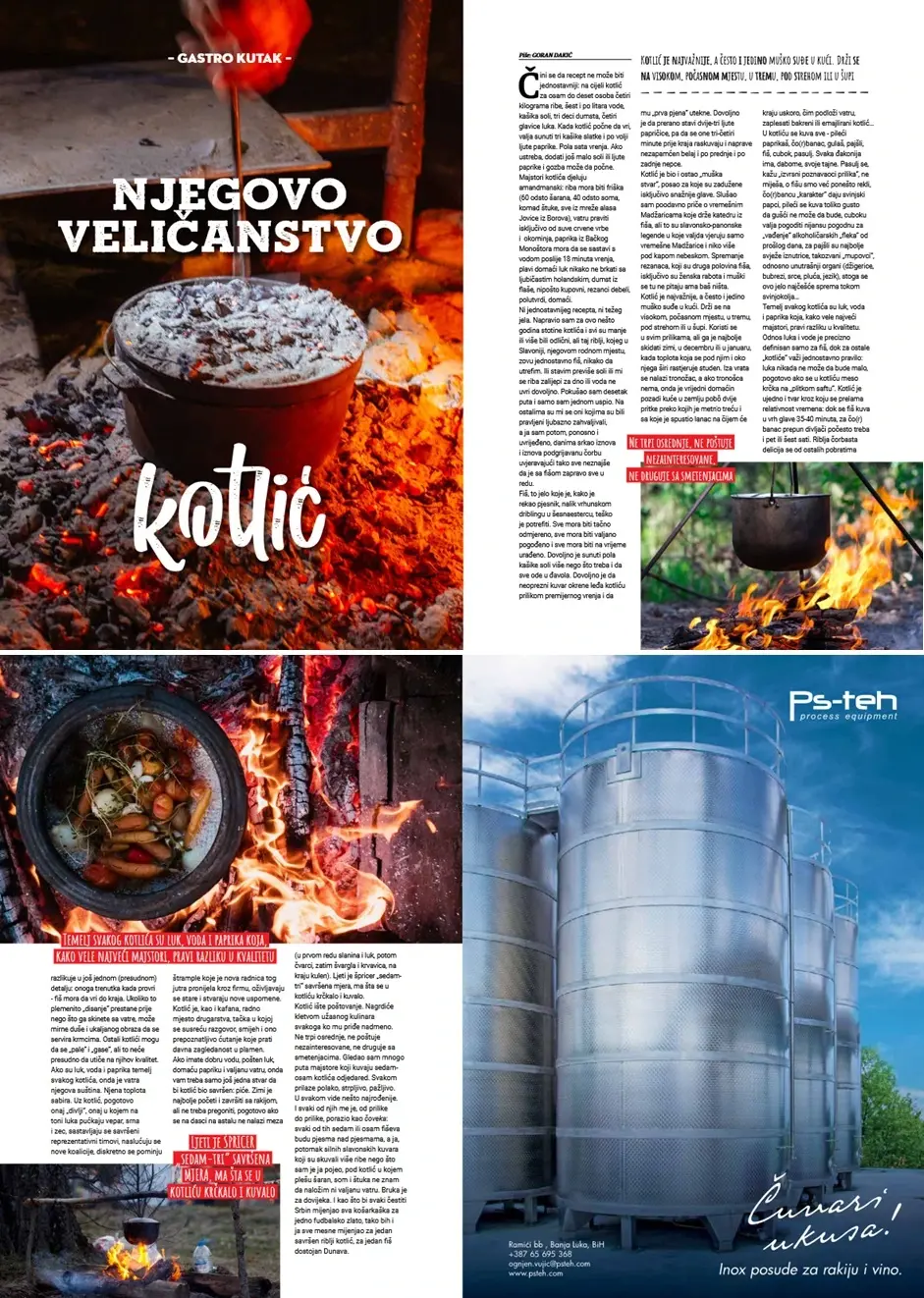
His Majesty: The Kotlić
![[object Object]](https://api.hedonistmagazine.net/storage/images/2026/05/ae61fcd7-3b80-4f6e-9ceb-3bbd076a9e74.webp)
The recipe seems almost absurdly simple: for one large cauldron serving eight to ten people, four kilograms of fish, six and a half liters of water, a spoonful of salt, three deciliters of homemade tomato sauce, and four onions. Once the cauldron begins to boil, add three spoons of sweet paprika and, if desired, some hot paprika as well. Let it boil for half an hour. Adjust the seasoning if needed, and the feast may begin.
But masters of the kotlić treat such simplicity almost like a constitutional amendment. The fish must be fresh - sixty percent carp, forty percent catfish, perhaps a piece of pike, ideally straight from the nets of a trusted Danube fisherman. The fire must be made exclusively from dry red willow and hardwood. The paprika from the village of Bački Monoštor must meet the water only after exactly eighteen minutes of boiling. Domestic blue onions must never be confused with Dutch purple ones. The tomato base has to come from a bottle prepared at home, never from a store. The noodles must be thick, semi-firm, and handmade.
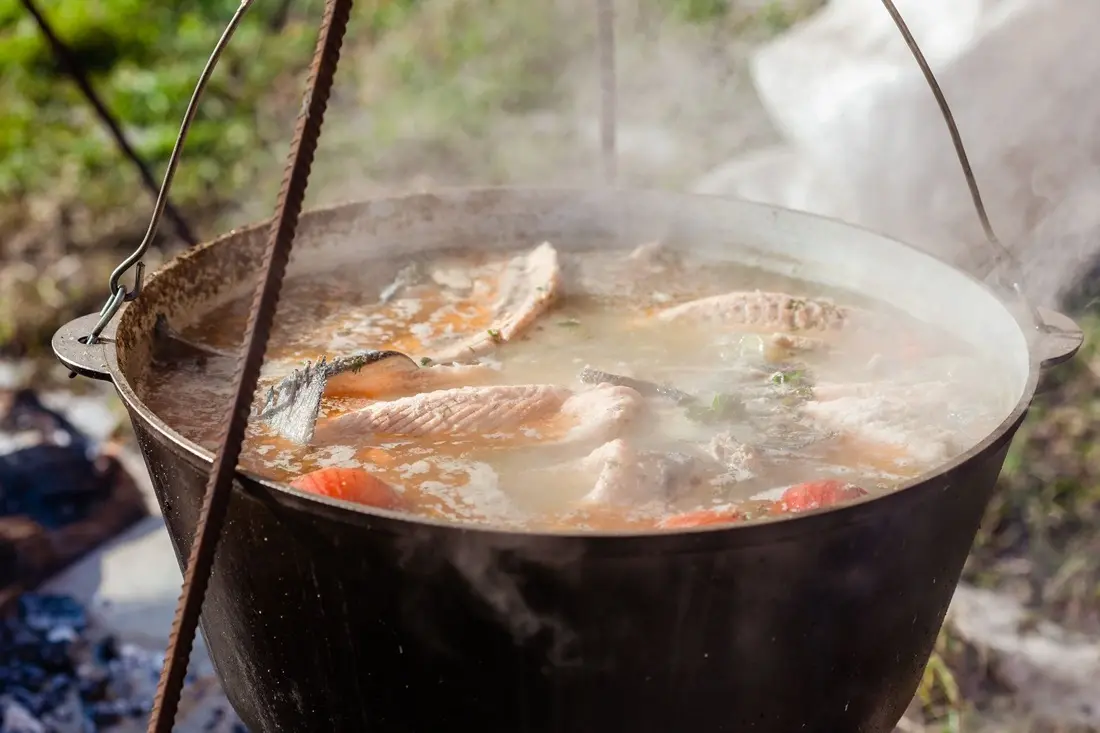
No recipe appears simpler. No dish is more difficult.
Over the years, I have cooked hundreds of kotlić stews, most of them good or even excellent, but that fish stew, known in Slavonia simply as fiš, still escapes me. Either I add too much salt, or the fish sticks to the bottom, or the broth refuses to reduce properly. I have tried at least ten times and succeeded only once. Every other time, the guests politely thanked me while I spent days afterward proudly and stubbornly reheating the leftovers, convincing everyone around me that the stew was perfectly fine.
Fiš is one of those dishes that, as a poet once said, resembles a brilliant dribble inside the penalty box. Everything must be measured precisely, timed perfectly, and executed without hesitation. Half a spoon too much salt, and the entire cauldron is ruined. Turn your back during the first boil, and the crucial foam escapes. Add hot peppers too early, and they dissolve into chaos that burns both the tongue and the soul.
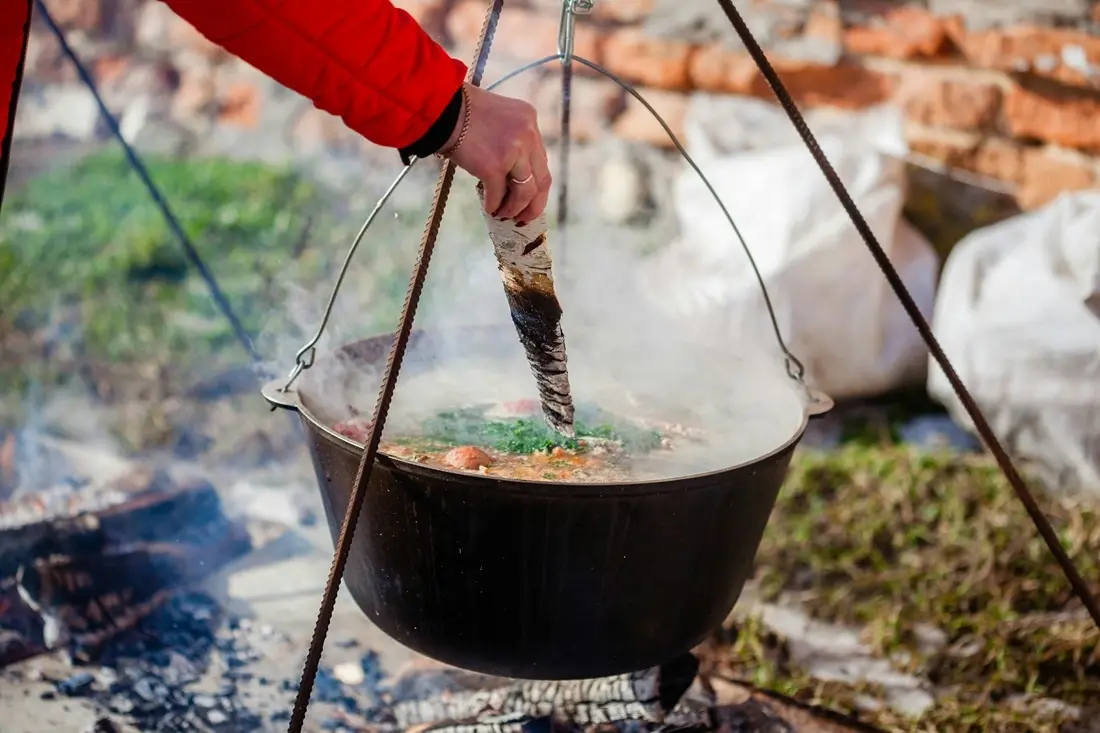
A Man’s Ritual by the Fire
The kotlić has always been considered “men’s work,” a ritual entrusted to the supposedly stronger heads of the household. I once heard stories of elderly Hungarian women who mastered fiš better than anyone else, but those are probably just Panonian legends believed only by elderly Hungarian women themselves. The noodles, however, the second half of every proper fiš, belong entirely to women. Men have no authority there whatsoever.
The kotlić is often the most important and sometimes the only truly masculine cookware in the household. It hangs in a place of honor beneath the roof, inside a shed, or under the porch. It is used throughout the year, but winter is when it feels most alive - in December or January, when the warmth beneath the cauldron pushes back the cold.
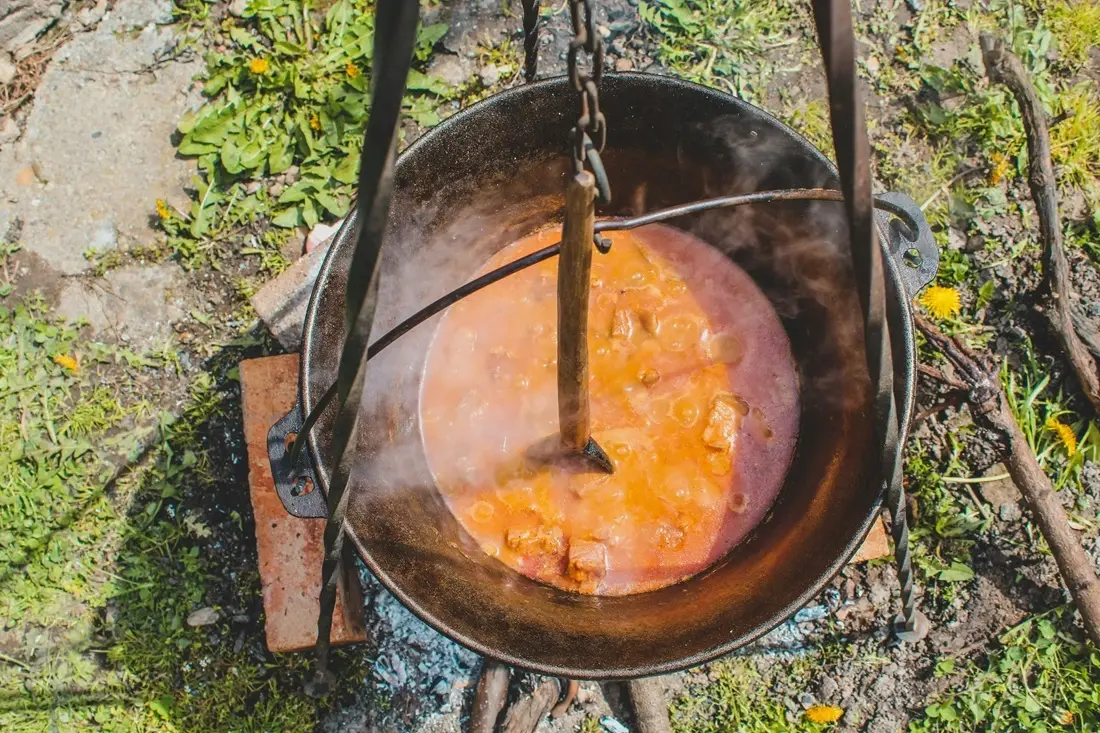
Near the entrance stands a tripod. If there is no tripod, then the host has probably driven wooden poles into the earth behind the house, laid another beam across them, and hung a chain from which a copper or enamel cauldron will soon begin to dance above the fire.
Inside the kotlić, everything can be cooked:
fish stew, chicken paprikaš, venison stew, bean soup, goulash, tripe.
Each dish has its own secret.
Beans should never be stirred. Fiš must never stop boiling once it starts. Wild game stew gets its soul from pork trotters. Chicken paprikaš should be thick enough to almost stand on its own. Tripe demands fresh organs, liver, kidneys, heart, lungs, and tongue, usually prepared during the traditional pig slaughter season.
At the heart of every kotlić is three elements: onion, water, and paprika. According to the true masters, paprika is what ultimately defines quality. For fiš, the ratio between onion and water is mathematically precise. For every other stew, there is only one rule: there can never be too much onion.
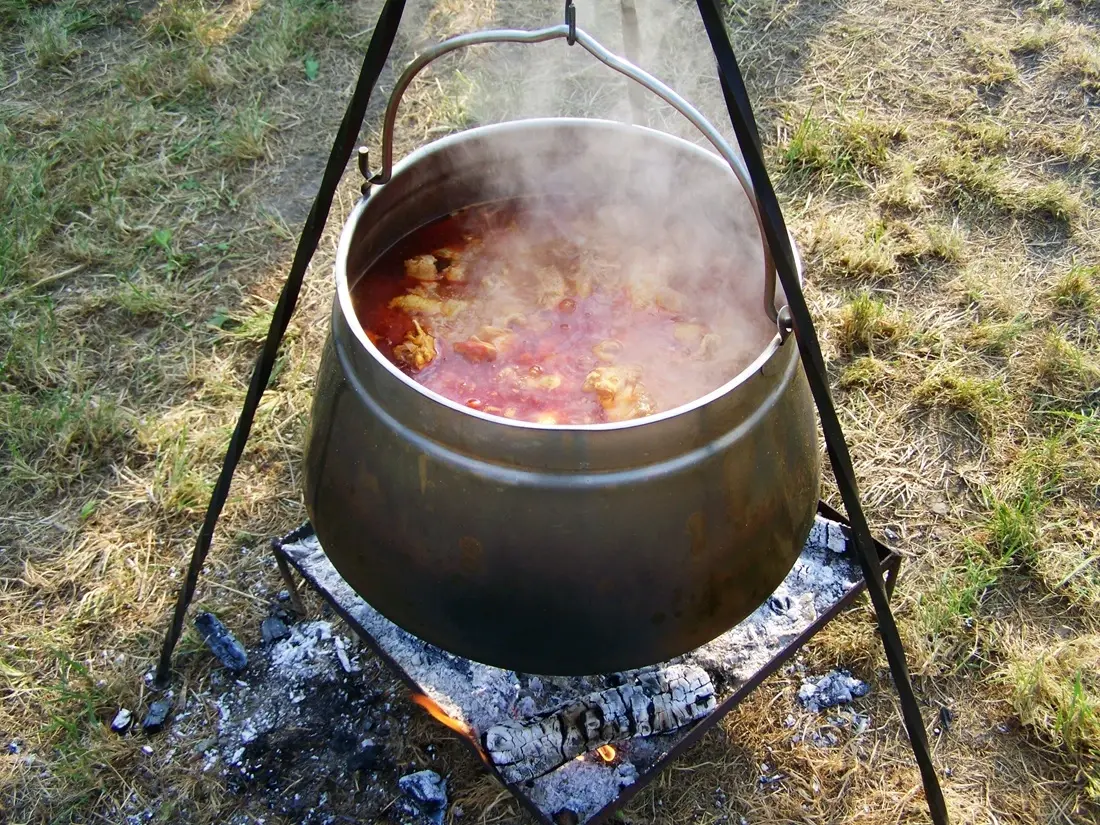
Fire That Brings People Together
If onion, water, and paprika form the foundation of the kotlić, then fire is its soul.
Its warmth gathers people together.
Around a bubbling cauldron, especially the wild ones where boar, deer, and rabbit slowly simmer over mountains of onions, perfect national football teams are imagined, future political coalitions quietly predicted, gossip exchanged about the new woman who walked through the office that morning wearing stockings nobody failed to notice.
Old memories return. New ones are created.
The kotlić, much like the traditional Balkan tavern, is a workplace of friendship - a place where conversation, laughter, and that familiar silence of people staring into flames meet naturally.
The Drink Matters Too
If you have good water, honest onions, homemade paprika, and a proper fire, there is only one more thing required for a perfect kotlić: the drink.
In winter, the meal should begin and end with rakija, though moderation helps - especially if there is no proper spread of cured meat, cracklings, and sausages on the table.
In summer, however, there is only one true companion.
A wine spritzer mixed seven-to-three.
No matter what simmers inside the cauldron.

The Cauldron Demands Respect
The kotlić punishes arrogance.
It despises mediocrity, rejects the distracted, and has no patience for careless cooks.
I have watched masters prepare seven or eight cauldrons at once. They approach each one slowly, carefully, almost tenderly, as if speaking to something deeply personal.
And every single time, they defeat me.
Each of those fiš stews turns into poetry.
Meanwhile, I - descendant of generations of Slavonian cooks who prepared more fish than I could eat in a lifetime - still struggle to light the proper fire beneath carp, catfish, and pike.
A lifelong humiliation.
And just as every true Serb would trade all basketball trophies for a single football world title, I, too, would exchange every meat stew I have ever cooked for one perfect fish kotlić.
One fiš worthy of the Danube.
- Written by Goran Dakić / HEDONIST
- Originally published in HEDONIST Magazine Issue 05, 2021