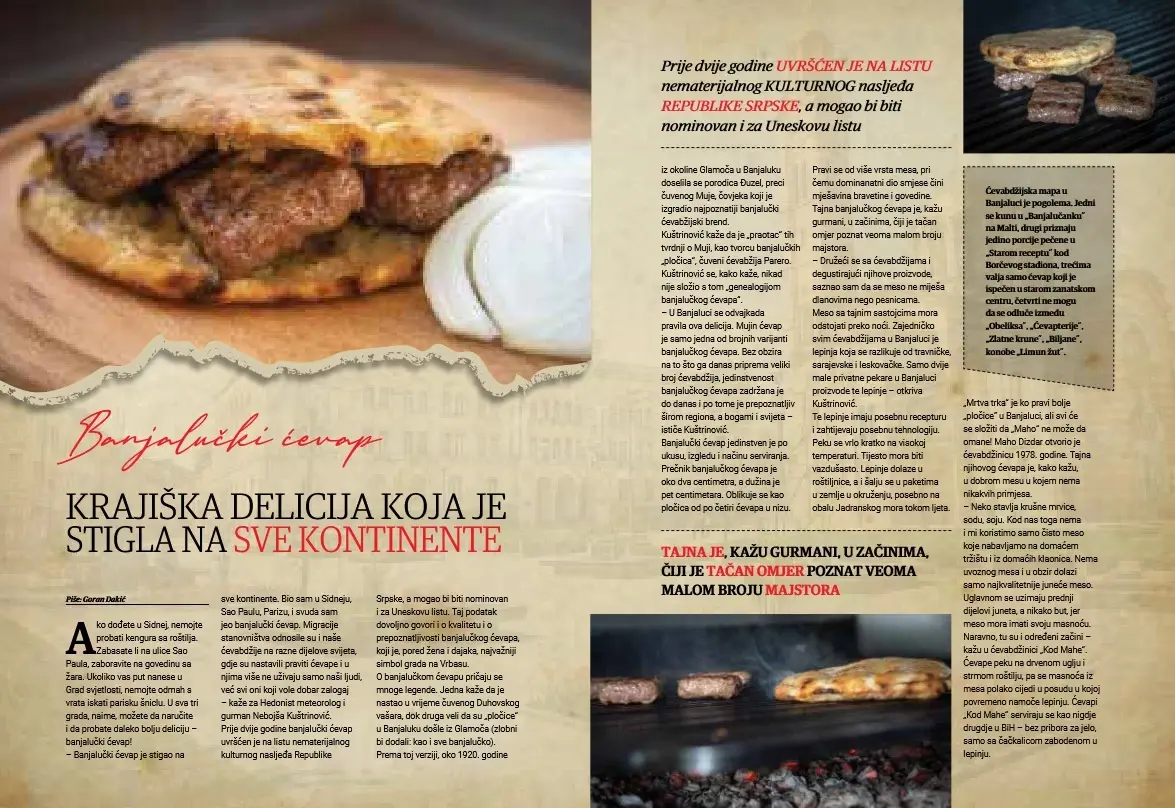
Banja Luka Ćevapi: A Krajina Delicacy That Has Reached Every Continent
![[object Object]](https://api.hedonistmagazine.net/storage/images/2026/04/e6ecafee-adaf-47c1-a8ea-b0a7997cf050.webp)
If you find yourself in Sydney, skip the grilled kangaroo. If you wander through the streets of São Paulo, forget the barbecue beef. And if your journey takes you to the City of Light, don’t rush to order a Parisian schnitzel. In all three cities, you can try something far better - Banja Luka ćevapi.
“Banja Luka ćevapi have reached every continent. I’ve been to Sydney, São Paulo, Paris, and everywhere I went, I found and tasted them. Migration has taken our grill masters across the world, where they continued making ćevapi. Today, it’s not just our people enjoying them, but anyone who appreciates a good bite,” meteorologist and food enthusiast Nebojša Kuštrinović told HEDONIST magazine.
Editor’s note: This article is part of the HEDONIST archive and was originally published in 2020 in the second print edition of the magazine.
Two years ago, Banja Luka ćevapi were added to the list of intangible cultural heritage of Republika Srpska, and they may soon be nominated for the UNESCO list as well. This alone speaks volumes about their quality and recognition. Alongside the Vrbas river and the traditional dajak boat, they are among the most important symbols of the city.
A delicacy wrapped in legend
Many legends surround Banja Luka ćevapi. One claims they originated during the famous Pentecost fair, while another says the signature “tiles” came to Banja Luka from Glamoč. According to that version, around 1920, the Đuzel family moved from the Glamoč area to Banja Luka. They were the ancestors of the famous Mujo, the man who built one of the most recognizable ćevapi brands in the city.
The secret, gourmets say, lies in the spices, whose exact proportions are known to only a very small number of masters.
Kuštrinović notes that the origin of this claim is the well-known grill master Parero. However, he never agreed with that version.
“This delicacy has always been made in Banja Luka. Mujo’s ćevapi are just one of many variations. Despite the number of grill masters preparing them today, the uniqueness of Banja Luka ćevapi has remained intact, and that’s why they are recognized across the region and beyond,” he says.
A recipe like no other
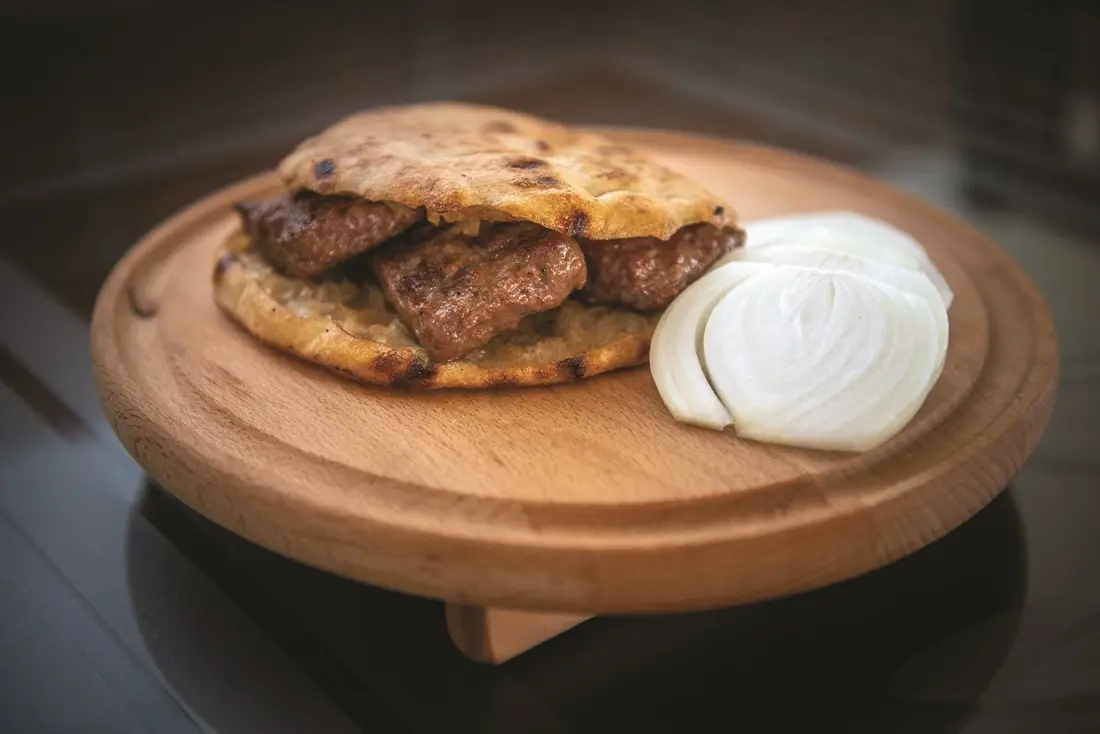
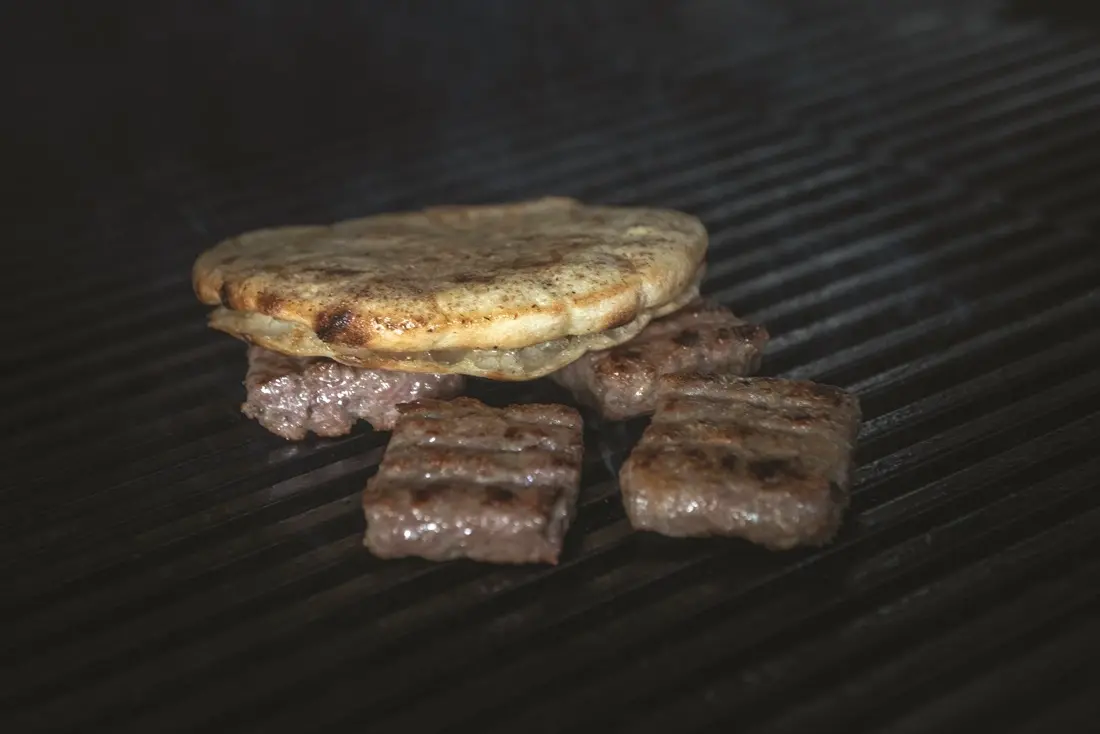
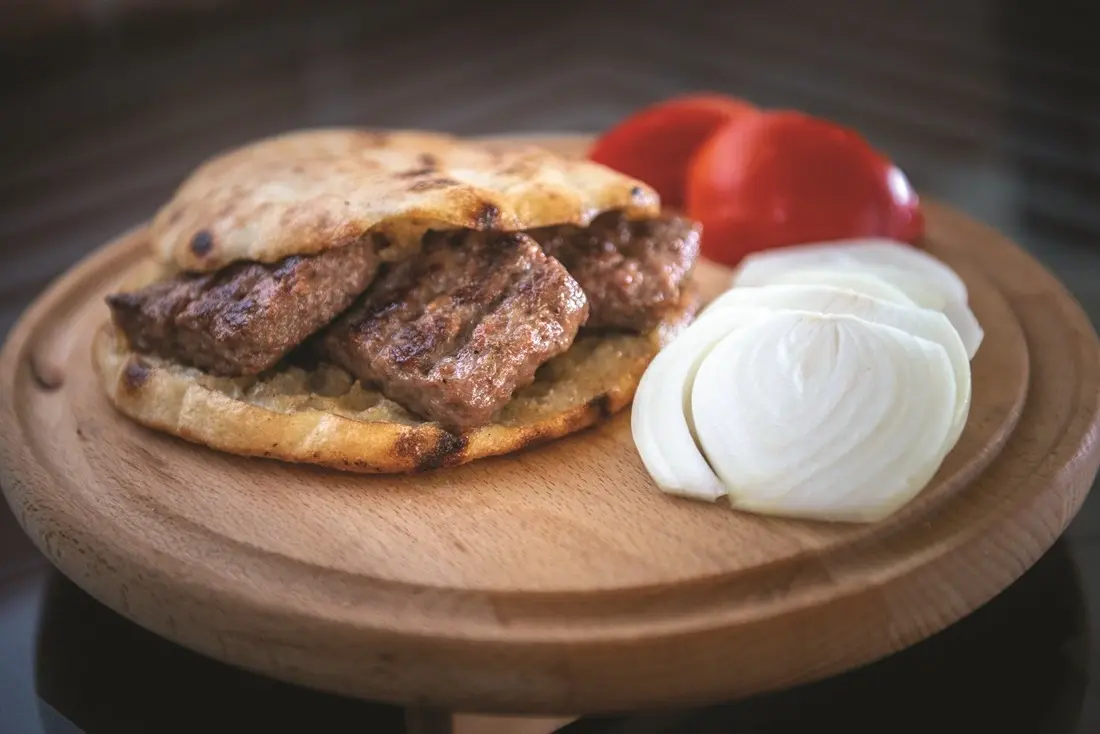
Banja Luka ćevapi stand out in taste, appearance, and presentation. Each piece is about two centimeters in diameter and five centimeters long, shaped into a distinctive block of four connected ćevapi.
They are made from a mix of meats, most commonly a blend of lamb and beef. According to gourmets, the secret lies in the spices, with the exact ratios known only to a few masters.
“From spending time with grill masters and tasting their food, I learned that the meat is not mixed with open palms, but with fists. The mixture, along with the secret ingredients, must rest overnight. What all grill houses in Banja Luka share is the bread, which is different from the ones in Travnik, Sarajevo, or Leskovac. Only two small private bakeries in the city produce these flatbreads,” reveals Kuštrinović.
These flatbreads have a unique recipe and require a specific baking process. They are baked quickly at high temperatures, resulting in a light and airy texture. They are delivered to grill houses and even shipped to nearby countries, especially to the Adriatic coast during summer.
Where tradition lives
There is a friendly rivalry over who makes the best “tiles” in Banja Luka, but many agree that you can’t go wrong with Maho. Maho Dizdar opened his ćevapi shop in 1978, and the secret, they say, lies in the meat.
“Some add breadcrumbs, baking soda, or soy. We don’t. We use only pure meat sourced locally, from domestic slaughterhouses. There is no imported meat, only top-quality beef. We mostly use the front cuts, never the hind leg, because the meat needs to have the right amount of fat. Of course, there are also specific spices,” they explain at the “Kod Mahe” grill house.
Their ćevapi are grilled over charcoal on a slanted grill, allowing the fat to drip slowly into a container where the flatbread is occasionally dipped. The result is a unique serving style — no cutlery, just a toothpick placed into the bread.
A city of grill masters
The map of ćevapi spots in Banja Luka is extensive. Some swear by “Banjalučanka” in the Malta neighborhood, others only recognize portions from “Stari recept” near the Borac stadium. Some prefer the old crafts center, while others can’t decide between places like Obelix, Ćevapterija, Zlatna kruna, Biljana, or the tavern Limun žut.
No matter where you go, one thing is certain — Banja Luka ćevapi are not just food. They are tradition, identity, and a taste that travels far beyond the city where it was born.
- By Goran Dakić / HEDONIST
- Published in HEDONIST Magazine, Issue 02, 2020