

A Pickled World: Why Fermentation Came Back, and What Science Actually Knows About It

From kimchi in American dietary guidelines to sauerkraut from Futog: is fermentation the new gastronomic revolution, or an old habit with new marketing?
When the US government released its new dietary guidelines in January 2026, it named kimchi for the first time. The guidelines advise eating fermented foods such as kimchi, sauerkraut, kefir and miso alongside vegetables and high-fiber foods. On January 9, in morning trading, shares of the Korean company Daesang, one of the biggest kimchi producers, were up almost 13.5 percent.
If that isn't a sign that fermentation has become fashionable, then it is a sign that it's become a business. The question is how much science stands behind it, and how much packaging.
Sour Is Older Than the Refrigerator
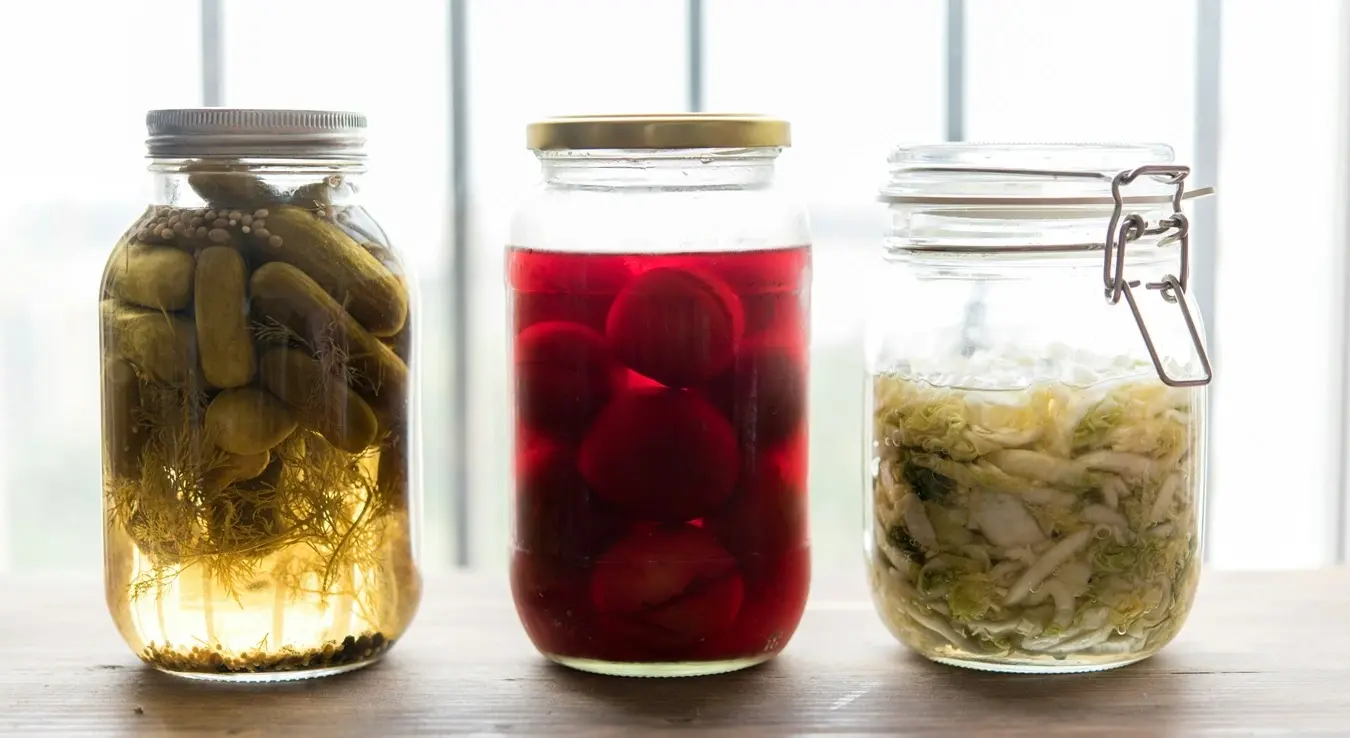
By the definition of the International Scientific Association ISAPP, fermentation is “desired microbial growth and enzymatic conversion of food components.” That covers yogurt, kefir, sauerkraut, kimchi, kombucha, sourdough, and thousands of local products. Not everything sour counts: cucumbers in vinegar are not fermented, and neither is juice with added citric acid. “Probiotic” sodas often contain added bacterial spores and have undergone no fermentation at all.
The region has its own example. Futog cabbage, from the area around Novi Sad, was the first food product in Serbia to receive protection as a geographical indication (the name of origin was registered in 2008), and sources mention cabbage growing in Futog as far back as 1578. Its thin, sweet leaves speed up souring, so 25 to 30 days is enough. A University of Novi Sad study showed that the fermentation, at around 18 °C, is started by the bacterium Leuconostoc mesenteroides and carried on by lactobacilli.
The first yogurt bacterium was also isolated in the region: in 1905 the Bulgarian microbiologist Stamen Grigorov isolated the “Bulgarian bacillus” from curdled milk, and Metchnikoff built on his work in the 1908 book The Prolongation of Life, developing the idea linking fermented food and longevity.
Why It Came Back
Restaurants brought fermentation back to center stage. At Noma in Copenhagen, four times named the best restaurant in the world, every dish contains some fermented component. David Zilber has run its fermentation lab since 2016, and in 2018, with René Redzepi, he published The Noma Guide to Fermentation, which breaks down seven techniques: lactic fermentation, kombucha, vinegar, koji, miso, shoyu and garum. Redzepi says that waiting for something to ferment feels contrary to the spirit of the modern age. Noma today also sells ready-made bottled products through Noma Projects.
Home kitchens were set in motion by the story of the gut microbiome. According to the Associated Press in July 2026, interest is growing along with “gut health,” and the US government’s guidelines explicitly call for more fermented food. It should not be forgotten that the guidelines were written by an administration that had simultaneously gone to war against ultra-processed food, so fermented food was a logical candidate for “real food.”
What Science Says
The most cited trial is the Stanford one from 2021. Thirty-six healthy adults, divided into two groups of 18, ate for 10 weeks either a high-fiber diet or a diet of fermented foods (yogurt, kefir, fermented cottage cheese, kimchi and other fermented vegetables, vegetable brine drinks, kombucha). The fermented group ate an average of 6.3 servings a day. The result: the diversity of their gut bacteria rose, and 19 inflammatory markers, including interleukin-6, fell. In the fiber group, diversity did not change. Servings of yogurt and vegetable brine drinks were most strongly linked to the rise in diversity.
But there are caveats. The sample was small, the participants healthy, the duration short, and few people eat six servings a day. The authors also noted that the link between number of servings and diversity was weaker than the link with time.
Other trials are less clear-cut. An eight-week trial from 2025 with 87 healthy people who ate 100 grams of sauerkraut a day showed no significant change in microbiome diversity, and short-chain fatty acids rose only in the group that ate pasteurized sauerkraut. Kombucha, in an eight-week trial with 24 people, made no significant difference. On the other hand, a 2018 pilot study of 34 patients with irritable bowel syndrome showed that sauerkraut eased symptoms, equally whether pasteurized or not. Kimchi eased symptoms in a trial of 90 patients with the same diagnosis over 12 weeks. A large prospective review from 2025 concludes that regular consumption of some fermented foods is associated with a modest reduction in mortality, but that the evidence is not sufficient for health claims.
A review article in Advances in Nutrition (2025), written by the same Stanford researchers, sums it up: trials mostly show a benefit, but they are small and short. One curiosity: pasteurized cabbage gave results similar to unpasteurized in the studies, so what matters may not be the live bacteria alone, but also the products of fermentation.
What Isn’t a Fairy Tale
Fermented vegetables are salty. They typically contain about two percent salt, and many traditional products considerably more. The World Cancer Research Fund (WCRF) considers salt-preserved food a probable risk factor for stomach cancer, and a meta-analysis showed that high intake of pickled food raises the risk (RR 1.28), while moderate intake has no significant effect (RR 1.10). The British epidemiologist Tim Spector notes that the signal follows very salty preserved food in large quantities, not fermentation itself: a few servings of kefir, yogurt, kimchi or sauerkraut in a varied diet is not the same as meals of salty pickles every day.
Some people should be more careful: those with weakened immune systems (the CDC advises them to avoid unpasteurized fermented products), pregnant women (kombucha is not recommended because of its variable alcohol content), people with histamine intolerance, people with irritable bowel syndrome or SIBO (fermenting white cabbage increases mannitol, which causes trouble for some), and people taking MAO inhibitors because of tyramine.
How to Start at Home
Here science admits a gap: no trial has yet specifically tracked home fermentation. What is known is that vegetable fermentation under proper conditions is safe: once the pH drops to 4.6 or lower, pathogens do not multiply, and in the US there are no documented cases of poisoning from properly fermented vegetables.
The US National Center for Home Food Preservation (USDA/NCHFP) recommends for sauerkraut three tablespoons of non-iodized salt per five pounds (about 2.3 kg) of shredded cabbage, which is about 24 grams per kilogram. The ratio, experts say, controls pathogen growth, so it should not be changed. The cabbage is packed firmly until it releases its juice, submerged under the liquid (with a weight or a bag), and covered with a clean cloth. At 21–24 °C fermentation takes three to four weeks, at 15–18 °C around five to six, and below 15 °C it may not start at all. White foam is common, but slimy cabbage or a lot of mold means the whole batch is thrown out.
When shopping, mind the labels. “Raw,” “live,” or “unpasteurized” usually indicates a product with live microbes, while a pasteurized one has none, though it may still have benefits. Cucumbers in vinegar are not fermented, and “probiotic” on a label does not mean the food is fermented.
A Revolution?
A revolution would be if science had discovered something new. What happened is more modest and probably more lasting: a slow, cheap technique returned to kitchens where it had long been forgotten, and it has also gained some scientific support, not yet large enough for big claims.
In Futog, they sour cabbage for a month, and Stanford measures ten weeks. The two agree on one thing: don’t rush.