

The Puzzle Italy Can't Solve: Why the Balkans Love Dylan Dog More Than the Rest of the World
![[object Object]](https://api.hedonistmagazine.net/storage/images/2026/10/1505e493-030e-439c-9094-97ed04d6a94d.webp)
While Italy spent this September celebrating Dylan Dog's fortieth birthday - with special editions, a stage play, "Horror Nights" in bookshops from Milan to Palermo - none of the commentators there addressed a far stranger question: why has this gaunt nightmare investigator from London, born in the mind of an Italian scriptwriter, taken root in the Balkans like almost nowhere else on the planet outside Italy itself?
That's not a rhetorical question. It's a puzzle Italian critics and Balkan academics alike have poked at, without a clear answer. Zagor, Tex Willer, Martin Mystère, and Dylan Dog, all from the same publishing house, Sergio Bonelli Editore, found a massive, devoted readership at newsstands across the former Yugoslavia, while in Germany, France, or the UK those same titles never managed to take hold in anything like the same way.
The Rapper Who Writes Introductions for a Horror Comic
The best evidence of just how deep this connection runs isn't a sales statistic, but who currently edits Dylan Dog in Serbian. The job of editor for the "Veseli Četvrtak" edition, which has regularly published the comics in Serbian since 2008 and has so far reached issue 243 of the regular series, belongs to Marko Šelić Marčelo - a rapper, writer, and one of the most recognisable figures on Belgrade's music and literary scene. Marčelo writes the introductory text for every issue, pointing readers toward the film, music, and philosophical references hidden inside the stories, from the records Dylan listens to to the books he's holding in certain panels.
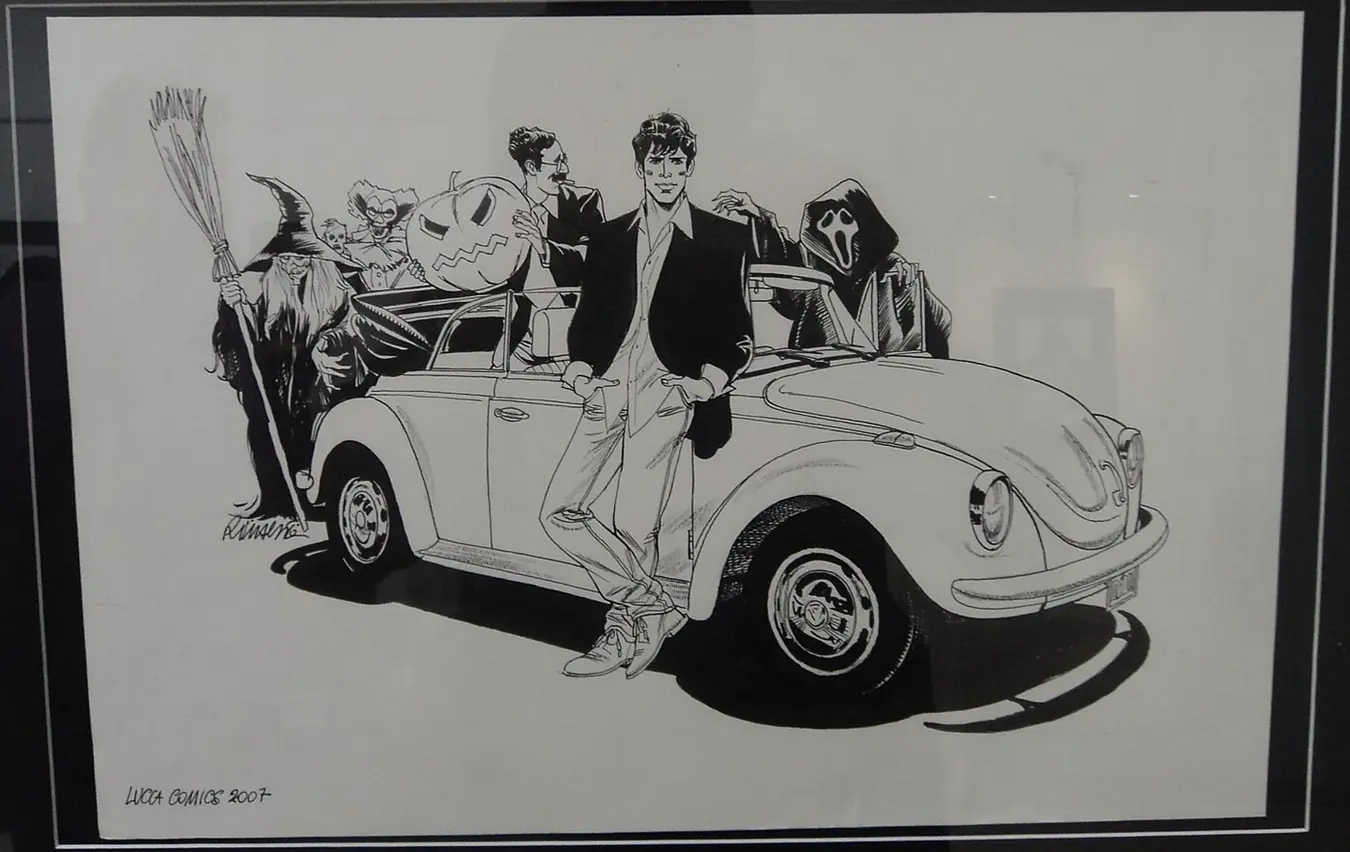
According to Marčelo, the secret of Dylan's appeal lies in his deliberate imperfection - a character trait his creator, Tiziano Sclavi, built in from the earliest issues and deepened over time. The character in the first issue, Marčelo says, was considerably more self-assured than the Dylan readers know today; Sclavi quickly "humanised" him, adding fears, failed romances, and a pervasive insecurity that made the character feel more real to readers than the flawless superheroes dominating the market at the time.
A Vampire Theory That Might Explain Everything
One explanation circulating among academic observers of this phenomenon touches on something far deeper than marketing or distribution: Dylan Dog's huge popularity in Serbia and the wider region may owe something to the region's own, much older tradition of belief in vampires and supernatural beings, deeply rooted in local folklore. Unlike most of Western Europe, the Balkans never fully "rationalised" their fears of the night - stories of werewolves, vampires, and creatures lurking in the dark stayed part of the oral tradition far longer here than in the western part of the continent. A comic whose main character wrestles with exactly these kinds of creatures on a daily basis, set against an atmosphere of permanent fog and decaying London streets, may simply have fallen on more fertile ground here than in more rational, less superstitious societies.
This remains a theory, not a proven fact - but it's compelling enough that serious commentators keep repeating it, even without a final explanation for why, of all the world's comics, it's specifically the Bonelli titles that failed to take root anywhere else outside their home country in quite the same way.
The Man Who Wanted to Write About the Fear of Everyday Life
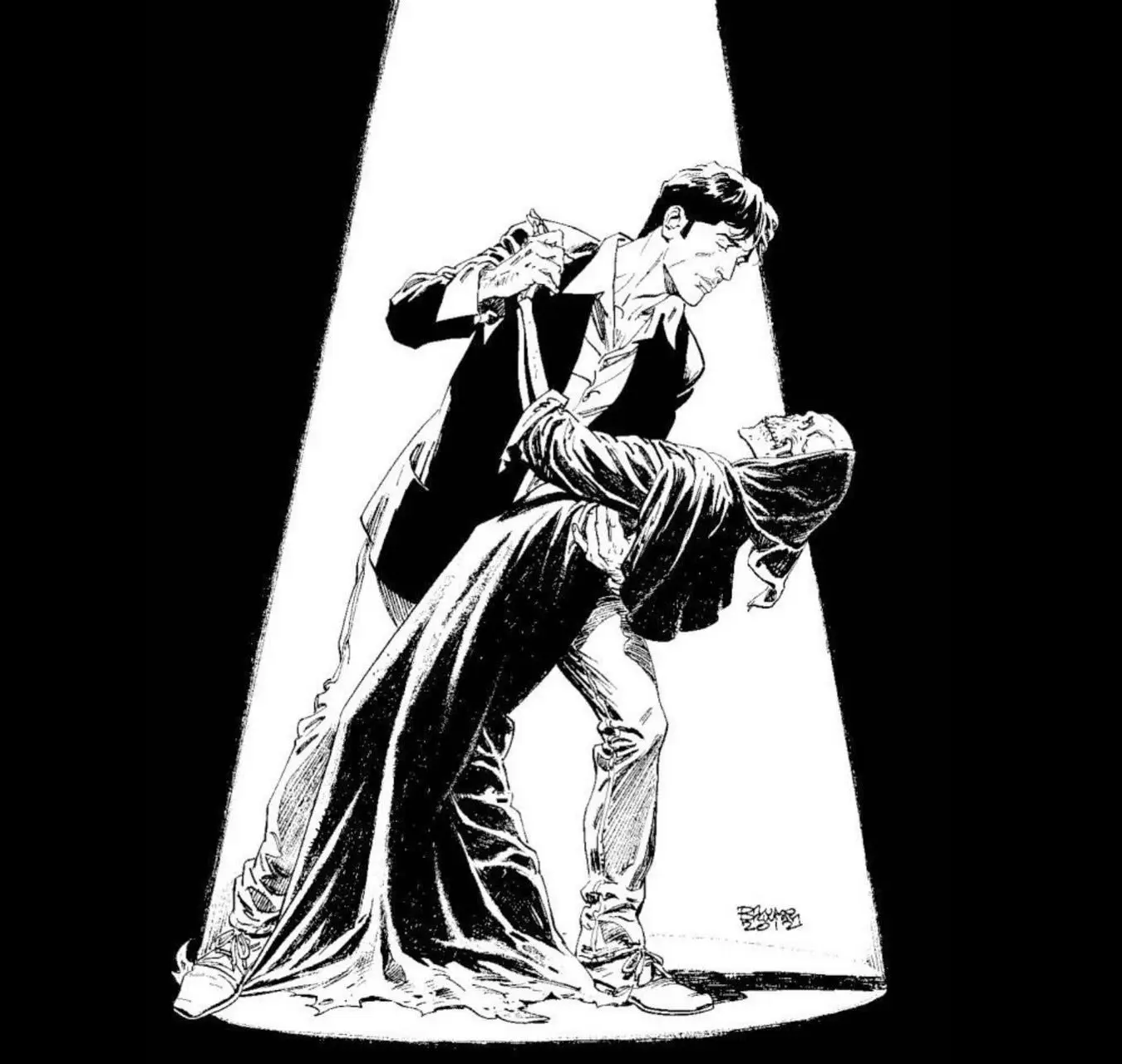
Tiziano Sclavi, born in 1953 in the small town of Broni near Pavia, the son of a schoolteacher and a municipal clerk, approached comics with an idea that ran against the genre's standards of the time. While horror back then mostly meant monsters and supernatural threats, Sclavi wanted a comic that, behind every supernatural story, would actually be talking about far more down-to-earth, human fears - loneliness, alienation, uncertainty about one's own place in the world. The character was originally meant to be set in America; only later was the action moved to London, to a fictional address, 7 Craven Road, a street name just as familiar today to readers from Milan to Belgrade.
He borrowed the first name from Welsh poet Dylan Thomas, while the surname came from the title of a Mickey Spillane novel, "Dog figlio di..." - a working title Sclavi otherwise used for all of his still-unformed characters, before giving them a final identity. For the character's look, Sclavi drew inspiration from British actor Rupert Everett, whom he'd just seen in the film Another Country - a choice that proved so striking that Everett himself went on, years later, to star in the film adaptation of Sclavi's novel Dellamorte Dellamore, a work that in many ways served as the conceptual forerunner of Dylan Dog.
Umberto Eco and a Comic Read Like Scripture
The first issue, "Dawn of the Living Dead," hit Italian newsstands on 26 September 1986, written by Sclavi, drawn by Angelo Stano, with a cover by Claudio Villa. Sales were initially so weak that, according to stories from within the publishing house, Sergio Bonelli considered telling Sclavi the series might be cancelled - a decision he thankfully, for the history of European comics, put off until the last moment. Well before issue 100, Dylan Dog had overtaken Tex Willer himself, the long-reigning champion of the Italian market, in sales - proof to the Bonelli publishing house that it had won over an entirely new readership, on top of its traditional one.
One of the comic's most unusual fans was Italian philosopher and semiotician Umberto Eco, who once said he could read the Bible, Homer, and Dylan Dog for days on end without ever getting bored. Sclavi and artist Bruno Brindisi returned the favour by introducing, in issue 136, "Lassù qualcuno ci chiama," a character named Humbert Coe - an obvious tribute to the philosopher, whose enthusiasm for the comic played a significant part in pushing Dylan Dog, and comics in general, past the boundary of mere genre entertainment and into serious cultural phenomenon territory.
Forty Years Later, the Same City, a New Generation
Today, as of August 2026, the regular series catalogue has reached issue 480, with unbroken continuity since 1986 - a rarity in publishing of any kind. Sergio Bonelli Editore has put together a full year of anniversary celebrations, including a stage play, Dylan Dog: Horror Show, co-written by Sclavi himself alongside Nicola Russo.
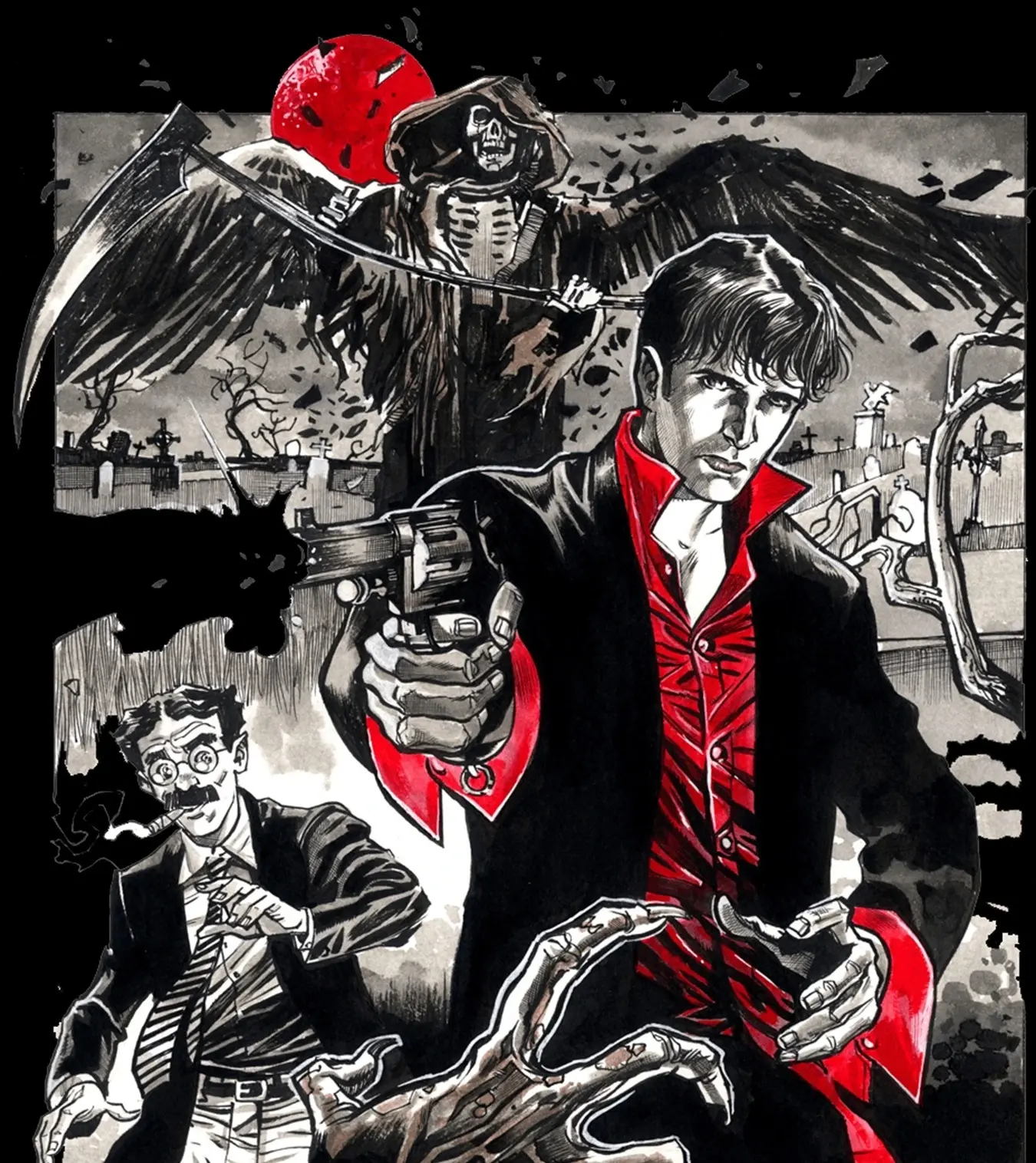
What sets this celebration apart from a typical nostalgia tour is a detail the editorial team in Italy specifically highlights: readers who discovered Dylan as teenagers in the eighties and nineties are now buying the comic together with their own children. The same story, on a smaller scale but with equal emotional weight, is repeating itself in Belgrade, Sarajevo, and Zagreb - where the publishers Veseli Četvrtak and Ludens have faithfully followed Italy's release schedule for nearly two decades now, delivering the same story to the same, now three-generation-deep, readership.
Perhaps that's where the most honest explanation for the Balkan puzzle we opened with actually lies. It doesn't much matter whether the reason is vampire folklore, nineties nostalgia, or simple happenstance in publishing distribution during Yugoslavia's breakup. In this part of the world, Dylan Dog stopped being just an Italian import. It became part of a family ritual - a comic parents hand down to their children to read, in much the same way the character himself has been handed down, issue to issue, generation to generation, for four decades now, without a single interruption.
- Written by Ognjen Tešić / HEDONIST
Related articles
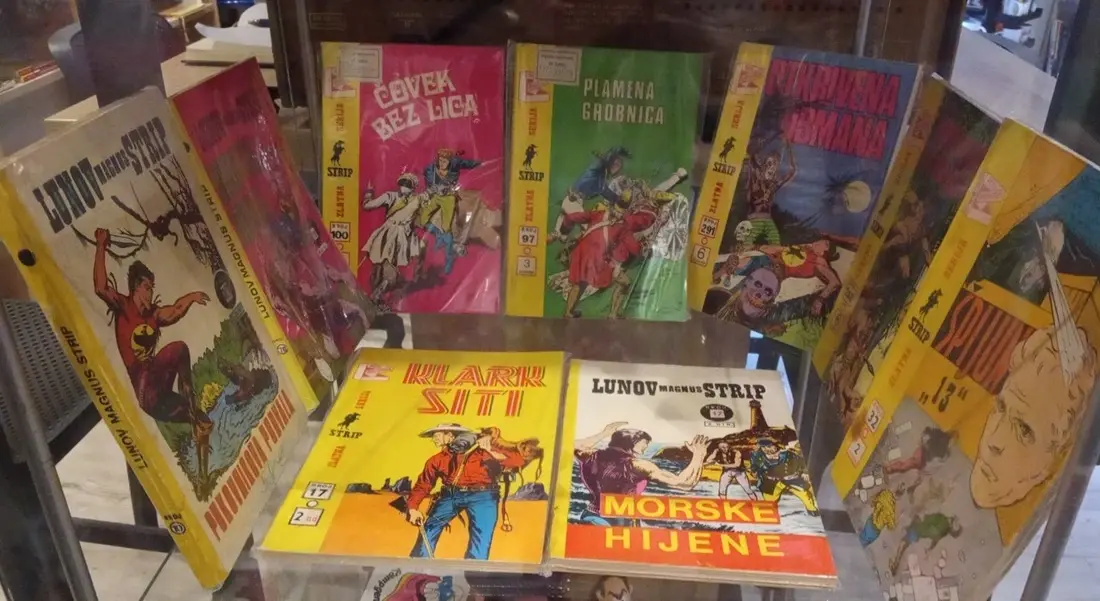
Banja Luka Comic Shop: A Reminder of Childhood
Mister No is a New Yorker, a World War II veteran, and a pilot who, in the late 1950s, leaves everything behind to seek a different life in South America - settling in the Brazilian town of Manaus. He is a man running from the pressures of modern life, a charming drifter who skillfully avoids the trap of marriage. However, “Mister No” is also the name of a comic shop in Banja Luka, which was recently opened in the Nova Varoš neighborhood.
When Comics Smelled Like Adventure: Childhood with Zlatna Serija
Some childhoods are remembered for games in the yard, first bicycles, or long summer evenings. Others are remembered for their thin, colorful comic book issues, which smelled of fresh printing ink and promised adventure on every page.
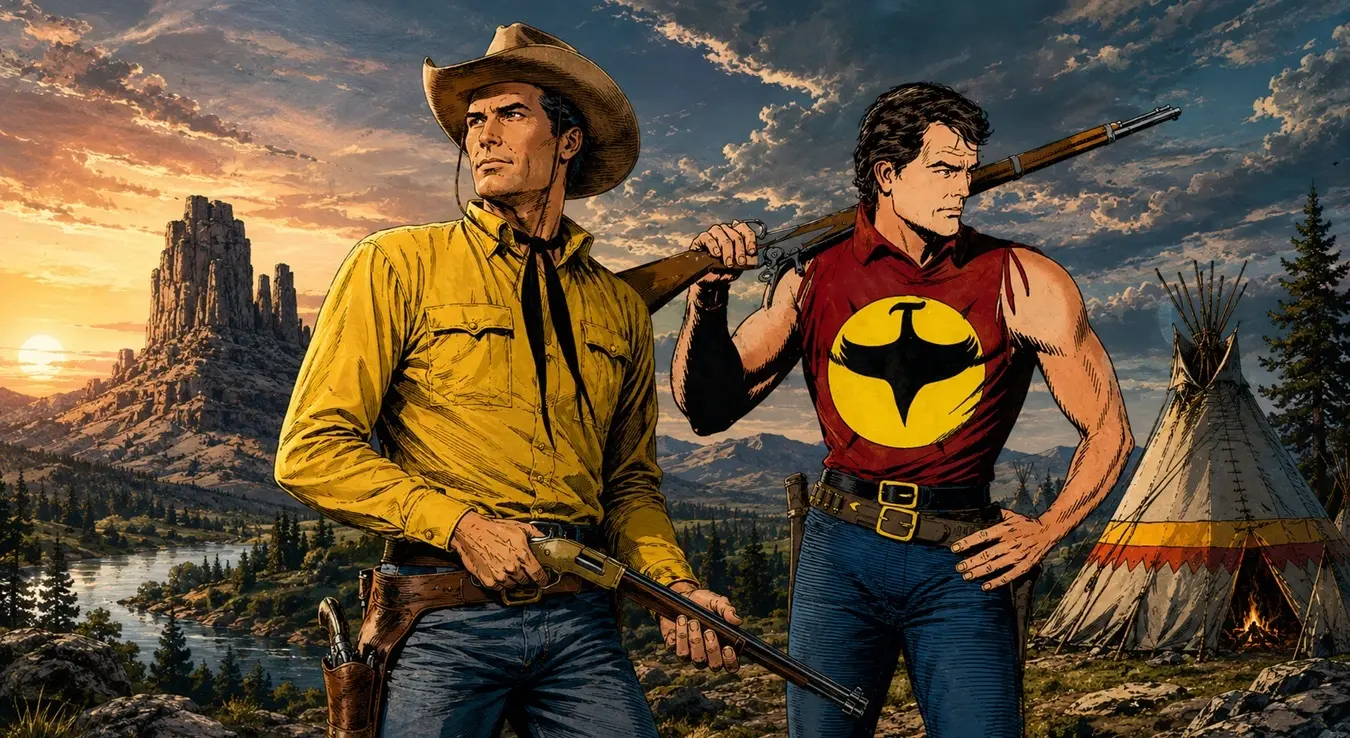
How Zagor and Tex Outlived Their Era: Dinosaurs That Never Had to Evolve
When Italian writer Gian Luigi Bonelli was coming up with a name for his new cowboy in 1948, inspired by the honest, open features of actor Gary Cooper, he first chose “Tex Killer.”