

The Village China Rebuilt: The Story of Europe’s Most Photographed Settlement

![[object Object]](https://api.hedonistmagazine.net/storage/images/2026/07/8ef5ea40-2e49-4c01-94fa-d5d90a1107c3.webp)
Some cities have inspired films, places immortalized in songs, and landscapes captured on the canvases of history’s greatest painters. Yet very few places have left such a profound impression that someone chose to recreate them almost stone for stone, thousands of miles from their original home. That is precisely what happened to Hallstatt, the tiny Austrian village nestled between the steep slopes of the Alps and the tranquil waters of the lake that bears its name.
Just over a decade ago, a luxury residential development rose in China’s Guangdong Province, painstakingly modeled after Hallstatt. Its builders reproduced the village’s distinctive timber balconies, central square, church crowned by its elegant steeple, and even the layout of its narrow streets with remarkable fidelity. The project, reportedly worth hundreds of millions of dollars, quickly attracted international attention and sparked an intriguing question: why would one of the world’s largest economies invest such enormous resources in replicating a village of fewer than a thousand residents? What makes Hallstatt so extraordinary that it was considered worthy of architectural duplication?
When news of the Chinese project first reached the Austrian village, disbelief was the dominant reaction. Some residents dismissed it as an elaborate joke. Others felt a quiet sense of pride that their hometown had become an inspiration on the opposite side of the globe, while some worried that its uniqueness had somehow been diminished. Over time, those initial emotions settled, but the story of the "second Hallstatt" endured as one of the most remarkable examples of how a small European village could evolve into a global cultural phenomenon.
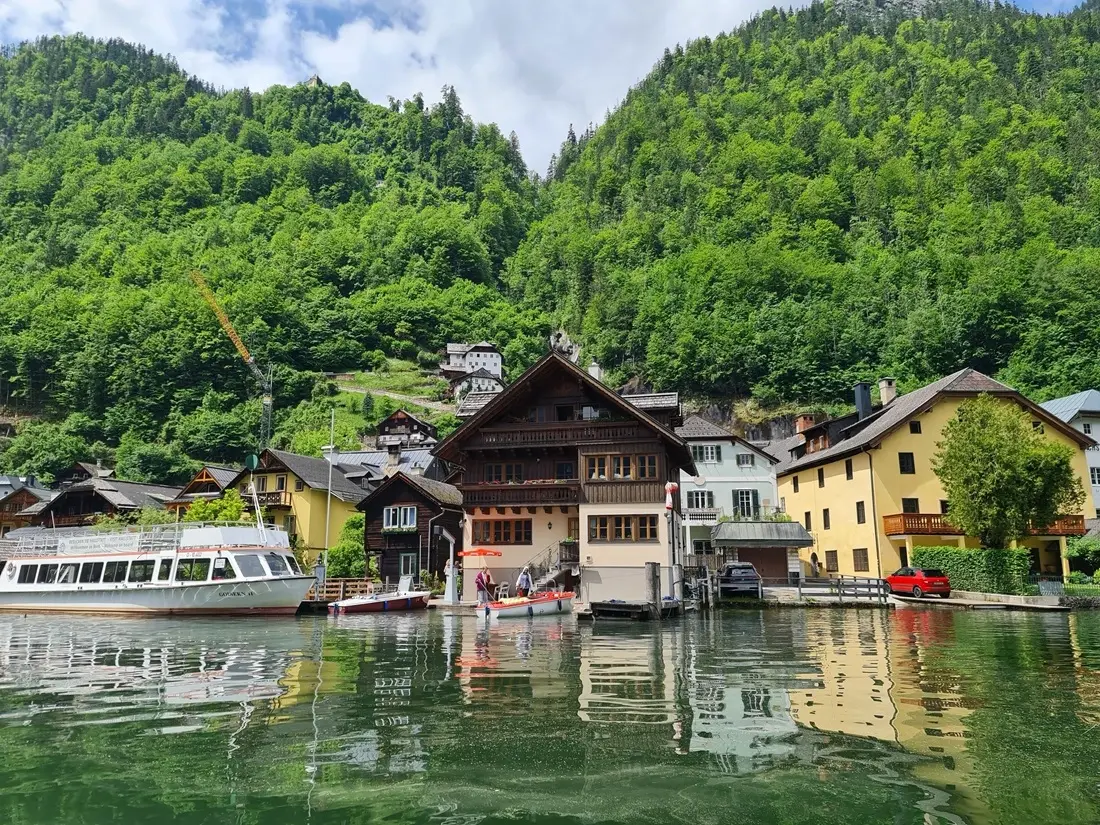
Yet the Chinese replica is merely the latest chapter in a far longer story. Hallstatt did not become famous because it looks beautiful in photographs, nor because social media transformed it into a modern travel sensation. Its history began long before the invention of photography - indeed, long before most of today's European nations even existed.
That is the great paradox of Hallstatt. At first glance, it appears almost impossibly picturesque: pastel-colored houses reflected in still waters, narrow lanes overflowing with flowers, and towering mountains embracing the village from every side. Beneath that postcard-perfect beauty, however, lies one of the most significant stories in European history - a story shaped by salt, commerce, and extraordinary wealth that transformed this remote Alpine settlement into one of the continent's earliest centers of prosperity.
To understand why Hallstatt became one of Austria's defining symbols, a destination sought by travelers from every corner of the world, and ultimately a place China chose to reproduce, we must journey back several thousand years - to an era when the wealth hidden beneath these mountains began changing the destiny of an entire region.
The Village Built on Salt
Today, it is difficult to imagine that ordinary table salt was once valued almost as highly as precious metals. In a world without refrigeration or modern methods of food preservation, it ranked among humanity's most valuable resources. Salt preserved meat and fish, traveled vast distances through trade, settled debts, and in some civilizations even functioned as a form of currency. It was no coincidence that people often referred to it as "white gold."

It was this very white gold that transformed Hallstatt into one of prehistoric Europe's wealthiest settlements. Hidden within the surrounding mountains are salt deposits that have been mined continuously for more than 7,000 years, making them among the oldest still-active salt mines anywhere in the world. While many European communities were only beginning to emerge, Hallstatt already possessed organized production, thriving commercial networks, and remarkable prosperity that attracted people from across the continent.
Archaeological excavations carried out during the nineteenth century uncovered hundreds of richly furnished graves containing weapons, jewelry, ceramics, and luxury goods that had arrived from distant parts of Europe. These discoveries revealed that Hallstatt was never an isolated Alpine village. Instead, it served as a vital trading hub connected to an extensive network of routes linking the Alps with Central and Southeastern Europe. Its significance proved so extraordinary that archaeologists named an entire cultural period after it - the Hallstatt Culture, which defines the early phase of the Iron Age across much of Central Europe.
Few places in the world have left such a lasting imprint on history that they have lent their name to an entire civilization. Hallstatt is one of those rare exceptions. Although most visitors arrive today in search of its breathtaking scenery, beneath its cobbled streets and centuries-old wooden houses lies a legacy that helped shape European civilization long before the emergence of modern nation-states.
The wealth generated by the salt trade enabled this small settlement to survive for centuries despite its exceptionally challenging geography. Wedged tightly between sheer cliffs and the lakeshore, Hallstatt has never had room to expand. Rather than spreading outward, the village adapted to the terrain, with houses built one above another and connected by narrow passageways and staircases that remain among its defining architectural features today. Ironically, this distinctive layout - born not from artistic vision but from necessity - would later become one of the reasons Hallstatt captivated photographers, painters, and travelers from around the world.
Few people gazing today across the calm waters of the lake or admiring the flower-filled balconies adorning nearly every house realize that this tranquil village was once the setting for one of the most important economic stories in European history. Without salt, Hallstatt might have remained little more than another secluded Alpine community. Because of it, the village gave its name to an entire archaeological culture, endured more than seven millennia of history, and ultimately became so iconic that it inspired an architectural twin on the other side of the world.
How Hallstatt Became Europe’s Most Photographed Village
Today, it is almost impossible to search for Europe's most beautiful destinations without Hallstatt appearing near the top of the results. Its image graces the covers of travel magazines, features prominently in Austria's tourism campaigns, and fills the social media feeds of millions of travelers eager to capture a landscape that seems almost too perfect to be real. Yet Hallstatt's rise to global fame did not begin with Instagram, nor was it the product of social media. Its story reaches much further back, reflecting the changing ways in which people have admired and interpreted nature across the centuries.
During the eighteenth century, and especially throughout the nineteenth, the Romantic movement transformed Europe's relationship with the natural world. Mountains, lakes, and untouched wilderness were no longer regarded merely as geographical features but as places capable of inspiring awe, contemplation, and spiritual renewal. Artists, poets, and adventurous travelers set out in search of landscapes that could evoke emotions beyond words. The Austrian Alps quickly became one of their favored destinations, and Hallstatt, dramatically wedged between towering mountains and the still waters of its lake, offered a composition that seemed almost impossibly perfect.
Its narrow streets, timber houses adorned with flower-filled balconies, and slender church steeple reflected in the lake presented a scene that required little artistic embellishment. Unlike many celebrated landscapes of the era, Hallstatt did not need to be romanticized on canvas. It simply had to be painted faithfully. That is why numerous Austrian and German artists of the nineteenth century captured almost the same perspective that, more than a century later, would become one of the most recognizable images on Instagram.
By the late nineteenth and early twentieth centuries, photographers gradually replaced painters as the principal chroniclers of the village. As photography and printing technologies advanced, images of Hallstatt began appearing on postcards that travelers mailed across Europe. At a time when international travel remained beyond the reach of most people, postcards served as windows into distant worlds. For countless Europeans, Hallstatt was first encountered not in person but through a carefully framed photograph tucked inside an envelope.
The expansion of the railway network brought the village even closer to the outside world. Journeys through the Austrian Alps became faster and more accessible, and Hallstatt slowly evolved from a remote mining settlement into a destination increasingly included on the itineraries of European travelers. Despite its growing popularity, however, the village managed to preserve the rhythm of everyday life that had defined it for centuries. Visitors came and went, but Hallstatt remained remarkably unchanged.
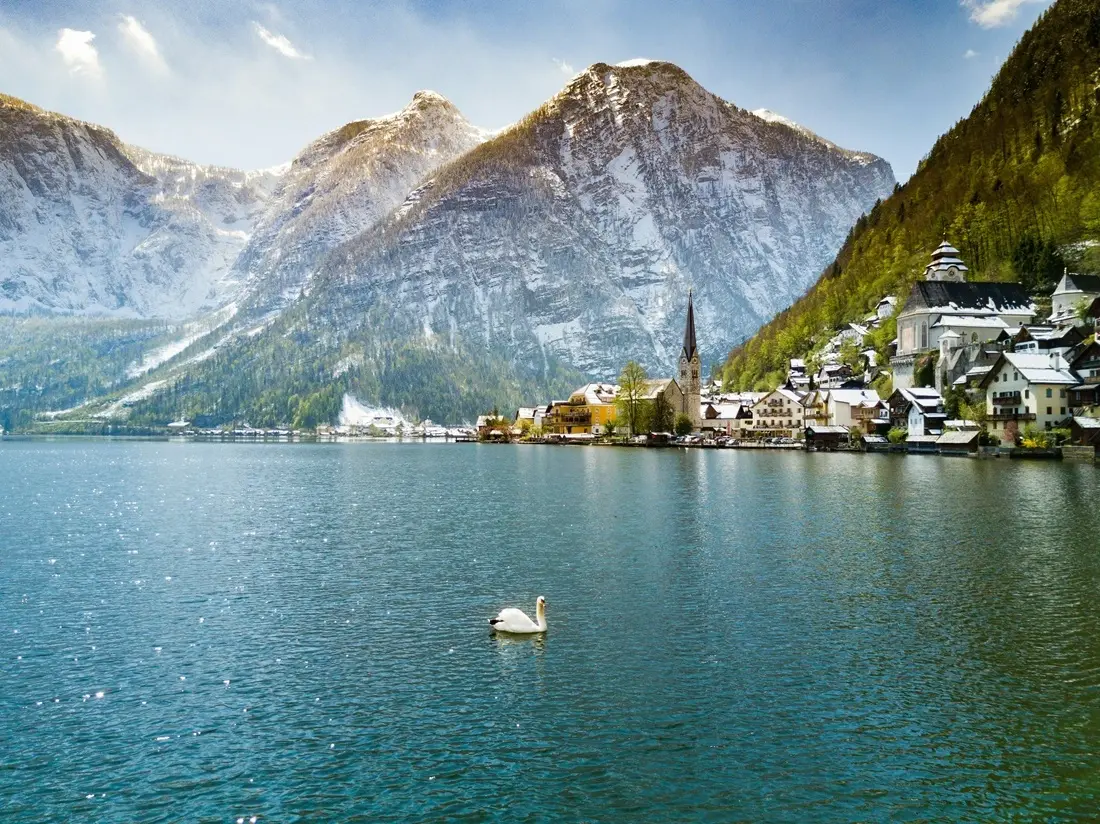
The true turning point arrived toward the end of the twentieth century, when the international community began to recognize not only the village's extraordinary beauty but also its immense historical significance. In 1997, the Hallstatt–Dachstein/Salzkammergut Cultural Landscape was inscribed on the UNESCO World Heritage List, acknowledging both its spectacular natural setting and the unique cultural legacy shaped by thousands of years of salt mining. For Hallstatt, the designation represented far more than an international honor. It marked the beginning of a new chapter in the village's history.
UNESCO recognition attracted a different kind of visitor. No longer were the streets filled solely with hikers or history enthusiasts. Architects, photographers, archaeologists, students, and cultural travelers arrived from around the world, eager to experience a place officially recognized as part of humanity's shared heritage. Visitor numbers increased steadily rather than dramatically, until another revolution, this time technological, transformed global tourism once again.
With the rise of social media, photography became the world's most influential travel guide. Recommendations from guidebooks and television documentaries gave way to images shared on smartphones, where destinations could become internationally famous overnight. Hallstatt proved perfectly suited to this new digital landscape. Few places appear so effortlessly photogenic from almost every angle, and even fewer undergo such dramatic yet equally captivating transformations with the changing seasons. In summer, the village is framed by lush greenery and overflowing flowers. Autumn paints the surrounding mountains in shades of crimson and gold. Winter blankets rooftops beneath fresh snow, while spring lends the entire landscape the dreamlike quality of an illustrated fairy tale.
It did not take long for Hallstatt to become one of Instagram's defining travel icons. Travel vloggers, influencers, and content creators soon turned its lakeside viewpoints and narrow streets into essential stops on the European itinerary. Today, scarcely any serious guide to Austria omits Hallstatt from its list of destinations that every traveler should experience at least once.
Yet there is another reason visitors so often describe the village as fairy-tale-like. Hallstatt is not remarkable because it is grand or monumental. Quite the opposite. Its appeal lies in the extraordinary harmony between human settlement and the natural landscape. The mountains remain largely untouched by urban development, the lake has preserved its remarkable stillness, and houses built across different centuries seem as though they have always belonged precisely where they stand. Nothing competes for attention, yet together every element forms a composition of remarkable balance and quiet beauty. That harmony is what elevates Hallstatt beyond the status of a tourist attraction. It feels less like a place that was constructed than one imagined by an artist and gently placed into the landscape.
It was precisely this almost surreal beauty that led to one of the most extraordinary episodes in modern architectural history. One country did not simply decide to send more tourists to Hallstatt.
It decided to build its own.
When China Built a Second Hallstatt
In the early years of the 2010s, unusual stories began circulating among the residents of Hallstatt. Some locals noticed groups of Asian visitors who seemed interested in far more than taking holiday photographs. They carefully measured buildings, photographed façades from every conceivable angle, studied the layout of streets and squares, and in some cases even sketched individual structures by hand. At first, no one thought much of it. Hallstatt had long grown accustomed to curious visitors from around the world, and a little extra enthusiasm hardly seemed unusual.
Only later did it become clear that these were not ordinary tourists.
Behind their visits stood China Minmetals Corporation, a major Chinese developer planning an ambitious luxury residential project in Huizhou, in Guangdong Province. Rather than creating a generic European-style neighborhood, the company set its sights on something far more extraordinary: a near-faithful replica of Hallstatt itself.
The development, reportedly valued at around US$1 billion, was never intended to be a theme park or a movie set. Instead, it was conceived as a fully functioning residential community featuring villas, apartments, hotels, public squares, and commercial spaces aimed at China's growing affluent class. At its center stood a carefully recreated version of Hallstatt's iconic church tower, surrounded by buildings designed to mirror the Austrian village with remarkable accuracy.
When photographs of the Chinese Hallstatt first appeared, they astonished audiences around the world. The resemblance was striking. While the surrounding Alpine peaks and the tranquil lake could never truly be replicated, the architecture, streetscape, and overall atmosphere were immediately recognizable. For some observers, the project represented a fascinating example of globalization and China's admiration for European cultural heritage. Others saw it as a troubling case of cultural imitation carried out without the consent of the community that had shaped the original village over centuries.
The news was met with mixed emotions in Austria. Some residents felt a sense of pride that their tiny village had become so admired that it inspired a full-scale reconstruction on the other side of the world. Others questioned whether the identity of a place could simply be borrowed by reproducing its façades. Austrian newspapers followed the story closely, sparking a broader public debate about where admiration ends and imitation begins.
Unlike disputes involving counterfeit products or trademark infringement, however, the legal situation proved far more complicated. A historic village as a whole cannot easily be protected under intellectual property laws in the same way as a patented invention or a registered logo. As a result, no major legal battle ever unfolded. Instead, both sides gradually sought to transform an awkward situation into an opportunity for dialogue.
Representatives of the Chinese project later visited Hallstatt, met with local officials, and worked to establish friendly relations between the two communities. Over the following years, cultural and tourism exchanges were organized, official delegations traveled in both directions, and what had initially appeared to be the beginning of an international dispute slowly evolved into an unexpected example of cultural diplomacy between two places separated by thousands of kilometers and vastly different histories.
Ironically, the replica only increased interest in the original. The story of "the second Hallstatt" generated headlines across the globe, introducing millions of people to the Austrian village for the very first time. Many travelers who had never heard of Hallstatt before suddenly added it to their bucket lists, eager to experience the place that had inspired such an extraordinary act of architectural reproduction. Rather than diminishing the value of the original, the copy ultimately reinforced its uniqueness.
Perhaps that is the most fascinating lesson hidden within this unlikely story. Architecture can be surveyed with astonishing precision. Buildings can be measured down to the last centimeter, façades recreated stone by stone, squares redesigned, and church towers rebuilt from scratch. Yet what makes Hallstatt truly Hallstatt has never been its skyline alone. Its real identity lies in thousands of years of history, in the generations of miners who carved salt from the mountains, in the merchants who carried that "white gold" across Europe, and in the landscape itself - a setting that no architect, regardless of talent, can faithfully reproduce.
That is why two Hallstatts now exist.
One is built of stone, timber, and concrete.
The other has been shaped over more than seven millennia by history, memory, and human experience - a place whose true essence can never be duplicated, no matter how perfect the copy may appear.
When Beauty Becomes a Burden
Few places in the world would complain about attracting too many visitors. Most towns and villages spend years investing in tourism campaigns, international travel fairs, and new infrastructure, all in the hope of persuading more people to come. Hallstatt, however, has become a reminder that success can carry its own price. Ironically, the very qualities that transformed it into one of Europe's most celebrated destinations have also become some of its greatest challenges.
In a village with fewer than a thousand permanent residents, several thousand visitors may arrive on a busy day. Tourist coaches begin rolling in early each morning, and during peak season, the narrow streets that served generations of local families are transformed into a continuous stream of travelers searching for the same postcard-perfect view they have already seen countless times online. Many spend only a few hours in Hallstatt. They step off the bus, photograph the market square, the church steeple, and the lakeshore, enjoy a coffee or buy a souvenir, and then continue toward Salzburg or Vienna.
This form of tourism undoubtedly supports the local economy, but it also places enormous pressure on a historic settlement never designed to accommodate such numbers. Roads become congested, public spaces overcrowded, and everyday life increasingly shaped by the rhythms of visitors who experience the village only as a brief stop on a larger itinerary. What was once a quiet Alpine community has become one of Austria's most visited destinations.
Social media has amplified the challenge in ways few could have imagined. Travelers once explored places to understand them. Today, many choose destinations because they have already encountered a particular image online. Hallstatt illustrates this shift perfectly. At several viewpoints, visitors routinely line up simply to capture the same photograph of the lake, the church tower, and the surrounding mountains. The irony is unmistakable: thousands of people travel in search of something unique, only to recreate almost identical memories.
In recent years, residents have repeatedly warned that the village cannot absorb an ever-growing number of day-trippers indefinitely. Some describe the feeling of living inside an open-air museum, while others point out that visitors often forget there are real lives behind the picturesque façades. The windows they photograph belong to family homes, not film sets. The streets are not backdrops for social media videos, but the everyday routes children take to school and neighbors take to work or the grocery store.
Local authorities have therefore spent years searching for a balance between preserving quality of life and sustaining the tourism economy on which many residents depend. Restrictions have been introduced on the number of tour buses, visitor management has become more carefully organized, and discussions increasingly focus on sustainable tourism - the principle that even the world's most beloved destinations should never become victims of their own popularity.
Hallstatt is, of course, far from unique. Similar pressures are reshaping places such as Venice, Santorini, Dubrovnik, and the villages of Cinque Terre. Yet Hallstatt perhaps illustrates the paradox more clearly than anywhere else. A community that flourished for millennia because of salt now finds itself working just as hard to preserve its identity from the unintended consequences of global fame.
At the same time, more travelers are beginning to realize that the true value of places like Hallstatt lies not in the photographs they take home, but in the time they choose to spend there. Hallstatt was never meant to be experienced in an hour. Its stories reveal themselves in weathered wooden balconies, narrow alleyways, the sound of church bells echoing across the lake, the scent of fresh mountain air in the early morning, and the remarkable silence that returns after the last tour buses depart. These are the moments a camera rarely captures, yet they are precisely why people have traveled in search of extraordinary places for centuries.
Can the Soul of a Place Be Copied?
When China built its own Hallstatt, one question quickly emerged. If it is possible to recreate the same square, the same church tower, and houses that closely resemble the original, what truly distinguishes a copy from the place it imitates?
The answer reaches far beyond architecture.
Modern technology has become remarkably good at reproduction. Buildings can be replicated with astonishing precision. Historic streets can be reconstructed. Entire neighborhoods can be recreated if enough money, expertise, and determination are invested. What cannot be engineered, however, is time itself.
Hallstatt did not become extraordinary the moment its houses were built. Its identity evolved over thousands of years through generations of miners descending into the mountain in search of salt, merchants carrying that precious resource across Europe, families building their homes along the lakeshore, and children growing up beneath the same dramatic Alpine skyline that continues to captivate millions of visitors today. Every century added another layer to the village's story, leaving traces that no architectural blueprint could ever reproduce.
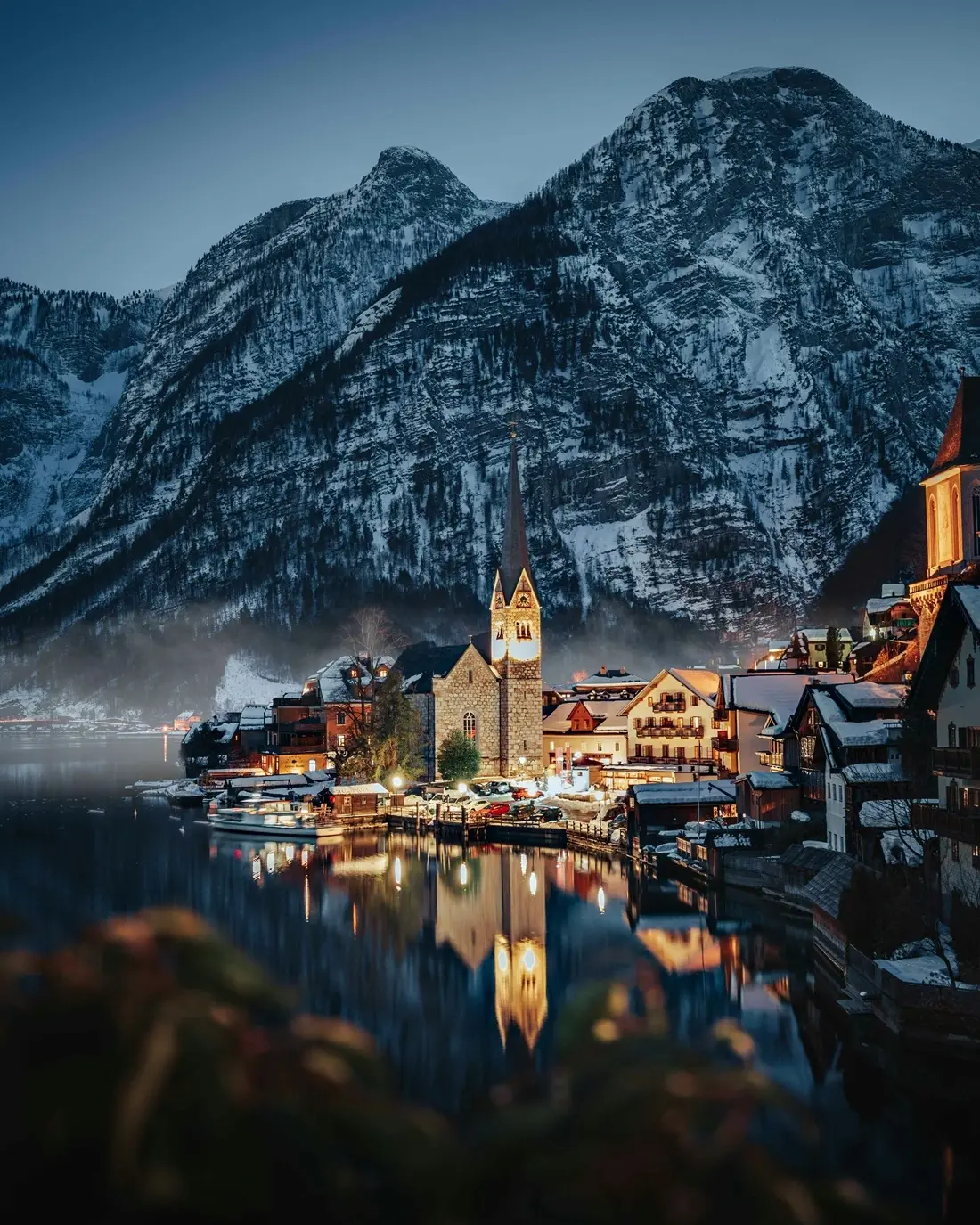
This is why places possess what many architects describe as a genius loci - the spirit of place. It is an invisible quality that emerges only when history, landscape, and human experience become inseparable over centuries. It cannot be measured, designed, or manufactured. It reveals itself only when someone sits beside the lake on a quiet morning, watching the mist slowly rise between the mountains, and, for a brief moment, experiences Hallstatt as it existed long before social media transformed it into a global icon.
Perhaps that is why Hallstatt continues to fascinate visitors from every corner of the world. Not because it is flawless, nor because it resembles a postcard, but because it feels authentic. At a time when cities increasingly resemble one another, when the same global brands dominate shopping streets from Tokyo to Toronto, places that have preserved their distinctive character become ever more precious.
Ironically, China's replica only reinforced that truth. It demonstrated that architecture can be copied, but stories cannot. A market square may be rebuilt, but not the memories created there over centuries. A church tower may rise again elsewhere, but not the sound of bells that have marked the rhythm of village life for generations. Houses can be reconstructed with remarkable accuracy, but not the lives once lived within their walls.
That may be Hallstatt's greatest lesson. The beauty of a place is never limited to what we see. It is also shaped by everything a photograph cannot capture - the scent of rain on ancient stone, stories passed from one generation to the next, local traditions, moments of profound silence, and the quiet awareness that we are standing somewhere infinitely older than ourselves.
Hallstatt became one of Europe's defining symbols not simply because it is beautiful, but because its beauty rests upon a history stretching back more than seven thousand years. It is a story of salt that once fueled kingdoms, of people who learned to build a community between mountain and lake, of a village that inspired painters, photographers, and travelers across the globe - and ultimately became so extraordinary that another country attempted to recreate it.
Yet no matter how convincing the replica may appear, something essential will always remain impossible to relocate. No blueprint can reproduce the first rays of sunlight reflecting across Hallstätter See at dawn. No construction project can manufacture seven millennia of history. No architect can design the countless memories accumulated by generations who have called this place home.
That is why Hallstatt is more than one of Europe's most beautiful villages. It is a reminder that the world's greatest places owe their beauty not merely to architecture, but to time itself.
And time remains the one masterpiece humanity has never learned to copy.