

The Straight Razor: A Ritual That Outlived Us, Died, and Came Back

![[object Object]](https://api.hedonistmagazine.net/storage/images/2026/08/5b072219-62f2-4eea-b7f0-657a9fb1a296.webp)
Outside almost every barbershop in the world, the same symbol still spins - a red-and-white spiral so familiar that almost no one looks at it twice. Few people know it was never decoration. It was an advertisement, and for something far less pleasant than a haircut.
In medieval Europe, a barber wasn't just the man who cut your hair and shaved your face - he was also a surgeon. When Pope Alexander III banned monks from bloodletting patients in 1163, the job fell to barbers, simply because they already owned sharp tools and steady hands. They pulled teeth, set broken bones, and bled patients as a cure for everything from a sore throat to the plague. When the procedure was done, the patient would grip a wooden rod in his fist to make the veins stand out - and that rod, wrapped in blood-stained bandages left to dry, flapping in the wind outside the shop, became what we now recognize as the barber's pole, spiralling in red and white. Red was the blood. White was the bandages.
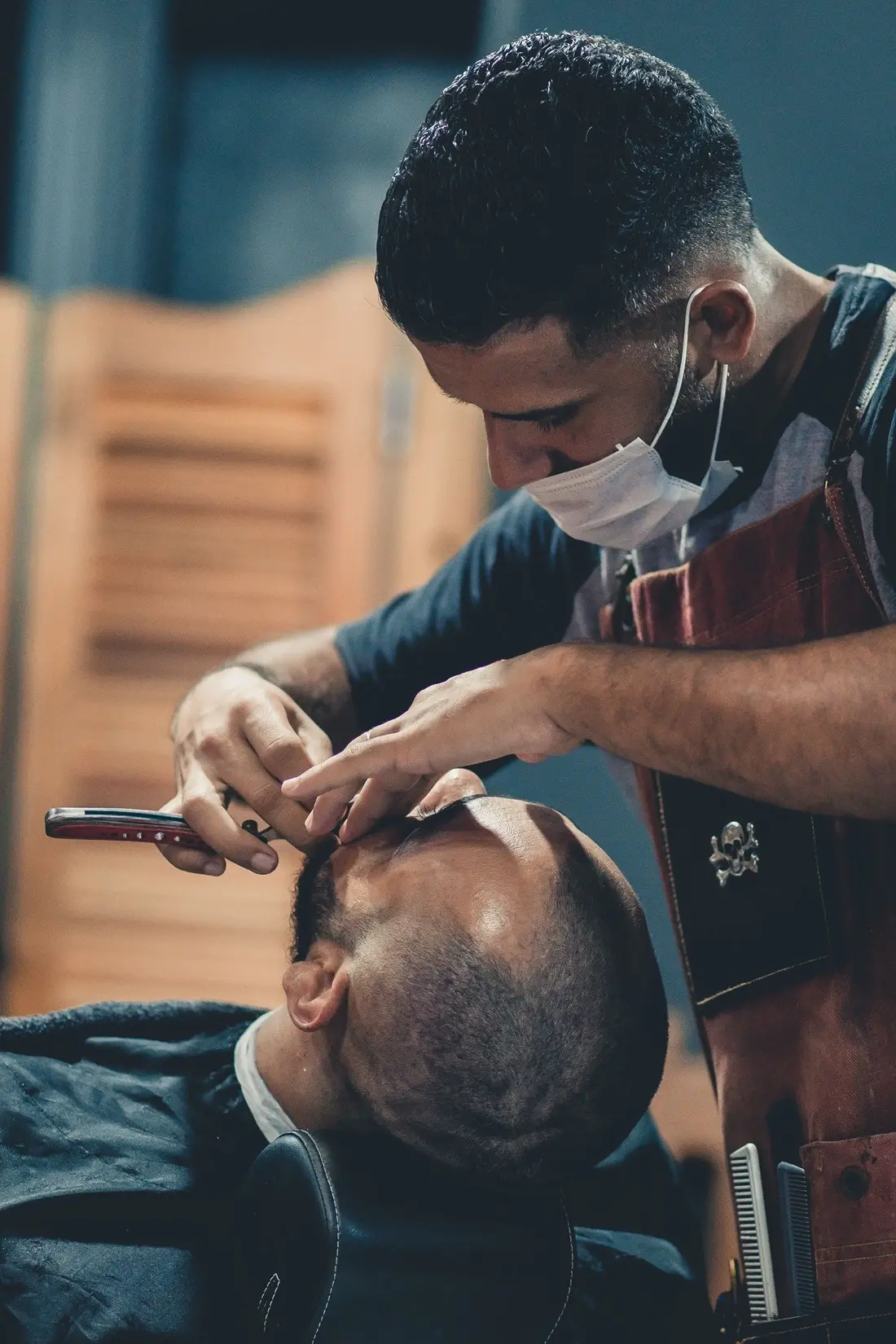
Today, when someone sits down in that same chair, something far calmer unfolds. A hot towel comes first, laid over the face - less to relax the skin than to open the pores and soften the hair enough for the blade to pass through without resistance. Next comes the brush, then soap worked into a thick lather, then the blade itself: a single edge, polished to a shine, gliding down the cheek with a sound closer to breathing than cutting. The man in the chair doesn't move a muscle. He knows one wrong twitch at this moment could cost him a cut, so the stillness here isn't a choice. It's a condition.
Long before anyone had heard of Gillette, the blade was the only way a man could shave down to smooth skin. It wasn't a matter of aesthetics, but of necessity - and a necessity that requires a steady hand and a stropping stone always means someone else has to do it for you. Everything changed at the turn of the twentieth century, when an American travelling salesman named King Camp Gillette patented something that looked almost trivial: a blade that was thin, cheap, and - most importantly - disposable. Instead of carrying your razor to the barber to be sharpened, you could now throw it away and slot in a new one. Sales started slowly. What truly broke the straight razor's dominance wasn't marketing, but war: once the United States entered the First World War, soldiers needed to be clean-shaven for their gas masks to seal properly, and Gillette's compact kit was faster and more practical in the trenches than a blade that needed stropping. The soldiers came home with the habit, and barbershops across the Western world lost the reason for being that they'd held for centuries.
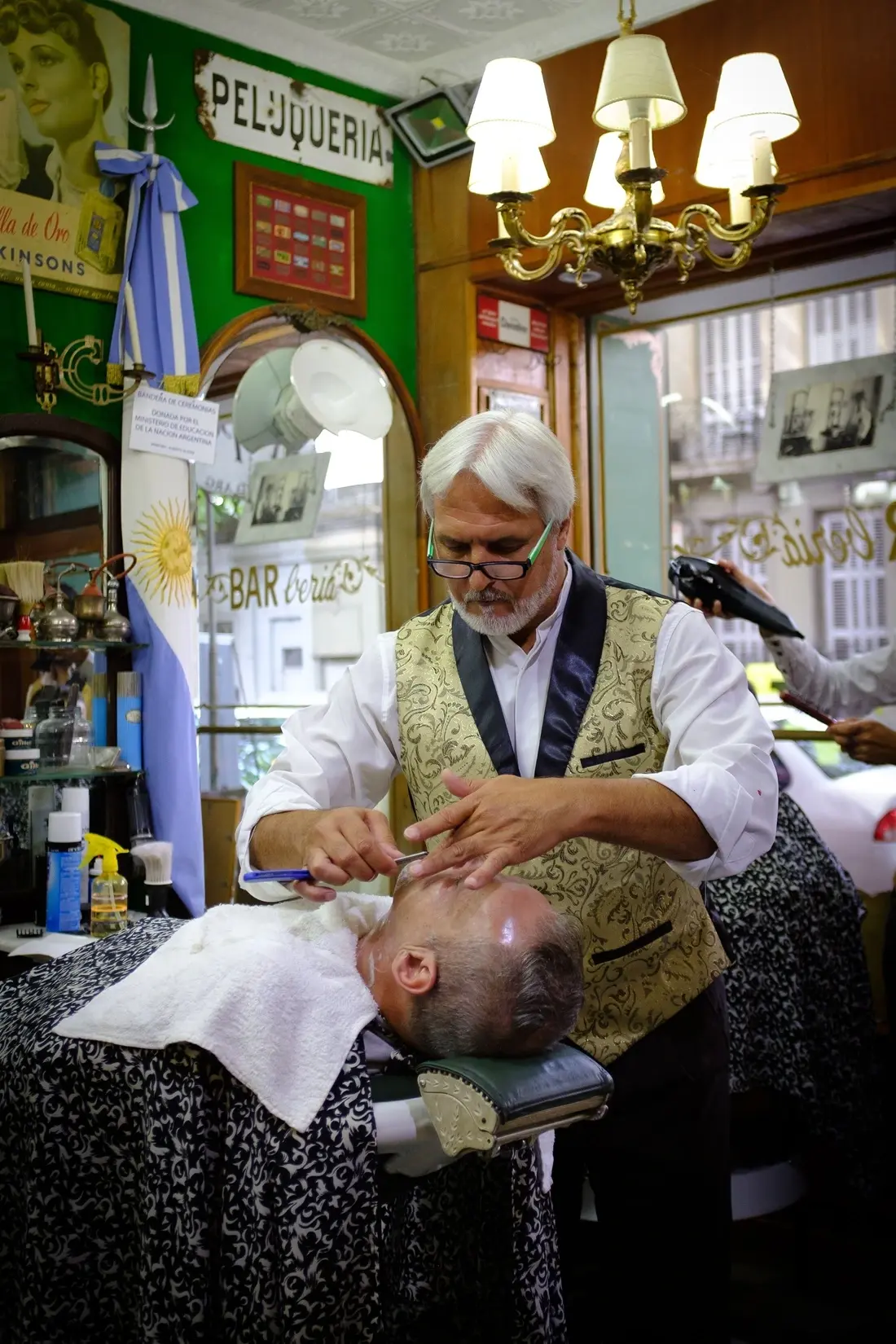
The final blow landed half a century later, and it came not from technology, but from fashion. As one third-generation barber later put it, the sixties killed the trade because everyone suddenly wanted to look like a hippie - long hair, an unshaped beard, nothing that called for a weekly visit to a man holding a blade. Barbershops, once the social hub of a man's week, became relics.
What sets the blade apart from the disposable razor isn't just romance - it's the physics of shaving itself. A disposable razor stacks several blades one behind the other, each one tugging the hair and cutting it at a slight angle before it snaps back beneath the skin - which is exactly why so many men deal with ingrown hairs and irritation. A straight razor works the opposite way: a single honed edge, sharpened at a precise angle across a series of increasingly fine stones, cuts the hair flush with the skin's surface in one pass, with no tugging at all. The result isn't just a closer shave - it doubles as a mild exfoliation, something no five-blade cartridge can offer, however loudly its ads claim otherwise.
Over the past fifteen years or so, the blade has made its way back - and not by accident. Shows like Boardwalk Empire and Mad Men reminded an entire generation what a man looked like stepping out of a barbershop clean-shaven and smelling of talc instead of canned foam, and suddenly that image was desirable again.
But the comeback isn't pure nostalgia. In a world where more and more gets done in a hurry, alone, or through a screen, twenty minutes in a chair - a hot towel on your face, someone else carefully tracing your jawline with a blade - has become a rare luxury precisely because it demands a kind of slowness you can't buy in a three-minute tube. A barbershop today isn't just a place to get shaved. It's become, once again, what it was before Gillette rewrote the rules: a place where a man stops for a moment, hands a blade to someone else to hold against his throat, and trusts.
That trust, in the end, is the real reason the ritual came back at all. A plastic cartridge can never give you that feeling - not because it's a worse tool, but because it's always held by one hand only: your own. A straight razor, by definition, requires another person. And maybe that, in an age when we do less and less for one another, is the real difference it offers.