Seven Men Who Changed the Way Men Dress
![[object Object]](https://api.hedonistmagazine.net/storage/images/2026/08/9c9a1ed4-22b8-4ea4-94d6-28933c99fbdb.webp)
The camera moves in. Cary Grant steps out of the car, buttons his jacket in a single motion, and walks into frame as though the suit were a second skin rather than something he'd put on that morning. The audience doesn't register it as style. They simply register it as him. That, in the end, is the difference between a man who wears fashion and a man who becomes it, without ever seeming to try.
Menswear has rarely changed overnight. More often, it has been reshaped by individuals who never looked like they were chasing what was modern, but rather like they had found their own way of dressing and stayed loyal to it. Their influence didn't always originate on a runway. Sometimes it began on a film set, in a recording studio, on a street corner, or behind the wheel of a car. Seven men, across seven different eras, changed not just what gets worn, but what wearing clothes is understood to mean.
What they shared was not a taste for the eye-catching. If anything, the opposite: the styles that endure longest are almost always built on simplicity, proportion, and details a person only notices on the second glance. That's precisely why their wardrobes still read as contemporary, even though many of the pieces they wore were cut decades ago.
Cary Grant: the art of the perfect cut
Cary Grant remains the clearest case for the idea that a suit shouldn't wear the man - the man should wear the suit. His style was sophisticated without ever straining to prove it. Dark suits, white shirts, understated ties, well-made coats, and carefully chosen shoes made up a wardrobe that looked simple precisely because everything in it was exactly where it belonged.
Grant needed no extravagance to leave an impression. His silhouette, and the ease with which he carried a jacket, turned the classic suit from office uniform into a statement of character. In North by Northwest, his grey, double-breasted, pinstriped suit never read as costume - it read as an extension of the man wearing it. That remains the great lesson of his style: elegance works best when it looks entirely effortless.
Marlon Brando: the moment a T-shirt became an attitude
While Grant embodied tailored elegance, Marlon Brando revealed an entirely different side of menswear. A white T-shirt, blue jeans, and a leather jacket stopped being workwear in his hands and became a symbol of youth and a new kind of masculine energy.
In the early 1950s, Brando proved a man didn't need a suit to look powerful and self-assured. His look in The Wild One became one of the defining images in the history of popular culture, and his role as Stanley Kowalski in A Streetcar Named Desire cemented his standing further still. Brando didn't invent the T-shirt or the leather jacket - he changed the way culture looked at them. From that point on, menswear began speaking not only to status, but to attitude.
James Dean: a uniform for a generation
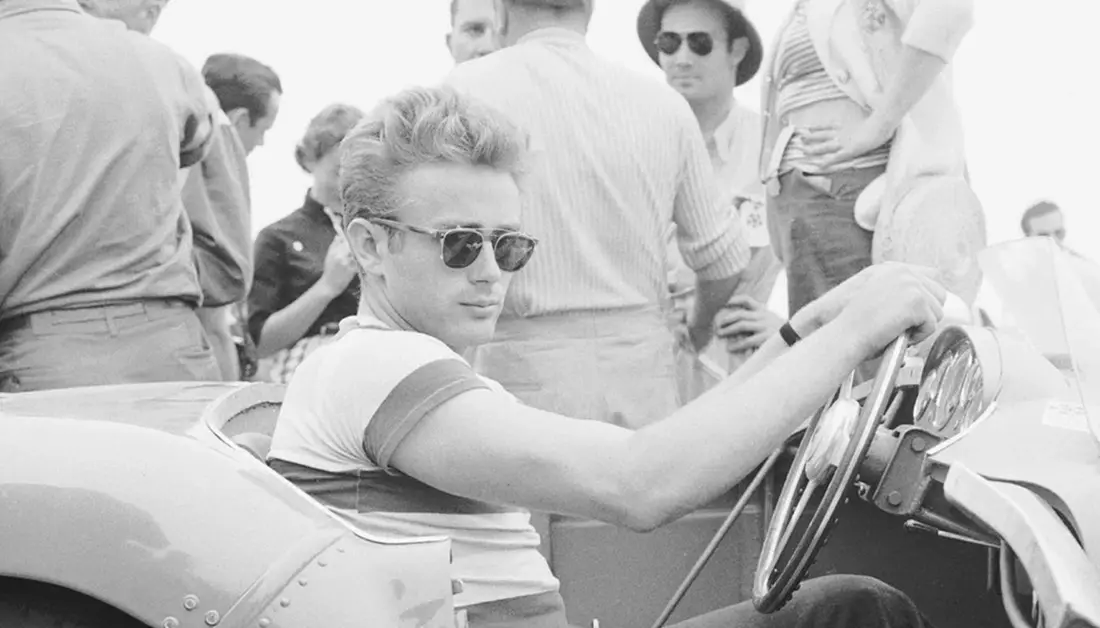
A few years later, James Dean took that idea and turned it into a universal symbol of youth itself. His short life and only a handful of major roles were enough to make his style nearly mythological.
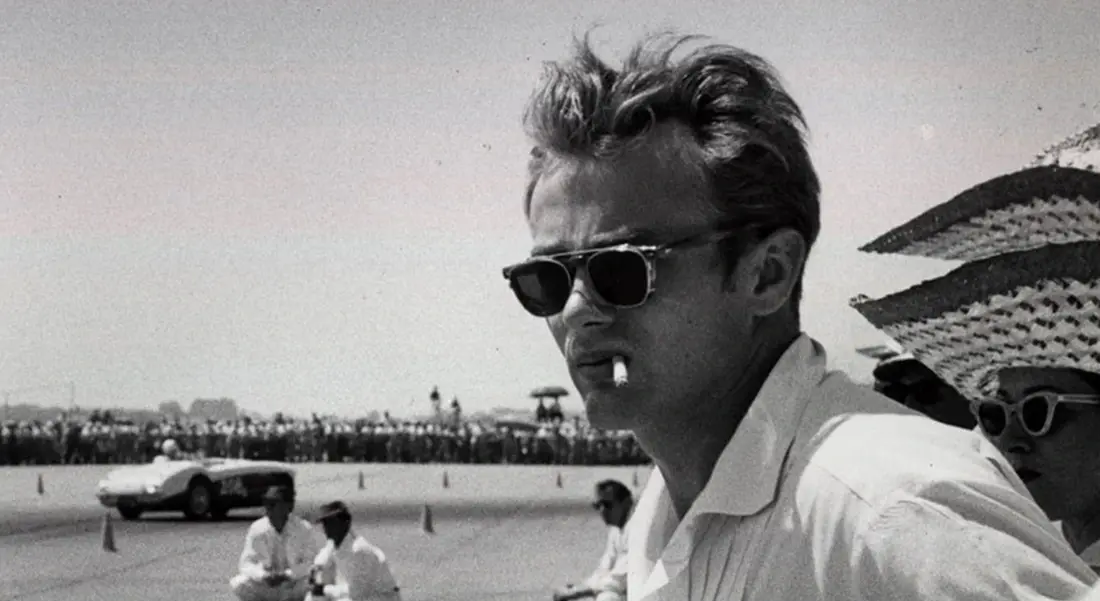
The red jacket, white T-shirt, jeans, and boots of Rebel Without a Cause created a visual code that has repeated itself for decades since. His clothes never looked deliberated over - they looked like a natural extension of who he was, which is likely why they've remained so convincing. Dean helped turn youth itself into a cultural category, complete with its own look and its own rules. A man no longer had to dress like his father to appear grown.
Paul Newman: sporting elegance without effort
Paul Newman belongs to a different kind of icon altogether. His wardrobe was less dramatic, but arguably more durable for it. Oxford shirts, chinos, knit sweaters, polo shirts, sport coats, and simple loafers made up a wardrobe that worked almost anywhere.
Newman had the rare ability to look elegant even dressed down completely. His style depended not on luxury details but on proportion and confidence. Even in a plain T-shirt and jeans, he came across as a man who understood clothing without taking it too seriously - a principle contemporary menswear, with its blend of formal and casual, would only catch up to decades later.
Steve McQueen: when clothing becomes character
Few figures fused screen charisma, sporting ease, and masculine elegance as completely as Steve McQueen. His style was polished enough for a premiere and relaxed enough for a motorcycle ride.
Harrington jackets, suede jackets, knit sweaters, polo shirts, boots, jeans, and well-cut suits - none of it ever looked like an attempt to draw attention. At a moment when style was drifting further from formal rules, McQueen proved that sportswear and workwear could carry the same visual weight as a suit. His look in Bullitt - a dark polo sweater, trousers, and coat - remains one of cinema's most enduring depictions of understated masculine style.
When the rules stopped being rules
Grant, Brando, Dean, Newman, and McQueen belong to the same larger story - the story of masculine elegance gradually shedding formality, from the suit to blue jeans, without losing its sense of dignity. The next two men write an entirely different chapter: one where getting dressed stops being a matter of taste and becomes a matter of freedom.
David Bowie wasn't looking for a perfect version of traditional menswear - he was demonstrating how far style could go once it stopped being bound by expectation. From the glam-rock aesthetic of Ziggy Stardust to sharp tailoring, platforms, color, and avant-garde combinations, Bowie turned dressing into an artistic language, often an extension of the music he was making. His influence reshaped the very idea of what looking masculine could mean: he showed that style could be fluid, theatrical, and ever-changing without losing a shred of authenticity.
Gianni Agnelli, the Italian industrialist, was neither an actor nor a musician, yet for decades he was one of the most influential figures in European menswear - precisely because he knew how to nudge classic dressing a few deliberate inches outside the rules. He wore impeccably tailored suits with sport shoes, a watch worn over his shirt cuff, a tie left looser than etiquette demanded. His clothing was luxurious, but never entirely obedient - proof that true elegance sometimes only arrives once you know the rules well enough to break them.
Why their style still works
Trends have a shelf life. Style is a much slower category. A well-cut suit, a white T-shirt, a good leather jacket, a fine wool sweater, a simple coat - none of it depends on a single season. Their value comes from proportion, material, and the character of the man who chooses them. That's why contemporary fashion keeps circling back to these seven men: fashion houses keep rediscovering cuts from the 1960s and '70s, and film costuming keeps becoming a reference point for new collections.
But this isn't a story about nostalgia. It's a story about the fact that style, when it's genuine, doesn't age - it simply waits for the next generation to discover it as their own.
- Written by Ognjen Tešić / HEDONIST