

ASHOK MURTY for HEDONIST: Hedonism Is Everything I Do

![[object Object]](https://api.hedonistmagazine.net/storage/images/2026/01/6d2ff679-172b-45fd-a845-b75c7f5e9ca3.webp)
Anyone even slightly familiar with the fashion industry in this region is surely acquainted with the name Ashok Murty. A trained architect who, by a twist of fate, entered the fashion world, Murty has become a highly respected figure in his field.
He is a man with an unerring sense of the contemporary, skillfully working across both domestic and international scenes, approaching every project with wholehearted dedication. His journey from his hometown of Šabac to Belgrade was, as he says, short but demanding.
“From today’s perspective, I can responsibly claim that the difference between the ‘province’ and the ‘metropolis’ was far less pronounced in every sense, both in terms of living standards and the quality of what we call culture. I had a truly cosmopolitan upbringing, partly because I come from a so-called mixed marriage, and partly because the world at that time, not just for me, felt much smaller and somehow within reach. Before I even enrolled at university, I had already traveled extensively, both with my parents and on my own. There was very little that interested me and that I hadn’t seen. Every passion and interest I had was adequately supported. We spent summers and winters in places that, today, realistically exceed what I can afford, given my current financial status. My mother was, for much of my early childhood, more absent than present due to the nature of her work, but precisely because of that, and because of the unusual situation of such a family living in a small town, we learned to hold together strongly as a unit and remain close and intimate.”
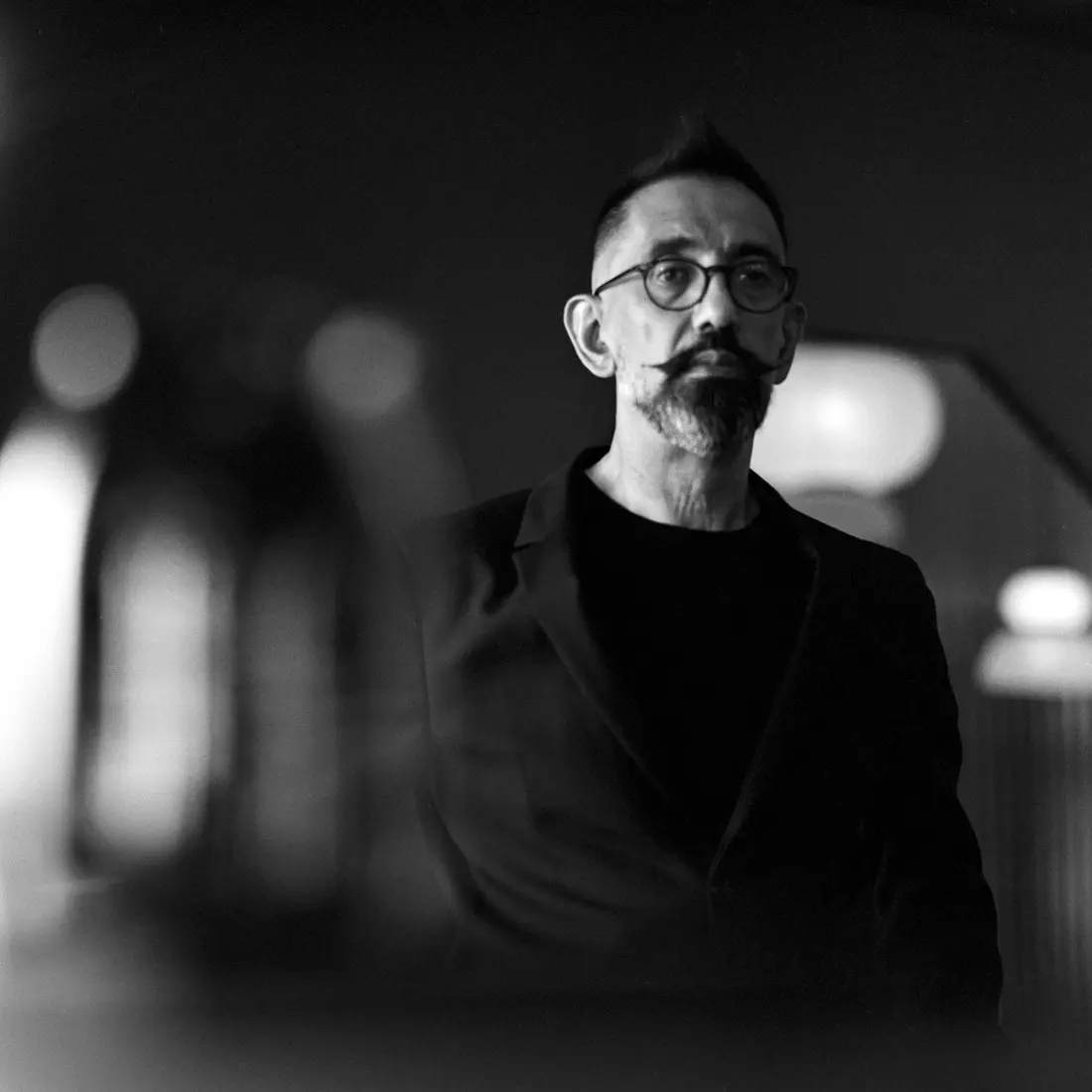
Reflecting on his upbringing in Šabac, Ashok emphasizes that he formed all the key relationships that shaped and defined him for life independently.
“Today I know that every interaction I have with other people is emotionally charged. Although I was aware that I would have to complete my ‘developmental path’ and ‘self-realization’ elsewhere, almost from the moment I became self-aware, everything I’ve said explains why it was incredibly difficult for me to move from Šabac to Belgrade, especially considering that I carried with me most of the essential things that kept me grounded. It was somehow assumed that Belgrade would only be the first stop on a longer life journey. From what followed, it seems I probably stayed at that point permanently. I’m not complaining.”
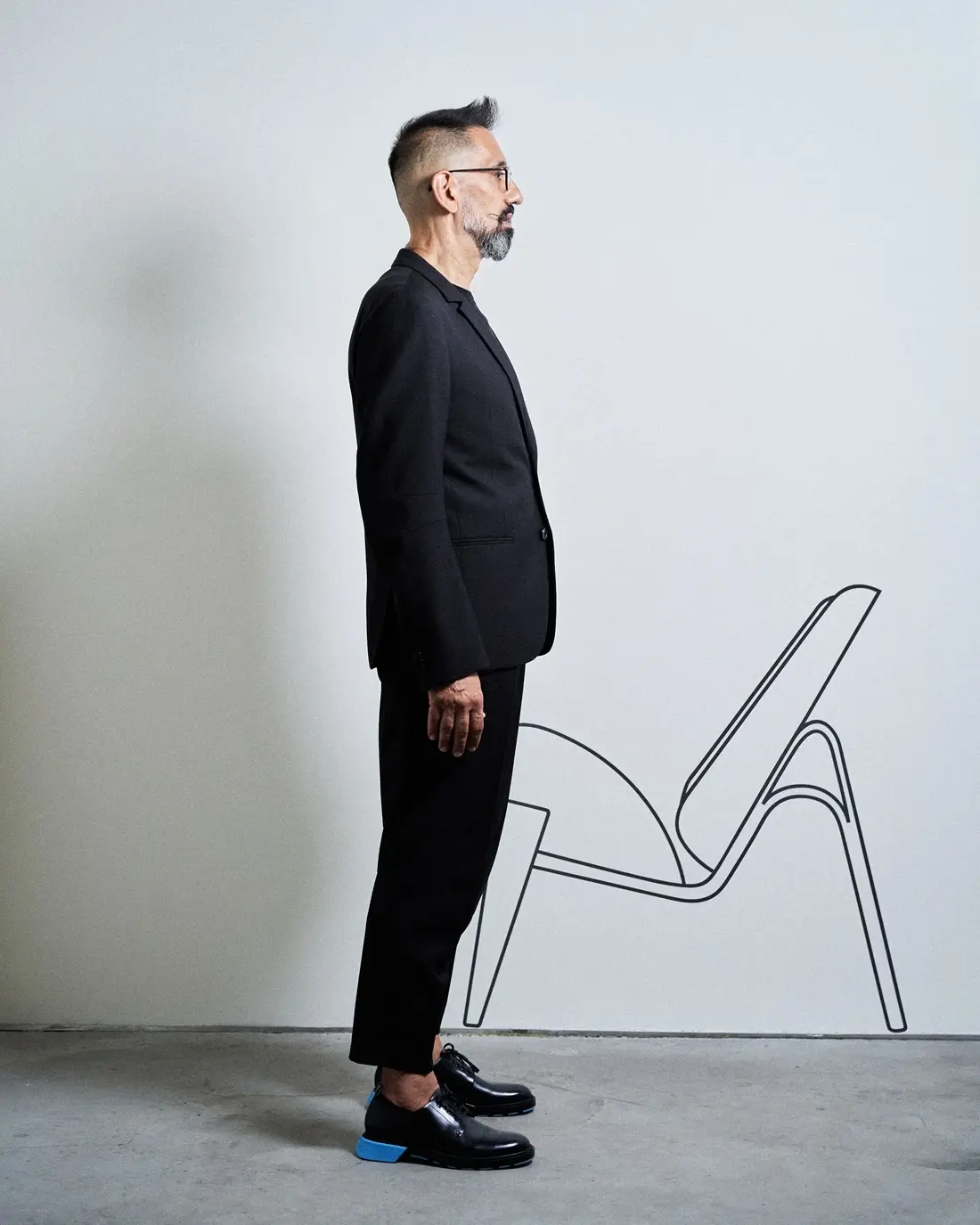
From an early age, he says, he was accompanied by intense curiosity.
“Everyone around me genuinely tried to provide the information I was seeking, but only now can I see how enormous that effort was and how much gratitude I owe them. Very early on, we established that: a) I didn’t want to do what my parents did, b) everyone around me believed I would be an artist, and c) there was a serious risk I might end up studying biology. My father, like every good Indian, desperately wanted his offspring to surpass him and, following the professional status trends of Yugoslavia at the time, hoped I would become, at best, a doctor, or at worst, a pharmacist. He was permanently frustrated by my complete lack of a conventional approach, both to education and to my future. I simply wasn’t ambitious in the traditional sense. What probably confused him even more was the fact that I completed my entire education by firmly holding onto the belief that education should be one great exploration, not a race for results. My mother, on the other hand, was greatly amused by all of this, but left it to me to bear the consequences of such an attitude toward the educational system.”
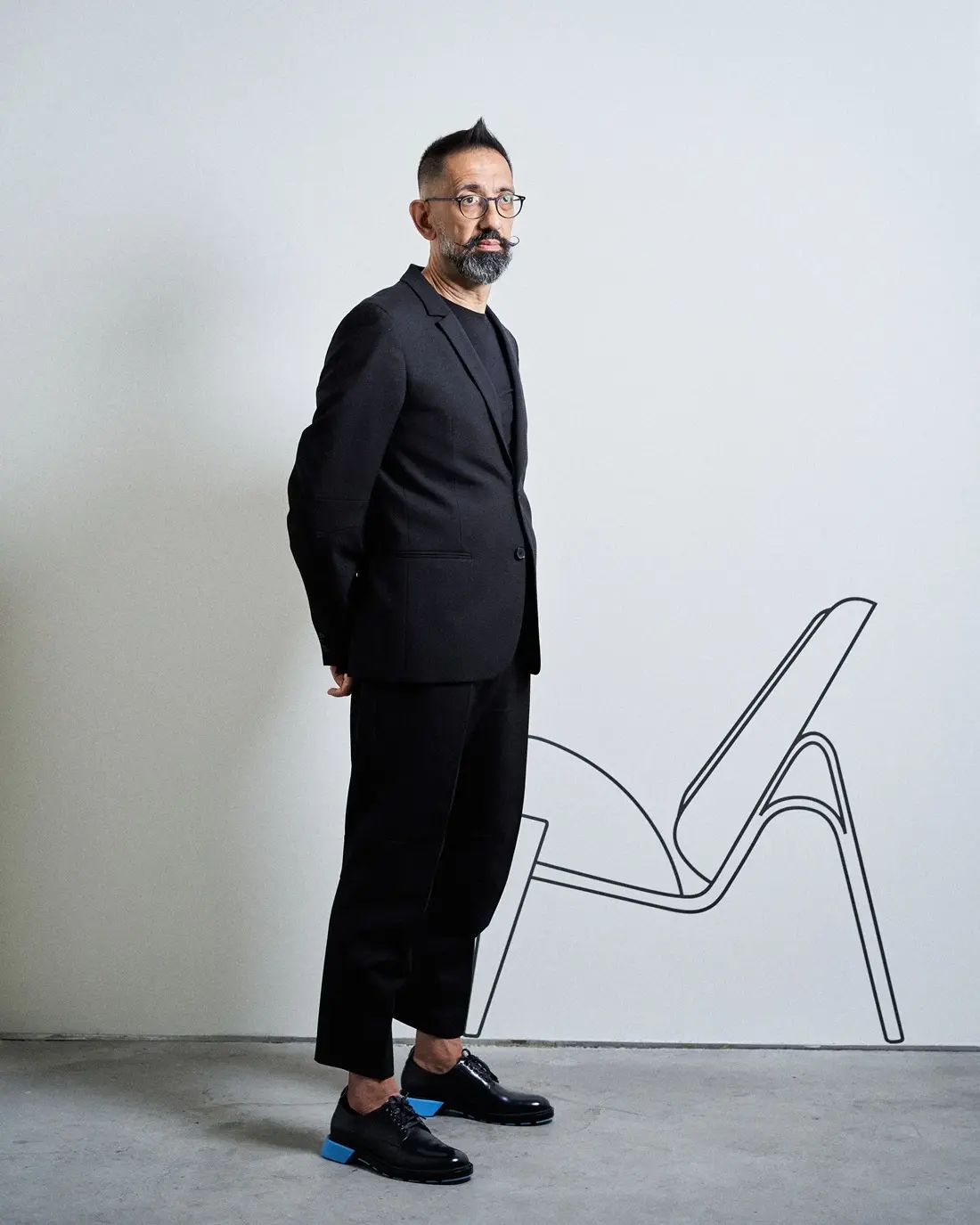
The price of that approach, Ashok notes, was often very high. Yet today, as someone who shares knowledge with younger generations, he tries to remind them of one essential question: “What did you want to be when you were a child?”
“If you manage to awaken that process even later in life, you may rediscover the child within you who has a sincere, untainted relationship with the world.”
In addition to his parents, a Serbian mother and an Indian father, Ashok was also shaped by Yugoslavia.
“I don’t identify as a Yugoslav. I am a Yugoslav. That is the closest definition of my identity. Although today such self-identification is almost equivalent to admitting you have leprosy or HIV (in the best-case scenario), I am too old to change or lie to myself or others for the sake of conformism. Yugoslavia, let me remind those who may have forgotten, was a SMALL country in terms of population, roughly the size of, for example, the capital of India. That small country never had enough people to generate a cultural imprint strong enough to preserve itself and its people within broader civilizational processes. Today, fragmented as we are, we are still dependent on one another in every serious creative or cultural endeavor. There simply aren’t enough of us in one place. And if a language and culture that are universally understandable are destroyed, you disappear without a trace. Yugoslavia was many things, but it was not perfect. However, nothing better has emerged in this region since.”

Ashok began his professional career as an architect, which he describes as a natural continuation of what he studied. However, his path soon took a different direction.
“I graduated in architecture, but (remember the 1990s?) for existential reasons, I ended up in electronic media, where I worked on the visual identity of TV personalities. So I didn’t enter fashion immediately. I dealt with corporate styling. You see why curiosity is a good thing. Everything can become a creative challenge, even starting from scratch at the age of 32,” Murty notes.
He believes that style, which represents a visual sublimation of who you truly are, will never go out of fashion.
“It’s not about the need to differ from others because you believe you’re superior. Eccentricity in itself cannot be bought with status symbols. Style is a deep inner need to remain true to yourself and to be able to live with yourself, without constantly seeking external validation. In reality, having your own style is equivalent to Zen.”

Still, he feels that the style of dress in the Balkans could be significantly improved.
“I don’t comment on it because it throws me into depression. I don’t watch horror movies either, because I don’t like being scared. On the other hand, it’s easy to mock others, but that’s neither humane nor well-mannered. So, I remain silent.”
For Ashok, fashion is like a phoenix, ceasing to exist the moment it becomes tangible. From the moment it is born, it already becomes the ashes of the past. From those ashes, people in fashion are expected to create a new phoenix. This is a constantly repeating process, and he always advises the young people he teaches to understand its essence.
“Fashion has ceased to be art and has become an industry, with increasing complexity and accelerated segregation and codification of professions within it. This further limits freedom of expression, and a wrong choice at the beginning can define you for the rest of your professional life. Today, a perfect product is sought, not a perfect idea. If young people accept this harsh reality early on, they may have a chance to master the mechanisms that will eventually allow them to influence a product, even when we’re talking about something as small as their own brand. I believe that information overload, without mechanisms to organize it into a system, combined with the ease of exposure through social media, has made it even harder for young people in fashion to understand that this field also requires long, hard work to reach a goal. Quite simply, they burn out.”

The question of how innovative one can be in an age of saturation is one Ashok addresses through his own work.
“In my case, which somewhat disqualifies me in the context of this question, I have been far more engaged in decoding and establishing communication between the local and the global through the medium that, in the broadest sense of the word, is called fashion.”
He claims not to dwell on past successes or failures.
“I am present in the moment. Honestly, everything I do, I do fully. I don’t recognize ‘big’ or ‘small’ tasks. In that context, and because I work a lot and in so many different formats, it happens that when someone asks me what I did last week, I stop and start laughing at myself, because I genuinely can’t remember anything, even though I know I worked myself to exhaustion. I don’t think that’s professional arrogance. I think it’s living your work to the fullest. In such a life, short-term memory must be constantly cleared.”
The COVID situation forced him, as someone accustomed to a high-intensity rhythm, to slow down significantly for quite some time, which he describes as a state close to complete helplessness.
“Finally, I realized that my essential hedonism is everything I do. The highest form of hedonism for me is occasionally being able to work with people I care about, and somehow along the way stealing a moment that is intimate and private enough to enjoy small things that are meaningful to us.
Of course, the greatest hedonism lies in those few precious moments I can dedicate to myself and the things that fulfill me, such as reading and all those entertaining forms that once took us to cinemas and theaters, and now we watch them from an armchair.
What I miss most is travel itself, but not today’s version, where you go somewhere to ‘check it off’ and cover as much as possible in the shortest time. I mean traveling when time itself wasn’t a luxury, when you went somewhere as an adventure, when you could determine your own arrival and departure, when you could be a complete stranger in a place without feeling lost. I struggle with claustrophobia,” Ashok concludes, hoping we will soon return to old habits without restrictions.
- Interview by: Dijana Latinović
- Photography: Nemanja Maraš
- Originally published in HEDONIST Magazine, Issue 04, 2020
