Why Does Music Move Us?
![[object Object]](https://api.hedonistmagazine.net/storage/images/2026/08/e5737a92-9b2d-46f0-8872-c164acbc7f18.webp)
Some moments seem almost impossible to put into words. Thousands of people stand before a stage. The lights fade. The bass slowly disappears, the rhythm dissolves, and only a handful of notes linger above the crowd. Arms rise almost instinctively, every gaze fixed in the same direction, while an unmistakable sense of anticipation fills the air.
Nothing has happened yet. And yet, almost everyone feels the same thing. Then, a few seconds later, the music erupts.
The drop lasts only a moment, but the emotional release it creates often lingers for years. People may forget the exact order of the tracks, perhaps even the DJ's name, yet they rarely forget the feeling of becoming part of something far greater than themselves.
It is precisely this phenomenon that has increasingly fascinated scientists over the past two decades.
The Brain Loves What Comes Next
One of the most influential studies in the neuroscience of music was conducted at McGill University in Canada. Using advanced brain imaging techniques, researchers discovered that music activates the same reward circuits associated with experiences such as eating, falling in love or achieving meaningful personal goals.
But perhaps their most intriguing discovery lay elsewhere.
Dopamine - the neurotransmitter most closely associated with pleasure and motivation - is not released only at the emotional climax of a song. Its production begins several moments earlier, as the brain anticipates what is about to happen.
In other words, the emotional experience starts before the event itself.
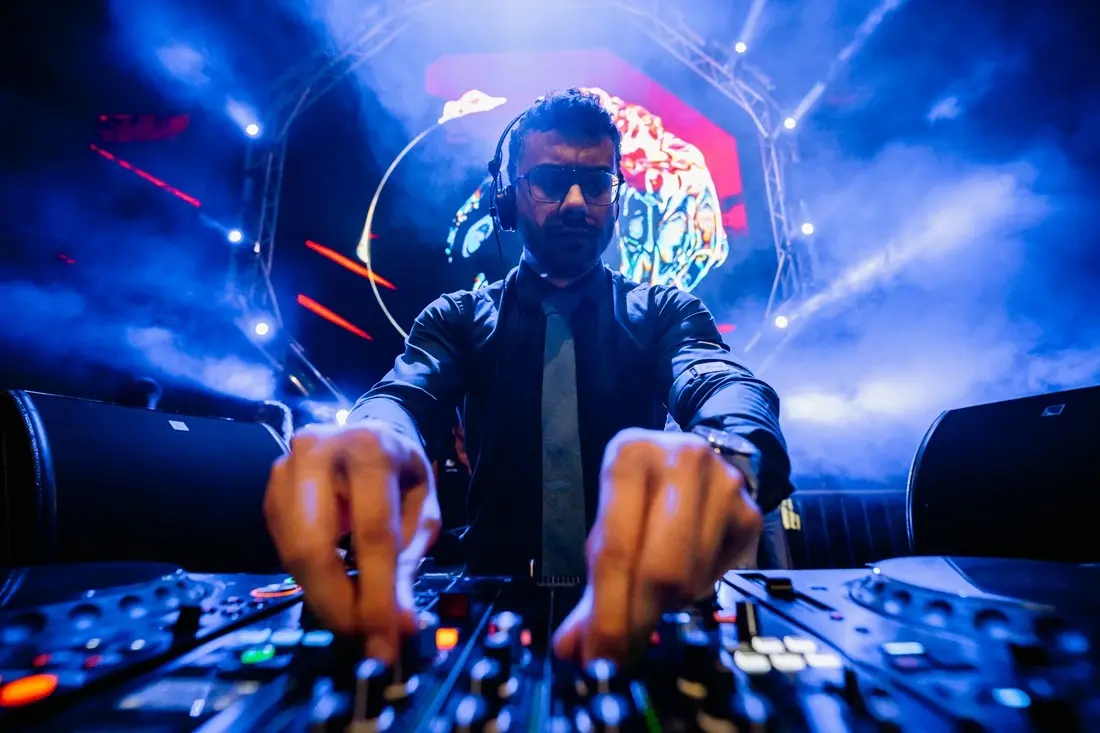
This explains why audiences at concerts and festivals can physically feel the energy building during a track's build-up - the carefully constructed passage that precedes the musical release.
The Art of Anticipation
According to Canadian neuroscientist and author Daniel Levitin, whose acclaimed book This Is Your Brain on Music helped popularise the science of musical perception, the human brain is never a passive listener.
Instead, it is constantly predicting what will happen next. Every melody, rhythm and harmonic progression becomes a sequence of expectations.
When music behaves as anticipated, we experience comfort and satisfaction. When those expectations are briefly disrupted, tension begins to build. And when the anticipated resolution finally arrives, the emotional response becomes significantly more powerful.
Electronic music exploits this mechanism with remarkable precision. Producers gradually layer sounds, increase rhythmic intensity and manipulate dynamics, stretching anticipation to the point where the listener's brain actively seeks resolution.
The most accomplished artists understand that extending a build-up by only a few seconds can produce an even stronger emotional response than the drop itself.
When Emotion Becomes Collective
Yet what happens at festivals cannot be explained by neuroscience alone.
More than a century ago, French sociologist Émile Durkheim introduced the concept of collective effervescence - those rare moments when groups of people share the same emotional state so intensely that they experience a profound sense of belonging to something greater than themselves.
Originally used to describe religious rituals, the concept has since become central to understanding concerts, sporting events and large-scale music festivals.
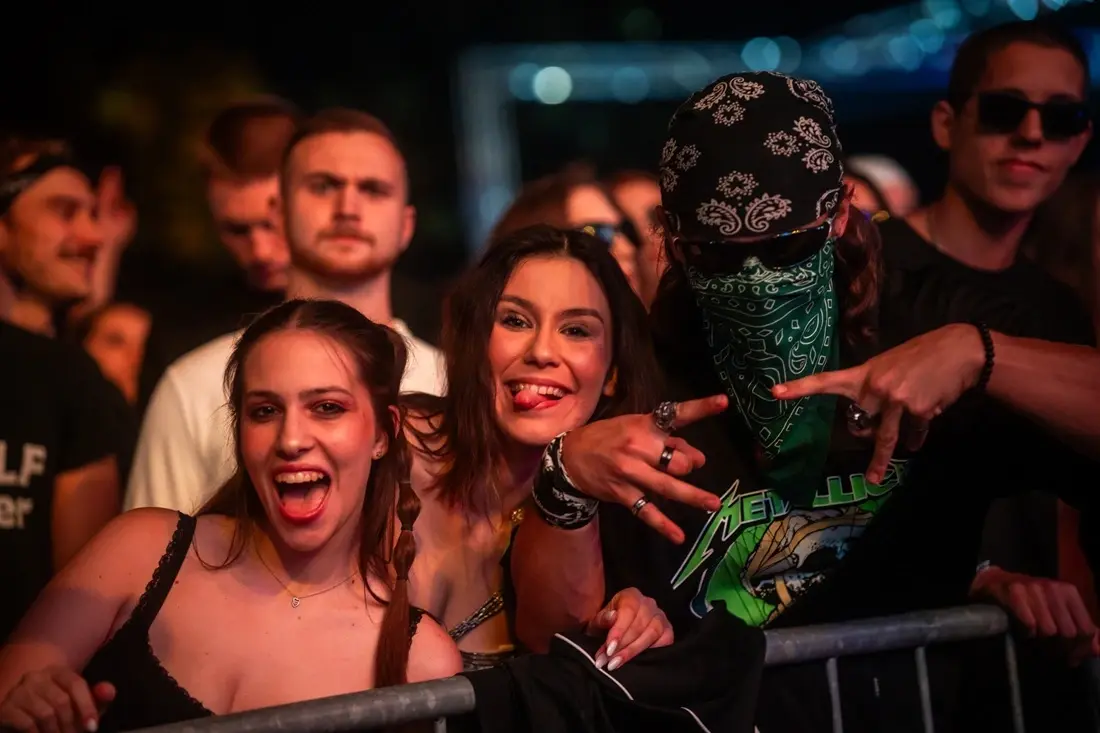
When tens of thousands of people raise their hands simultaneously, dance to the same rhythm or respond to the same musical moment, the boundary between individual and crowd begins to dissolve.
Recent research suggests that synchronised movement can increase the release of endorphins and oxytocin - neurochemicals linked to trust, social bonding and emotional connection.
Perhaps that is why strangers often leave a festival feeling as though they have shared something deeply personal. In many ways, they have.
More Than Music
In an age where virtually every song ever recorded is available at the touch of a screen, one might expect large music festivals to become less relevant.
The opposite has happened.
From Tomorrowland in Belgium and Awakenings in the Netherlands to Ultra Europe in Split, EXIT Festival in Novi Sad and Freshwave Festival at Banja Luka's historic Kastel Fortress, people continue to travel hundreds - sometimes thousands - of kilometres in search of an experience that no streaming platform can replicate.
They are not there simply to hear music. They come for the atmosphere. For the shared anticipation. For the extraordinary sensation of standing among thousands of strangers who, for one unforgettable moment, are emotionally moving together.
Increasingly, research into contemporary consumer behaviour suggests that younger generations value memorable experiences more than material possessions. Festivals have become one of the defining expressions of that shift, offering something increasingly rare in modern life: genuine human connection.
What Remains After the Music Ends
Perhaps the greatest value of a music festival has little to do with spectacular production, towering stages or world-famous headliners.
Its real power lies somewhere far less tangible.
At a time when so much of human interaction takes place through screens, festivals remain among the few spaces where thousands of people share the same place, the same moment and the same emotion.
Science can explain dopamine, endorphins and the neurological mechanisms behind collective emotional experiences.
What it cannot fully explain is what people carry home after the final track fades into silence. Perhaps that is why the defining memory of a festival is rarely a perfectly executed drop. Instead, it is the fleeting sensation that, if only for a few minutes, we ceased to be thousands of separate individuals.
We became a single crowd. A single rhythm. A single shared human experience.
- By Dejan Marić / HEDONIST