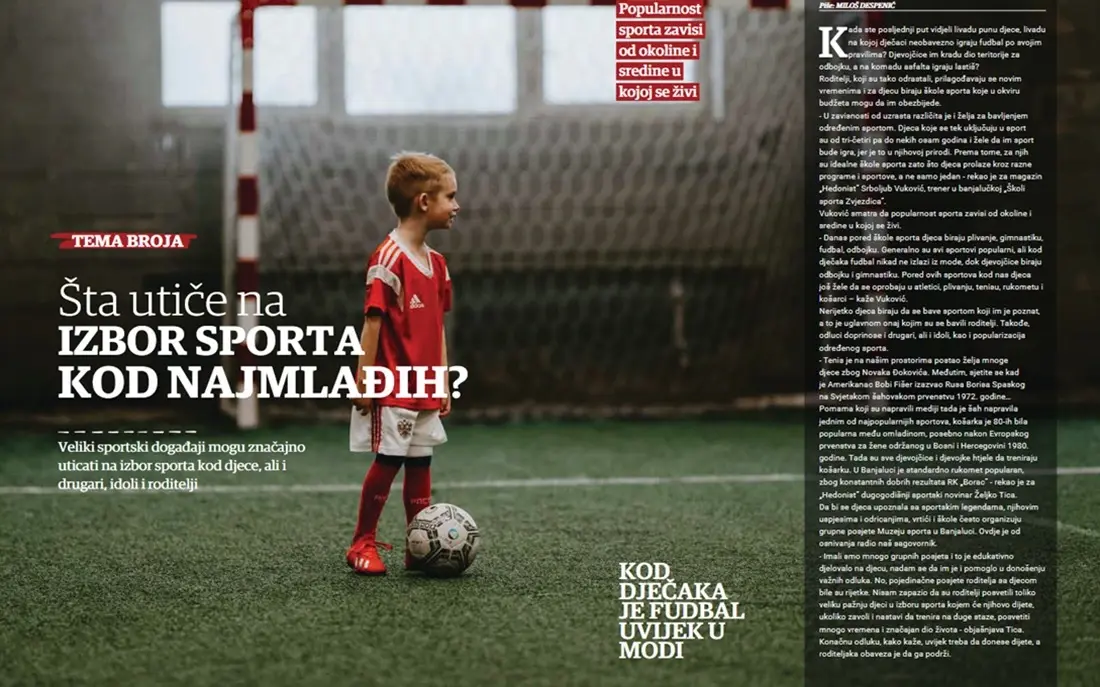
What Influences Young Children When Choosing a Sport?
![[object Object]](https://api.hedonistmagazine.net/storage/images/2026/07/9cdd4b0f-903d-43ce-9551-badd34f7fbbe.webp)
When was the last time you saw a meadow filled with children making up their own rules for a game of football? Nearby, a group of girls claims part of the field for volleyball, while others play hopscotch on a patch of asphalt. For generations of parents, this was a familiar childhood scene. Today, however, times have changed.
Instead of spontaneous games in the neighbourhood, many families introduce their children to organized sports through academies and sports schools that fit their interests and family budgets.
"The desire to participate in a particular sport varies with age," says Srboljub Vuković, coach at the Zvjezdica Sports School in Banja Luka, speaking to HEDONIST Magazine. "Children who are just beginning their sporting journey - typically between the ages of three or four and around eight - see sport primarily as play, which is perfectly natural. That's why multisport programs are ideal at this stage. They allow children to experience a variety of activities rather than focusing on a single discipline too early."
According to Vuković, the popularity of different sports is strongly influenced by the environment in which children grow up.
"Alongside general sports schools, children today most commonly choose swimming, gymnastics, football, and volleyball. Overall, every sport has its audience, but football never goes out of fashion among boys, while girls are especially drawn to volleyball and gymnastics. Many children are also eager to try athletics, tennis, handball, and basketball."
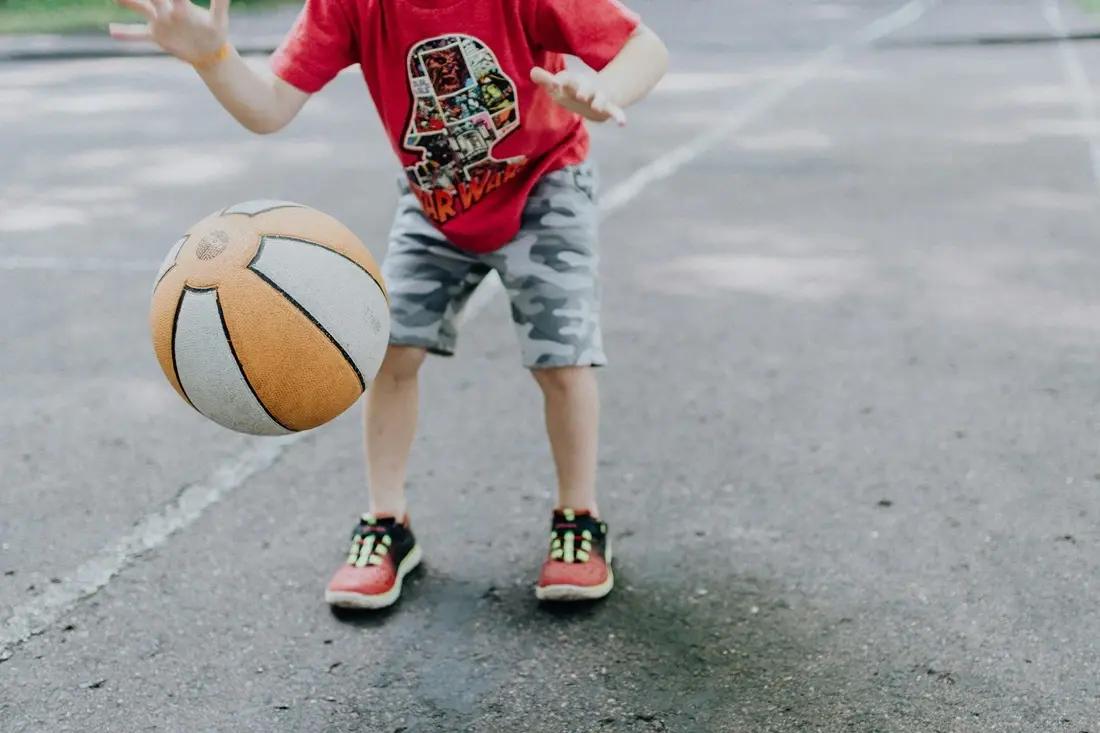
Children often gravitate toward sports that already feel familiar. In many cases, these are the sports their parents once played. Friends also play an important role, as do sporting heroes and the visibility certain sports receive in the media.
"Tennis became a dream for countless children across our region thanks to Novak Djokovic," says veteran sports journalist Željko Tica. "But history offers many similar examples. Think back to the 1972 World Chess Championship, when American Bobby Fischer challenged Soviet champion Boris Spassky. The media attention surrounding that match turned chess into one of the world's most popular sports almost overnight. Basketball experienced a similar boom during the 1980s, particularly after the 1980 European Women's Basketball Championship held in Bosnia and Herzegovina, when many girls wanted to become basketball players. In Banja Luka, handball has remained consistently popular thanks to the long-standing success of RK Borac."
To help children discover the stories behind sporting greatness, kindergartens and schools frequently organize group visits to the Sports Museum in Banja Luka, where Tica worked for many years.
"We welcomed numerous school groups, and those visits had real educational value," he recalls. "I hope they also helped children make important decisions about their future interests. Individual visits by parents with their children, however, were surprisingly rare. I rarely saw parents taking such an active role in helping their children choose a sport that could eventually become a lifelong passion and occupy a significant part of their lives."
Ultimately, Tica believes the final decision should always belong to the child, while the role of parents is to provide encouragement and support rather than pressure.
- By Miloš Despenić / HEDONIST
- Originally published in HEDONIST Magazine, Issue No. 7 (2021).