

Where the Night Still Looks the Way It Once Did for Everyone
![[object Object]](https://api.hedonistmagazine.net/storage/images/2026/08/67630e4e-14ae-4d1a-a98b-ffe6a8481acc.webp)
More than a third of humanity can no longer see the Milky Way, not even on a clear night. According to the World Atlas of Light Pollution, over 80 percent of the global population now lives under a sky saturated with artificial light, with the figure climbing even higher in North America and Europe. What was once an ordinary, everyday sight - a river of stars overhead - has become something people now travel to find.
Far from cities, in landscapes lit by little more than the sky itself, the Milky Way stops being the faint smear we barely register. It becomes a wide, layered river of stars, clear enough that the naked eye can pick out its dark rifts, dense clouds of dust, and countless distant points of light. None of it requires a telescope or an observatory - only a place dark enough to let it through. Here are five destinations where that's still possible.
Atacama, Chile - a desert under some of the darkest skies on Earth
Northern Chile holds one of the harshest, most beautiful places on the planet. The Atacama Desert is known for its almost unreal dryness, its high elevation, and its vast stretches without settlements or light pollution - conditions that also made it home to ALMA, the largest observatory complex in the world, sitting at over 5,000 meters above sea level. Once the sun drops behind the Andes, a landscape that looked all but lifeless by day takes on an entirely different dimension.
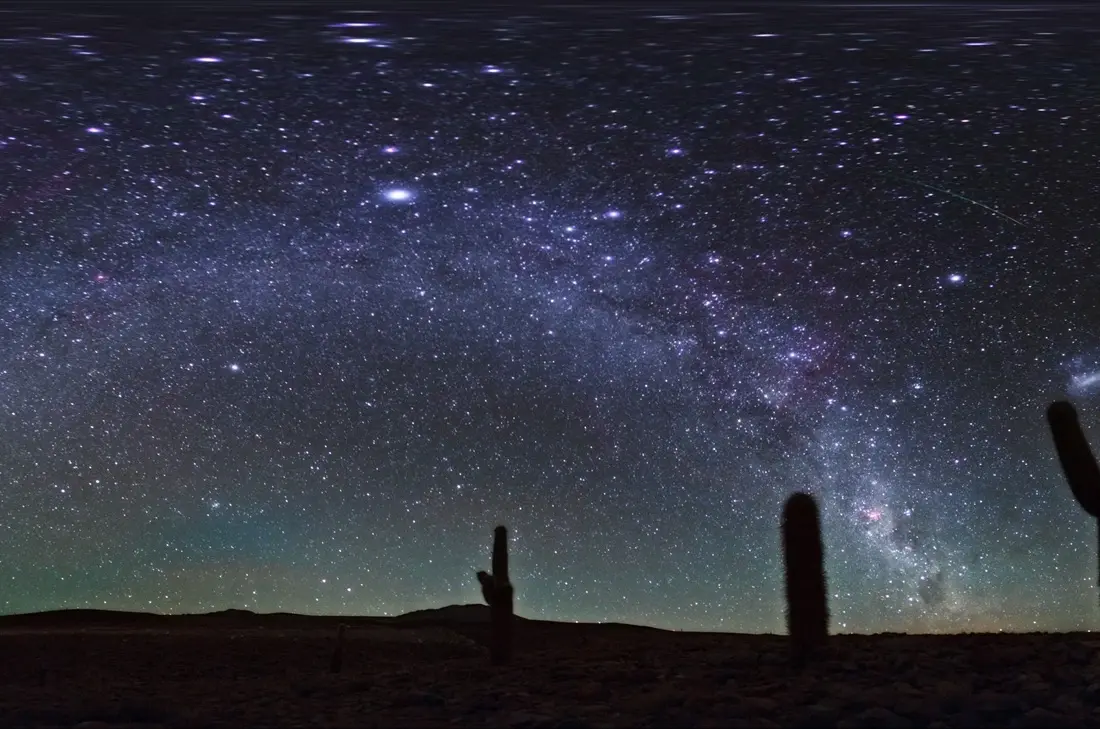
The Milky Way appears almost three-dimensional here. Its dense central band stands out sharply against a black sky, suspended above desert valleys and volcanic peaks. The best time to visit is between May and August, during Chile's winter, when the air is driest and the nights longest. And unlike anything seen through a telescope, the most striking part of the view here requires no equipment at all.
NamibRand, Namibia - stars above an endless horizon
Night takes on a different character in southern Africa. The NamibRand Nature Reserve stretches across one of Namibia's most remote desert landscapes, far from any city and its artificial glow, and carries an official Gold Tier dark-sky designation, the highest rating given. By day, its red dunes, distant mountain ranges, and endless horizon feel almost minimalist; after sunset, that same emptiness becomes the stage for one of the richest displays the night sky has to offer.
What strikes most here is the sense of scale. As the Milky Way arcs overhead, there's no city glow to compete with it, so the eye moves naturally from dune to star. That combination of desert landscape and untouched dark sky makes NamibRand one of the most photogenic stargazing destinations anywhere in the world.
Aoraki Mackenzie, New Zealand - the southern sky at full strength
On New Zealand's South Island lies the Aoraki Mackenzie International Dark Sky Reserve, a protected area of more than 4,300 square kilometers and one of the largest dark-sky reserves on Earth, where safeguarding the night sky is treated with nearly the same seriousness as protecting a national park. Lighting regulations here have been in place since the 1980s, decades before the region was officially designated a reserve in 2012.
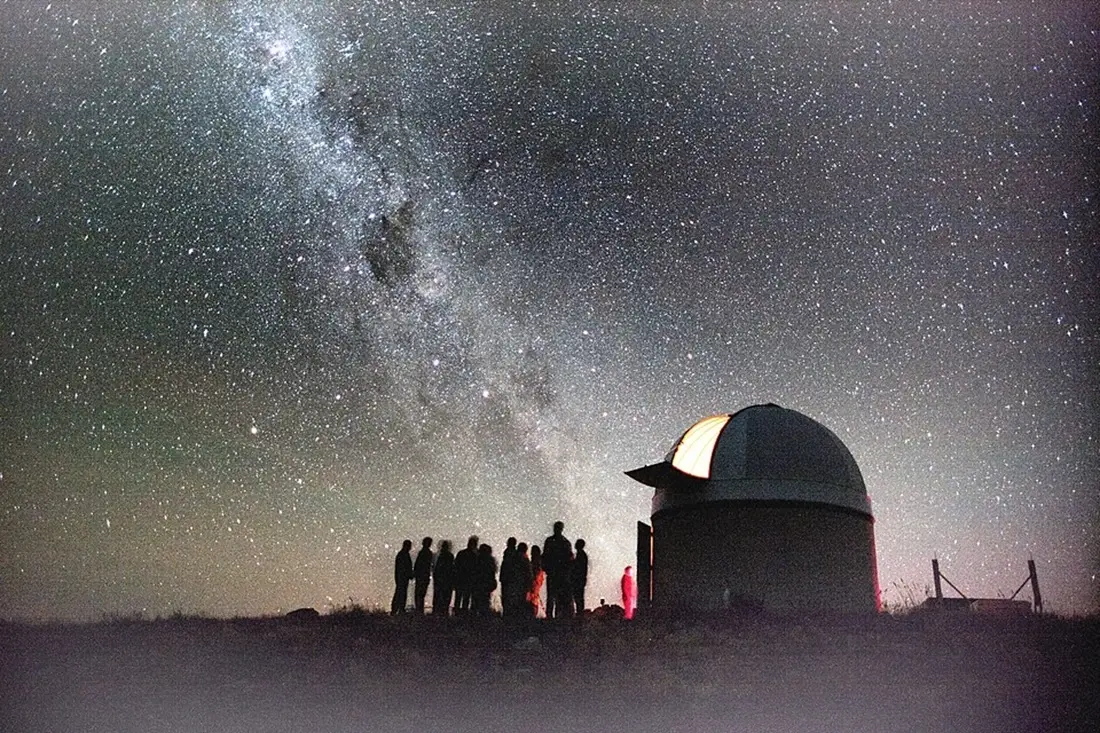
Part of what sets this destination apart is what appears in the southern sky itself. Beyond the Milky Way, favorable conditions can reveal the Southern Cross and the Magellanic Clouds - two dwarf galaxies visible only from the Southern Hemisphere. At Mount John Observatory, located within the reserve, visitors can also look through a professional telescope at objects the naked eye could never catch. Here, night isn't simply the hour when the landscape disappears into darkness - it's when the other half of it opens up.
La Palma, Canary Islands - an island built to guard the dark
On La Palma, one of the Canary Islands, a starlit sky has become part of the destination's official identity: in 2012, the island became the world's first Starlight Reserve. Thanks to its geography, elevation, and strict light-pollution controls that have been written into local law since 1988, it offers exceptional conditions for stargazing.
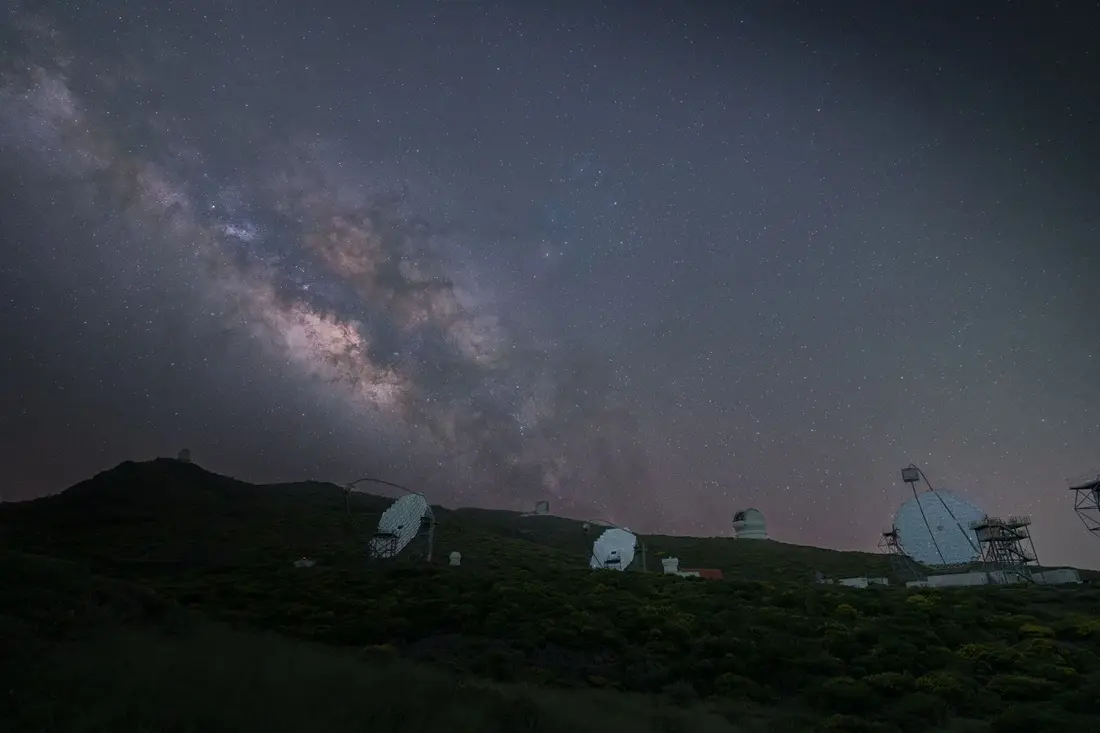
The standout spot is Roque de los Muchachos, perched above the clouds and far from any coastal town, home to one of the most important astronomical complexes in the world - including one of the largest optical telescopes on the planet. You don't need to be an astronomer to understand why this place matters. You just need to wait for a truly night and look up.
Wadi Rum, Jordan - the Milky Way above the desert
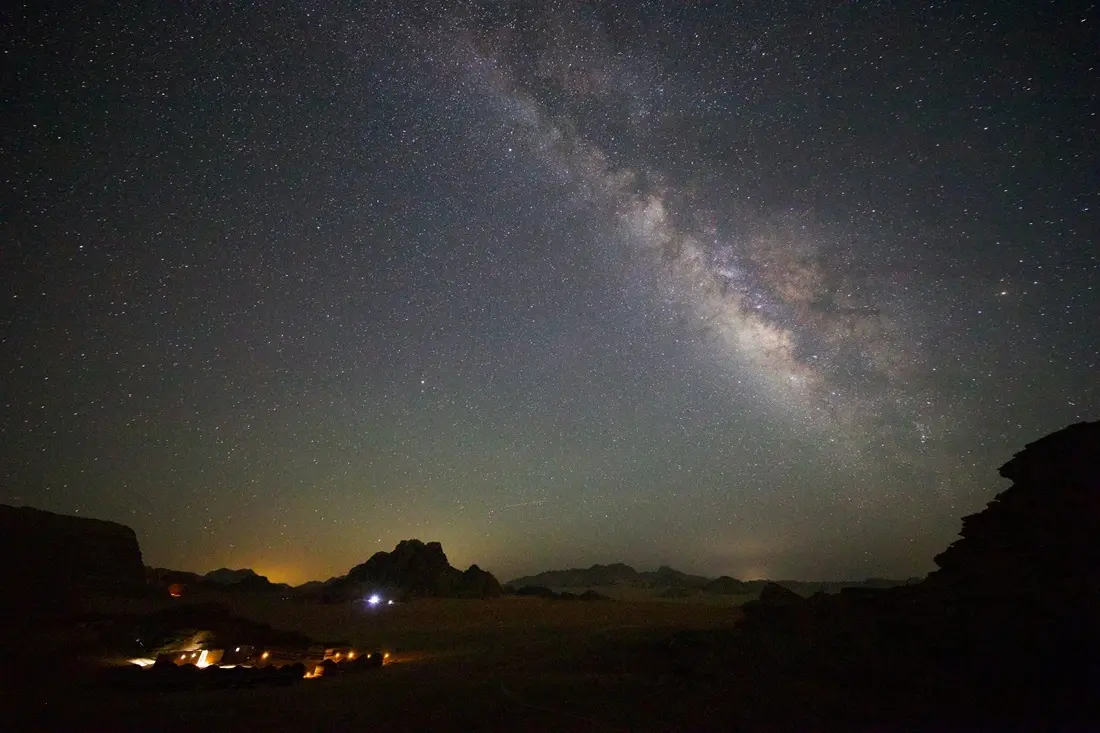
In Wadi Rum, the stars arrive with a landscape that looks built for a film set - and it has, in fact, stood in for the surface of Mars in more than one production. Towering red cliffs, sweeping sand valleys, and near-total silence create the perfect stage for the night sky. As a protected UNESCO site far from any urban center, the desert offers a view of the Milky Way with none of the light veil that hides it almost entirely in cities. The best time to visit runs from October through April, when nights are cooler and skies are at their clearest.
The experience peaks when the stars rise above Wadi Rum's distinctive rock formations. At that point, sky and earth become nearly impossible to separate: the black desert turns to silhouette, and the Milky Way becomes the only source of light.
A darkness that gives something back
In a world that grows brighter by the night, the finest view sometimes requires stepping away from every light we've put there ourselves. Someone lying on the sand in Namibia, or on a rock in Wadi Rum, looking up for the first time, is often seeing the sky the way every generation before ours once did - with nothing artificial standing between them and the galaxy.