

The City Slowly Disappearing: Italy’s Wonder on Top of a Cliff
![[object Object]](https://api.hedonistmagazine.net/storage/images/2026/06/7f747f39-8793-4196-9a70-3a2b0e30922a.webp)
Perched atop a volcanic rock formation in the heart of Italy lies a place connected to the world by only a single bridge. Once home to thousands of residents, it is now often referred to as “the dying city.” Yet it is precisely this sense of fragility that has turned Civita di Bagnoregio into one of Europe’s most unusual and photogenic destinations.
Located in Italy’s Lazio region, between Rome and Tuscany, this stone oasis appears to float above the valley below. Seen from afar, it looks more like a movie set or a perfectly crafted postcard than a real place. Only when you get closer do you realize that it is a living town that has been defying time for more than two thousand years.
A City Threatened by Disappearance
Civita did not earn its nickname, “the dying city,” by accident. Built on a foundation of volcanic tuff rock, it has been slowly eroded for centuries by wind, rain, and natural geological processes. Every year, small portions of the cliff disappear, and experts warn that nature has long been fighting a silent battle against this ancient settlement.
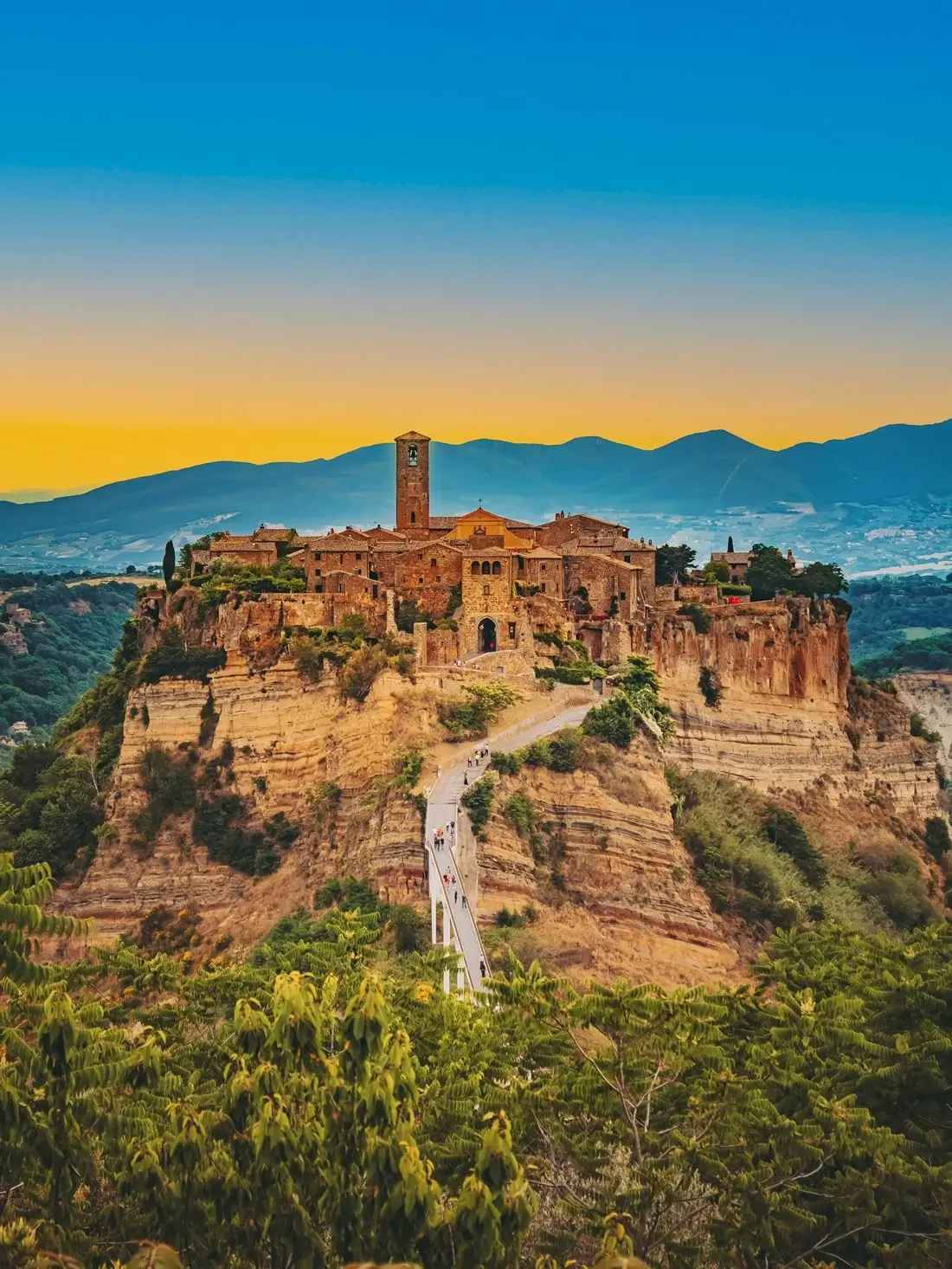
Thousands of people once lived here. Today, only a few dozen remain.
Yet this reality is exactly what gives the town its unique atmosphere. Walking through its narrow streets, visitors often feel suspended between two eras - a past that is gradually fading away and a present determined to preserve it.
A Journey That Continues Only on Foot
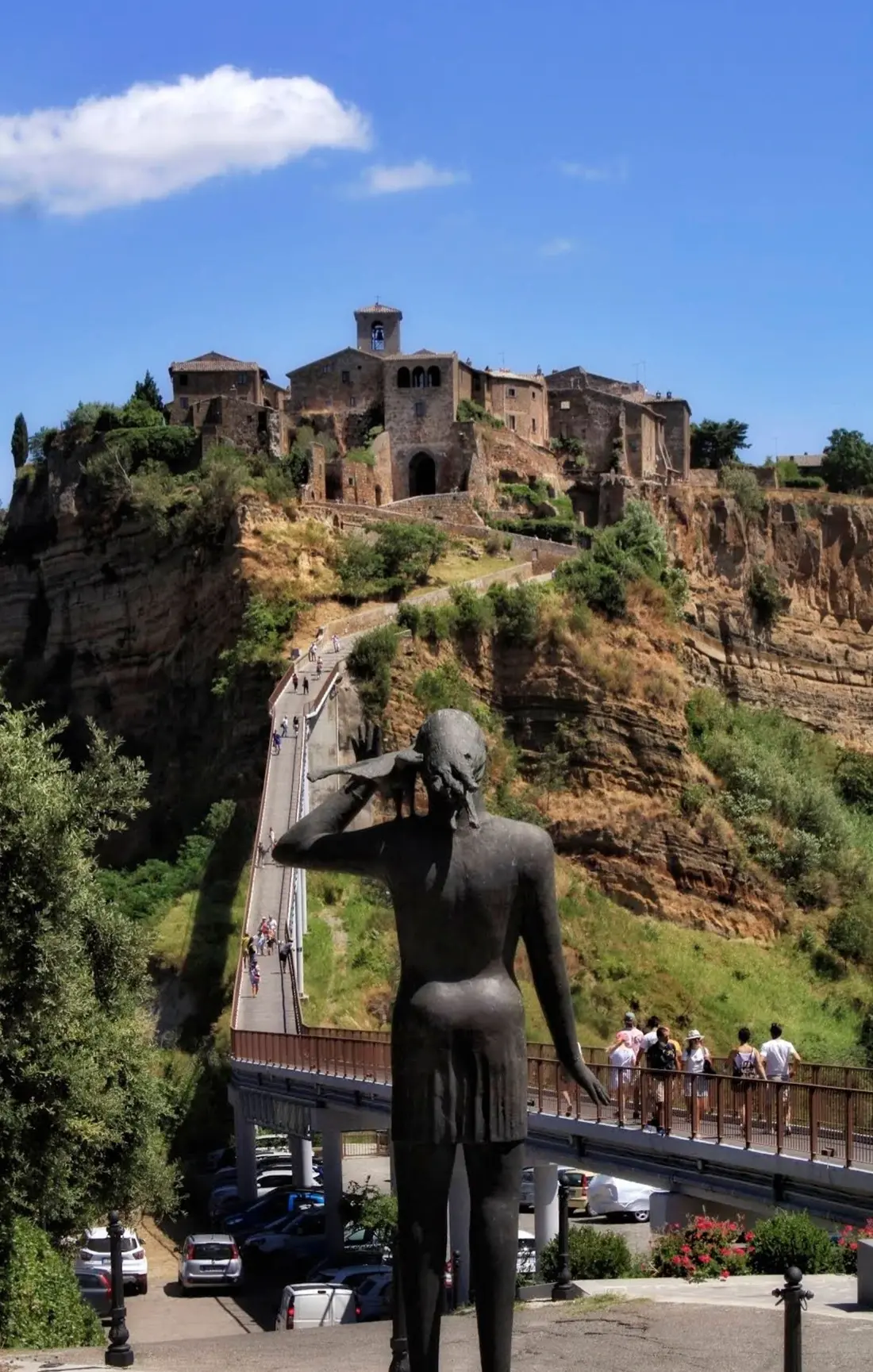
Civita cannot be reached by car. Visitors leave their vehicles in the nearby town of Bagnoregio and continue on foot across a long pedestrian bridge leading directly to the stone city perched above the valley.
The crossing itself is an essential part of the experience. With every step, the views become more spectacular. Deep valleys, green hills, and dramatic cliffs surround Civita from all sides, creating a sense of complete isolation from the modern world.
Once you pass through the ancient stone gate, originally built during the Etruscan era, it feels as though you have stepped back several centuries.
Italy Without the Crowds
While Rome, Florence, and Venice welcome millions of visitors every year, Civita di Bagnoregio offers something increasingly rare in modern tourism: peace.
There are no busy avenues, traffic jams, or overwhelming crowds.
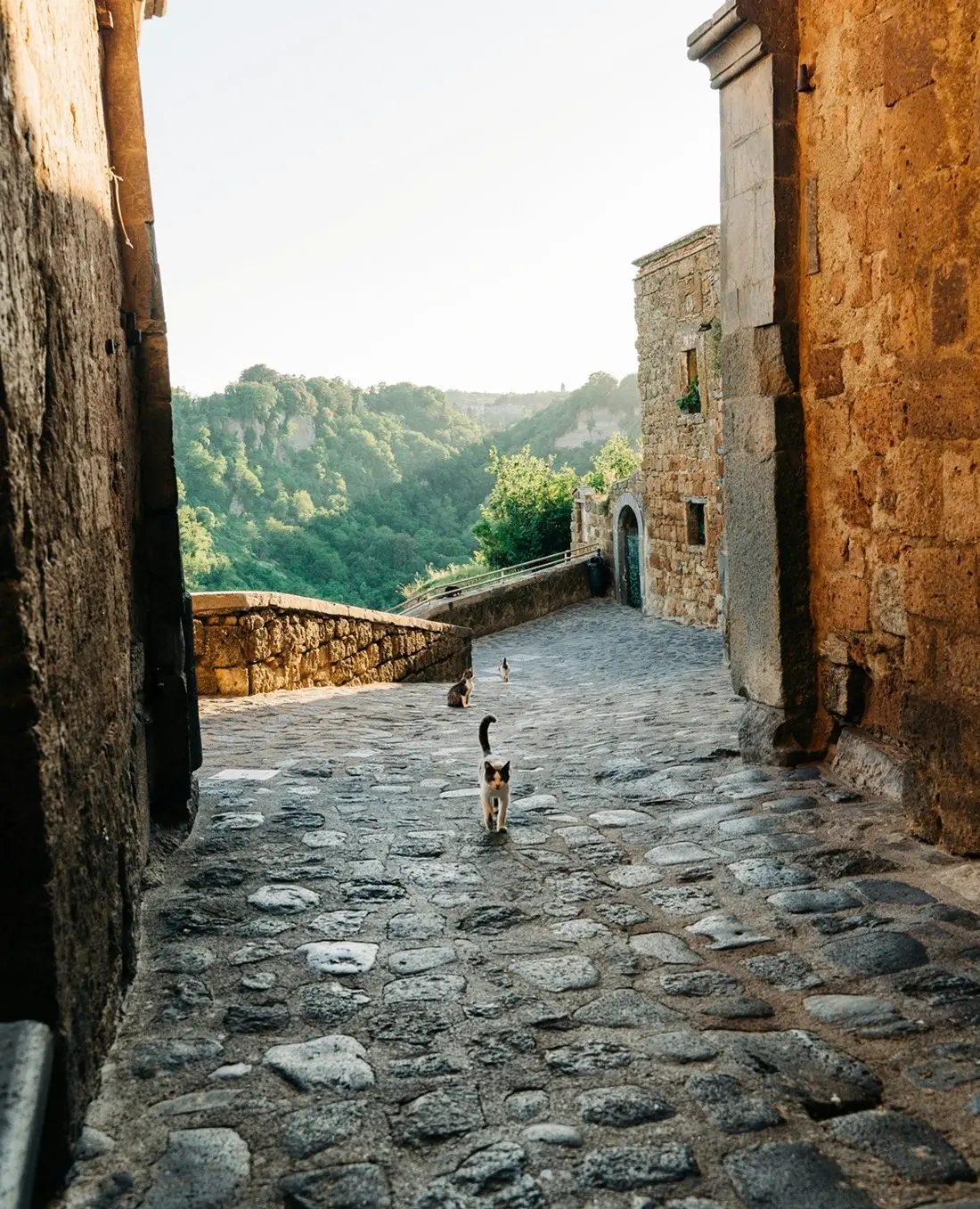
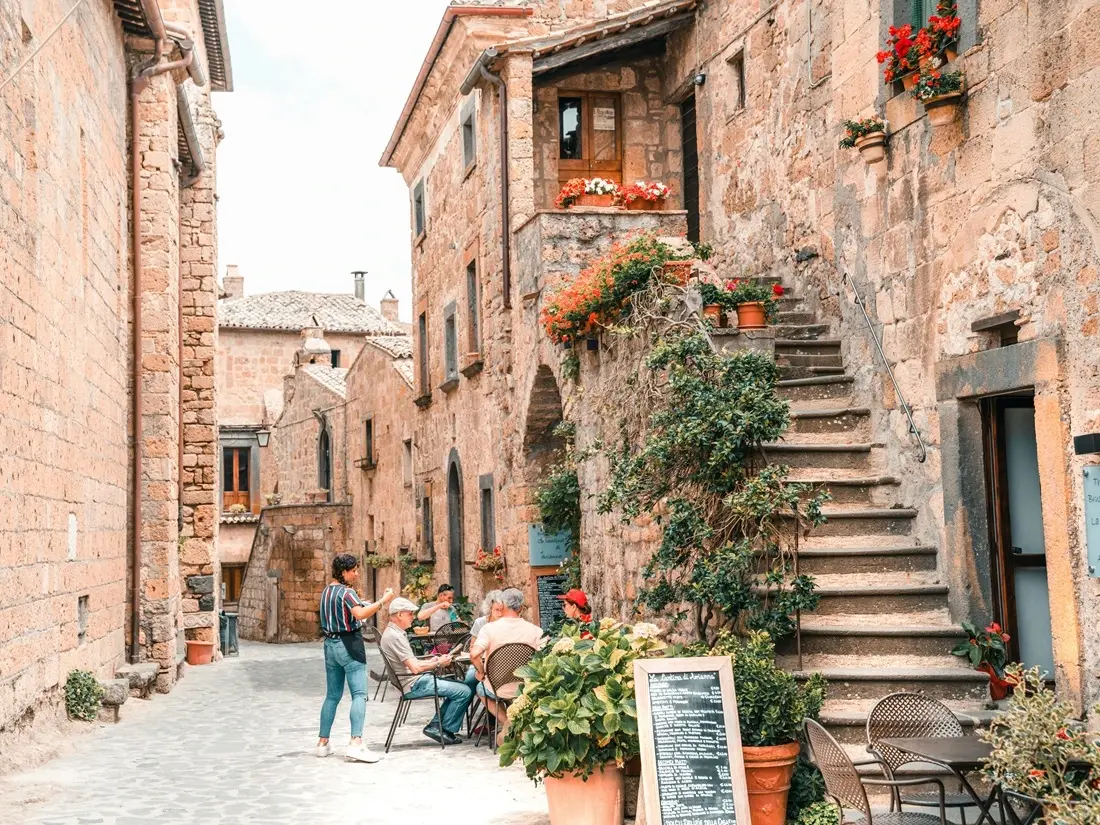
Instead, visitors are greeted by flower-covered stone houses, charming squares, family-run restaurants, and breathtaking views around nearly every corner.
This is not a destination that requires a detailed sightseeing plan. It is a place best experienced by simply wandering.
A Photographer’s Dream
Few destinations in Europe are as photogenic from nearly every angle.
The most iconic photograph of Civita is taken from the opposite side of the valley, capturing the entire town resting on its rocky pedestal and the bridge connecting it to the outside world.
At sunrise and sunset, the scene becomes almost surreal.
Golden light bathes the stone walls, while mist lingering in the valley below enhances the illusion that the town is floating above the clouds. It is no coincidence that Civita has increasingly appeared on lists of Italy’s most photographed places.
The Taste of a Slower Italy
One of the greatest qualities of this place is not what you see, but what you feel.
Unlike major tourist centers, life here moves at a slower pace. Lunch lasts longer. Coffee is enjoyed without hurry. Looking out across the valley often replaces checking a smartphone.
Small local restaurants serve specialties from the Lazio region, homemade pasta, local wines, and simple dishes that perfectly reflect the philosophy of this corner of Italy.
Everything feels authentic, understated, and genuine.
A Place That Stays With You
Perhaps Civita di Bagnoregio lacks the grand imperial palaces of Vienna, the glamour of Portofino, or the global fame of Venice.
But it possesses something many famous destinations have lost. It offers a sense of discovery.
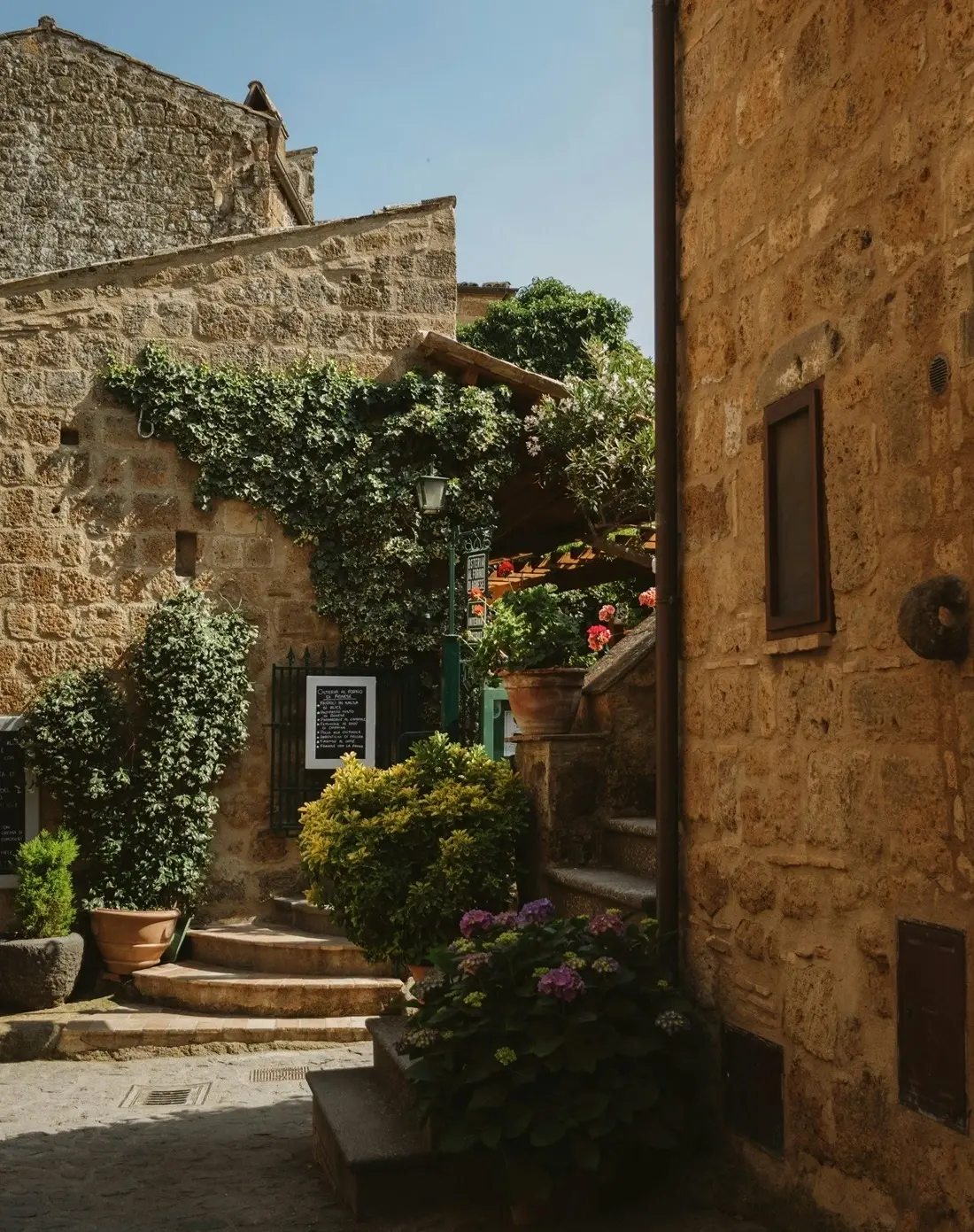
That rare feeling that you have found a place that still has its soul.
Perhaps that is why thousands of visitors cross the pedestrian bridge every year to experience the town that is slowly disappearing.
Because some places do not captivate through their size or fame. They captivate through their story. And Civita di Bagnoregio remains one of the most beautiful stories Italy still preserves.