
Palermo: Raw, Loud and Irresistible
![[object Object]](https://api.hedonistmagazine.net/storage/images/2026/05/6b1c97f7-e72a-42da-86df-6def5159dd20.webp)
Wild yet seductive; untidy yet lavish; rough yet warm; raw yet full of charm; old yet relentlessly alive - this is Palermo. If you arrive in Sicily’s largest city expecting the polished elegance of Milan, you will get raw aesthetics instead. If you’re looking for the romantic backdrop of Venice, you’ll find a loud, unfiltered reality. And if you seek the monumental stage of Rome, you’ll get chaos that directs its own scene.
Palermo is not like this by accident. It is a city shaped by the Phoenicians as a port, by the Arabs as a place of gardens and scents, and by the Normans as a capital of power. Everything that came after, Spaniards and Bourbons, did not erase those layers, but only tangled them further. In every sense, it is a city of many layers.
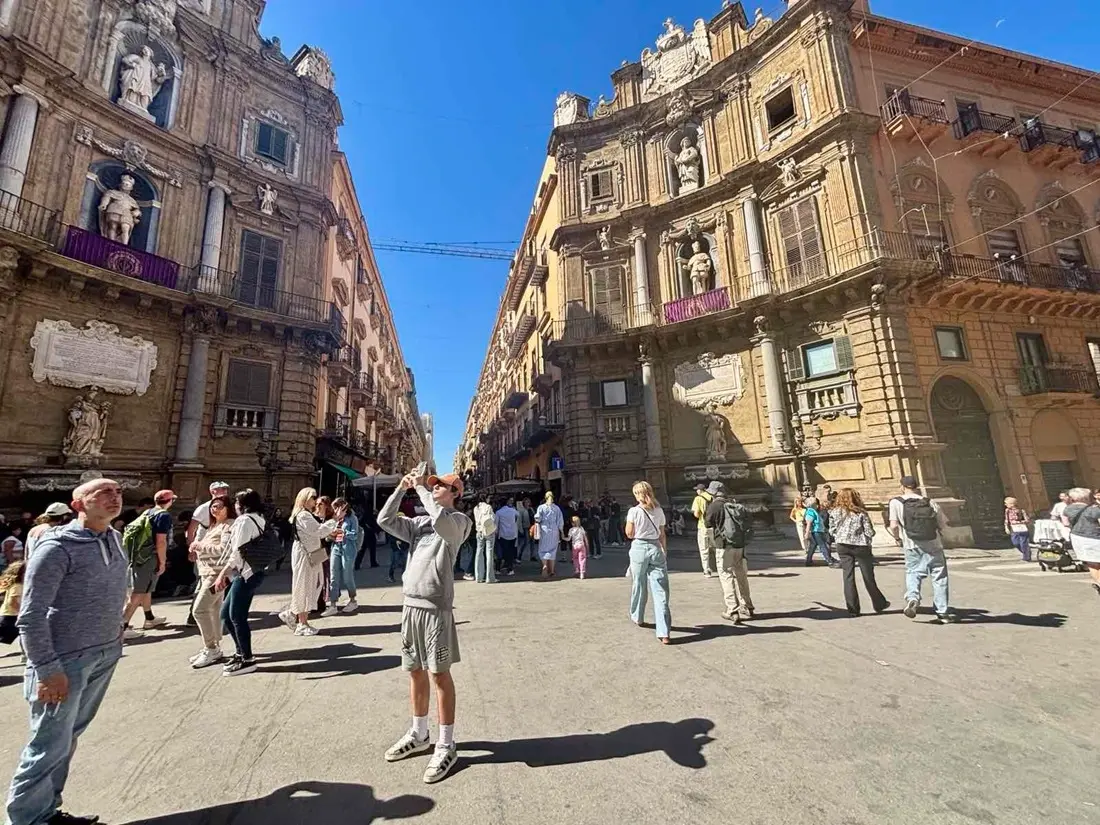
Wherever you go, sooner or later you will find yourself on Via Maqueda or Corso Vittorio Emanuele - the two main arteries that cut through Palermo and define its rhythm: one narrower, livelier, and pedestrian; the other wider, older, and more monumental.
Walking them is a constant collision. Noise, crowds, people from all sides - and yet it is beautiful, because within that chaos, views open up to squares, churches, and facades that remind you why you are here. Everything converges at Quattro Canti, where four streets meet, a crossroads whose rounded building corners form a perfect circle. People stop, turn around, and for a moment, even the crowd arranges itself into a scene that feels almost harmonious.
Following Corso Vittorio Emanuele leads to the city’s cathedral, the Cattedrale Metropolitana della Santa Vergine Maria Assunta. In front of the Cathedral of Palermo stands a sculpture of Santa Rosalia on a boat - an unusual motif at first glance, but one with deep symbolic meaning for the city. Every year, during the Festa di Santa Rosalia, a grand procession passes through Palermo with a “ship” bearing her figure, recalling the legend that her relics were brought to the city in the 17th century and that they stopped the plague.
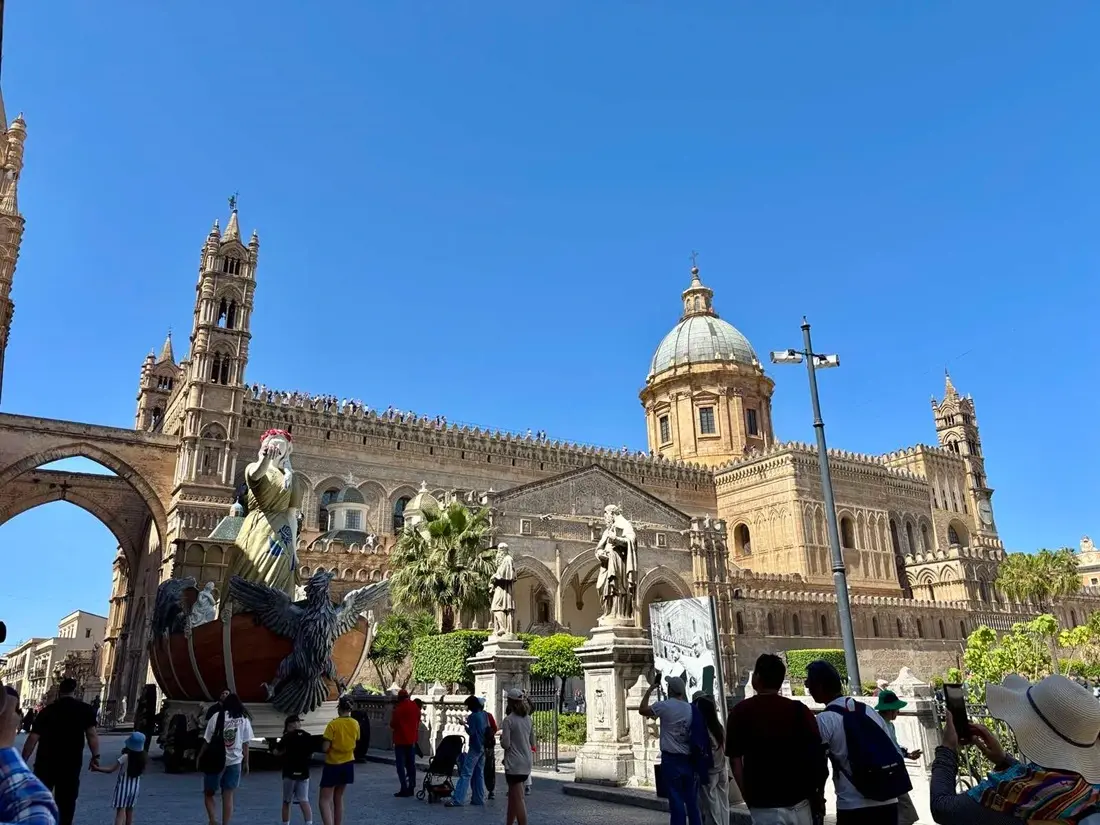
On the site of today’s cathedral once stood an early Christian, or Byzantine, basilica, which the Arabs converted into a mosque in the 9th century. After the Norman conquest, Christianity was restored in the 12th century, and construction of the cathedral began in 1185. Over the centuries, the building was continuously modified and expanded, incorporating Gothic, Baroque, and later Neoclassical elements - without any attempt to unify them into a single style. That is why today it appears as a blend of different eras, and that is precisely its logic: everything remains visible.
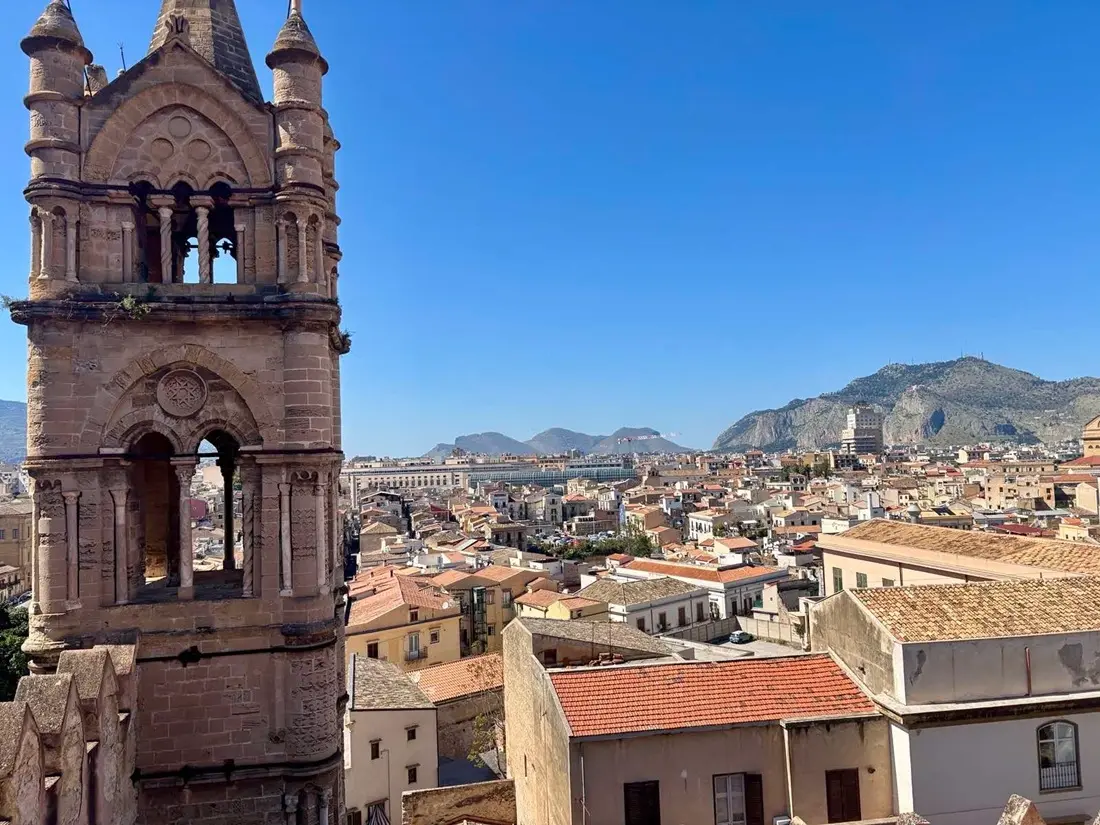
The cathedral is stunning from the outside, but climbing to the roof is something of a tourist trap. The stairs are narrow and awkward, the space above is not an open terrace but a tight passage with an uncertain railing, and in reality, you spend most of the time waiting in line - both to go up and to come down. The view is not dramatically different from what you can already get from other points in the city.
Not far from the cathedral stands the Norman (Royal) Palace, one of the oldest royal residences in Europe. It originated during Arab rule between the 9th and 11th centuries, when this was a fortified and administrative center. With the arrival of the Normans in the 11th century, Palermo became the capital of the Kingdom of Sicily.
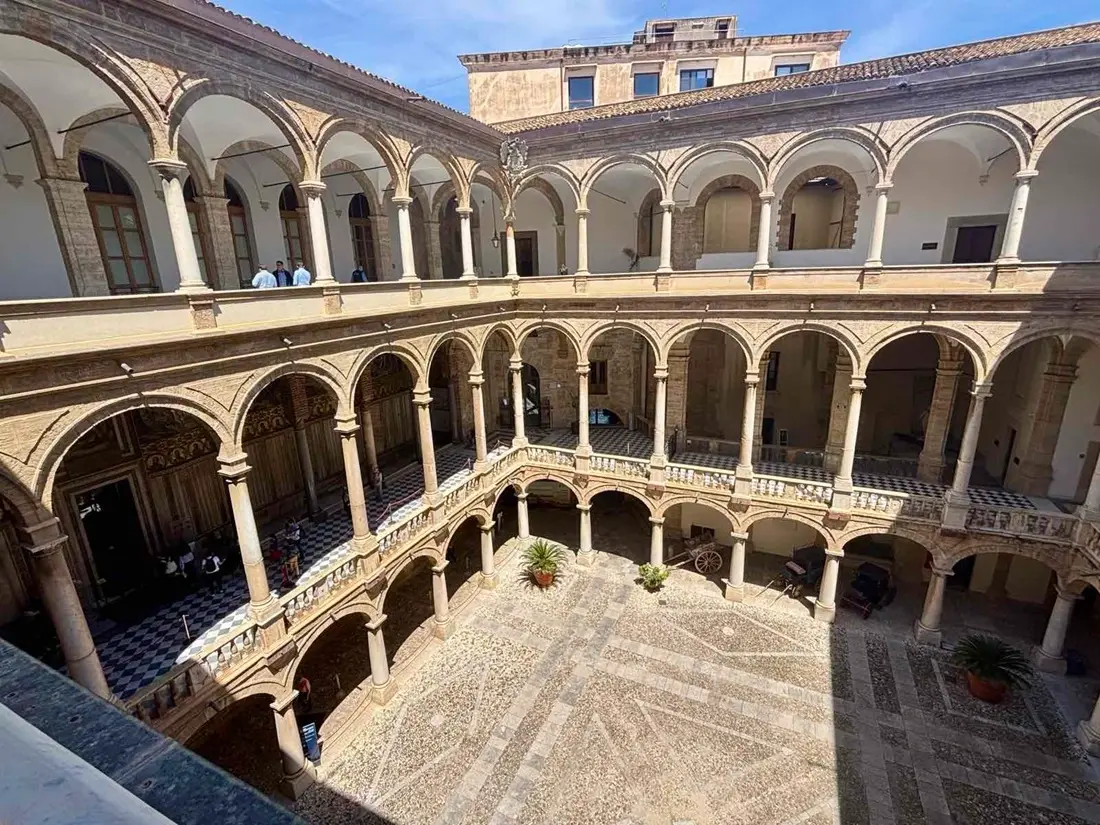
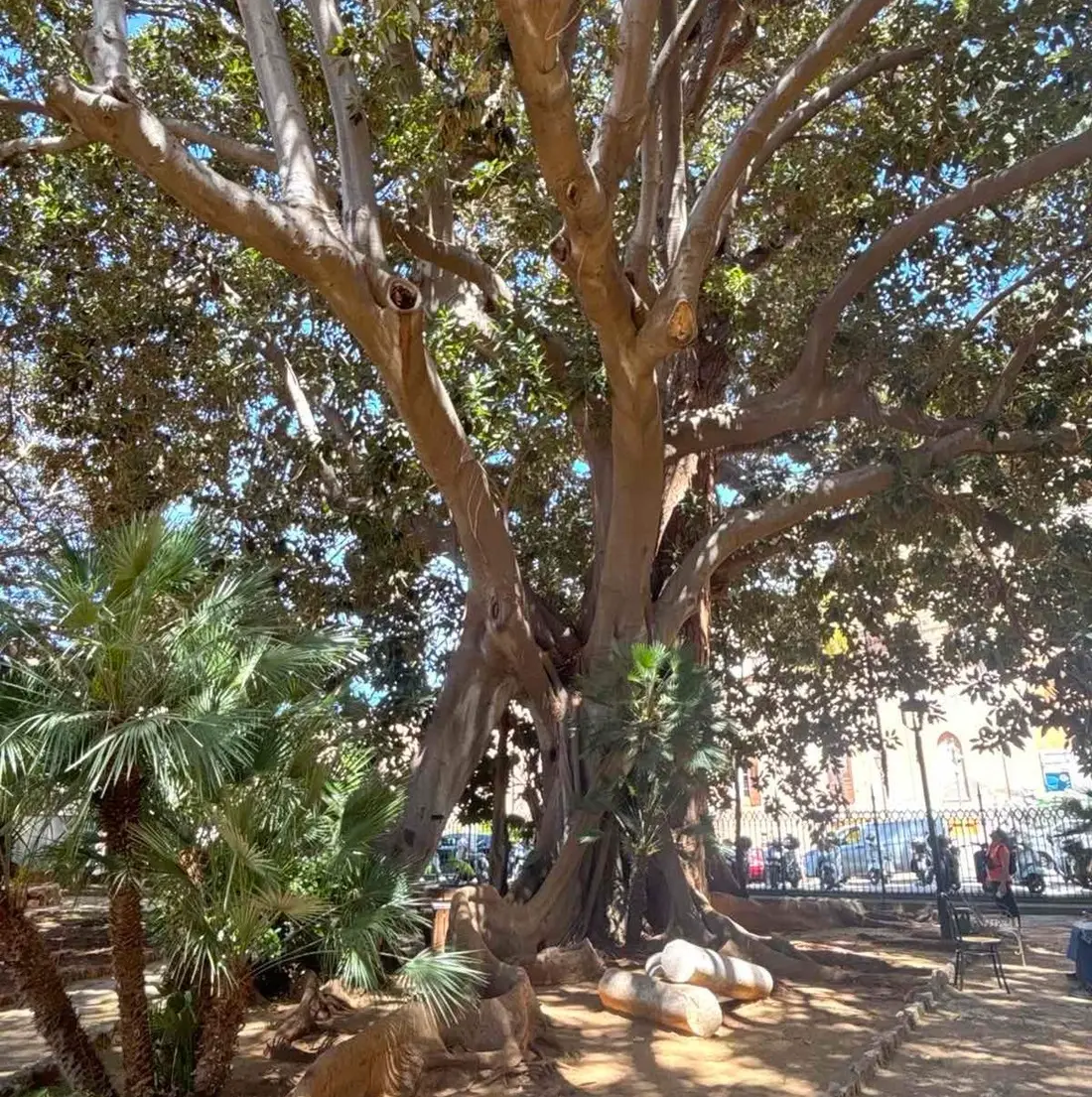
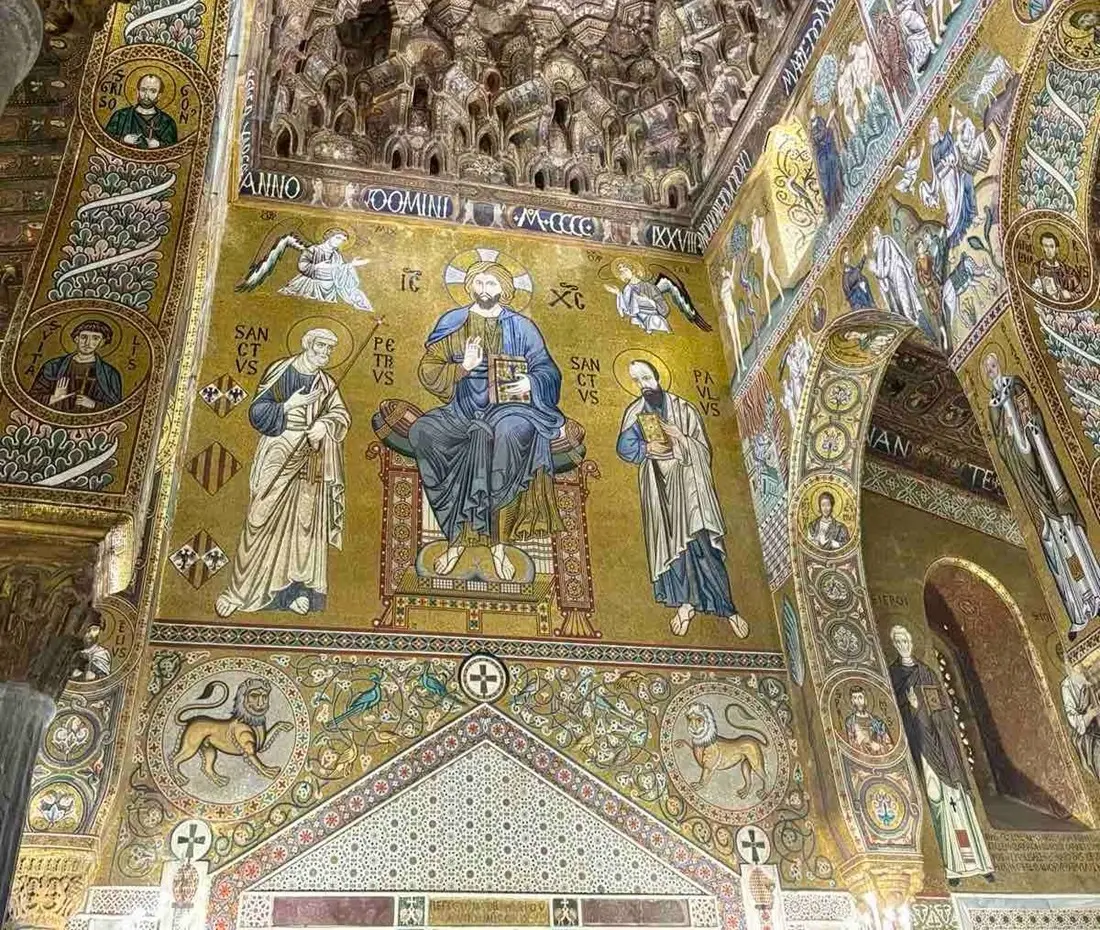
From that period comes the Cappella Palatina, built in the 12th century by King Roger II of Sicily. It is a space that defies any logic of style. Gold, mosaics, a wooden ceiling in Arabic style, Norman structure, Byzantine details - all together, yet nothing clashes. This is where Palermo makes the most sense: different influences do not cancel each other out, but coexist. Rulers did not destroy what they found; they added to it. The palace today looks like a complex historical mosaic - just like Palermo itself.
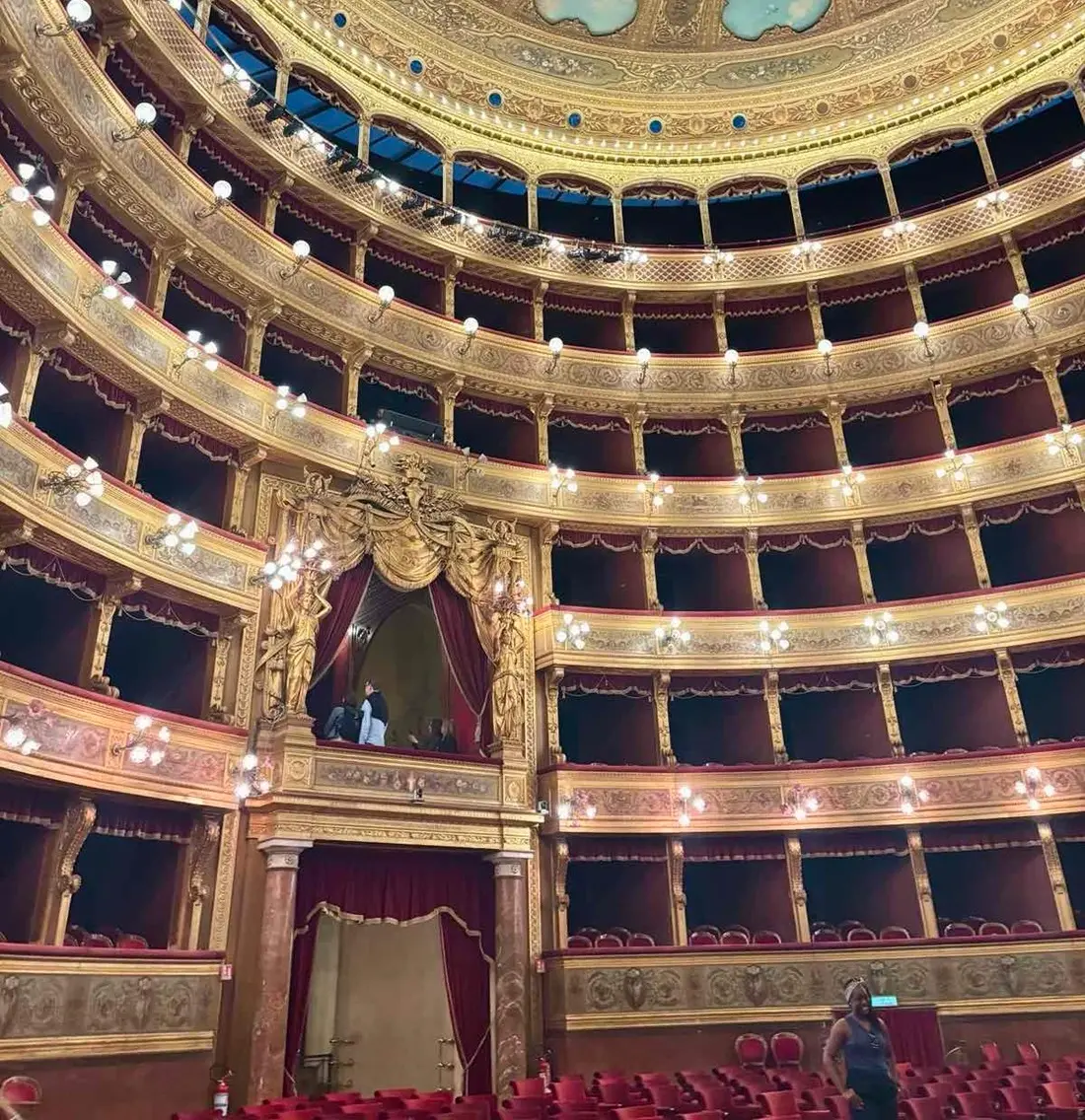
And just when you think you have understood the rhythm of the city, a tour of Teatro Massimo creates a sharp contrast. Outside- noise, vendors, traffic, overlapping voices. Inside - silence, order, symmetry, and a sense of grandeur that feels almost unreal compared to the street you just left. The largest opera house in Italy and one of the largest in Europe, built in the late 19th century, was designed as a symbol of order, power, and prestige - and it shows in every detail: perfect symmetry, monumental staircases, a red-and-gold auditorium, and acoustics so precise that even the quietest whisper carries.
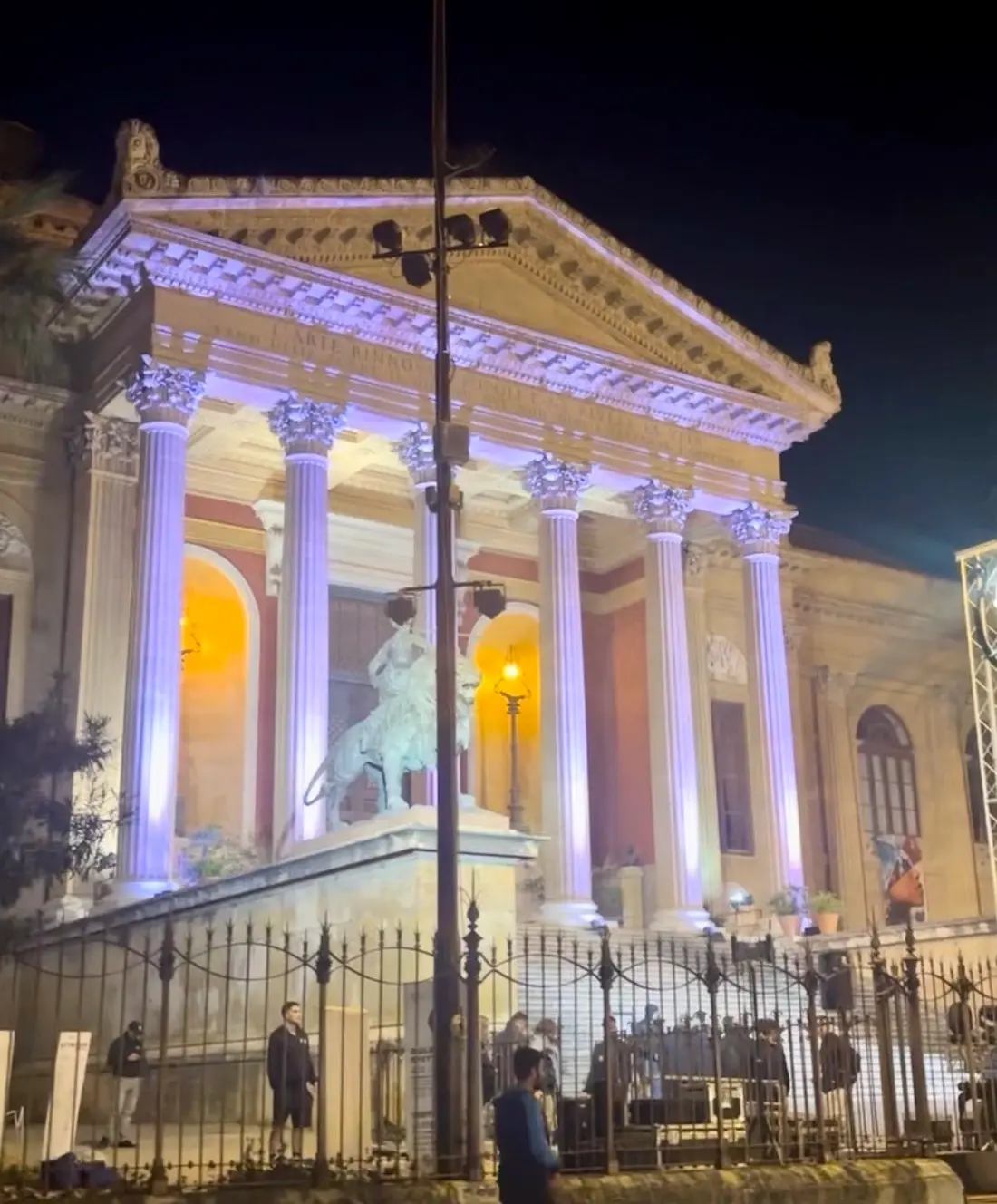
Teatro Massimo is also widely known for the final scene of The Godfather: Part III. It is on its steps that the dramatic epilogue unfolds, further embedding this space into popular culture. Many come not only for the opera and architecture, but also to recognize the iconic scene.
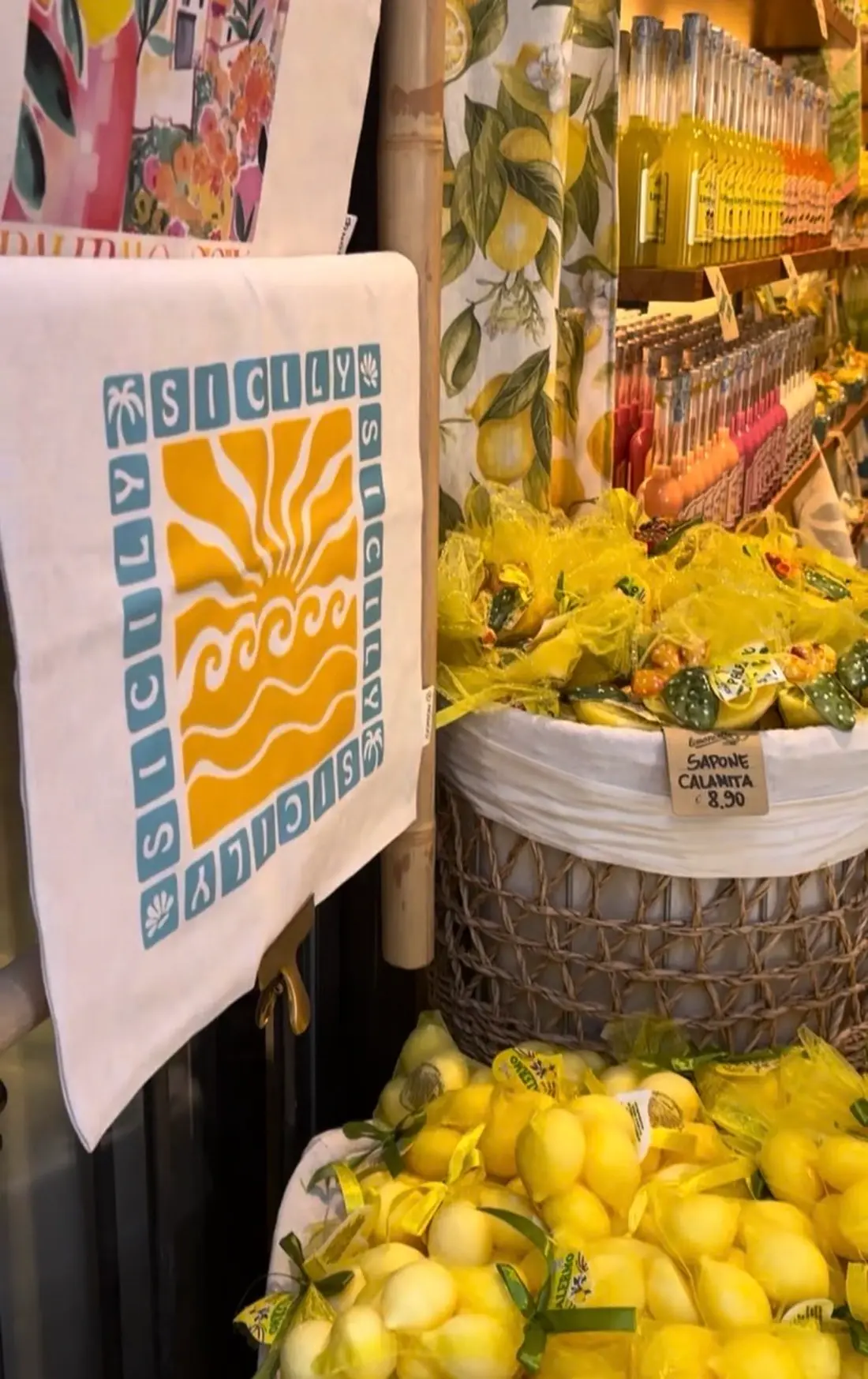
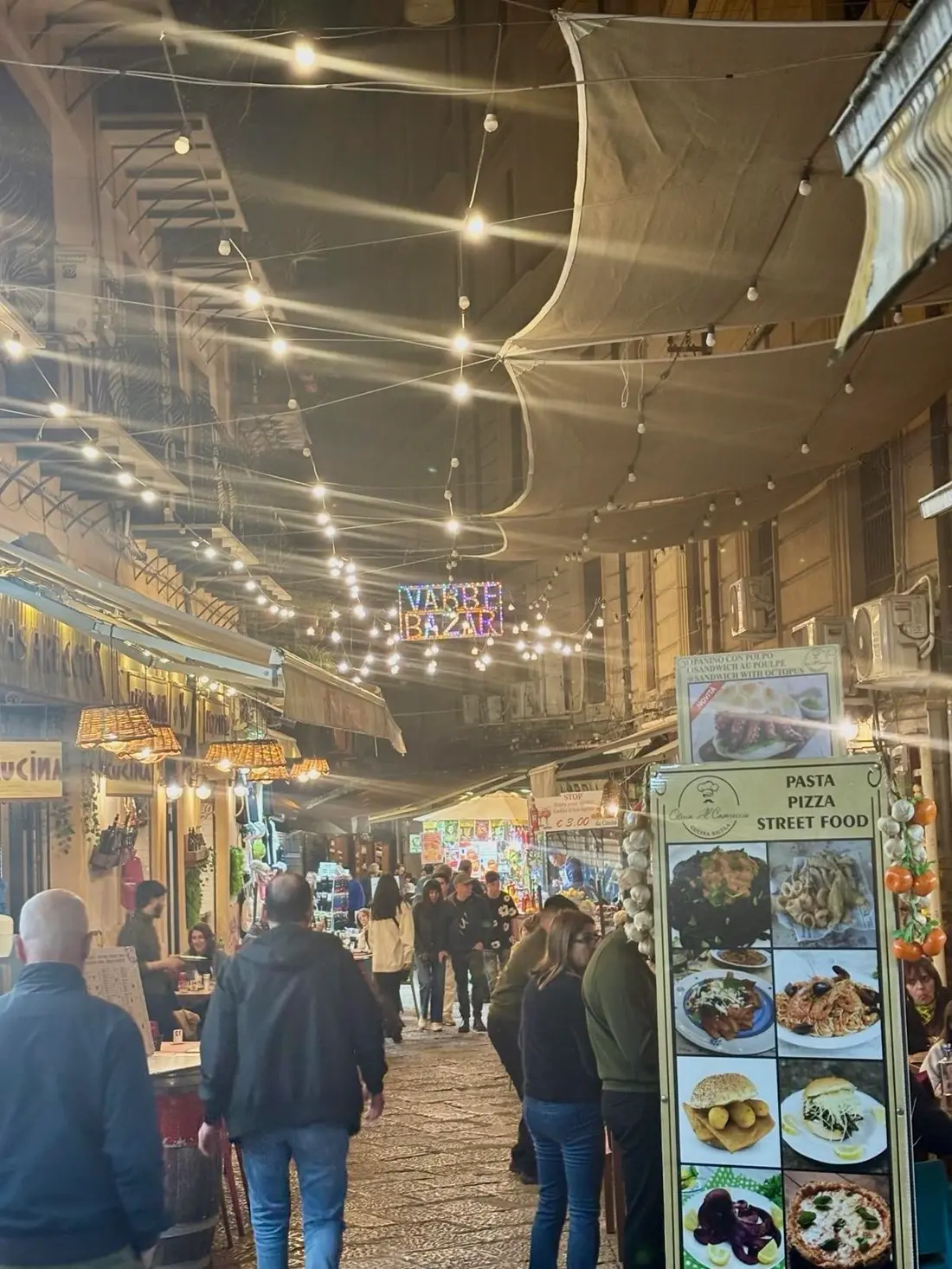
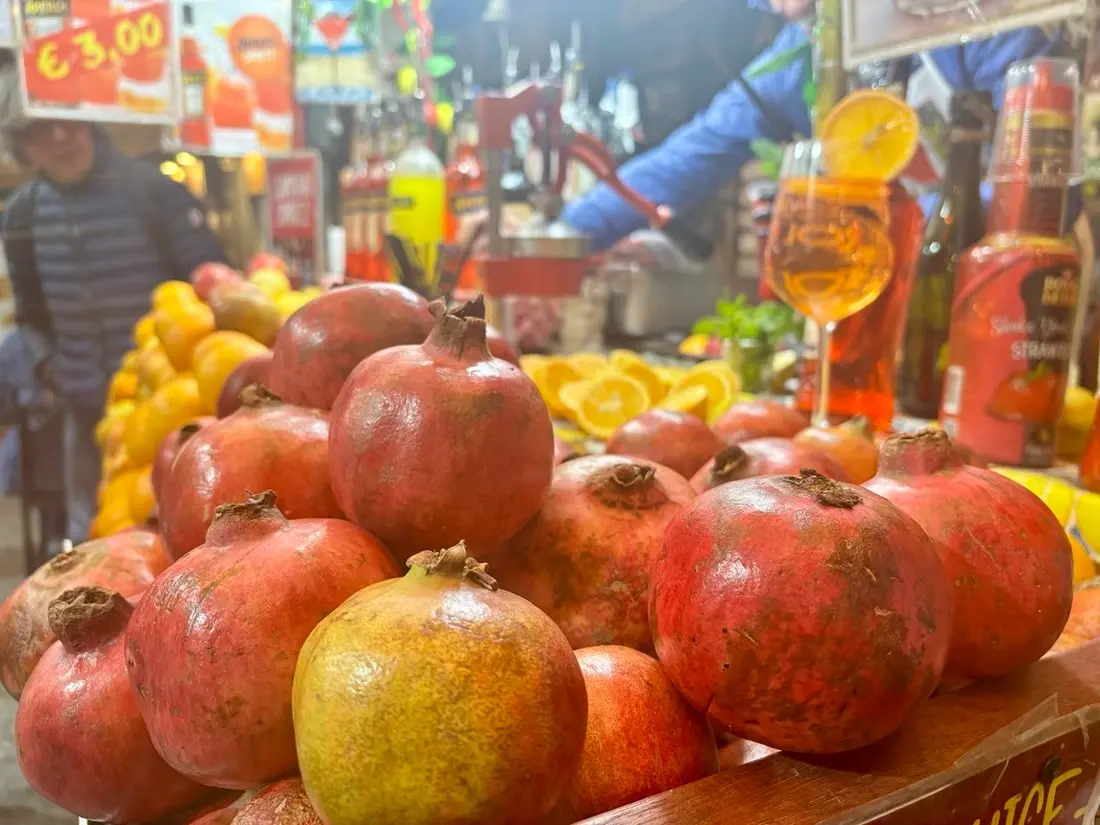
Once you return to the street, Palermo quickly reminds you where you are - most clearly at its markets. When researching the city before a trip, markets are always highlighted, and not by accident.
Palermo’s markets are not for everyone, and that becomes obvious immediately. At Mercato di Ballarò and Mercato del Capo, everything is exposed: rows of stalls, food under the heat, fish, meat, and fruit out in the open, vendors handling them with bare hands, shouting, calling, and offering. For some, it is unhygienic chaos - noise and crowds to avoid; for others, it is the purest rhythm of the city: energy, speed, and the feeling of being part of something real. Vucciria is less a market and more a stage - disappointing for some, a continuation of that same chaos into the night for others. In Palermo, markets are a clear filter - you either accept them as they are, or you don’t.
After the noise of the streets and the weight of history, the Monastery of St. Catherine offers a completely different focus - sweetness and calm. Within the monastery is a small pastry shop, I Segreti del Chiostro, where traditional Sicilian desserts are still made using old recipes of the nuns. Here, cannoli bear no resemblance to their “tourist version”: the crisp shell is filled just before serving, the ricotta is mild and fresh, without excess sugar, and the difference is immediately noticeable.
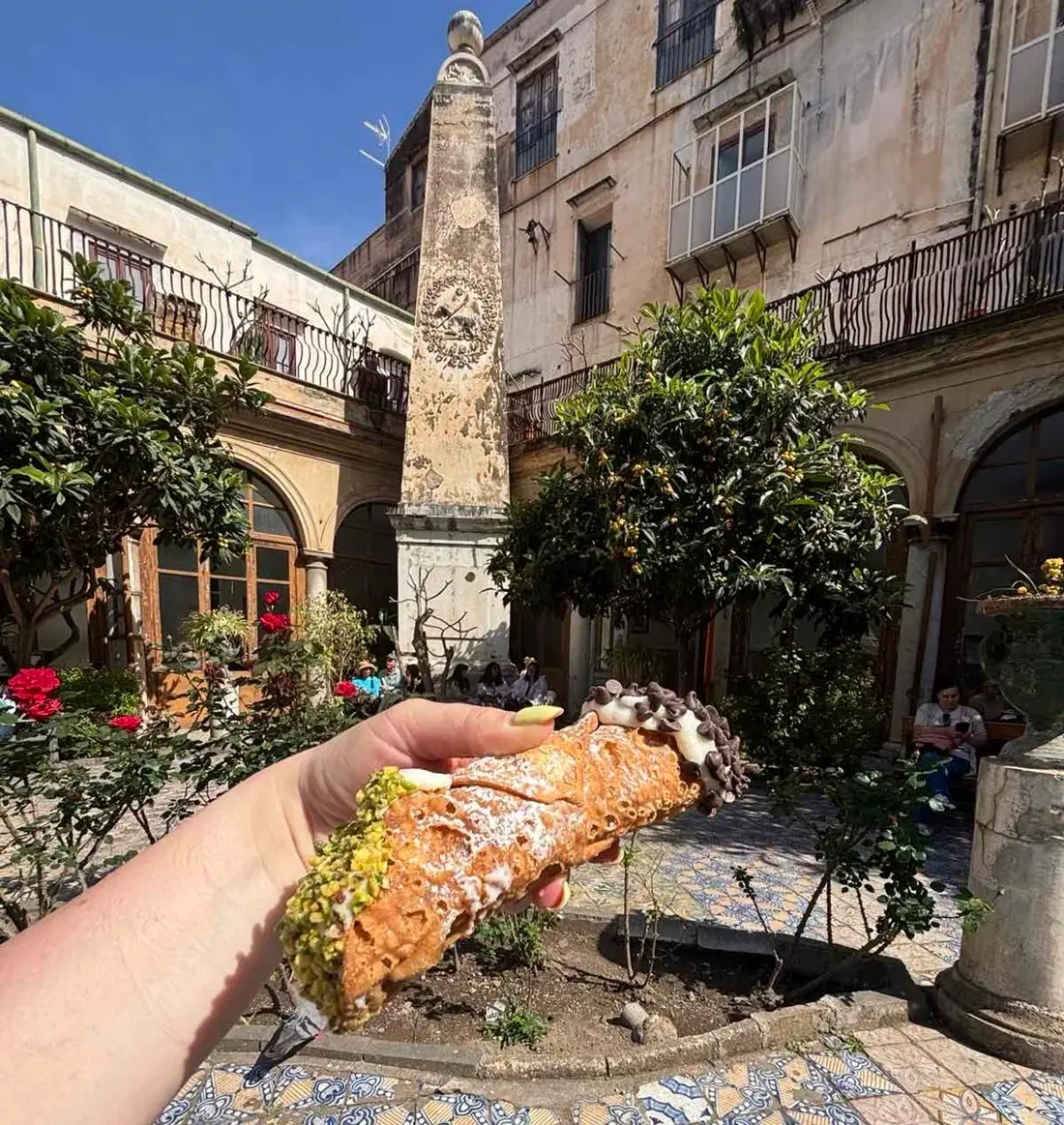
Cassata is another story - layered, heavier, filled with ricotta, marzipan, and candied fruit - a dessert you either love or find overwhelming. Again, the same pattern as Palermo itself: there is no middle ground. Either it fits you perfectly, or it doesn’t. Still, it is worth trying. And yes, this is a place worth waiting in line for. But the point is not to eat in a rush. Behind the pastry shop is a courtyard with greenery, a small fountain, and mosaics - a space filled with tourists, yet somehow still peaceful. You sit, eat slowly, and for a moment forget the city just beyond the walls.
A few steps away is Fontana Pretoria, also known as the “Fountain of Shame.” Its nickname comes from the large number of nude statues, which in 16th-century Palermo were considered too explicit. There is another local interpretation: the name was also a comment on the authorities of the time, as the city paid dearly for the fountain while everyday problems remained unresolved.
For many, one of the first associations with Sicily is the mafia. Today, however, Palermo tries to tell that story differently - without romanticizing it and without hiding it. The Wall of Legality is part of that narrative: a series of murals and messages honoring those who lost their lives fighting the mafia, reminding us of the city’s painful past.
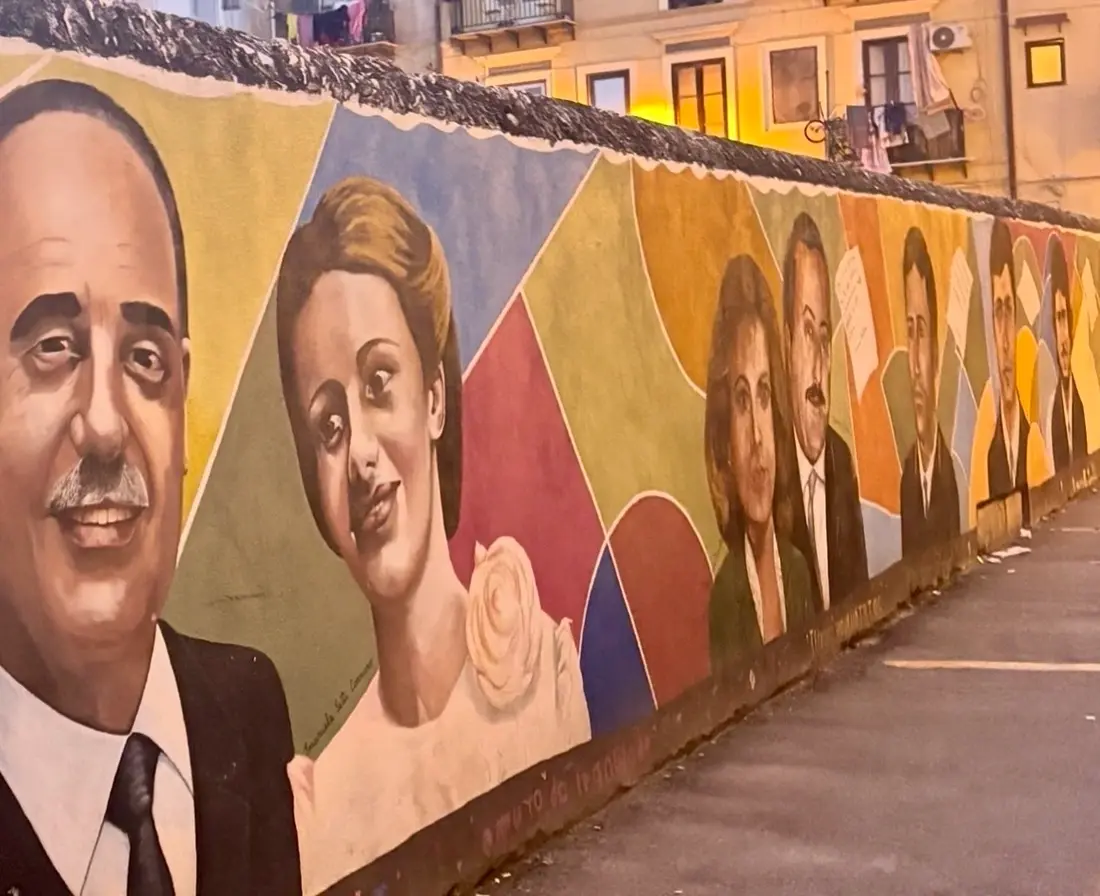
Here, the mafia is presented as a problem, not a myth. A particularly powerful image is the mural of Giovanni Falcone and Paolo Borsellino in the Kalsa district - judges assassinated in 1992 in attacks that shook all of Italy and sparked stronger resistance against organized crime. Unlike films and stories that often portray the mafia through style and power, the focus here is on the cost: violence, fear, and a system that scarred the city for years. The Wall of Legality and the Falcone–Borsellino mural are not just remembrance - they are a message: Palermo does not celebrate the mafia, but those who stood against it.
No story about Palermo is complete without its food. Food here is a continuation of everything you have seen. On the streets, what dominates is what you eat “on the go”: arancini, panelle, sfincione, sandwiches filled with everything imaginable - often greasy, abundant, and unapologetically simple.
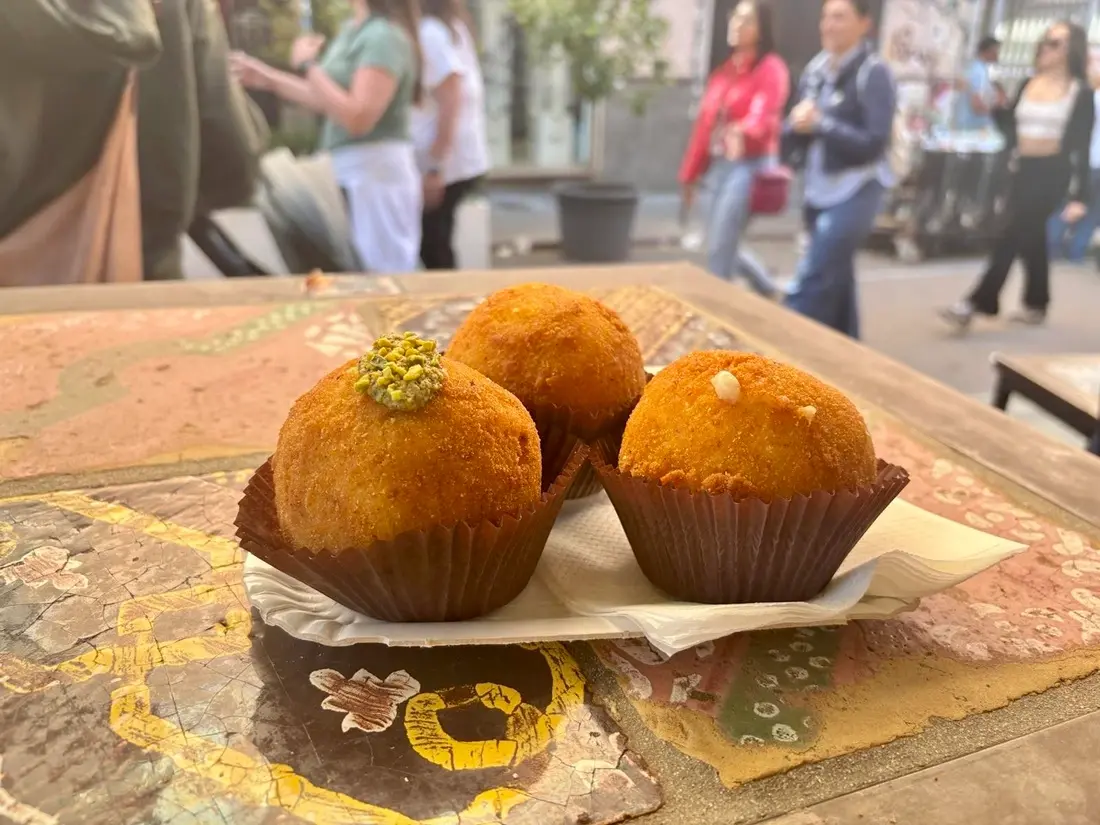
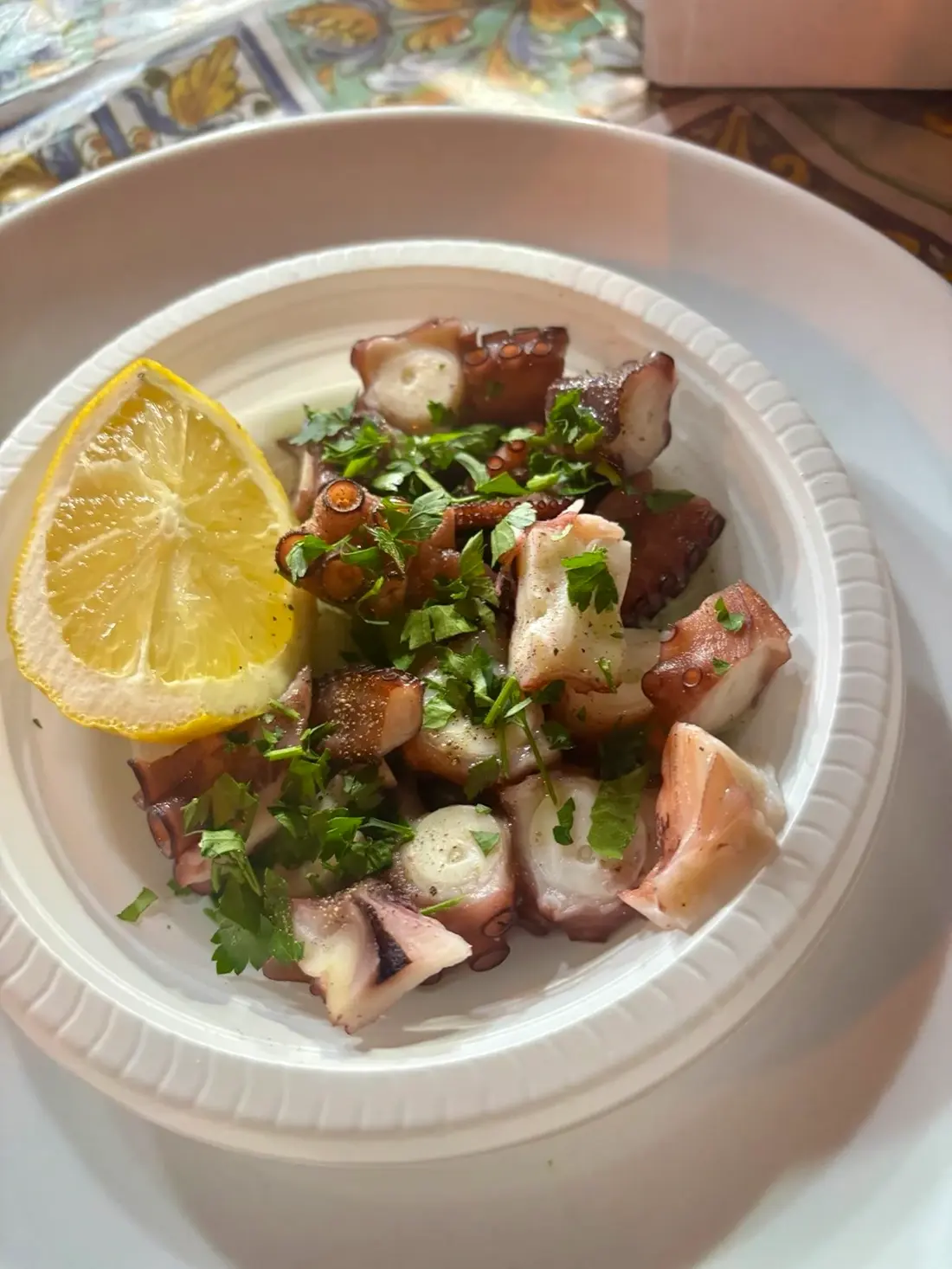
At the same time, that same cuisine produces serious dishes, pasta con le sarde, caponata, and fresh fish, revealing just how deep and diverse the tradition is. Palermo does not adapt its food to tourists; you eat what locals eat, the way they eat it.
The people of Palermo follow the rhythm of the city: open, quick, often loud, communicating directly and without much restraint. Music is everywhere - spilling out of cafés, windows, cars, Vespas. The rhythm is picked up along the way, without warning. And yet, beneath it all, there is a clear warmth: a willingness to help, to explain, to engage in conversation without reason.
Palermo does not beautify its reality. It does not ask to be understood. It simply asks to be accepted - even if only for a few days.
- By Anja Petrović / HEDONIST