

Ohrid: A Balkan Gem Between History and Nature
![[object Object]](https://api.hedonistmagazine.net/storage/images/2026/04/ed847864-5317-4a1e-8a1e-ab4466d9b0b7.webp)
Ohrid is a city located in the southwestern part of North Macedonia, on the northeastern shore of Lake Ohrid. Ohrid and Lake Ohrid are among the country’s main tourist destinations. Due to its large number of churches, the city is often referred to as the “Balkan Jerusalem.”
Ohrid is also known as the “City of Light,” a literal translation of its ancient name, Lychnid.
Lake Ohrid is a true natural wonder. It is home to more than 200 endemic plant and animal species, including algae, zooplankton, fish, snails, and crustaceans, which is why some refer to it as the “European Galápagos.” Experts believe the lake formed around 4 million years ago and that its depths still preserve species that are long extinct in other parts of the world.
It is therefore no surprise that it is considered one of the largest biological reserves in Europe, nor that UNESCO placed it on the World Heritage list back in 1980.
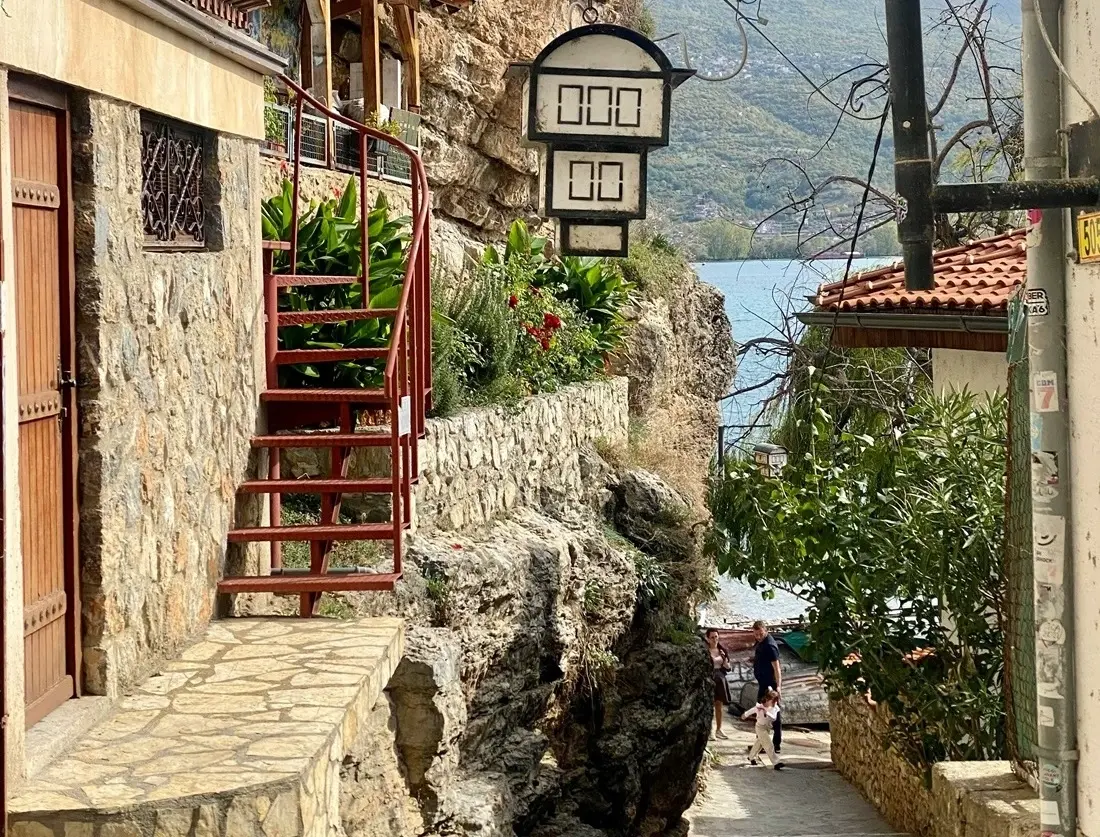
Lake Ohrid lies at an altitude of 693 meters. It stretches 30.8 kilometers in length, with a maximum depth of 289 meters. To the east, it is bordered by Mount Galičica, and to the west by Mount Jablanica.
Along its shores lie the Macedonian cities of Ohrid and Struga, as well as Pogradec in Albania. Due to its striking blue color, warm waters, and a surface area of as much as 358 square kilometers, it is often called the Macedonian freshwater sea. It is a popular destination for swimming and fishing, and if you dive in certain areas, you might even discover archaeological remains dating back around 3,000 years.
Lake Ohrid is fed by numerous underwater springs, as well as sources near the Monastery of St. Naum and in Studenište near Ohrid. These are mostly underground outflows from Lake Prespa, which lies at a higher altitude. Several rivers and streams from the Ohrid basin also flow into the lake.
The lake is home to 17 species of fish, among which the most famous are the Ohrid trout, letnica, and belvica—species that live exclusively in this lake. In addition to eel, chub, carp, and barbel, the lake is also home to a small fish called plašica, whose scales are used to make the famous Ohrid pearl.