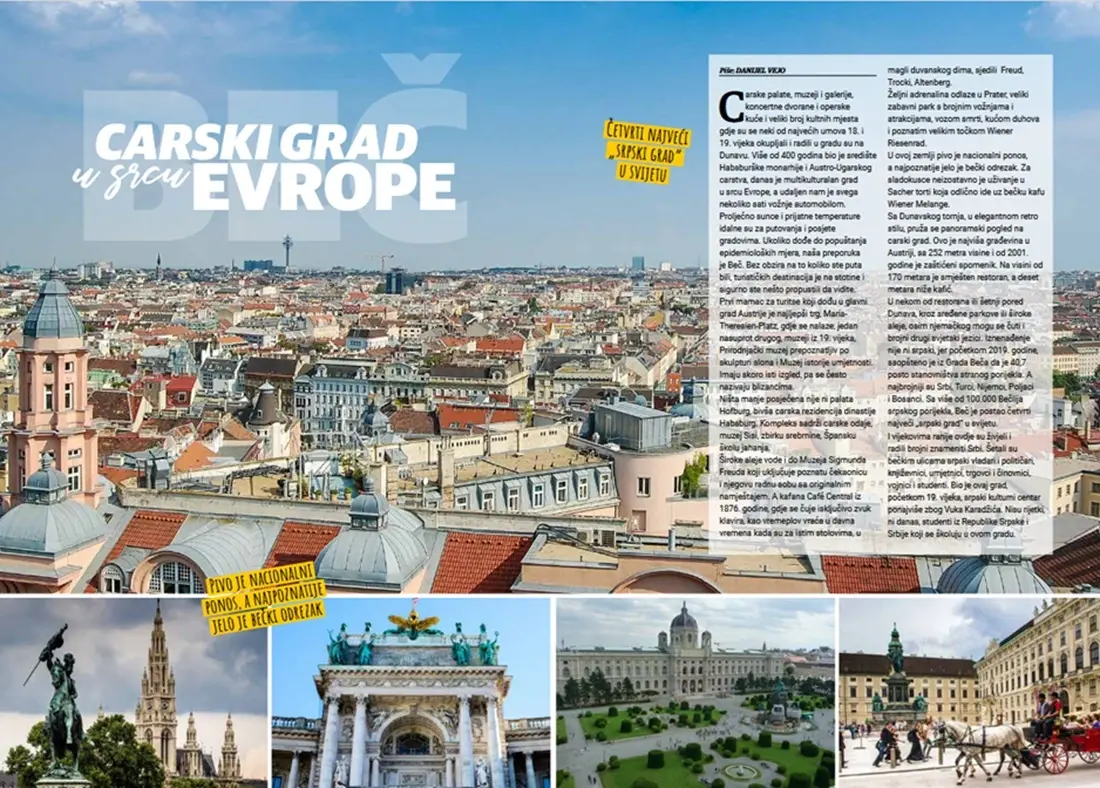
Imperial City in the Heart of Europe

![[object Object]](https://api.hedonistmagazine.net/storage/images/2026/06/c6f821fb-51db-47c3-beef-58fddded8e7f.webp)
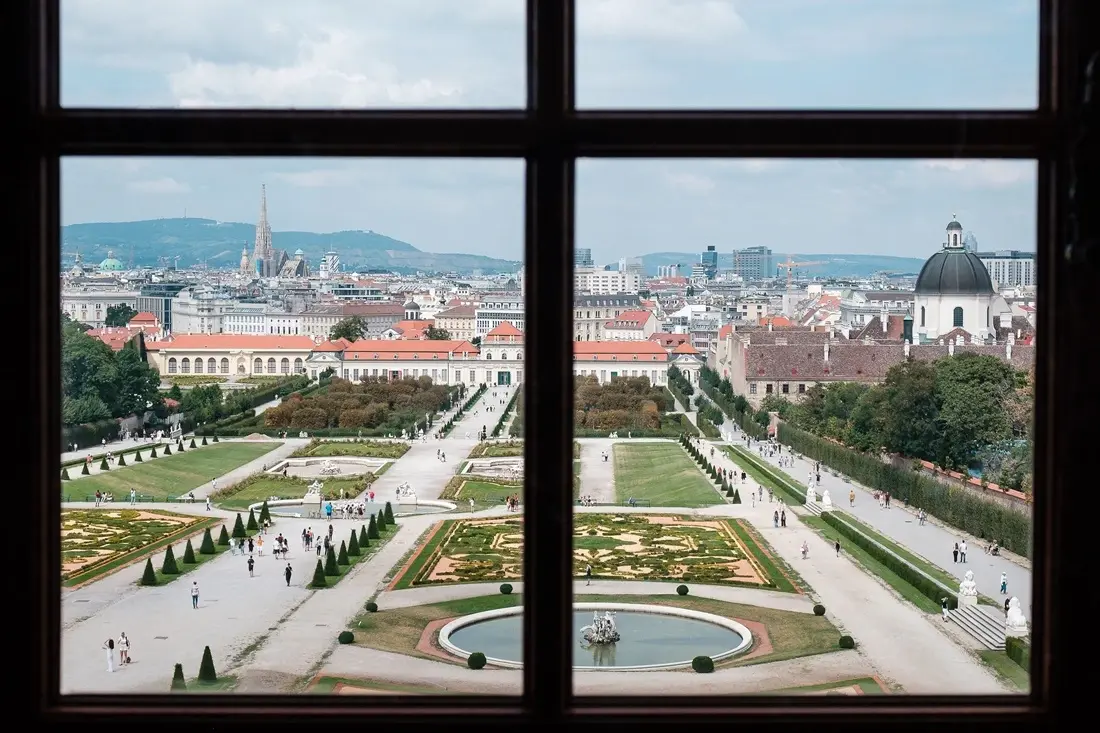
Imperial palaces, museums and galleries, concert halls and opera houses, along with countless iconic places where some of the greatest minds of the 18th and 19th centuries gathered and worked - all of this can be found in the city on the Danube. For more than 400 years, Vienna was the center of the Habsburg Monarchy and the Austro-Hungarian Empire. Today, it is a multicultural city in the heart of Europe, just a few hours away by car.
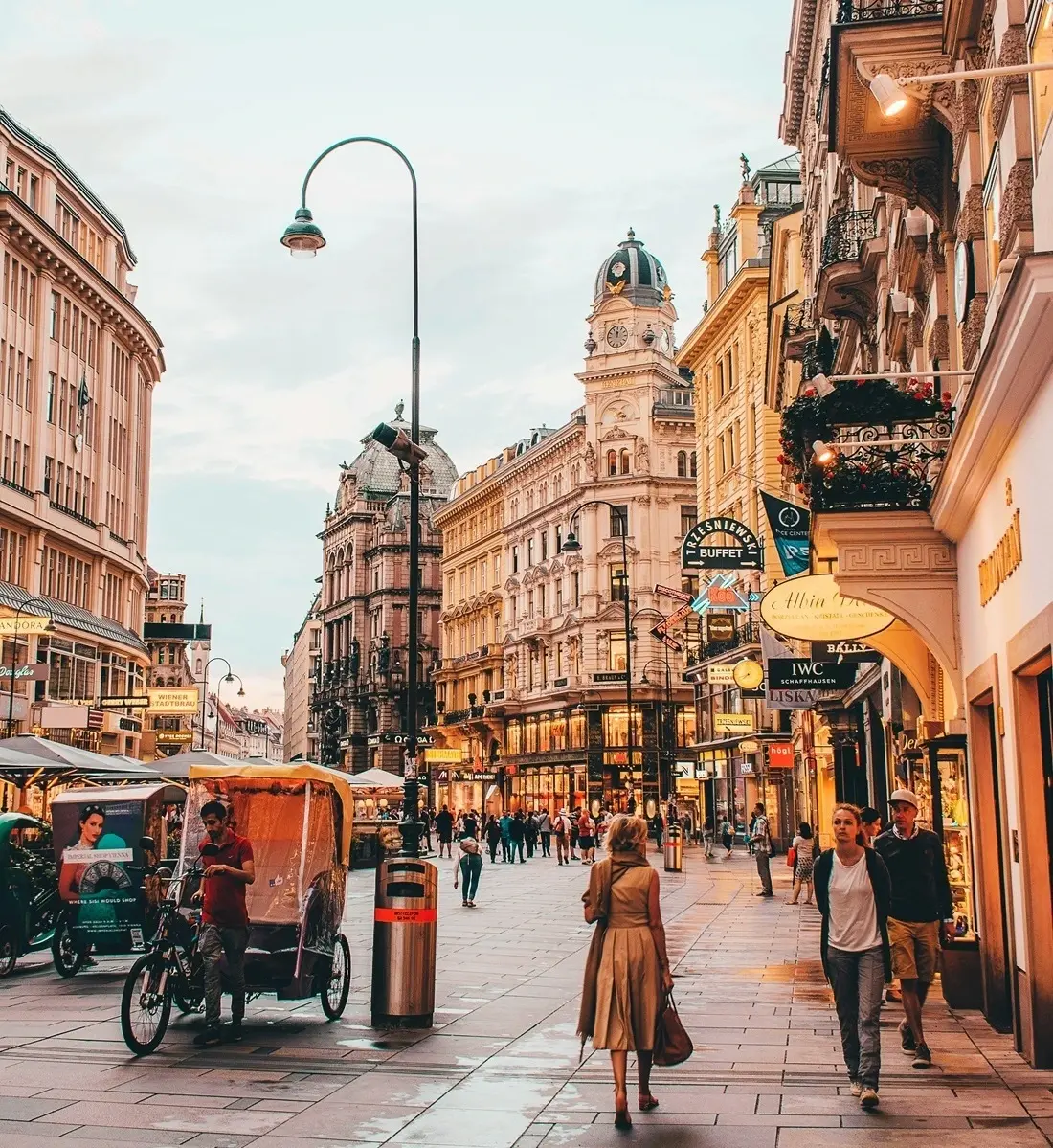
Sunny days and pleasant temperatures are perfect for city breaks, and our recommendation is Vienna. No matter how many times you have visited, the Austrian capital offers hundreds of attractions, and chances are you have still missed something worth seeing.
One of the first places that captures the attention of visitors is Maria-Theresien-Platz, arguably the city’s most beautiful square. Here, facing one another, stand two magnificent 19th-century museums: the Natural History Museum, recognizable by its elephant sculpture, and the Museum of Art History. Their almost identical architecture has earned them the nickname “the twins.”
No less popular is the Hofburg Palace, the former imperial residence of the Habsburg dynasty. The vast complex includes the Imperial Apartments, the Sisi Museum, the Imperial Silver Collection, and the famous Spanish Riding School.
Wide boulevards also lead visitors to the Sigmund Freud Museum, which includes the renowned waiting room and Freud’s study, preserved with original furniture. Meanwhile, the historic Café Central, established in 1876, where the sound of a piano fills the air, feels like a journey back in time. It was here that figures such as Freud, Trotsky, and Altenberg once sat around the same tables, surrounded by clouds of tobacco smoke.
Those seeking excitement head to the Prater, a large amusement park filled with rides and attractions, including roller coasters, a haunted house, and the famous Wiener Riesenrad Ferris wheel.
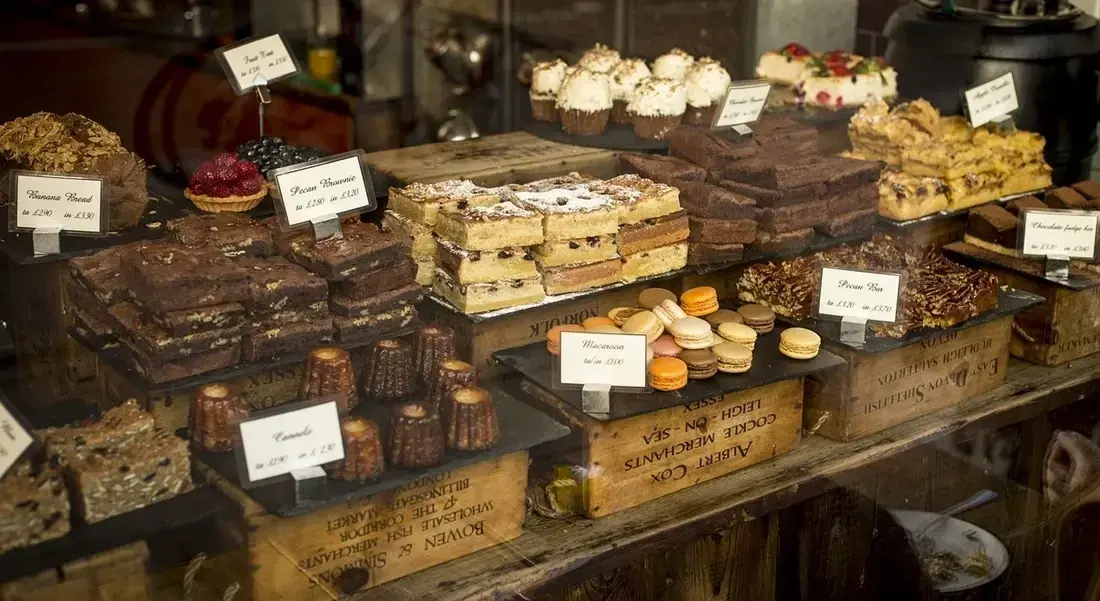
In Austria, beer is a matter of national pride, while the city’s most famous dish is the Wiener Schnitzel. For dessert lovers, a slice of Sachertorte paired with a classic Wiener Melange coffee is an essential Viennese experience.
From the Danube Tower, an elegant retro-style landmark, visitors can enjoy a panoramic view of the imperial city. At 252 meters, it is Austria’s tallest structure and has been a protected monument since 2001. A restaurant is located at a height of 170 meters, while a café sits ten meters below.
Whether dining in one of Vienna’s restaurants, strolling along the Danube, wandering through its manicured parks, or exploring its broad avenues, visitors will hear many languages besides German. Serbian is among the most common. In early 2019, the City of Vienna announced that 40.7 percent of its population was of foreign origin. The largest communities include Serbs, Turks, Germans, Poles, and Bosnians. With more than 100,000 residents of Serbian heritage, Vienna has effectively become the fourth-largest “Serbian city” in the world.
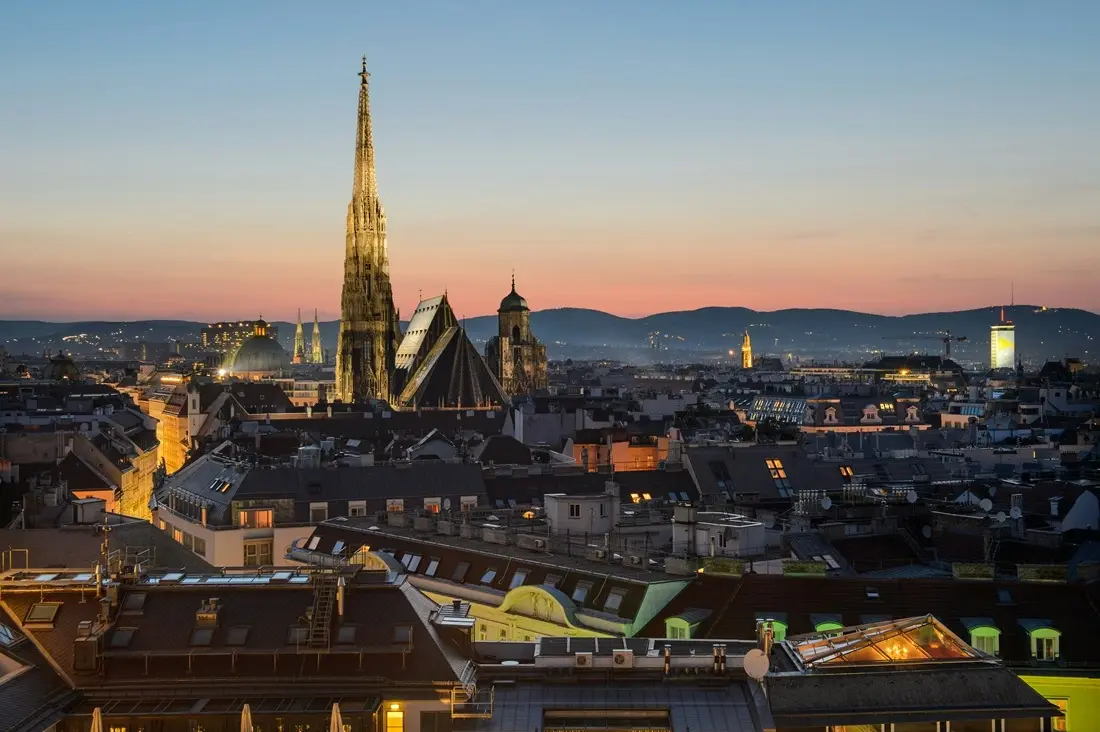
For centuries, Vienna was also home to many prominent Serbs. Serbian rulers and politicians, writers, artists, merchants, officials, soldiers, and students all walked its streets. In the early 19th century, Vienna served as a major Serbian cultural center, largely thanks to the work of Vuk Karadžić. Even today, many students from Republika Srpska and Serbia choose to continue their education in this city.
- Written by: Danijel Vejo / HEDONIST