
Boris Maksimović: Athens, or a Story of Uniforms, Walls, Parks and One Dog

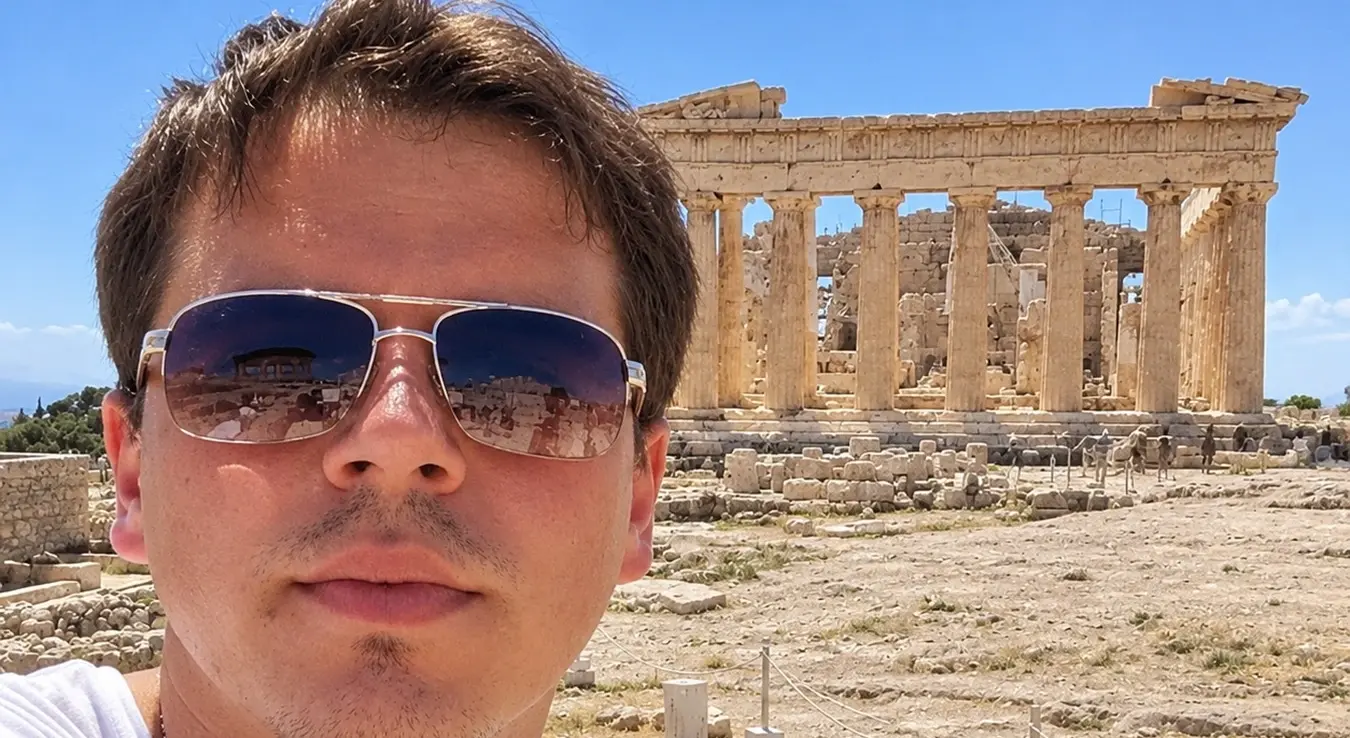
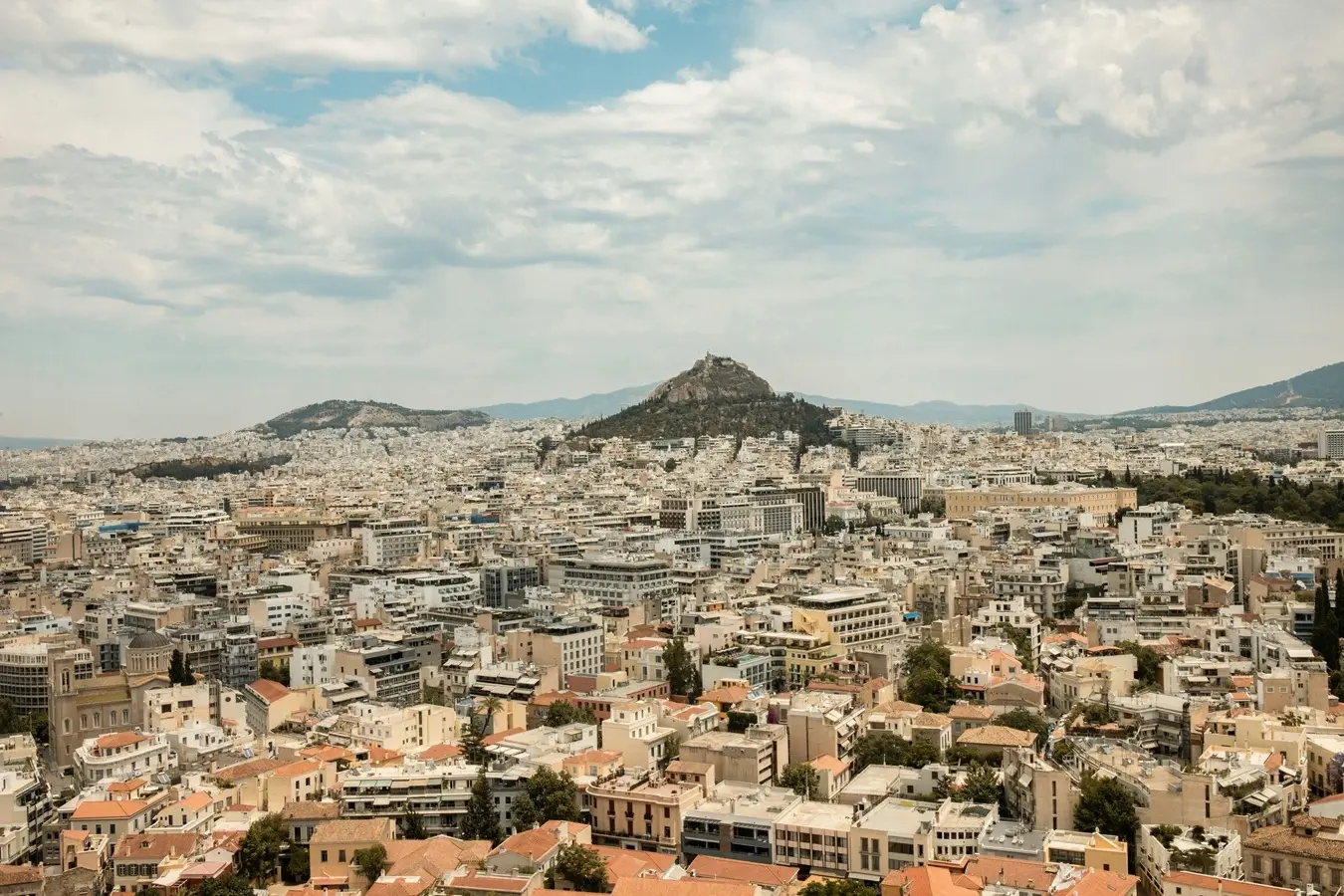
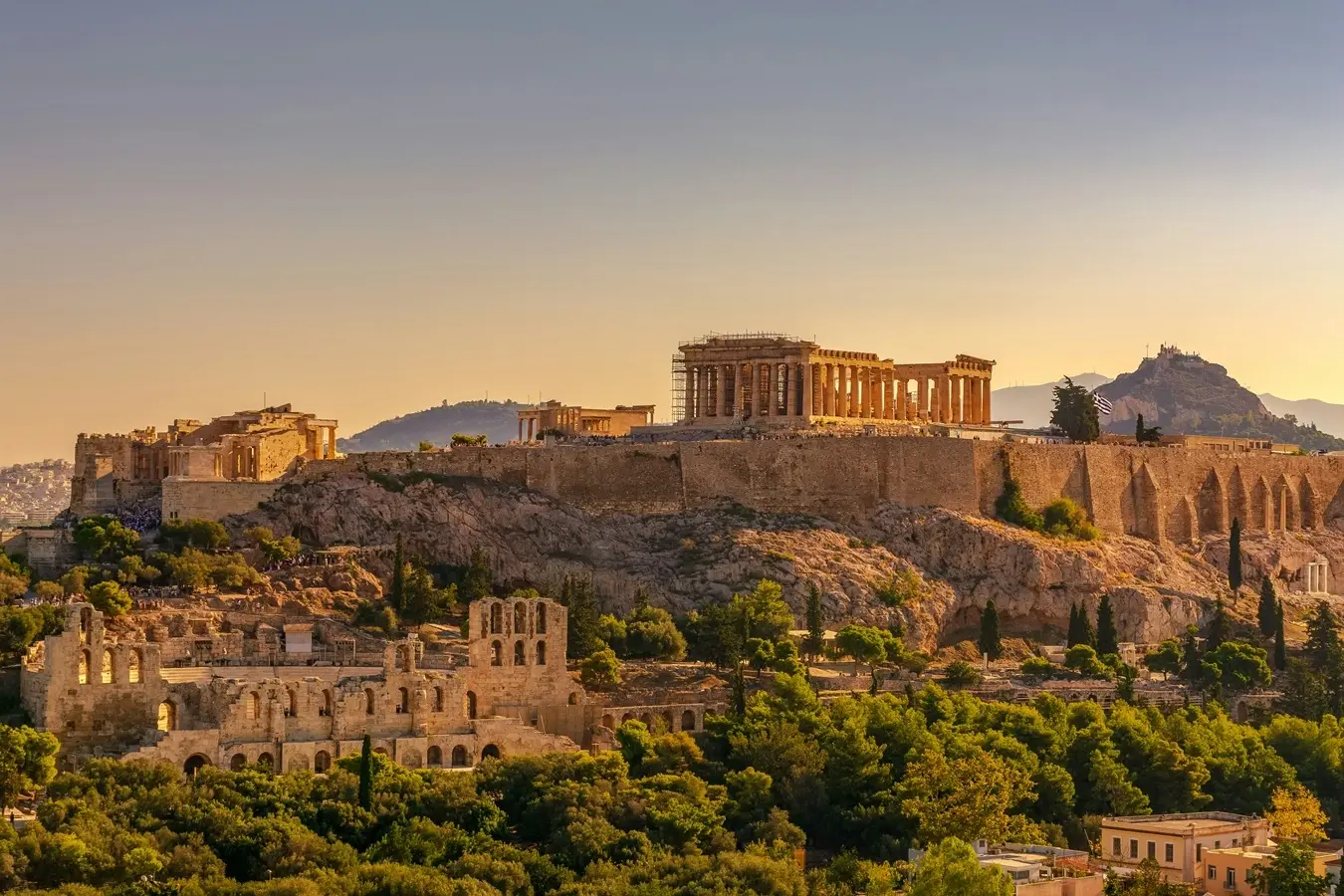
In early September 2005, I stood on the Acropolis, gazing in disbelief at Athens shimmering before me, all white in the blazing sunlight. It struck me that Athens might more logically have been called the White City; that whiteness seemed so intense it penetrated even through closed eyelids. At that moment, I promised myself I would return one day. I had no idea when or how, but somehow, I had to.
Editor’s note: This text is part of the HEDONIST archive and was originally published in 2020 in the second issue of the print edition.
Exactly ten years later, I found myself standing on that same Acropolis, overjoyed at having kept the promise I had made to myself, trying to compare the scene before me with the one etched into my memory. As it turned out, of course, Athens had been far more dazzling in my recollections - as memories so often are - and parts of the city looked more like Beirut than Athens. Yet the view's beauty had lost none of its power.
The fact that I had been to Athens ten years earlier means little in itself. It simply gave me a chance to see with my own eyes how illusory the power of memory can be, and how futile our attempts to outwit forgetting really are. I often find myself thinking about a city where I once spent some time, only to realise that all its images have become shrouded in a kind of haze, one that grows thicker with every passing year. I lived in Copenhagen for a month, four years ago, and today I am no longer sure whether I am really the person who was there, or whether the whole thing was just one of those extraordinarily vivid dreams you cannot quite distinguish from something you actually experienced.
I had spent only a single day in Athens, and for all those ten years I wondered whether I was even entitled to say I had been there. Wasn't it rather presumptuous to claim to have visited a city that had been a city for 2,500 years, after spending just one day in it? This time, I made up for that fleeting visit. I walked the city from end to end, wore out my shoes exploring every conceivable boulevard, street, alleyway and passage, deliberately losing myself in unfamiliar neighbourhoods in an effort to get to know it properly.
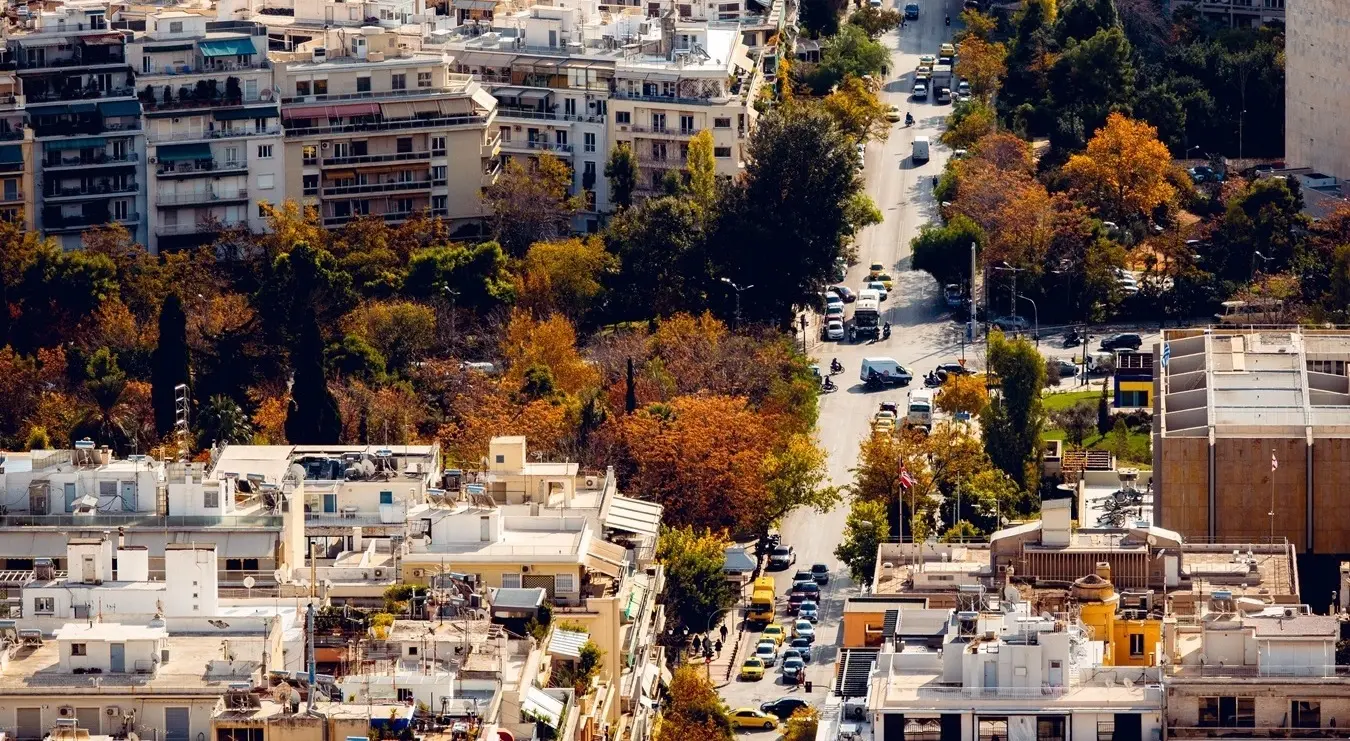
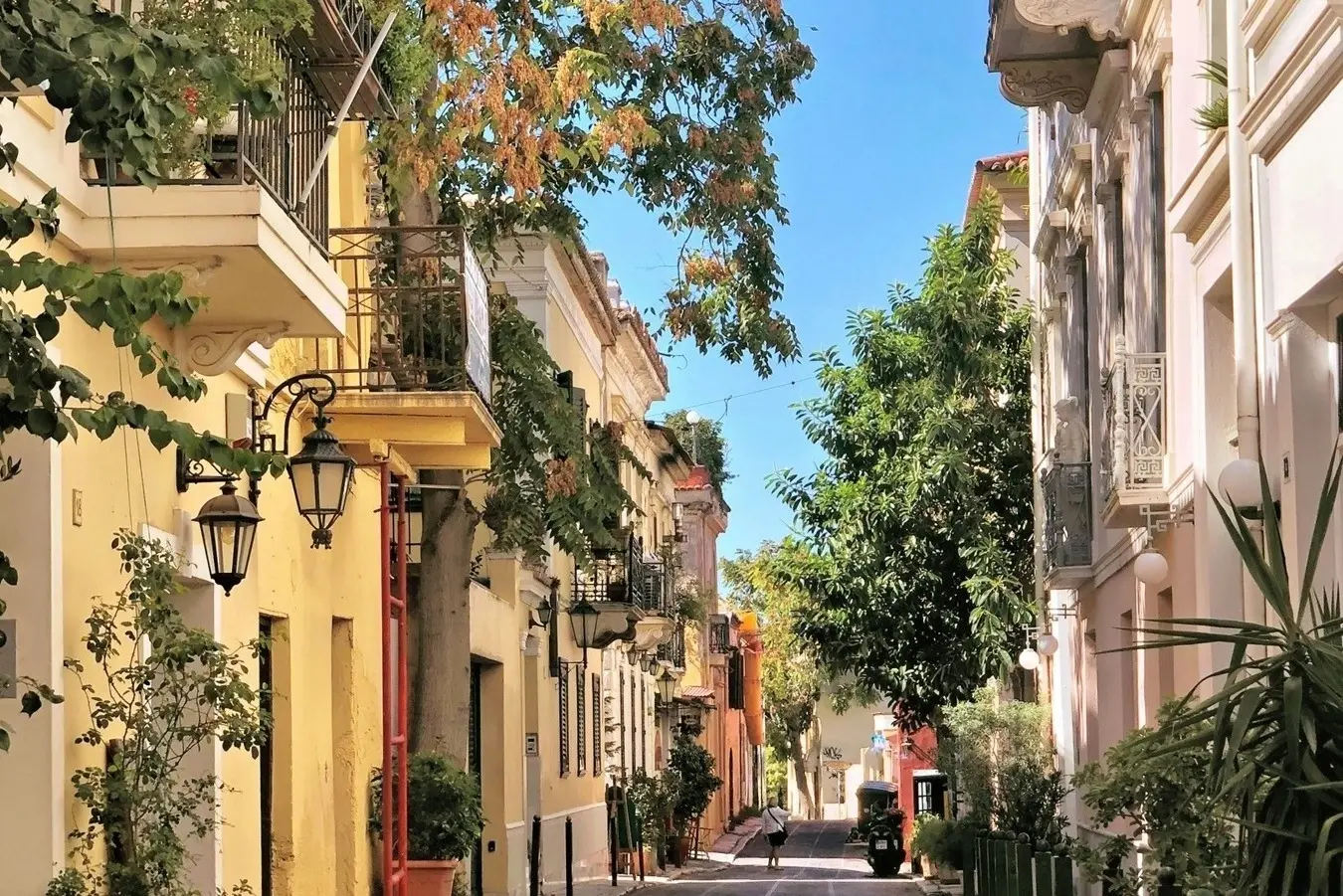
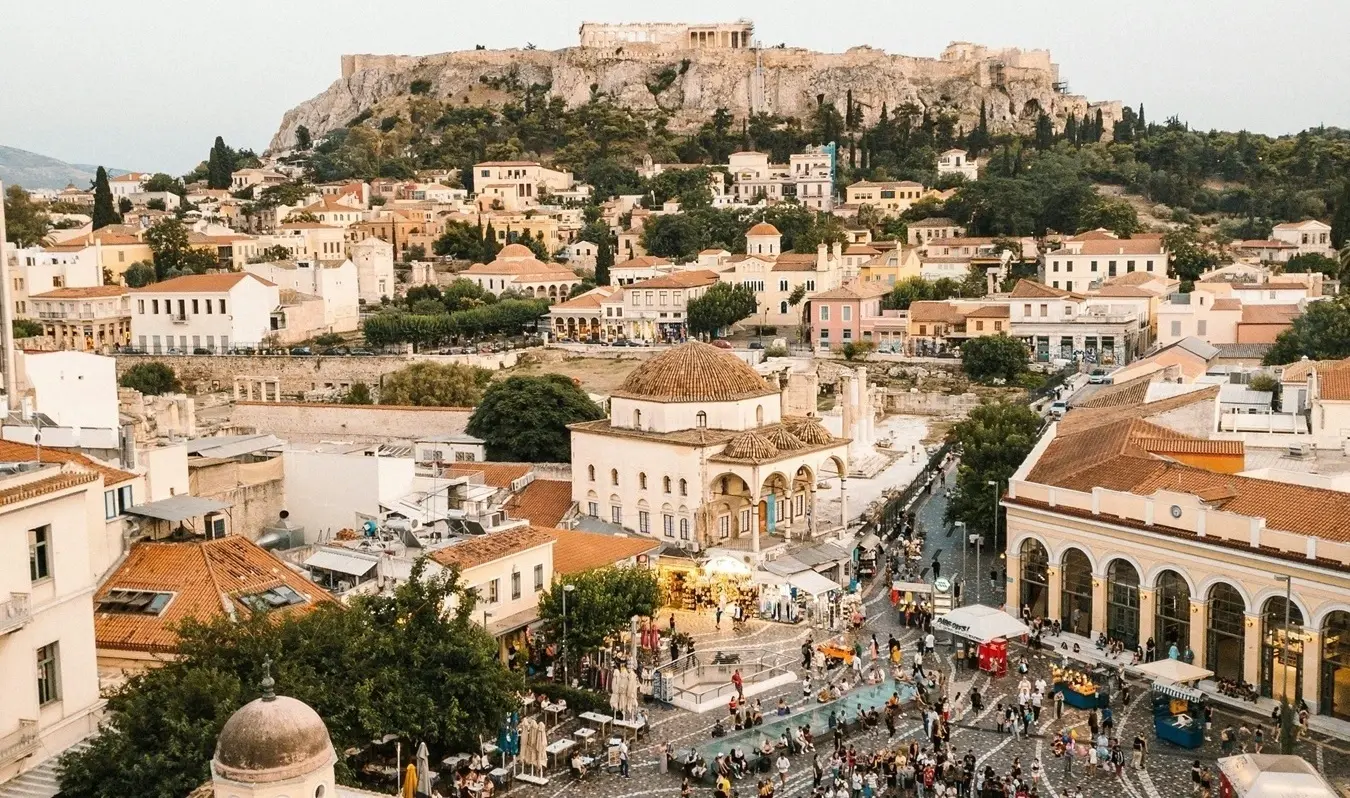
And yet, after all those dozens of kilometres on foot, I am still not sure where to begin. Should I start with the Acropolis, which sometimes appears above the city as unexpectedly as a kind word from a rough man, suddenly emerging clear and sunlit, like a jewel shining in the dark? Or with those gestures so ordinary that they catch you by surprise, such as sitting down at a café for a drink and having the waiter bring you a glass of cold water before anything else, constantly refilling it before even asking what you would like to order? (I know, it makes perfect sense. You would practically die of thirst in that scorching heat without water. Still, it is a lovely touch, especially when they bring you a few slices of vegetables sprinkled with a little vinegar to go with your beer.) Or perhaps I should begin with the walls, each one telling its own story. There is simply too much to say, and too few words capable of capturing it all. But one has to start somewhere.
In Athens, I stayed at the Travellers' House. We were not quite as lucky this time as we had been in Granada in 2013, when our House was literally five minutes from the city centre. This time, we had a rather longer walk ahead of us, and with each passing day I grew to hate that avenue a little more: the endless traffic made far too much noise, the road seemed to get longer every time we walked it, and then there were all those boutiques. (The more perceptive reader will realise that, in the line of duty, I was obliged to accompany my wife on her shopping expeditions through those corners of the city.) This Travellers' House broke every record: for the number of people who passed through it, the number staying there at the same time - more than forty, I think - and probably the number of nationalities represented under one roof. The flat was enormous, but there were so many of us that even sardines, accustomed as they are to cramped quarters, would have felt thoroughly claustrophobic. And yet it was lovely, in the way that only a Travellers' House can be.
There were the lads from Argentina on bicycles; a Russian brother with distinctly Asian features, from one of the remote tribes of Siberia; and a Polish couple who had hitchhiked their way across the whole of Europe and, after Greece, planned to head towards Bosnia and Herzegovina - more precisely, Herzegovina, and more precisely still, the Kravica Waterfalls. None of that would have been particularly unusual had they not passed through Foča just a few months earlier, also hitchhiking. In the meantime, they had covered another few thousand kilometres, only to find themselves practically back in the neighbourhood. In short, the House was a collection of wonderfully unusual stories, and I was there to soak up every one of them.
When I set off for the Acropolis, I knew the visit would make a serious dent in my budget, although no amount of money could possibly measure the beauty and historical value of the place. The ticket was not particularly expensive - twelve euros - but even that tells you something about my financial circumstances. When you find yourself wanting to have your cake and eat it too, while having neither the cake nor the money, you have to fall back on the skills acquired, as Zuko Džumhur might have put it, at the high school of cunning. So you ask at the ticket counter whether there is a discount for journalists. When they tell you that journalists get in free, you immediately produce a press card from your former newspaper, even though you have not worked there for more than a year. And the card itself was obtained by passing yourself off as a foreign correspondent, rather than admitting that you were actually a proofreader. But if that same card has already got you free entry to Hagia Sophia, the Acropolis and who knows how many other museums and institutions, then any pangs of conscience are nowhere to be found. And why should they be?
One day, in search of food, we set off at random, hoping to find a gyros, souvlaki or anything else that might make our wandering a little easier. We found ourselves in empty neighbourhoods that looked almost abandoned. Not a soul was in sight, while hundreds upon hundreds of tattooed walls and OXI posters surrounded us. It felt as though some kind of plague had swept through an African city only hours earlier, leaving everything with the appearance of a place suddenly deserted. Athens, the northernmost city in Africa - that was how it struck me at the time. There is something irresistibly appealing about getting lost in a city like that, as if you had wandered into someone's backyard while the owner was away and unable to catch you. We walked and walked, and not a living soul appeared. If this was an afternoon siesta, it must surely have been brought on by an invasion of tsetse flies.
I genuinely believe that the essence of a society or a city is hidden in details so obvious that we fail to notice them simply because they are right in front of us. They are those little things that are not little at all, yet somehow pass beneath everyone's radar. I believe that these “little things” can tell us at least something about the Greeks. Any judgement about a nation should be treated with a healthy dose of caution - mine especially - not least because every nation is an extraordinary mixture of even more extraordinary contradictions. Any sweeping attempt to squeeze such a vast and varied group of people into a neat definition is bound to backfire on whoever makes it.
In Greece, those contradictions practically leap off the walls. One of them concerns the relationship with the state. On the one hand, there is a centuries-old tradition of anarchism, of rejecting every god and master; on the other, a strong attachment to the military, the state and even the monarchy. Between 1967 and 1974, Greece went through a series of right-wing military governments, now collectively remembered as the Regime of the Colonels, reflecting the deep divisions within Greek society. Sometimes, all it takes is a single glance to take in both the “A” painted on the walls and the military uniforms that seem to be everywhere on the streets, sold at every other stall. Uniforms, sleeping bags, knives, boots - all laid out in the open. And if there is that much of it for sale, there must be plenty of customers willing to buy it.
Anarchism, meanwhile, has not remained confined to the walls. There is an entire neighbourhood that people openly describe as anarchist. Exarcheia took shape between 1870 and 1880 and became home to various left-wing, anarchist and anti-fascist groups. In mainstream media, it is often portrayed as a volcanic crater, the ninth circle of hell, a place inhabited by creatures straight out of Hieronymus Bosch's paintings. A few weeks before leaving, I read a disgustingly sensationalist article in the Croatian newspaper Slobodna Dalmacija about its brave reporter, who had supposedly dared to venture into this inferno, a place where even the police allegedly refused to go. That was enough to make up my mind about the first place I would visit in Athens.
As so often happens, Exarcheia turned out to be an entirely pleasant neighbourhood, full of cafés and restaurants, alive with cultural activity, concerts, political events and all kinds of other things. Throughout my stay - and I went to the central park every day - I never once felt unsafe. We cannot, and must not, get to know the world through the media. Anyone who tries is setting themselves up for disappointment from the outset. Treating newspaper articles and television reports as unquestionable facts is a monumental mistake. Anyone who relies on such a distorted understanding of the world will remain irreversibly impoverished by it. In fact, do not even take my word for it. Go there and see for yourself.
At the heart of Exarcheia lies a park, and in that park lives a large, beautiful dog. He has his own little shelter, and the people who gather there every day look after him. Watching him casually stroll around, carrying his considerable canine backside with such ease, is a delight in itself. Even more wonderful is the way he has become part of the community, and the community part of his life.
One evening, however, a man wandered into the park, visibly drunk. When the dog passed close to him, the man raised a bottle as if he were about to hit the animal with it. The dog began barking, but the man kept waving the bottle around, threatening to smash it over him. People tried to calm him down, explaining that the dog would not hurt him, that he was, in fact, the park's host and guardian, and asking him simply to put the bloody bottle down. He refused. Eventually, he threw the bottle at the dog. The dog chased him away and may even have given him a small bite on the leg. Peace returned to the park. That was the most dramatic incident in the neighbourhood “where even the police dare not go”. But a dog biting a man is not exactly news.
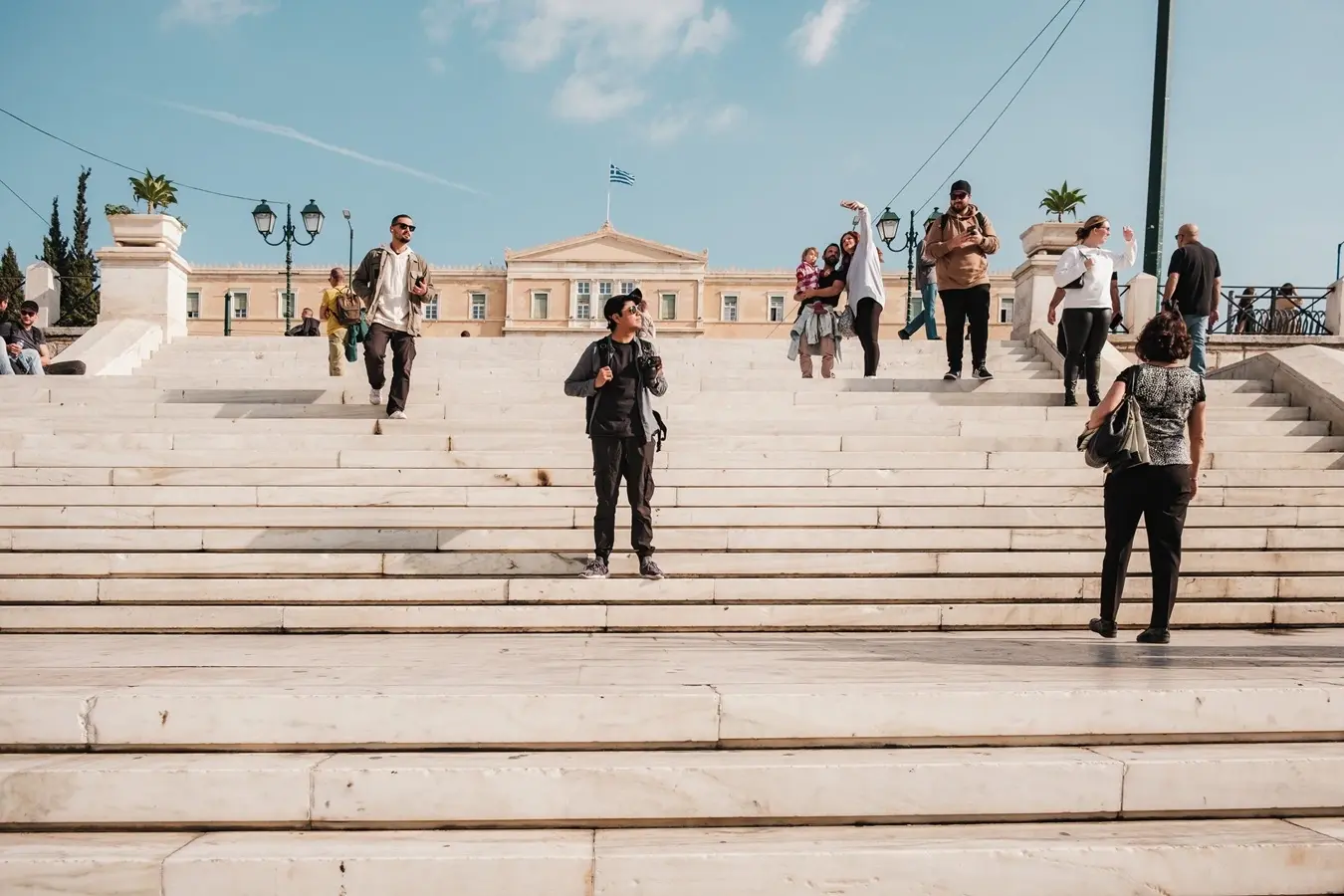
On my last day in Athens, I was walking along the main pedestrian street, the stretch that runs from Syntagma Square towards the foot of the Acropolis. I passed all those international boutiques, standing there as they do in every other shopping district from Lisbon to Istanbul. Amid the crowds and the jumble of voices, I thought I heard a familiar melody. At first, I assumed I was imagining it, the way you sometimes hear the opening notes of a piece of music and your mind supplies the rest. But this time it was no hallucination. The melody was real, painfully real. It struck me from behind, unexpectedly and viciously, like a sucker punch in a barroom brawl.
I realised I was hearing Tamo daleko, drifting from a melancholy accordion. It was as painfully beautiful as only an accordion can be, rather like the scene in the film Pretty Villages, Pretty Flames (Lepa sela lepo gore), when the characters hear Bacila je sve niz rijeku in the tunnel. I looked to my right and saw an old beggar playing the accordion. Beside him lay a piece of cardboard with a message written on it. The only word I could make out was “Serbos”, and that was more than enough.
“Far away, far away, beyond the sea…” I could not get the song out of my head. I wanted to ask him who he was and where he came from, but a lump had formed in my throat. I simply emptied the loose change from my pocket and hurried away. The history I had tried, if only for a little while, to escape had found its way back to me through the crowds, the different languages, the haggling merchants, the shoppers, the immigrants and the policemen. A war that had ended a hundred years ago caught up with me and knocked me flat on that busy promenade, in the one place where I least expected it.
A single shot fired in Sarajevo echoed through Athens that hot afternoon. All I could do was try to ignore the lump in my throat that refused to go away, the tears rising from somewhere deep inside me, and the images of a nation that had lost a third of its men a century earlier, only for the remaining two-thirds to be given their own chance to disappear barely twenty years later.
I turned left, trying to put some distance between myself and the history that follows me wherever I go. Then I realised I had stepped into Karadjordje the Serb Street, which runs parallel to Ermou, the main pedestrian thoroughfare. It felt like a lesson in the impossibility of escaping one's own history, no matter how hard one tries or how far one travels. And yet, somehow, I never seem to learn it.
- Written by: Boris Maksimović / HEDONIST
- Published in HEDONIST Magazine, Issue 02, 2020