

The Knife That Gets Better With Age

![[object Object]](https://api.hedonistmagazine.net/storage/images/2026/08/15c4227b-e884-4358-b9c8-b044ddd2c902.webp)
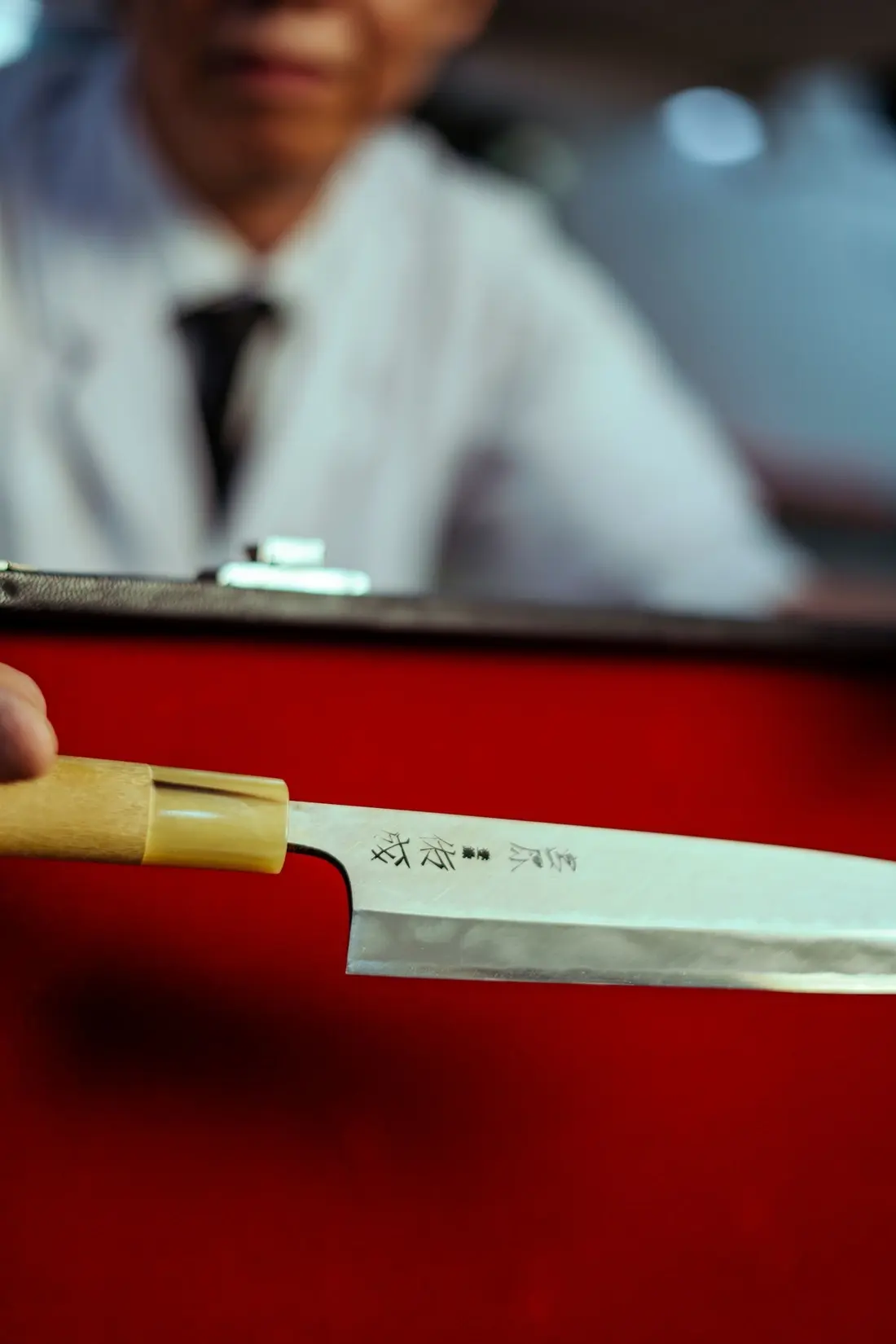
In a workshop in Sakai, just outside Osaka, one man spends his entire working life doing a single thing: sharpening. He doesn't forge, doesn't shape the handle, doesn't select the steel - he only hones the edge, moving it across a progression of increasingly fine whetstones, until it can glide through the flesh of a fish without resistance.
Elsewhere in the same workshop, another man spends his whole career only forging. A third does nothing but handles. This division of labor, in which mastery is handed down through generations within a narrow specialty, is part of why more than 90% of Japan's professional chefs rely on knives made in this one city.
In Japanese cooking, a knife was never simply a tool. It's an extension of the chef's hand, an object that demands attention, respect, and a particular kind of patience. Where most kitchens judge a knife purely by its function, Japan treats it as a meeting point of craft, metallurgy, aesthetics, and a philosophy of work. A well-made Japanese kitchen knife can look like a small piece of sculpture - but its real value only reveals itself the moment it touches a cutting board.
From swords to tobacco leaves
Sakai's history as a center of blacksmithing stretches back more than six hundred years, and its roots, oddly enough, lie in tobacco. When Portuguese traders brought tobacco to Japan in the sixteenth century, Sakai's swordsmiths - already skilled in working steel - began forging specialized knives to cut tobacco leaves. Those blades were sharp enough to catch the attention of the Tokugawa shogunate, which granted Sakai official status as a center of production, a mark of quality that has held ever since.
When social change at the end of the nineteenth century curtailed sword production, the smiths' knowledge didn't disappear. It moved into the kitchen. The same differential hardening technique that once gave swords their legendary edge is applied today to a knife destined for a cutting board.
Steel harder than physics tends to allow
The difference between a Japanese knife and an average Western one isn't just aesthetic - it's measurable. Japanese kitchen knives are typically hardened to 60 to 65 on the Rockwell hardness scale (HRC), while most European knives sit at 54 to 58. That handful of points translates, in practice, into an edge that holds two to three times longer before it needs resharpening.
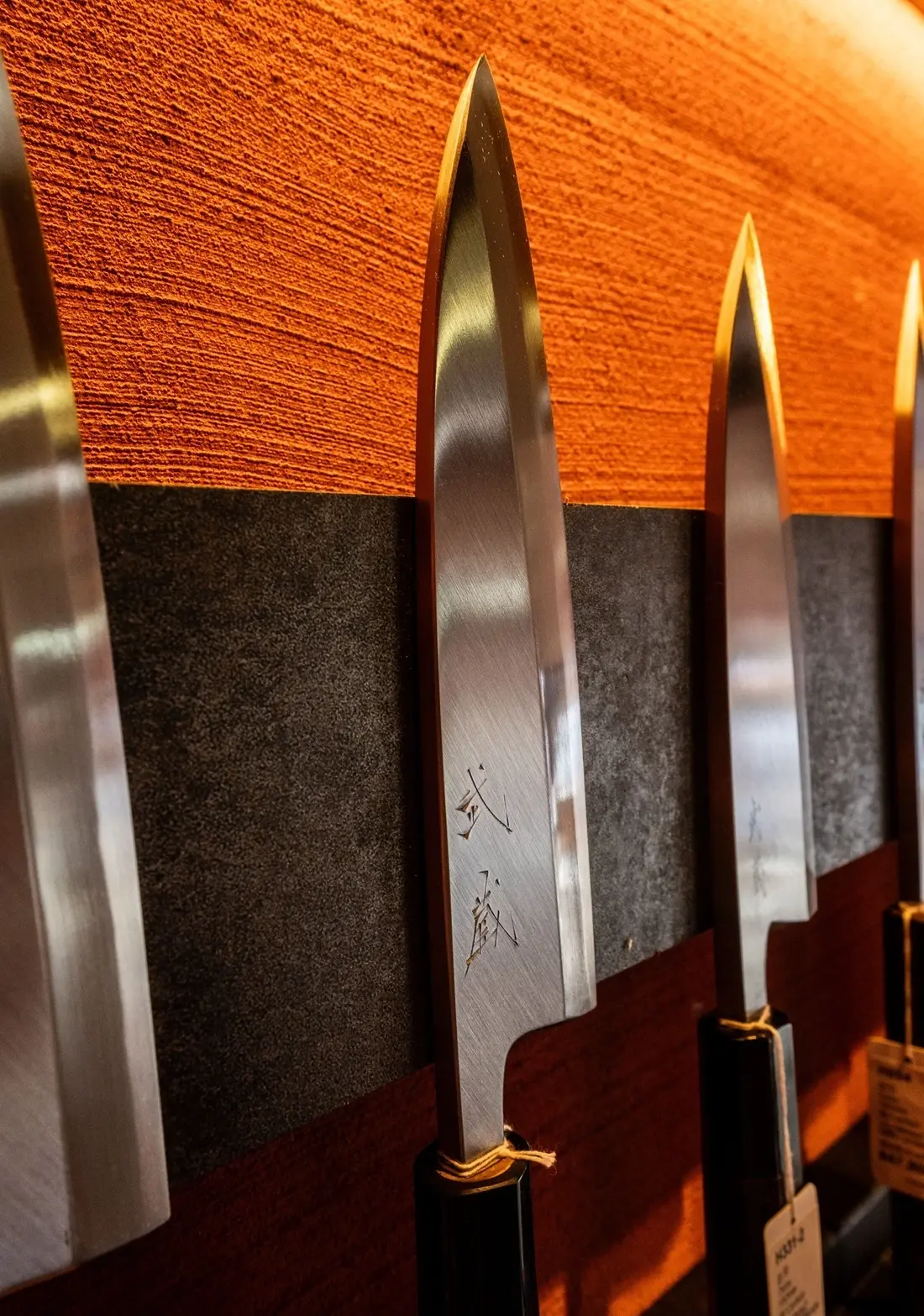
That hardness comes at a cost: the harder the steel, the more brittle it becomes, making the hardening process a balancing act. The blade is heated to a precise temperature, cooled rapidly, then gently reheated to relieve just enough brittleness to prevent cracking - without sacrificing the edge. The exact temperatures and timing remain something each workshop guards as a trade secret.
Patterns that record process, not fashion
What shows up on blades by masters like Itsuo Doi or Kenji Togashi - two of Sakai's recognized smiths - as a wave-like pattern across the steel is the result of fusing layers of metal with different hardness. In the technique known as kasumi, a hard, rapidly cooled core is wrapped in softer iron, so the hard edge is exposed only along the cutting line itself. Modern Damascus blades push that same principle toward the purely visual - some knives carry more than sixty layers of steel, producing a pattern that can resemble a galaxy or the surface of moving water.
The pattern, though, is a byproduct of the process, not its point. On a knife worth its price, blade geometry and steel selection matter far more than how photogenic the pattern turns out to be.
One blade, one purpose
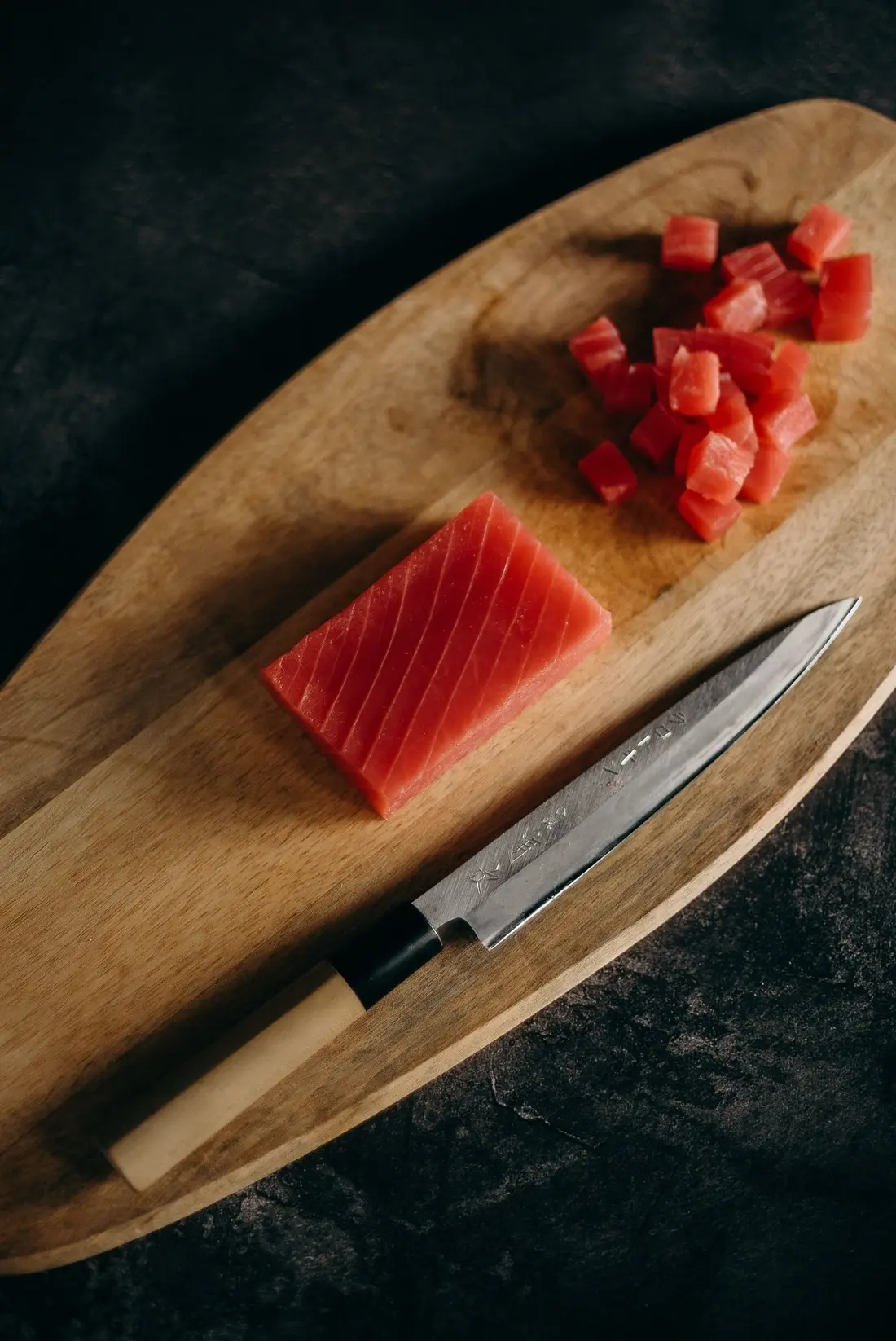
Japanese cooking is unusually attentive to how an ingredient is cut. Sashimi doesn't just require fresh fish - it requires a cut precise enough to preserve its texture. That's given rise to specialized shapes: the yanagiba, long and narrow, built for slicing fish; the deba, sturdier, for breaking down a whole fish; the usuba, made for precision vegetable work. In contemporary kitchens, more versatile shapes have gained ground - the gyuto, Japan's take on the Western chef's knife, and the santoku, probably the most recognized Japanese knife outside Japan today.
Traditional knives often carry a single-bevel edge, which allows for extraordinarily precise cuts but demands a different technique to handle and maintain. In the Japanese approach, the object is never separated from the knowledge required to use it correctly.
A beauty that ages alongside its owner
Japanese aesthetics are often linked to the idea of wabi-sabi - an acceptance of transience and imperfection. A hand-forged blade may carry faint hammer marks. A wooden handle changes color over time. The metal develops a patina. The edge itself is physically worn away with every sharpening.
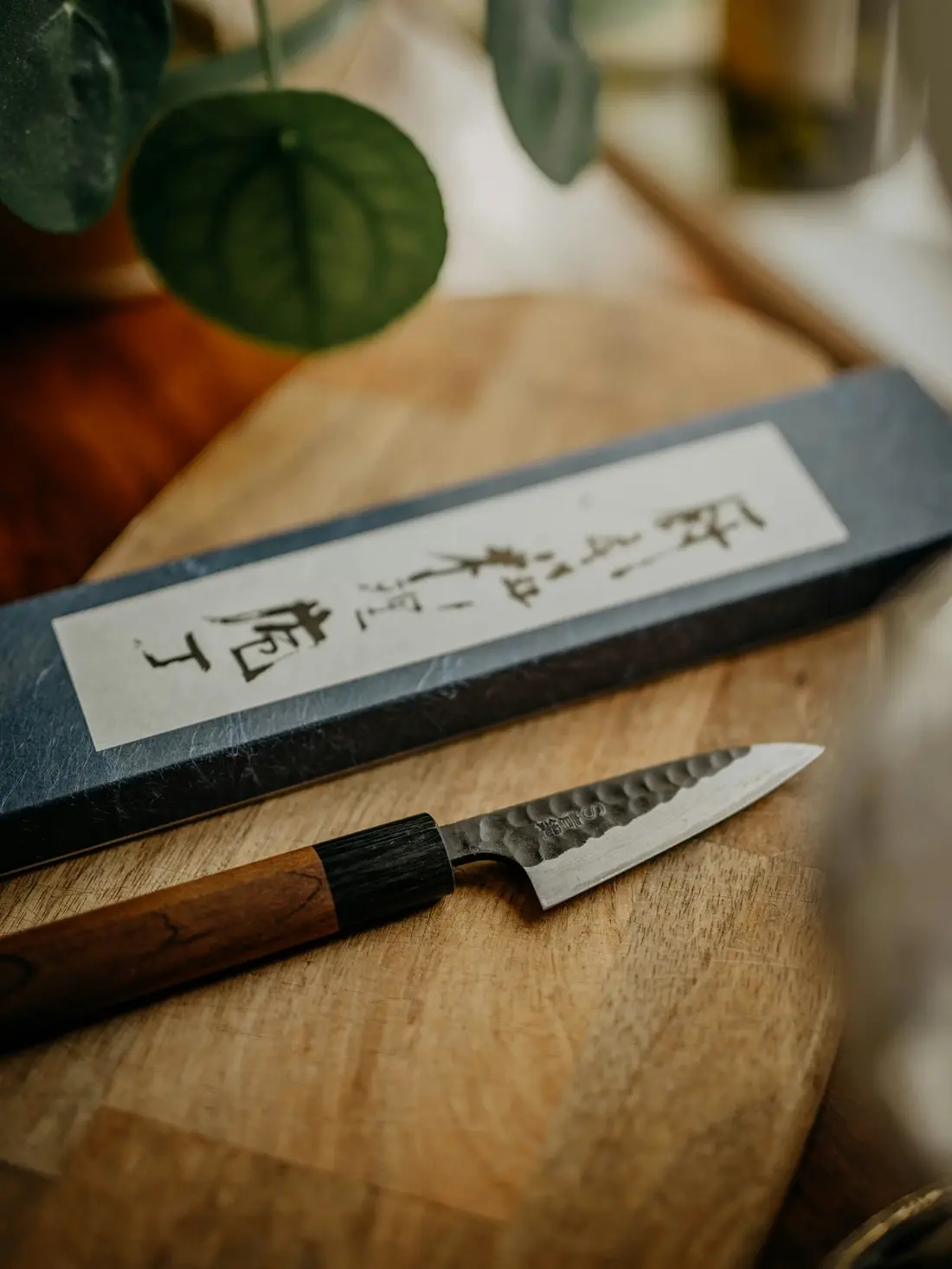
None of that diminishes the knife's value. If anything, a well-used knife becomes more personal over time, its surface holding the memory of years of work and the particular way its owner has held it. It's an entirely different relationship than the one most people have with an industrial tool, simply replaced the moment it stops being perfect.
For many people who cook seriously, the ritual of upkeep - a whetstone, the correct angle, a few minutes of attention each evening as the blade is washed, dried, and put away - is part of the appeal. In a world that measures nearly everything by how much time it saves, this is one of the rare objects that asks, instead, that we slow down.
Why the world's best chefs still seek them out
The fascination with Japanese knives crossed Japan's borders long ago, and demand has only grown in recent years - partly thanks to cooking shows and chef-influencers who treat their tools as part of their identity, not just their equipment. Some Sakai workshops now carry waiting lists that stretch for months for a hand-forged blade.
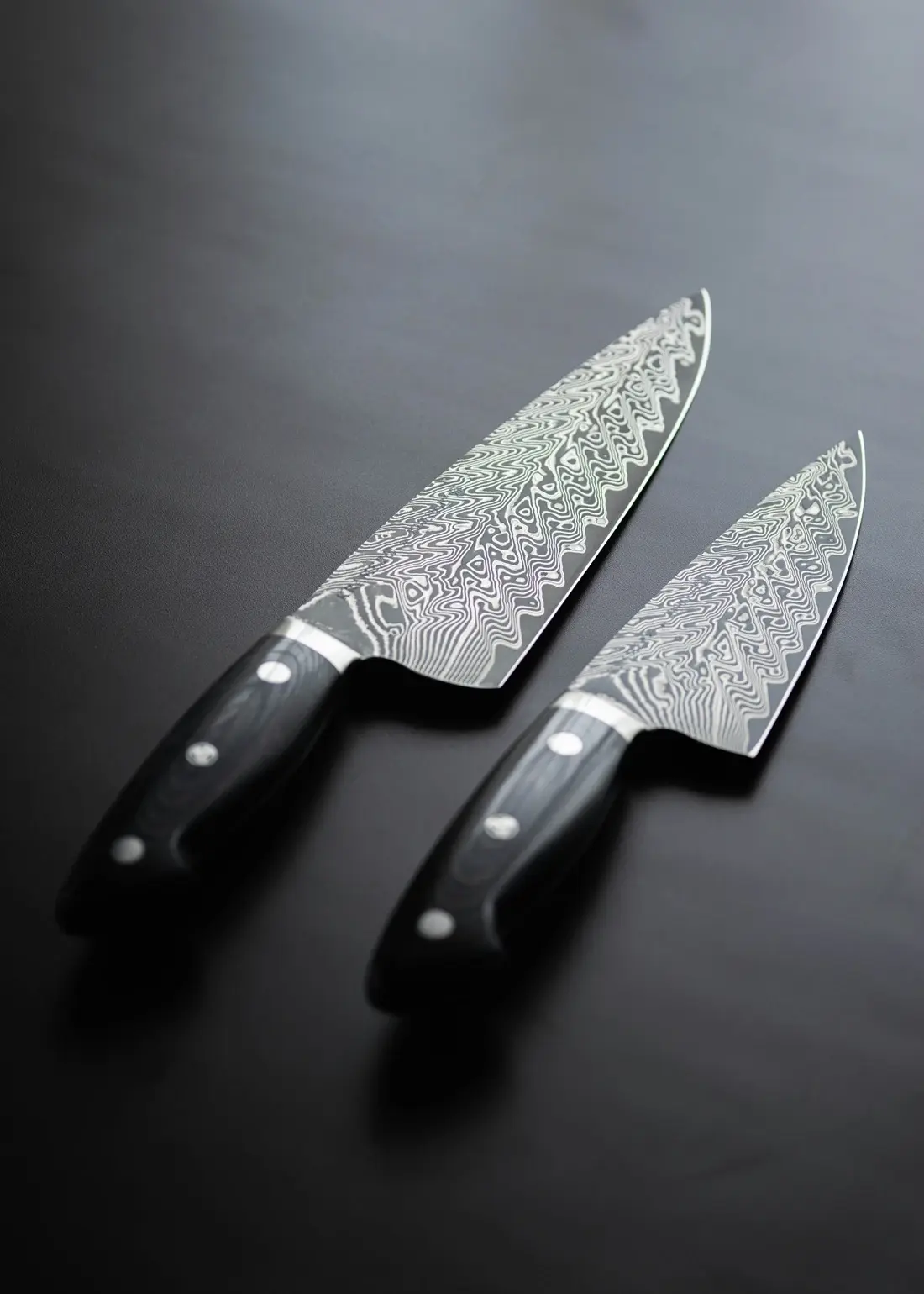
The price gap between two knives in the same category can be substantial, and it isn't arbitrary. What's being paid for isn't just steel - it's knowledge, time, the experience of the smith who forged it, and the ability to turn a piece of metal into an object built to last decades rather than years.
A well-made Japanese knife can therefore be a tool, an inheritance, and a work of art all at once - not because that was ever the intention, but because none of those things conflict with its purpose. And when it's eventually passed on to its next owner, the handle will still carry the trace of the hand that first picked it up.
- Written by Ognjen Tešić / HEDONIST