

The Greatest Hedonists of the Silver Screen: Characters Who Truly Knew How to Enjoy Life

![[object Object]](https://api.hedonistmagazine.net/storage/images/2026/01/98297a3a-7c00-48c8-b1ca-720aead3b545.webp)
Hedonism in cinema is often mistakenly associated with excess and downfall. Yet the most compelling cinematic hedonists are not those who burn out in indulgence, but characters who understand how to enjoy life through food, drink, aesthetics, conversation, and the simple act of being present. Their hedonism is not an escape from reality, but a conscious lifestyle choice.
Film has always been a space where pleasure is portrayed as an art form, and these characters are remembered precisely for that.
James Bond: Hedonism with Restraint and Style
James Bond is not merely a secret agent; he is a global symbol of refined hedonism. His enjoyment is never loud or ostentatious; it lives in a perfectly tailored suit, a carefully chosen drink, luxurious hotels, and rituals that are never skipped, even in moments of danger.
Bond understands that pleasure is part of identity, not a reward. His hedonism is controlled, understated, and always perfectly attuned to the moment.
Jules Winnfield & Vincent Vega: Everyday Hedonism
In the world of Pulp Fiction, hedonism isn’t found in extravagance, but in details. Jules and Vincent take pleasure in conversations about food, music, culture, and the small things that make an ordinary day worth noticing.

Their hedonism is spontaneous and unforced, a pause in time, a memorable meal, a song listened to with intention. It’s a form of enjoyment that requires no special setting, only presence.
Marcello Rubini: Italian Existential Hedonism
Marcello Rubini from Fellini’s La Dolce Vita embodies European, existential hedonism. His world is made of Rome at night, wine, conversations, women, and an ongoing search for meaning through pleasure.
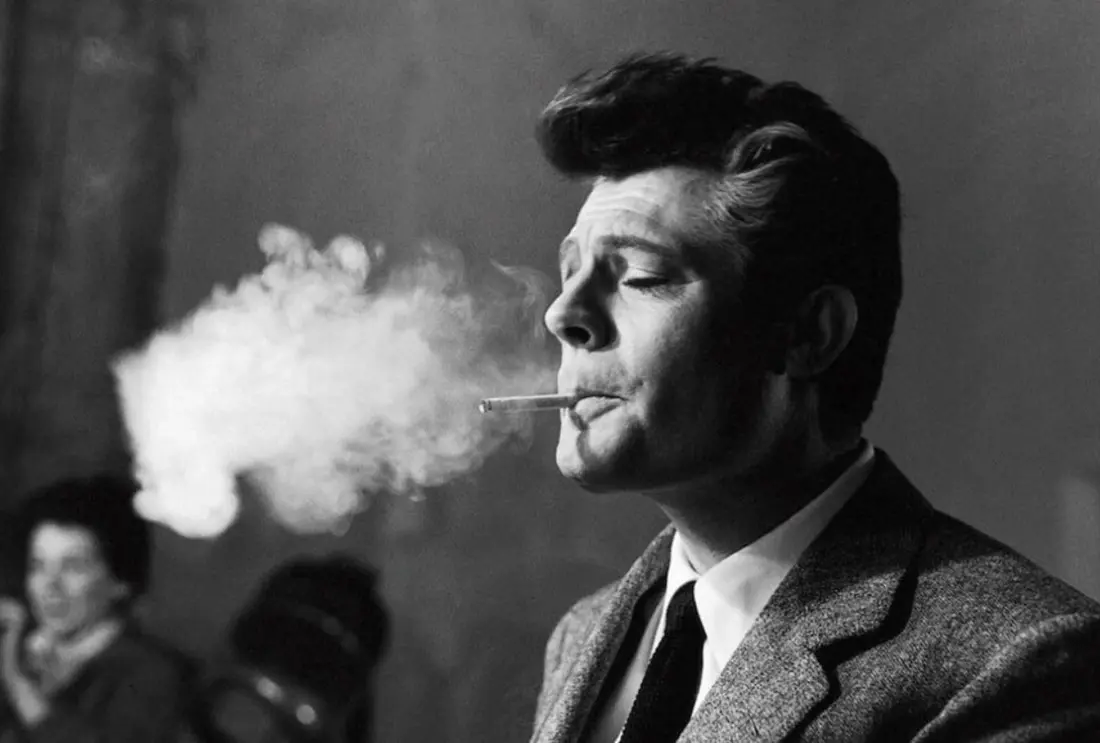
Marcello does not run from emptiness; he observes it, feels it, and lives alongside it. His hedonism carries no illusion of permanence, only an acceptance of transience as an essential part of beauty.
Tom Ripley: The Hedonism of Aesthetics and Silence
Tom Ripley in The Talented Mr. Ripley enjoys life quietly. His hedonism is not rooted in power or wealth, but in architecture, music, Mediterranean light, and carefully crafted atmospheres.
Ripley seeks a life that looks beautiful and feels harmonious. He is a hedonist who understands that pleasure often lies in the details others fail to notice.
“Big Night”: Hedonism Through Gastronomy
In Big Night, hedonism is not tied to a single character, but to ritual. Food becomes an act of love, culture, and identity. Cooking, sharing meals, and honoring tradition are presented as pure forms of pleasure.
Here, hedonism is neither fast nor superficial; it is slow, deliberate, and deeply emotional.
Vicky, Cristina & Juan Antonio: The Hedonism of Openness
The characters in Vicky Cristina Barcelona indulge without the need to fully explain or rationalize their choices. Their hedonism lives in art, wine, emotion, and a willingness to experience life without excessive calculation.

In this world, pleasure is not escape, but exploration of feelings, relationships, and personal boundaries.
Hedonism as a Cinematic Philosophy
These film characters prove that hedonism does not have to be destructive. It can be quiet, cultured, thoughtful, and aesthetic. True pleasure lies not in quantity, but in quality, in the ability to fully feel and remember a moment.
In an age of constant urgency, cinematic hedonists remind us that enjoyment is a skill. And sometimes, an act of rebellion.