

A Dot on the Map: What Constant Tracking Does to Children - and to Us

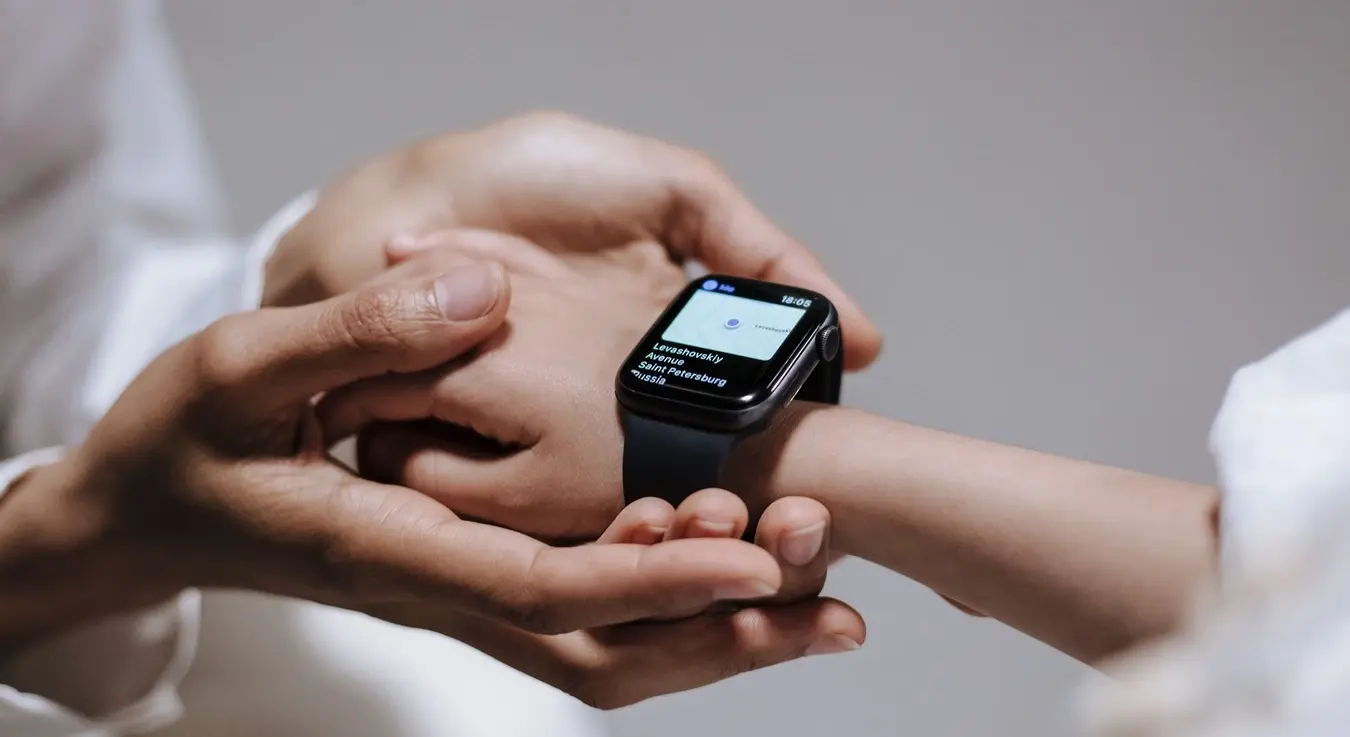
Parents monitor babies with smart socks, keep tabs on teenagers through apps, and their need to know where their children are does not end even when they grow up and leave for university. The Atlantic asks what all this surveillance has actually achieved. The answer is more uncomfortable than we might like to admit.
While researching the subject, a journalist writing for The Atlantic received a notification from her daughter’s nursery: her one-year-old had eaten a biscuit-nothing out of the ordinary. Smart bassinets record sleep minute by minute, smart baby socks costing around $300 send heart-rate and oxygen-level readings to a parent’s phone, nursery and school apps report minor playground disputes and scraped knees, and grades appear as soon as teachers enter them.
How Far Does It Go?
As children grow older, the monitoring rarely stops-the technology changes. For younger children, there is the AirTag tucked into a schoolbag or shoe – one footwear manufacturer has already designed trainers with a dedicated compartment for the device. Older children are tracked through GPS-enabled smartwatches and smartphones.
According to a study cited by the magazine, three-quarters of parents with teenagers aged 14 to 17 have access to their children’s location data. Psychologist Michaeline Jensen found in 2021 that their parents were tracking one-third of her students. Her unpublished research suggests that the figure has now risen to more than half. One of her doctoral students, aged 29, had only just defended her dissertation, yet her mother was still checking her location and calling to find out where she was.
The scale of the phenomenon is reflected in the numbers behind Life360, a location-sharing app with 102 million monthly active users – four times its 2020 figure. Last year, the company generated nearly half a billion dollars in revenue. Its features include a 30-day location history, driving-speed monitoring, and notifications when a child arrives at their university residence.
Why Is It So Easy?
The barriers have all but disappeared. In 2015, Apple began shipping iPhones with a built-in location-sharing app, which gradually became a default feature for parents. One mother of four says that once the technology became available, not using it almost seemed irresponsible.
Maureen Paschal, a college admissions consultant, recalls joining a group chat with mothers whose daughters lived on the same university floor. One morning, a mother posted that her daughter was still asleep, despite having a maths exam in ten minutes. Could one of the other girls go and knock on her door? Another mother replied that her daughter was already on her way.
Paschal thought it was too much. Does the scene sound familiar? A single Viber or WhatsApp group is all it takes for the same situation to unfold much closer to home.
The World Has Not Become More Dangerous. We Have Become More Afraid.
Psychologist William Pelham of the University of California, San Diego, found that around one-third of parents use tracking primarily for logistical reasons – such as knowing which school entrance their child is waiting at – while 40 per cent cite safety concerns.
Yet the statistics tell a story that runs counter to those fears. Teenagers today are less likely to smoke, drink, use hard drugs or become pregnant, with these figures falling by more than half. They are also less likely to have jobs, go on dates or drive – activities that, in their own way, involve everyday risks.
At the same time, rates of depression and anxiety are rising. Pelham is careful to stress that this is an observation, not proof of a causal relationship. Still, it is difficult to imagine that a declining tolerance for uncertainty has nothing to do with the picture.
A British study found that between 1971 and 2010, the proportion of parents allowing seven-year-olds to walk home from school alone fell from 80 per cent to just six per cent. An anxious parent is also one of the strongest risk factors for an anxious child. In 2024, the US Surgeon General issued an advisory on parental mental health, reporting that 18 per cent of both teenagers and parents experienced anxiety.
Getting Lost at Seven
Russell Shaw, a former school principal in Washington, recalls getting lost near a playground as a seven-year-old in the 1970s. He wandered off and was eventually driven home by the police. At the time, the experience was frightening. Looking back, however, he remembers something else: when a similar situation arose later, he already knew he could find his way out of trouble.
He wonders what it means to grow up believing that someone will always be there to rescue you.
Louise Barkhuus, a researcher who has studied tracking technology since 2003, admits that she struggles with the same dilemma. She tracked her daughter on the underground and, whenever the girl sent a message saying she was lost, Barkhuus found herself unable to hang up. She agrees that we monitor children too closely, but is not sure how to break the habit.
Checking Becomes a Trap
Psychologist Camilo Ortiz has a succinct explanation for the urge to check again and again: “It makes you feel better immediately, and then you need it again.”
He knows the pattern firsthand. On one occasion, he saw that his daughter appeared to be in the middle of a forest. Unable to reach her by phone, he raced home in a panic. The app had got it wrong. His daughter was actually on the underground.
Lenore Skenazy, who brought the idea of free-range parenting into the spotlight in 2008, points out that constant tracking deprives parents of the opportunity to practise letting go – and of discovering, through experience, that their children can leave home and return safely.
Life360 offers basic tracking free of charge, while its additional features cost between $9.99 and $24.99 a month. One of its advertisements features a mother singing about all the ways her daughter could die. According to co-founder Chris Hulls, the campaign pokes fun at parental anxiety. Skenazy sees it differently: in her view, it makes that anxiety seem normal.
The company says the average user opens the app five times a day.
Learning to Let Go
Ortiz has developed an approach he calls “independence therapy”, in which children are encouraged to plan and complete everyday tasks on their own, without parental supervision. These might include taking a bus or going to a shop.
One nine-year-old girl who was afraid to sleep in her own bed chose to take a city bus by herself. She missed her stop, found an adult who could help, and eventually made her way back. That night, for the first time, she fell asleep in her own bed.
Her experience was one of four cases published in 2024. Ortiz says parents often respond to the idea with an immediate question: “But can I track them?” The ultimate goal, of course, is to reach a point where there is nothing left to track.
Paschal found a compromise of her own: her husband installed the tracking app, meaning she could ask for her daughters’ location in an emergency without being able to check it constantly.
Darleen Smith allowed her 11-year-old daughter to visit shops, the pharmacy and the cinema on her own, as well as set up lemonade stands that brought in more than $1,000. Meanwhile, Courtney Perrone noticed that when her daughters began doing the grocery shopping independently, other families in the neighbourhood gradually started doing the same.
Social norms, The Atlantic concludes, are ultimately human creations. We made them, and we can change them.
Related articles

The Lost Key: Why We Can’t Remember the First Years of Life
New research shows that a baby’s brain does make memories. The question is why we can’t find them afterward.

A Shortcut to Childhood: Why Smell Takes Us Back More Powerfully Than an Image
From Proust’s madeleine to brain scans: smell doesn’t necessarily bring memories back faster than a photograph does, but it brings them back differently. Here is what science actually knows about it.