

The Road That Once Meant Fear, Today Means Freedom

![[object Object]](https://api.hedonistmagazine.net/storage/images/2026/02/66e44613-6283-45a6-905a-30119c394de4.webp)
There are places in the world that once symbolized danger, yet today represent one of the most extraordinary experiences a traveler can have. High in the Bolivian Andes lies a road that for decades carried the nickname “The Death Road.” Today, however, it attracts people from across the globe - not because of fear, but because of the powerful sense of being alive that emerges there more strongly than almost anywhere else.
Adventure Begins Above the Clouds
At an altitude of more than 4,500 meters, the cold mountain air cuts across your face while the landscape feels almost unreal. Snow-streaked peaks of the Andes stand silent and motionless, as if observing everyone who chooses to descend along the winding road leading toward the jungle far below.
Once, trucks and buses traveled here, often balancing on the edge of steep cliffs without protective barriers. Today, cyclists follow the same path - not to prove bravery, but to experience freedom.
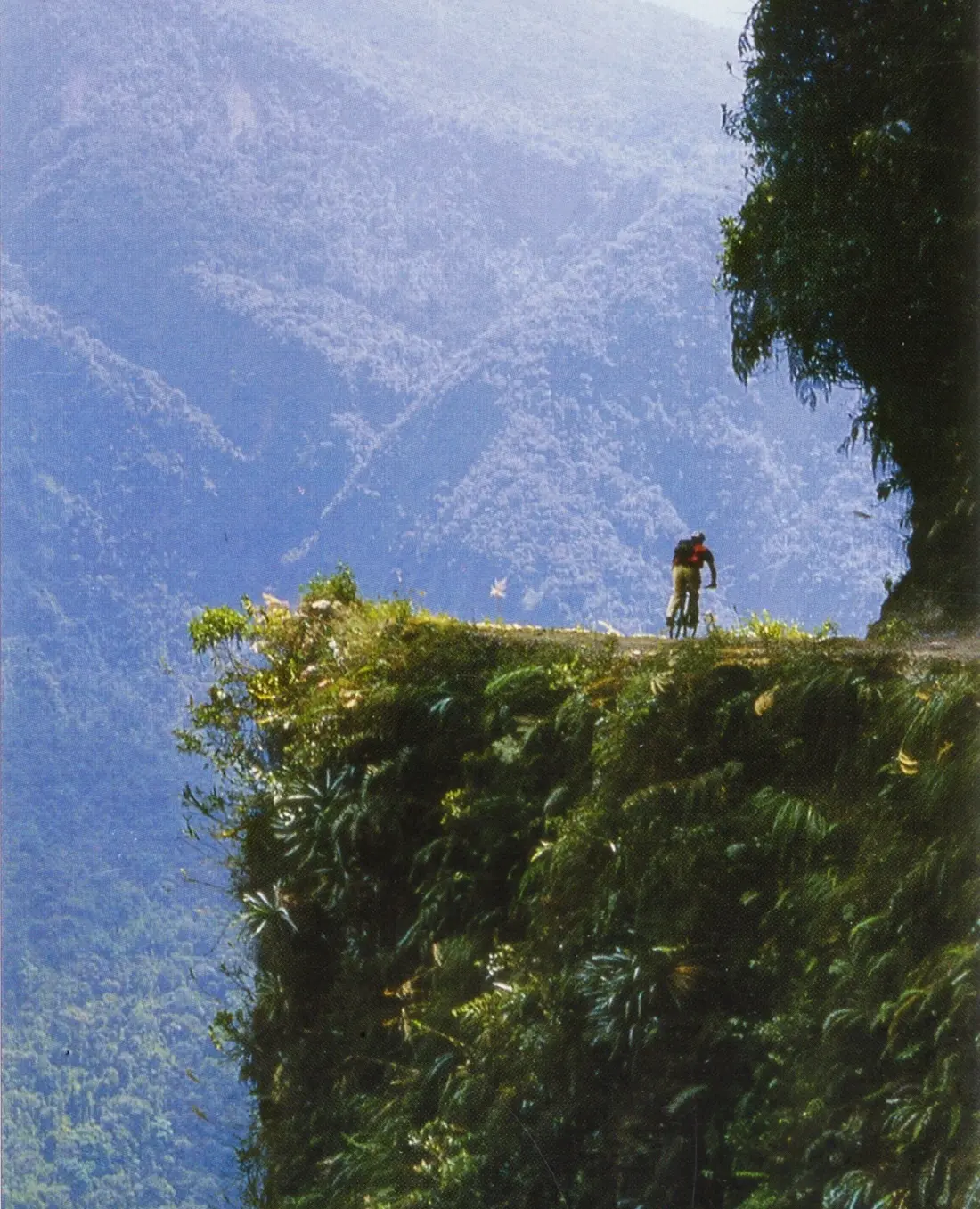
Descending Through Changing Worlds
The first kilometers unfold in cold air and dense mist. The road is narrow, and the silence is nearly complete. The sound of tires rolling over asphalt becomes the only rhythm that exists.
As you descend, the world transforms before your eyes.
Sometimes the greatest adventure is not found in speed or risk, but in the moment we dare to take a path that brings us back to complete presence.
Snow disappears. The air grows warmer. Mist turns into the humidity of a tropical forest. Green cliffs rise above the road while waterfalls spill directly over the rocks, creating the feeling that you are moving through a film rather than reality.
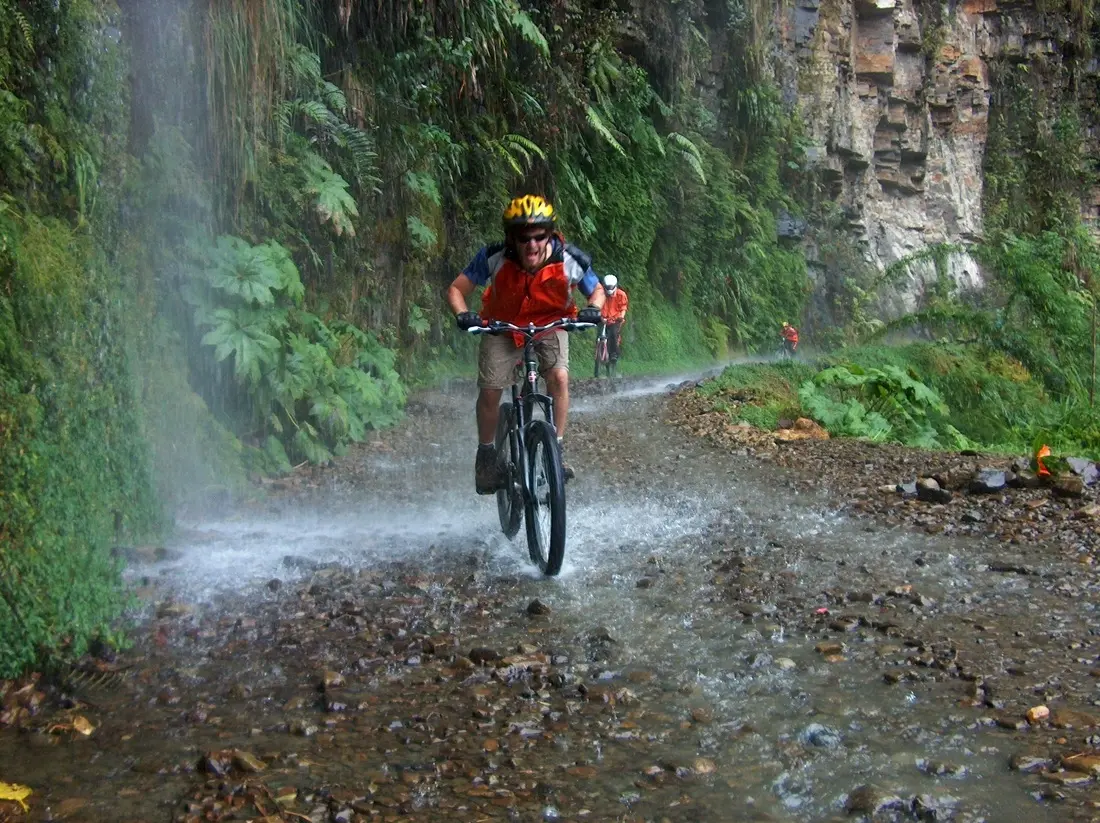
This transformation is not only geographical - it is internal. With every kilometer, fragments of everyday thoughts slowly fade away.
Adrenaline Without Speed
The paradox of this adventure is that the strongest rush of adrenaline often comes when you slow down. Looking into the depths below reminds you of how vast nature truly is, yet at the same time, it brings an unexpected sense of calm.
This is not an extreme sport. Most people who choose this ride are neither professionals nor thrill-seekers. What draws them here is the experience of controlled uncertainty - a rare moment of complete presence.
There are no phones, no distractions, no accelerated rhythm of daily life. There is only the road.
Trust as Part of the Journey
On the Death Road, you quickly realize that adventure is not about fighting fear, but about your relationship with it. Trust in the guide, the equipment, and in your own ability to remain calm becomes more important than speed or courage.
That is why many travelers say this ride is not a test of endurance, but an experience of focus.
Every turn demands attention. Every view rewards you with scenes that no photograph can fully capture.
When Adventure Becomes Silence
At the end of the road, somewhere between mountains and jungle, the adrenaline slowly fades. In its place comes a quiet sense of satisfaction - not loud or dramatic, but deeply personal.
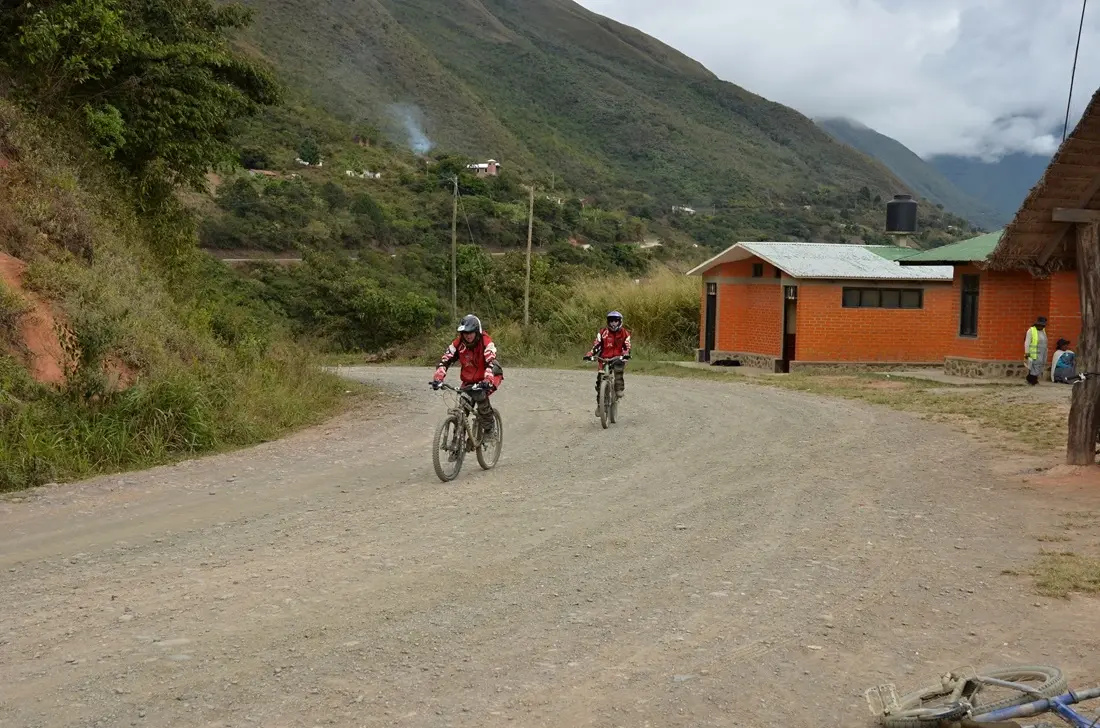
It is the calm awareness that you have stepped outside routine. That for a few hours, you lived more slowly, more consciously, and more authentically.
Once considered the most dangerous road in the world, today it reminds us of a simple truth: adventure does not need to be extreme to be profound. Sometimes it only needs to take us beyond the familiar and return us to the feeling of being fully awake.
- Written by: Ognjen Tešić / HEDONIST
- Photo credits:
- All photographs used in this article are sourced from Wikimedia Commons and published under Creative Commons licenses. Full author credits, licenses, and original files are available at the following links:
- Photograph 1
- Photograph 2
- Photograph 3
- Photograph 4