

Cave Diving: A Journey Into a World the Sun Never Enters
![[object Object]](https://api.hedonistmagazine.net/storage/images/2026/09/4b967ed8-a9c8-48b5-9f14-d4e7993e48de.webp)
Most extreme sports leave some margin for error. A climber can turn back a hundred metres from the summit. A big-wave surfer who wipes out can be pulled from the water by a jet-ski waiting nearby. Cave diving offers no such second chances. Go deep enough into the wrong passage, and the only thing standing between a diver and never being found again is a single thin line he laid down himself, and his own discipline in following it back.
A diver glides through a narrow rock passage, so tight his shoulders brush stone on both sides, while behind him, in darkness his flashlight barely pierces, a thin nylon line unspools. That line - not a compass, not memory, not a sense of direction - is the only thing that guarantees he'll ever make it back to the surface.
If the line breaks, if sediment rises off the bottom and turns the water into a milky, opaque soup, the diver is left trapped in a maze without a single ray of light to point toward the exit - because in true cave darkness, unlike diving in the open sea, there is no option to swim straight up simply.
That's the difference that sets cave diving apart from almost every other extreme sport on the planet: there is no immediate way out. Above your head isn't water leading to air, but hundreds of metres of solid rock.
A Sport Born From Its Own Tragedies
Modern cave diving as we know it today, with its strict, non-negotiable protocols, was built quite literally on the graves of people who broke those very rules. Sheck Exley, the American diver considered the father of the discipline, spent his career setting the safety standards every certified cave diver in the world uses today - the rule of thirds, under which exactly one third of the air supply is used going in, one third coming out, and one third stays in reserve for the unexpected, and the rule of the continuous line, which dictates that a diver must never, for even a moment, lose physical contact with the line leading back to the exit.
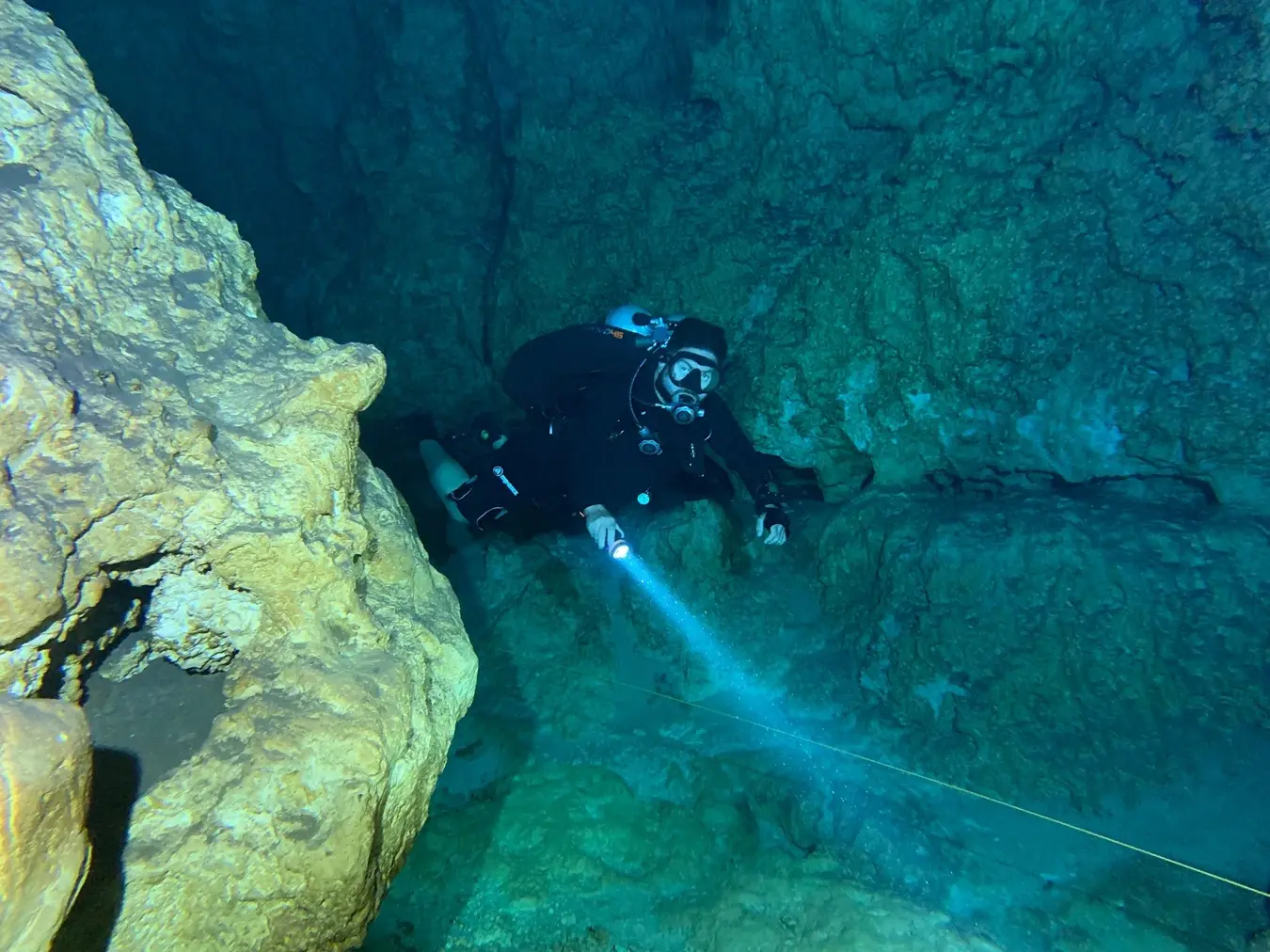
The irony is brutal: Exley himself died in 1994 attempting to set a new world depth record, roughly two hundred and seventy metres below the surface of a Mexican cenote, in the very region whose rules of the game his own research had helped define. A year earlier, Ann Kristovich had set the women's world depth record of around a hundred and sixty-five metres in the same cave system.
The statistics speak plainly about how unforgiving this discipline is toward anyone who skips the training. Independent studies of American cave diving accidents show hundreds of deaths over the past several decades, with Florida accounting for more than half of all recorded deaths in the US - and in the discipline's earlier decades, before formal training became the standard, the overwhelming majority of victims were divers with no cave-diving certification, often experienced open-water divers who wrongly assumed that experience automatically carried over underground. Eagle's Nest, a sinkhole system in central Florida that divers call the "Mount Everest of cave diving," has claimed at least ten lives since 1981, despite a sign at its entrance bearing an image of the Grim Reaper and a stark warning: "Stop. Prevent your death."
Mexico's Cenotes - Sacred Maya Gateways Into a Labyrinth
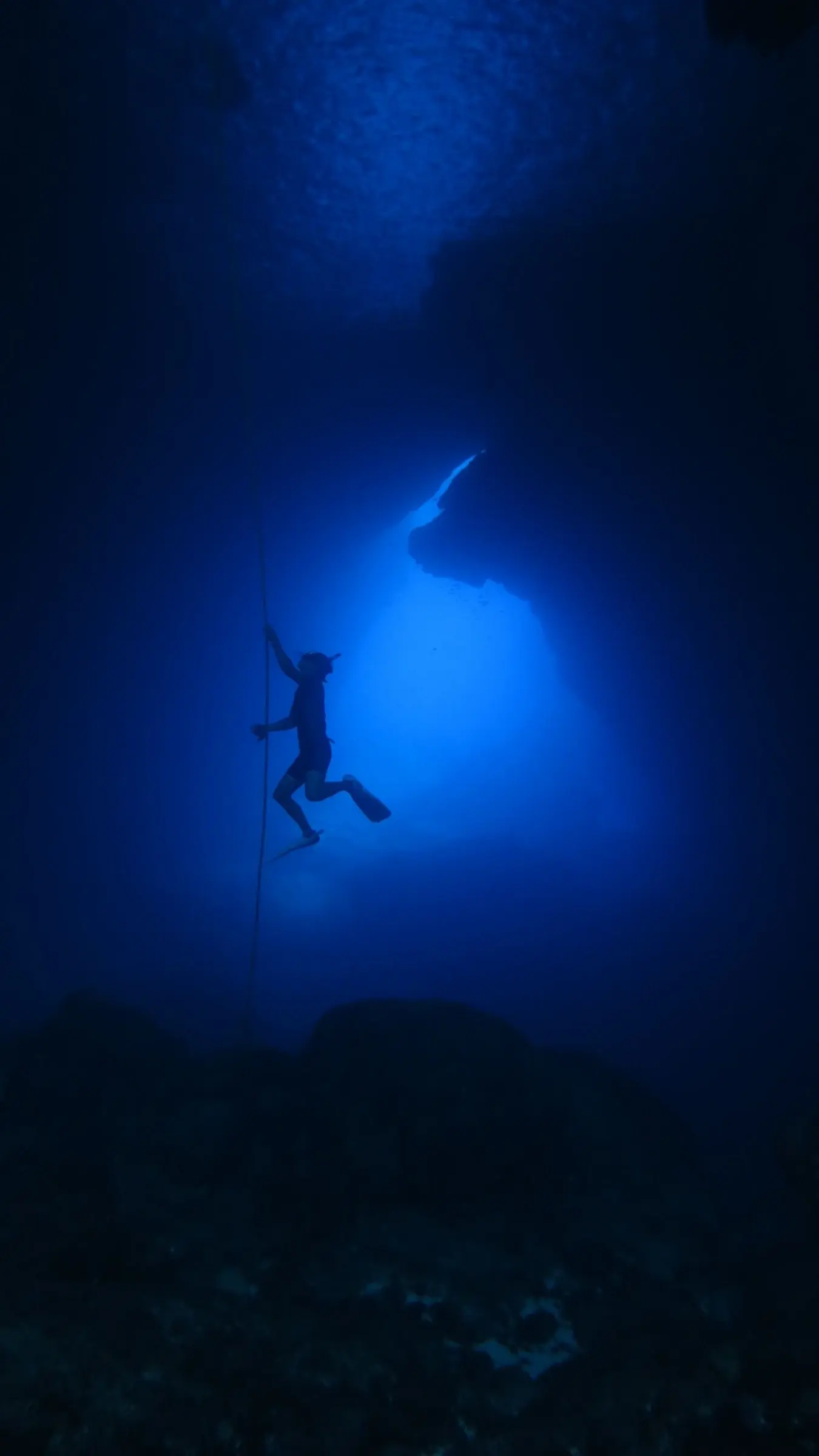
If Florida represents the dangerous, technically demanding side of this sport, Mexico's Yucatán Peninsula represents its almost sacred, transcendent side. Beneath the flat, seemingly ordinary surface of the jungle lie more than seven thousand cenotes - natural sinkholes formed when limestone bedrock, built from an ancient coral reef, collapsed its roof and exposed the underground rivers beneath. To the ancient Maya, cenotes weren't just a source of drinking water. They were sacred gateways to the underworld, Xibalba, a place where offerings were made and objects left for the gods.
The cave system known as Sac Actun, whose name in the Maya language simply means "white cave," is today the second-longest known underwater cave system in the world, just behind the nearby Ox Bel Ha system - more than three hundred and seventy-eight kilometres of flooded passages have been explored so far, accessible through two hundred and twenty-eight separate entrances scattered across the jungle. In one of its deeper chambers, called Hoyo Negro (Black Hole), scientists found the skeleton of a girl between twelve and thirteen thousand years old - one of the oldest human remains ever found on the American continent, preserved precisely because the cave had been sealed off from the outside world for millennia.
The Moment Two Worlds of Water Meet
One of the strangest sights cave divers describe isn't the darkness or the tightness of the passages, but a phenomenon known as a halocline - a layer where lighter, clearer fresh river water meets denser salt water pushing in from the sea below. Passing through that layer looks like someone suddenly smudged a camera lens: vision blurs completely for a few seconds, boundaries dissolve, and the diver temporarily loses all sense of orientation before surfacing on the other side, into crystal-clear salt water below. Experienced divers describe passing through it as swimming through an optical illusion so convincing the brain refuses to believe what the eyes are seeing.
The Woman Who Has Explored More Caves Than Anyone Before Her
The name that comes up most often in connection with exploring these systems is Jill Heinerth, a Canadian diver, photographer, and author of the book Into the Planet, who has spent decades leading expeditions through Mexico's cenotes in partnership with Mexico's National Institute of Anthropology and History. Her team, alongside uncovering the fossil remains of extinct animal species and documenting entirely new cave systems, has contributed something that goes beyond mere adventure - a scientific understanding of what an underground world left untouched for thousands of years actually looks like.
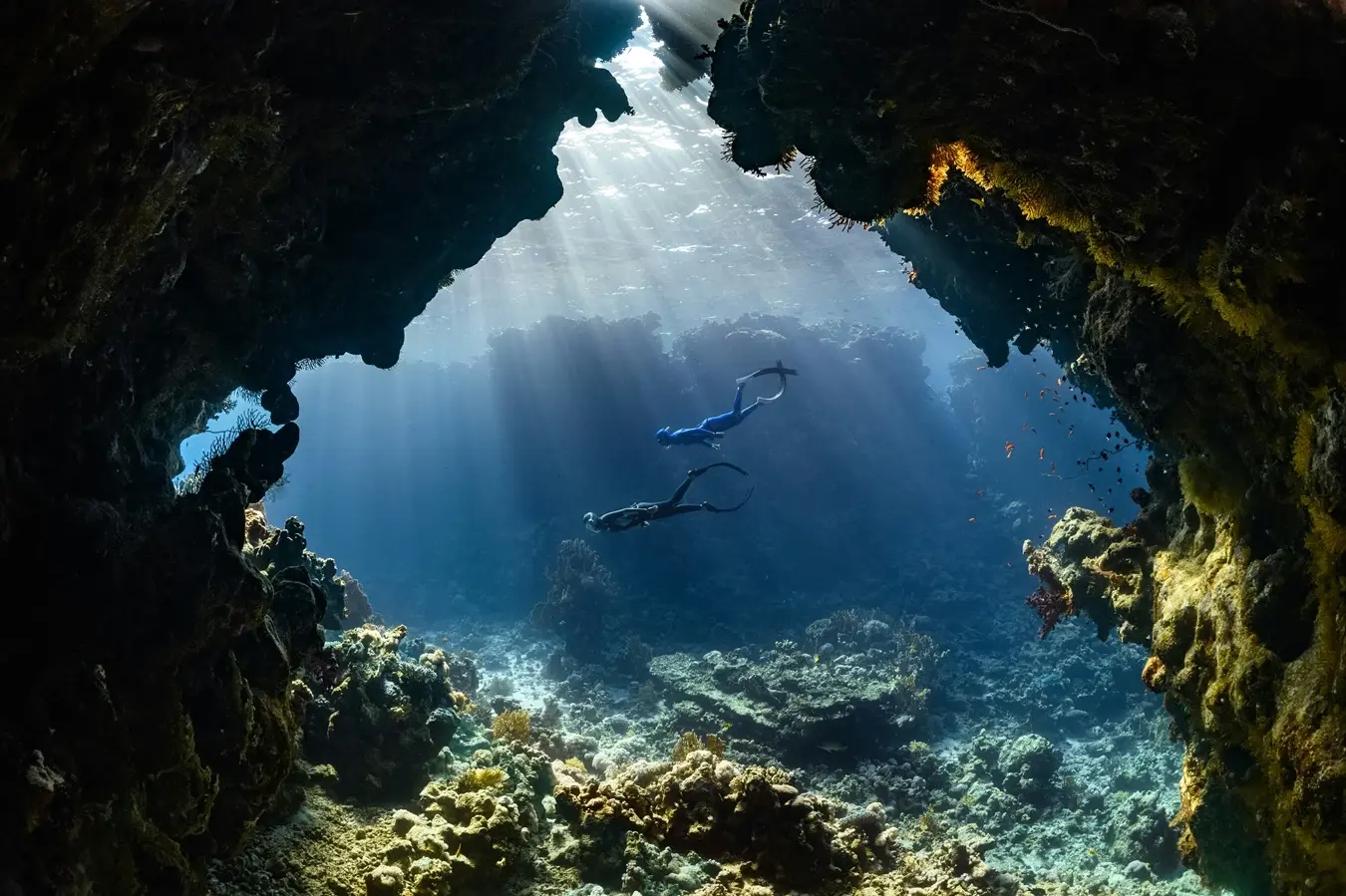
Heinerth often describes cave diving as the closest experience to space exploration available on Earth itself: total darkness, total silence, and territory no human eye has ever been in before. Unlike climbing a mountain that's already been summited or diving a reef that's already been photographed, many of the passages divers swim through today have never before been lit by a single lamp or seen by a single eye.
Why People Descend at All to Where the Sun Doesn't Reach
There's something deeply contradictory about this sport: a discipline born out of a string of deaths now attracts more and more people precisely because of that reputation for danger, yet those who respect it - who sit through hundreds of hours of training before ever swimming through their first narrow passage - have a surprisingly good safety record. The risk doesn't come from the cave itself, which was there millions of years before the first diver and will be there long after the last one. It comes exclusively from human arrogance, from the assumption that the rules can be skipped.
Perhaps it's exactly that sharp line between discipline and disaster that makes cave diving so fascinating to those watching from the safe distance of the shore. It's one of the rare places left on the planet where a person can still be first - the first to see that chamber, the first whose light has ever touched that rock - provided he respects the one line that promises him a way back.
Related articles
A World Beneath the World: The Most Unusual Caves on the Planet
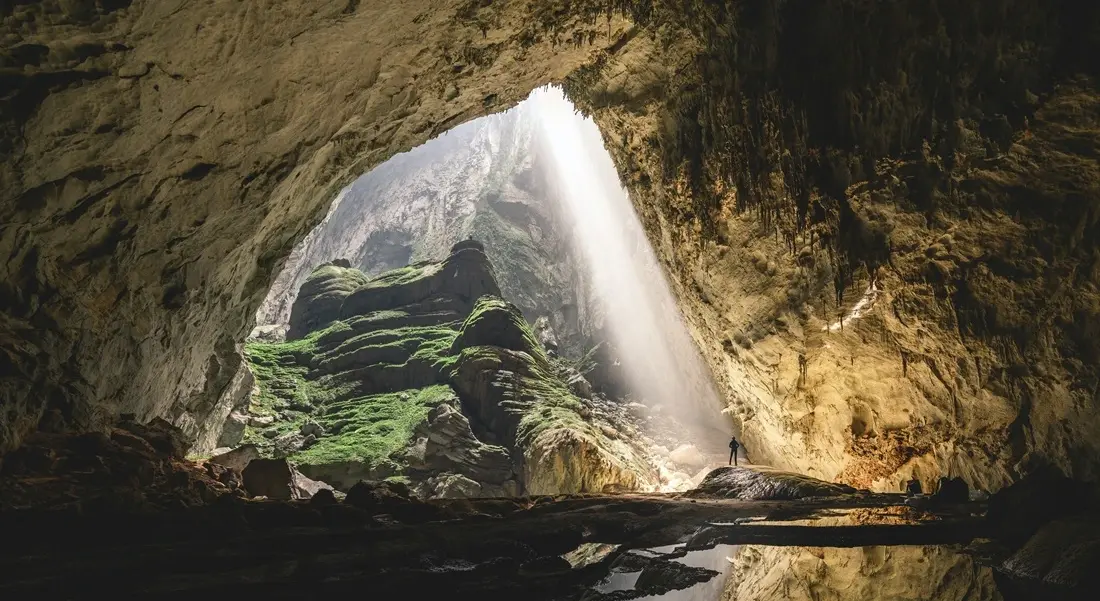
Beneath the surface of the Earth lies a world we rarely think about. While cities, rivers, and forests stretch above us, deep underground, there are kilometers of passages, subterranean rivers, and vast chambers that have been forming for thousands, even millions, of years. Caves are among the last places on the planet where nature still operates almost entirely beyond human control.
Diving with rays in the Azores: An adventure you never forget
In the middle of the Atlantic Ocean, where Europe ends, and the ocean takes over, the Azores offer one of the most distinctive diving experiences in the world — an encounter with rays in their natural habitat. No aquariums, no glass, no choreography. Just the silence of the depths and the slow, almost hypnotic dance of these elegant marine creatures.