
Socotra: An Island That Doesn’t Belong to This World
![[object Object]](https://api.hedonistmagazine.net/storage/images/2026/02/c51a89b5-b3c5-4c95-94b8-ee52f2346c96.webp)
There are places on this planet that do not ask to be seen, but to be understood. Socotra is one of them. An island that makes no effort to please, offers no postcards, and no ready-made stories. It stands alone in the Indian Ocean, like a geographical error - or perhaps a reminder that Earth still keeps a few secrets.
At first glance, Socotra appears to be a landscape from a dream. Or from an old science-fiction film made before perfection became a standard. Trees of improbable shapes, stone deserts colliding with turquoise waters, a silence that lasts longer than what feels comfortable. Nature here is not gentle. It is honest.
The island’s most recognizable symbol is the dragon blood tree. Its canopy spreads like an inverted umbrella, as if shielding itself from the sky. The red resin it produces earned it a name that belongs more to myth than to botany. But Socotra doesn’t care much for the line between myth and reality. Here, that boundary dissolves on its own.
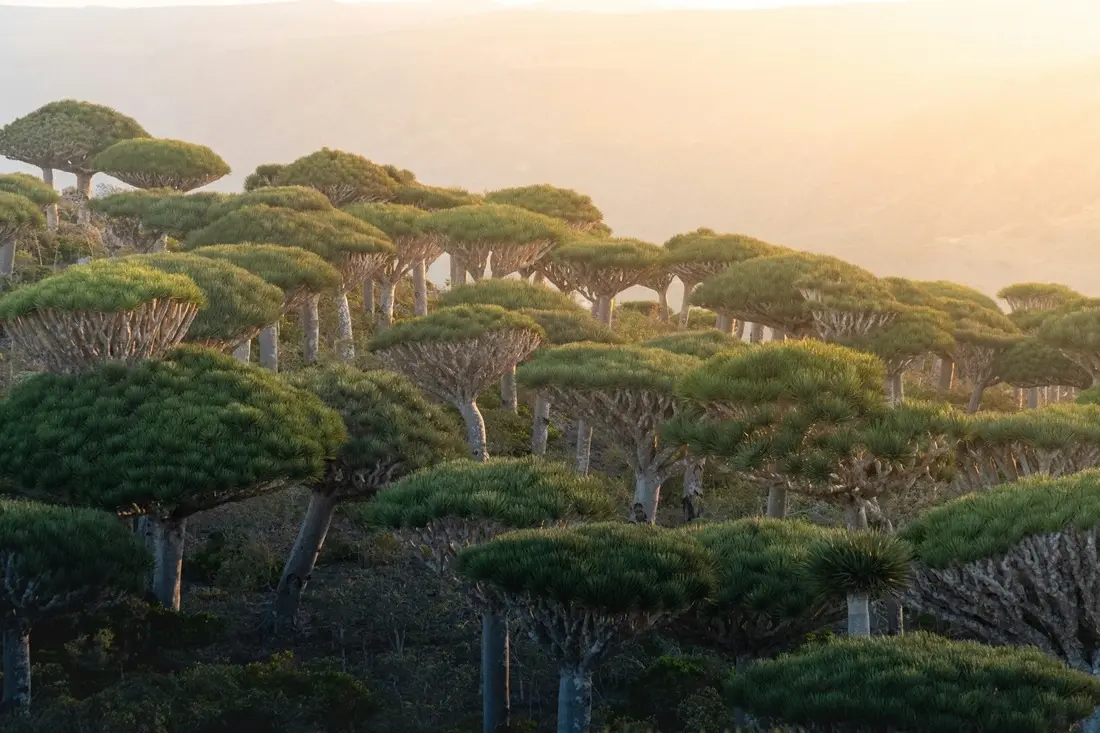
Isolation on Socotra is not a flaw - it is the essence. For thousands of years, the island remained cut off from the rest of the world, and precisely because of that, it became what it is today. Nearly a third of its plant species exist nowhere else on Earth. As if nature chose this piece of land to experiment without an audience.
Traveling to Socotra is not an escape, but a confrontation. With slow time. With one’s own thoughts. With the simple fact that humans are not the center of attention here. There are no luxury hotels, no urban noise, no feeling of missing out. Instead, there is wind carrying salt, sun that makes no compromises, and nights where the stars feel uncomfortably close.
The people of Socotra have learned to live with the island, not against it. Their rhythm is quiet, almost invisible. There is no need for explanations. Everything is already there - in a look, in a gesture, in the way they sit and wait for the day to decide when it will end.
Socotra is not a destination for those who want to “see as much as possible.” It is a place for those willing to see less, but more deeply. You don’t collect impressions here - you collect moments. You don’t create content - you create space. Space to breathe more slowly, to let thoughts expand, to realize how little is needed to feel enough.
Perhaps that is why Socotra remains one of the last true secrets of the planet. It is not easily accessible. It is not adapted. It is not filtered. And it has no intention of becoming any of that. It exists beyond trends and algorithms, as an island that chose to remain its own.
In a time when the world is rapidly turning into a map of familiar points, Socotra remains a blank space. And it is precisely within that emptiness that its strength lies. Because sometimes, the most beautiful places are not those that impress us, but those that quiet us.
Socotra does not ask for admiration. It simply reminds you that the world is larger, stranger, and freer than we are used to believing.
- Written by: Ognjen Tešić / HEDONIST