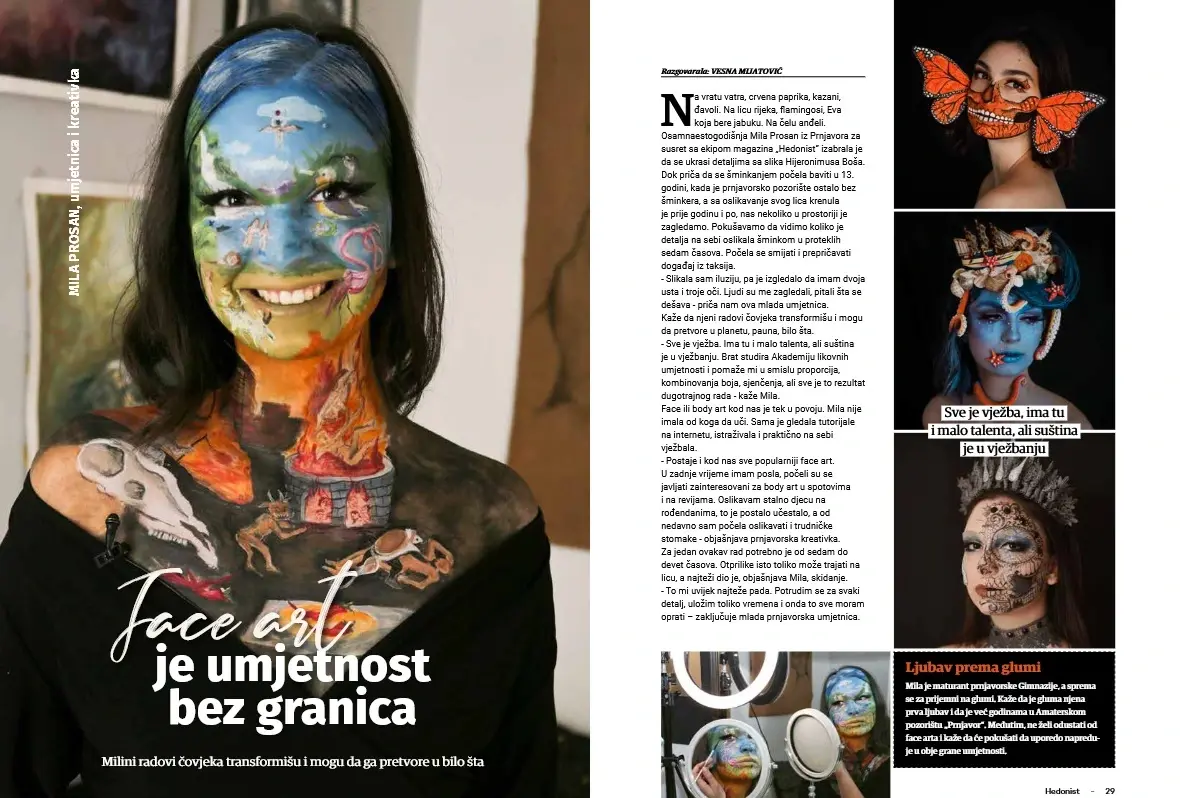
Face Art: An Art Form That Erases Boundaries

![[object Object]](https://api.hedonistmagazine.net/storage/images/2026/04/dffe8d16-7de9-4941-aa7b-0b9efddd06b9.webp)
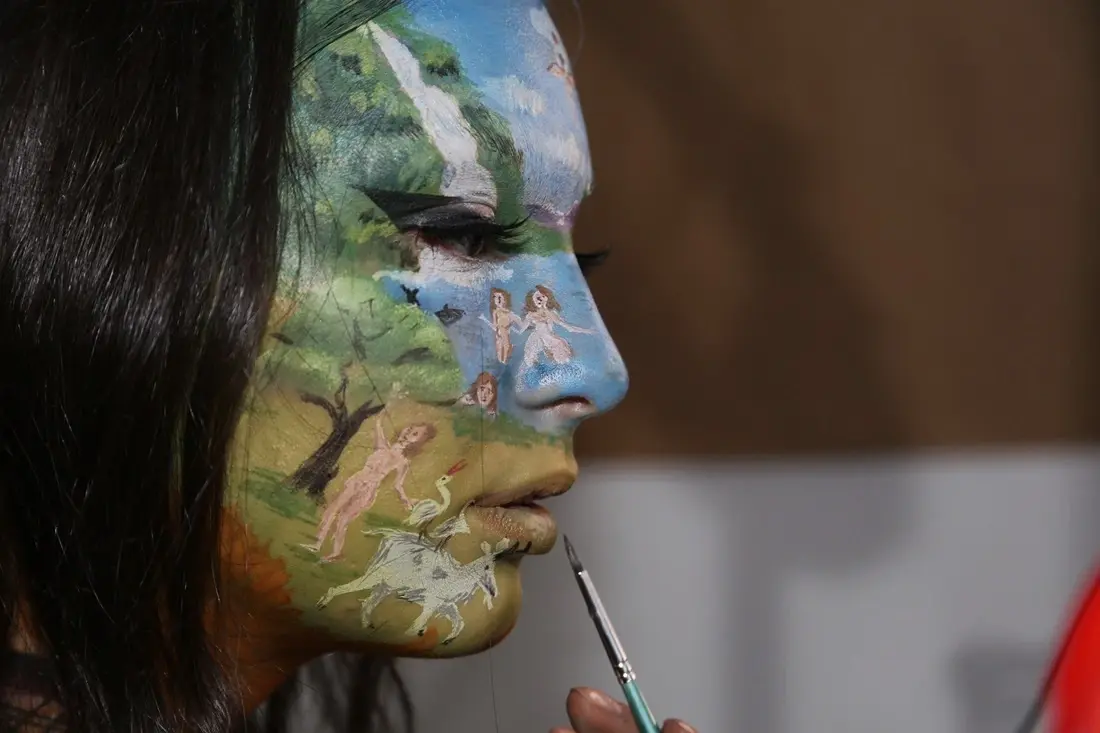
Flames on the neck. Red peppers, cauldrons, devils. On the face, a river, flamingos, and Eve picking an apple. Angels across the forehead. For her meeting with the HEDONIST magazine team, Mila Prosan from Prnjavor chose to adorn herself with details inspired by the paintings of Hieronymus Bosch.
As she explains that she began doing makeup at the age of 13, when the local theatre in Prnjavor was left without a makeup artist, and that she started painting her own face about a year and a half ago, everyone in the room watches her closely. We try to grasp how many details she has managed to create on her face after seven hours of work. She laughs and recalls a moment from a taxi ride.
Editor’s note: This article is part of the HEDONIST archive and was originally published in 2021, in the fifth print edition of the magazine.
“I created an illusion that made it look like I had two mouths and three eyes. People kept staring at me, asking what was going on,” the young artist says.
She explains that her work transforms a person, turning them into a planet, a peacock, or anything else imaginable.
“It’s all about practice. There’s some talent involved, but the essence is in repetition and work. My brother studies at the Academy of Fine Arts and helps me with proportions, color combinations, and shading, but everything you see is the result of long-term dedication,” Mila says.
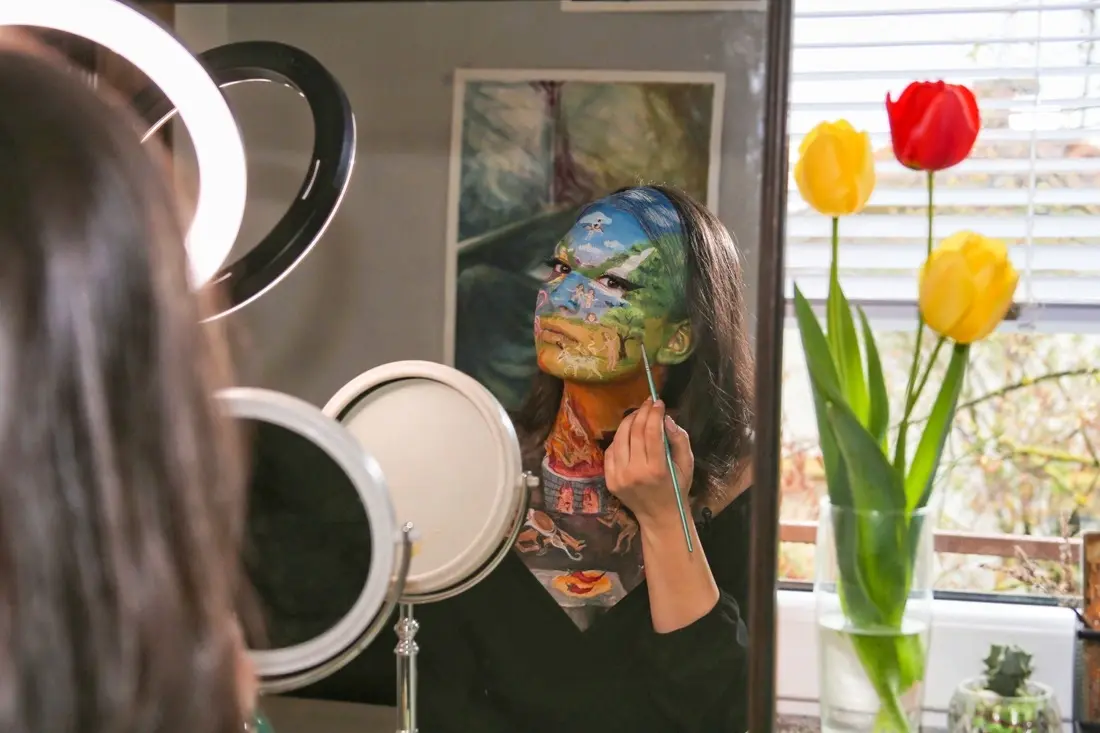
Face and body art are still emerging fields in this region. Mila had no one to learn from directly. She taught herself by watching tutorials online, researching, and practicing on her own face.
“It’s becoming more popular here as well. Lately, I’ve had more work. People are reaching out for body art in music videos and fashion shows. I regularly paint children’s faces at birthday parties, and recently I’ve started working on painting pregnant bellies too,” she explains.
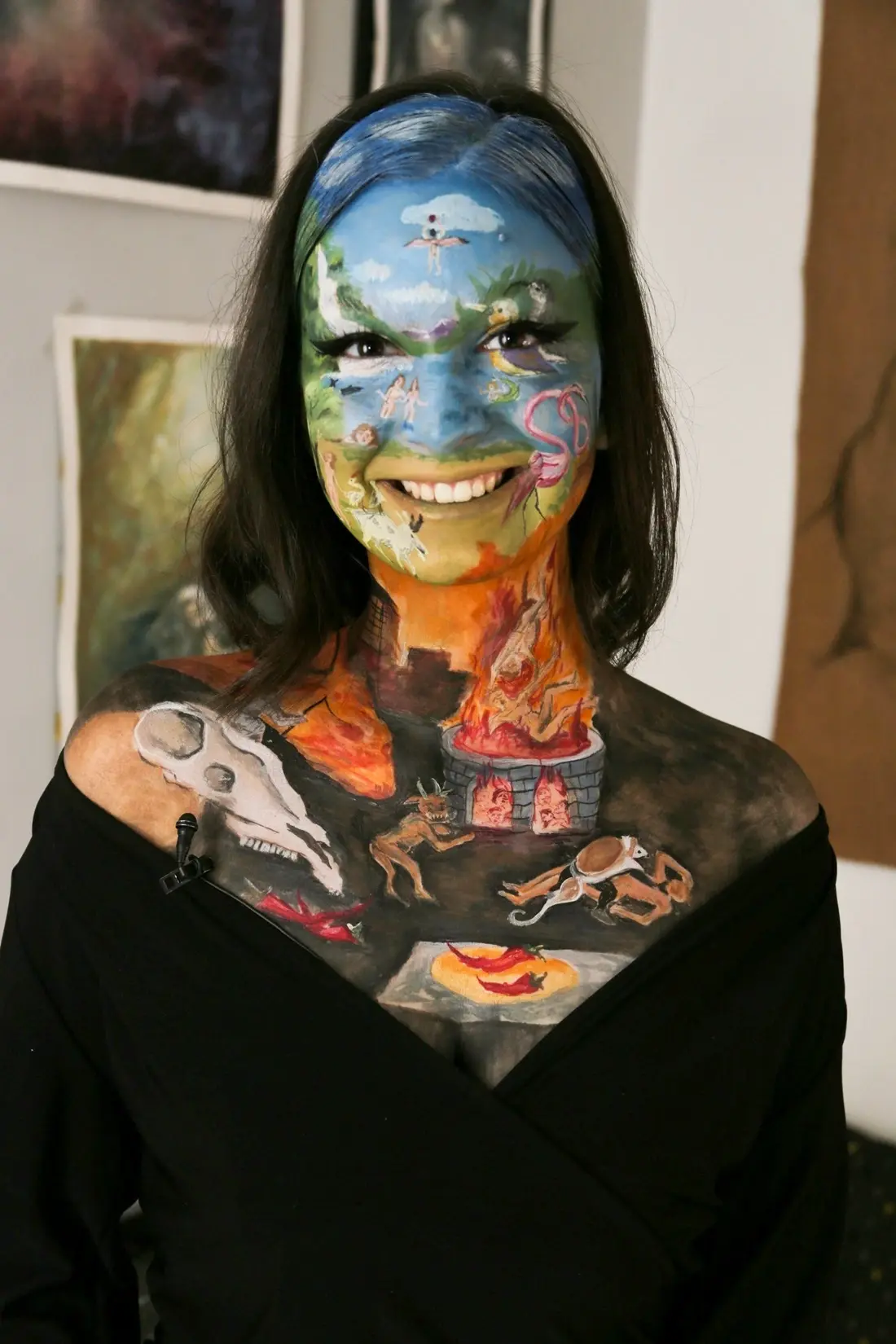
Creating one of these artworks takes between seven and nine hours. It can last on the skin for about the same amount of time, but the most difficult part, she says, is removing it.
“That’s always the hardest for me. I put so much effort into every detail, spend hours working on it, and then I have to wash it all off,” the young artist concludes.
- Written by: Vesna Mijatović / HEDONIST
- Originally published in HEDONIST Magazine, Issue 05, 2021