

How Humans Lost the Ability to Do Nothing
![[object Object]](https://api.hedonistmagazine.net/storage/images/2026/09/cb96375a-9d68-4cf0-b8de-e94c420dbb1e.webp)
In 2014, psychologist Timothy Wilson at the University of Virginia sat a group of people down in an empty room. He asked them to spend fifteen minutes alone with their own thoughts. No phone, no book, not even a pen to doodle with. Just a chair and their own mind.
The experience was so unpleasant that Wilson decided to find out exactly how unpleasant - he first gave participants a mild electric shock, uncomfortable enough that nearly all of them said they'd pay money never to feel it again. Then he left them alone in the room, with a button that could deliver that same shock.
Sixty-seven percent of the men pressed the button at least once. One participant did it 190 times in fifteen minutes. Wilson's conclusion, published in the journal Science, sounds almost absurd when said out loud: people are so uncomfortable being alone with their own thoughts that many would rather feel pain than sit with emptiness.
The idleness that used to be enough on its own
What Wilson's experiment really reveals isn't that people suddenly got stranger than they used to be. It reveals that something that was, for centuries, a perfectly ordinary, everyday part of life - waiting, emptiness, time with no task attached to it - has become almost unbearable for the modern human.

British philosopher Bertrand Russell wrote against what he called the cult of work all the way back in 1932, in his essay "In Praise of Idleness" - the belief that being busy is a virtue in itself, and idleness something to be ashamed of. Russell believed civilization would be healthier if people worked considerably less and spent the rest of their time thinking, playing, and pursuing activities with no productive purpose beyond their own enjoyment. His argument, radical for the 1930s, sounds almost nostalgic today - not because we adopted it, but because we went in the exact opposite direction. Modern humans don't just work a great deal; we've managed to fill every remaining scrap of free time with work too.
Before television became widely available, and especially before smartphones, empty time wasn't a problem that needed solving. Waiting in line, riding the bus, an evening with no plans - all of it was simply part of life, filled with your own thoughts, a conversation with a stranger, or, frankly, nothing at all. Today, moments like that have all but disappeared, and not by accident.
An industry that feeds on every gap
According to a 2026 report from Reviews.org, the average American now checks their phone 186 times a day - roughly once every five minutes of waking life. While the exact figure varies from study to study depending on methodology, every source agrees on one thing: that number keeps climbing year after year, or at best holds stubbornly at a historic high.
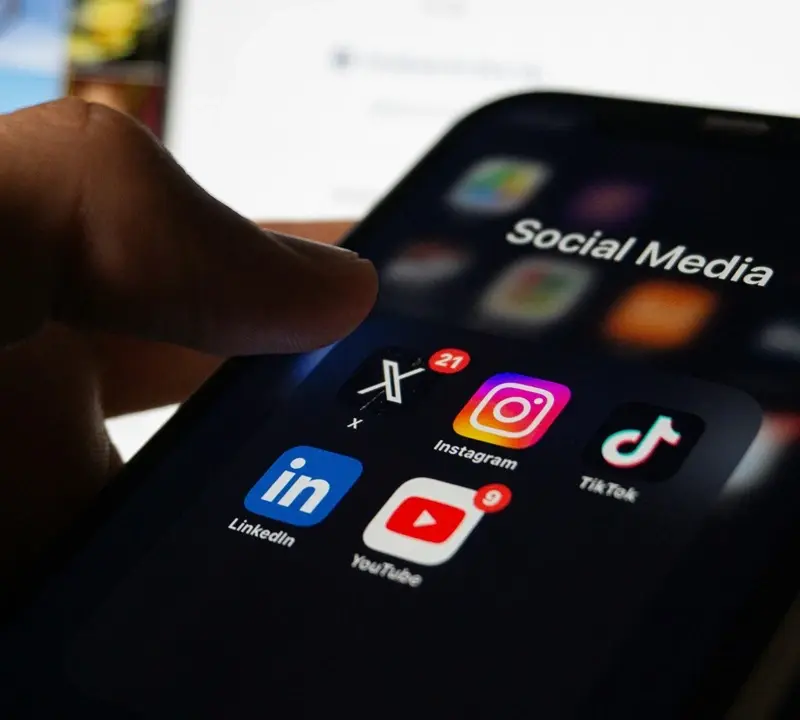
This isn't a coincidence, nor purely a matter of personal willpower. The apps we spend the most time on are designed - literally, by teams of engineers and behavioral scientists - to fill every moment of emptiness before the mind even has a chance to notice it's empty. Short-form video, infinite scroll, notifications arriving at unpredictable intervals - every one of these elements is borrowed straight from research on how habits form, deployed with the explicit goal of turning what used to be empty time into time spent inside an app. Boredom has become, in a literal economic sense, territory to be conquered.
The boredom we wrote off too soon
The irony of the whole story is that the science of boredom, contrary to popular belief, doesn't treat the feeling as purely negative. Research by psychologists like Andreas Elpidorou and colleagues shows that a moderate dose of boredom can actually spark creative thinking and problem-solving - a mind with no external task starts hunting for something to occupy itself, and it's often in that wandering that ideas emerge that a focused, busy mind would never have reached. Some of history's best-known discoveries and works of art were born in exactly these moments - on long train rides, during bouts of insomnia, on walks with no particular destination.
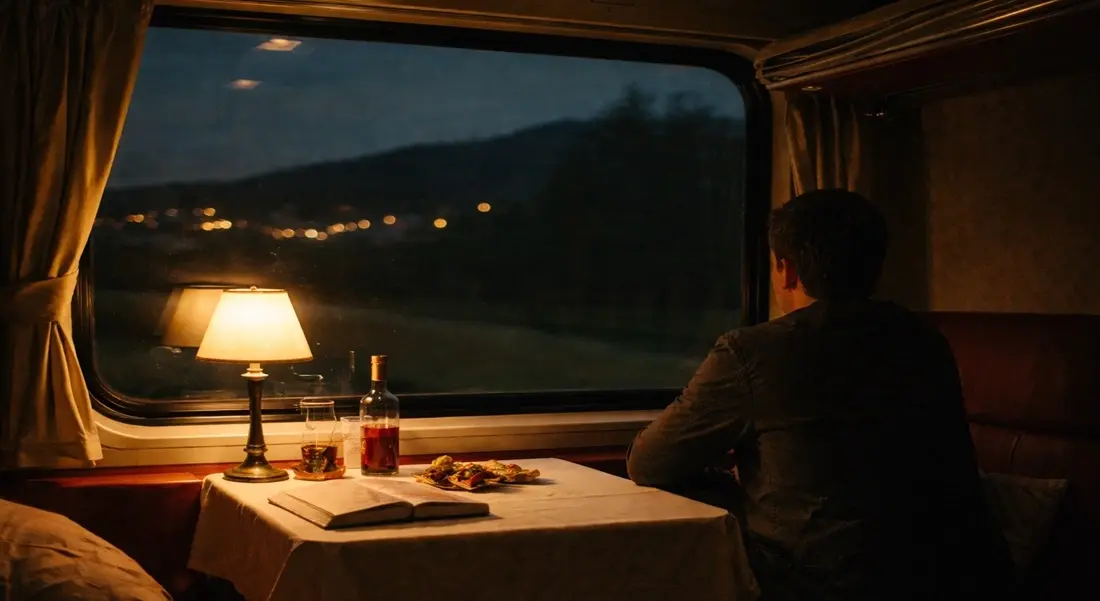
The problem isn't that boredom feels unpleasant. The problem is that, thanks to the device in our pocket, we've gained, for the first time in human history, a way to dodge it absolutely every single time it shows up - and we've used that option down to the last second. A mind that never gets the chance to wander never gets the chance to create anything out of that wandering, either.
What it would mean to relearn how to do nothing
Nearly a century ago, Russell predicted a world in which technology would free humans from excess labor and hand them more time to think. He got the first half of that equation right and completely missed the second - technology did free us from a great deal of physical work, but instead of spending that freed-up time thinking, we spend it in another form of busyness, just a much quieter, less visible one than going to a job.
Wilson's electric-shock experiment remains striking precisely because it shows how deeply rooted that discomfort really is - not as some modern invention, but as something that seems to have been waiting all along for the right tool to express itself fully. The phone in our pocket happened to be the tool that finally showed up.
Maybe that's why the single most radical act available to us right now is also the one that sounds most harmless: sit down somewhere for no reason, resist reaching for a screen the moment the first uncomfortable bit of emptiness arrives, and wait to see what happens when the mind is finally left alone with itself, with no escape button anywhere nearby.