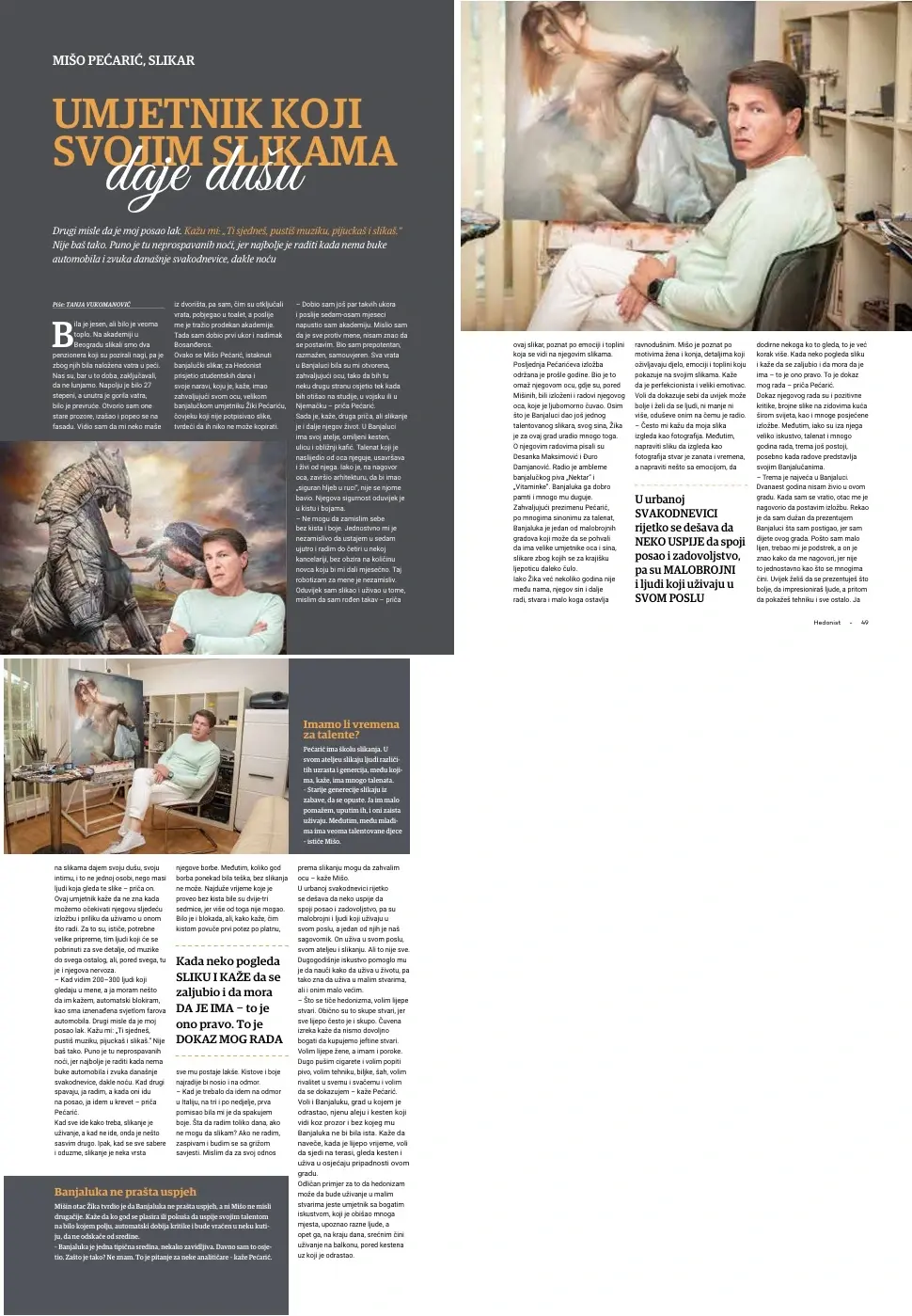
Studio, Paintbrush and Chestnut Tree: Mišo Pećarić’s Art of Living

“It was autumn, but the weather was unusually warm. At the Academy of Fine Arts in Belgrade, we painted two retired men posing nude, so we lit a fire in the stove for their benefit. Back then, they locked us in so we wouldn’t wander off. It was 27 degrees Celsius outside, and with the fire burning inside, the room was unbearably hot. I opened those old windows, climbed out, and made my way along the façade.
Someone spotted me from the courtyard and waved, so as soon as the doors were unlocked, I slipped into the toilet. Afterwards, the academy’s vice-dean came looking for me. That was when I received my first reprimand and acquired the nickname Bosanđeros.
This is how Mišo Pećarić, a prominent painter from Banja Luka, recalls his student days and the rebellious streak he says he inherited from his father, Žika Pećarić, a renowned Banja Luka artist who never signed his paintings, convinced that no one could ever replicate his work.
“I received a couple more reprimands like that, and after seven or eight months I left the academy. I thought everything was against me; I didn’t know how to handle myself. I was arrogant, spoiled, and overconfident. Thanks to my father, every door in Banja Luka was open to me, so I only began to experience a different side of life when I left for university, the army and Germany,” Pećarić says.
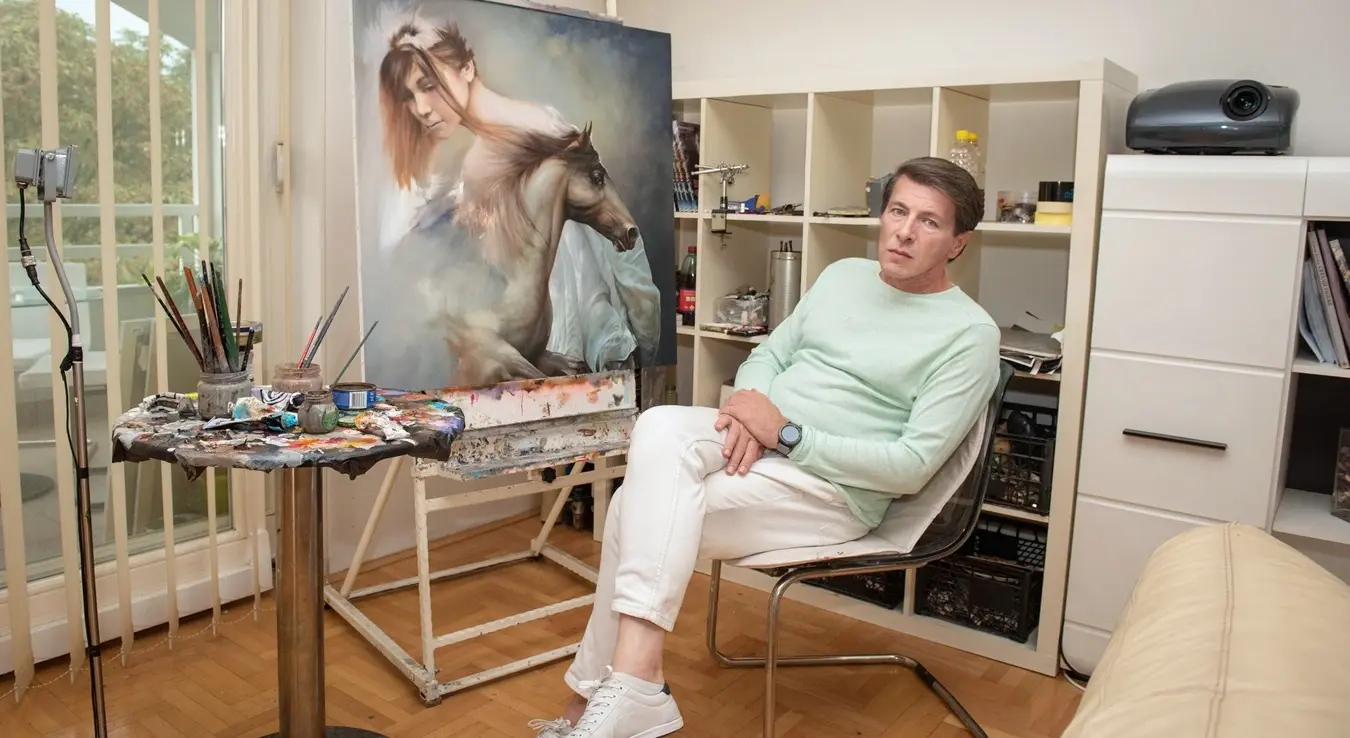
Things are different now, he says, but painting remains his life. In Banja Luka, he has his own studio, a favourite chestnut tree, a familiar street and a nearby café. He has nurtured and refined the talent inherited from his father, and it is how he makes his living. Although he studied architecture at his father’s urging, so that he would have “a secure livelihood”, he never pursued the profession. His security has always been in his paintbrush and colours.
“I cannot imagine myself without a paintbrush and paint. The idea of getting up at seven in the morning and working in an office until four, no matter how much they paid me each month, is simply unimaginable. That kind of robotic routine is not for me. I have always painted and enjoyed it. I think I was born this way,” says the artist, whose work is known for its emotion and warmth.
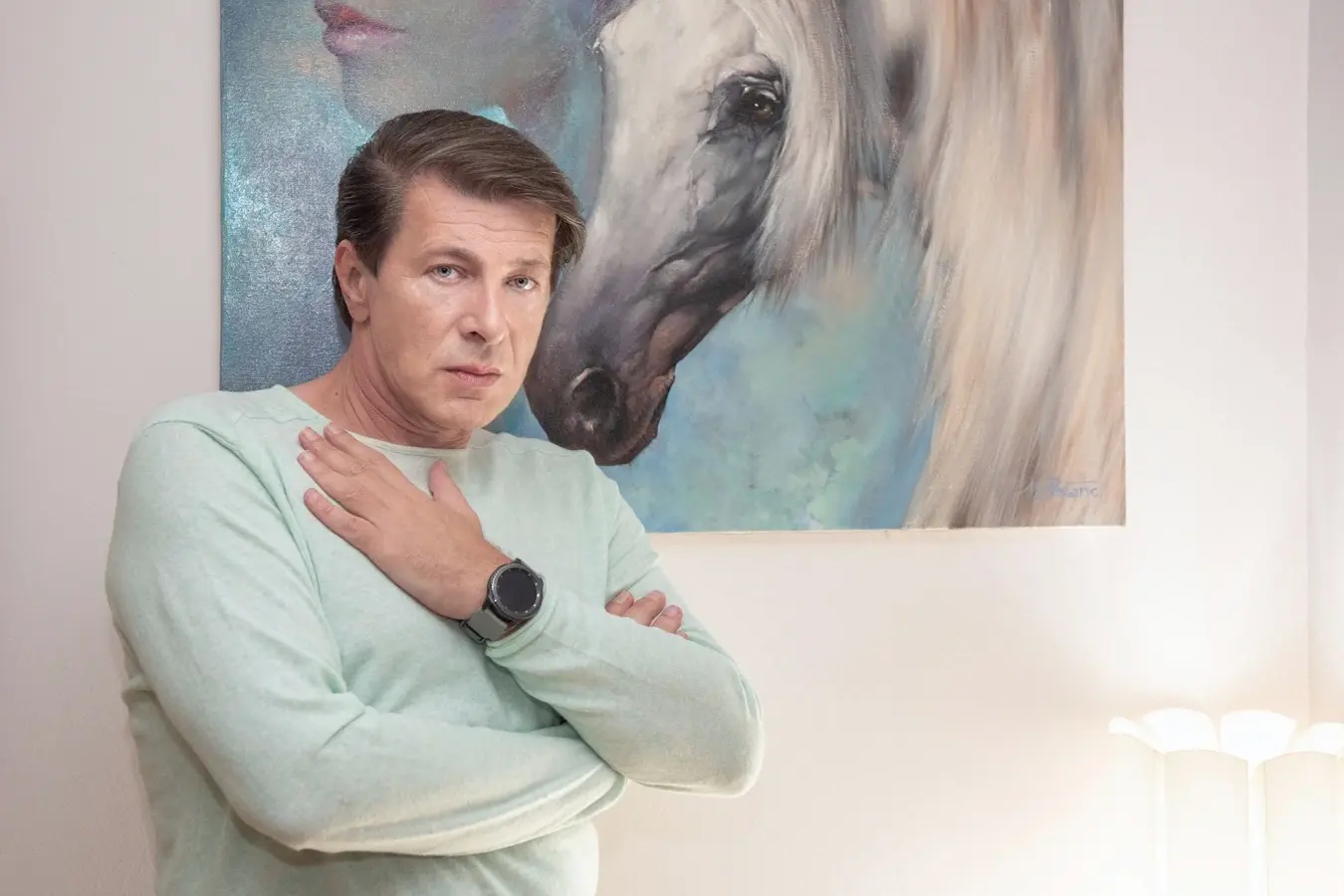
An exhibition held in 2019 was dedicated to his father. Alongside Mišo’s paintings, it featured works by Žika, which his son had carefully preserved over the years. Beyond giving Banja Luka another talented painter in his son, Žika made an immense contribution to the city in his own right.
His work was written about by the poet Desanka Maksimović and Đuro Damjanović. He designed the logos for Banja Luka’s Nektar beer and for the food company Vitaminka. The city remembers him well and owes him a great deal. The Pećarić surname is widely regarded as synonymous with artistic talent, and Banja Luka is among the few cities that can boast such a distinguished father-and-son pairing of painters. Their work helped make the beauty of the Krajina region known far beyond its borders.
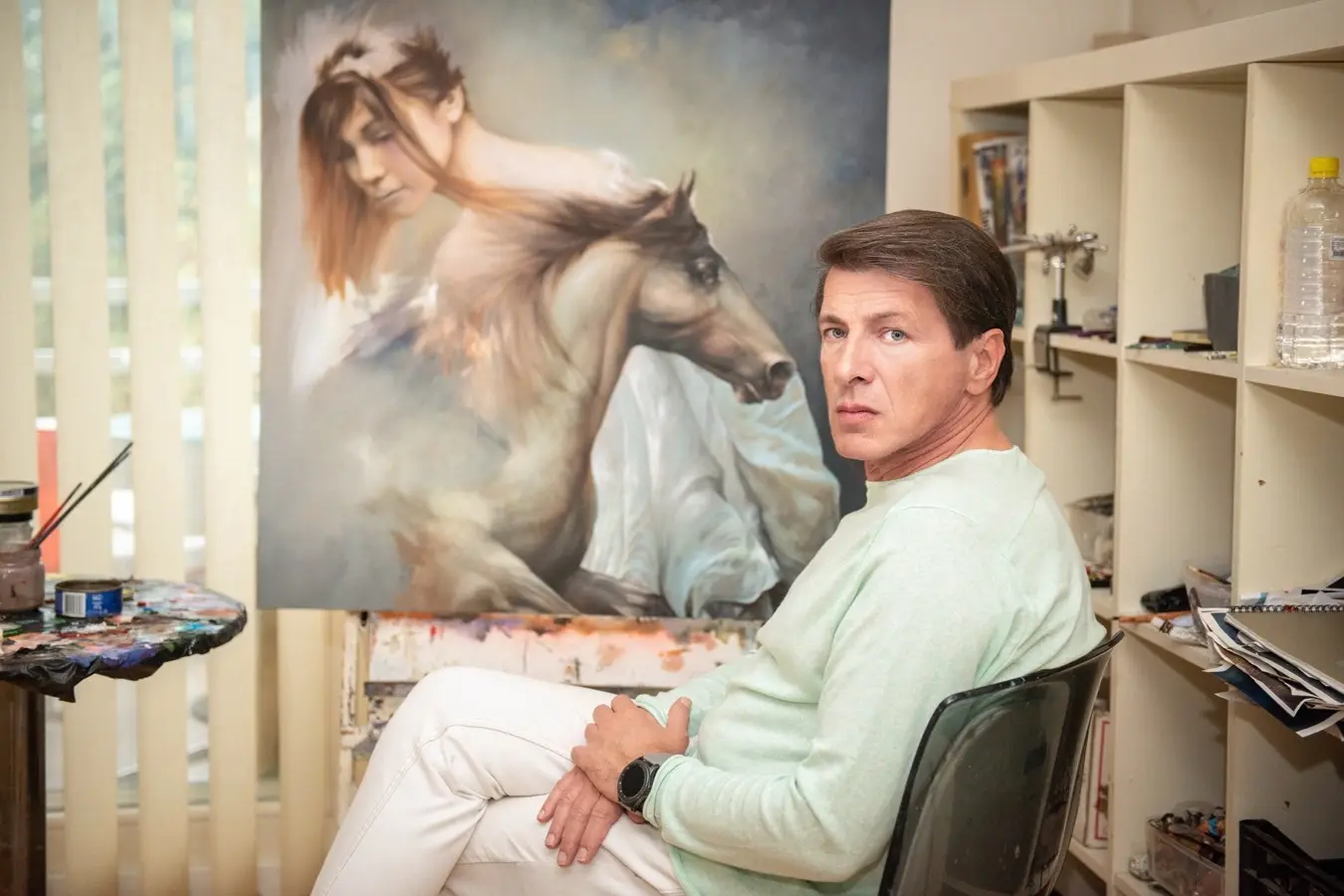
Although Žika is no longer with us, his son continues to work, create and move those who encounter his paintings. Mišo is known for his depictions of women and horses and for the details that bring his canvases to life. He describes himself as a perfectionist and a deeply sensitive person. He enjoys challenging himself to do better and wants people to be genuinely captivated by what he creates.
“People often tell me that my paintings look like photographs. But making a painting look like a photograph is a matter of skill and time. Creating something with feeling, something that touches the person looking at it, is a step further. When someone looks at a painting and says they have fallen in love with it and simply have to own it, that is the real thing. That is the real proof of what I do,” Pećarić says.
There is plenty of other evidence of his achievement: glowing reviews, paintings hanging on walls in homes around the world, and well-attended exhibitions. Yet despite his experience, talent and many years of work, he still gets nervous, especially when presenting his paintings to the people of his hometown.

“My stage fright is greatest in Banja Luka. I was away from the city for twelve years. When I returned, my father persuaded me to hold an exhibition. He told me I owed it to Banja Luka to show what I had achieved, because I was a child of this city. I am a little lazy, so I needed that push, and he knew exactly how to persuade me. Exhibiting is not as simple as some people imagine. You always want to present yourself in the best possible light and impress people, while also demonstrating your technique and everything else. I put my soul, my innermost self, into my paintings, and I share that not with one person, but with a whole crowd of people looking at them,” he explains.
The artist admits he has no idea when his next exhibition might take place, or when visitors will once again have the chance to enjoy his work. Such an event requires extensive preparation and a team to take care of every detail, from the music onwards. And then, of course, there is his own nervousness.
“When I see 200 or 300 people looking at me, and I have to stand there and say something to them, my mind just goes blank, like a deer caught in the headlights. People think my job is easy. They say: ‘You just sit down, put on some music, sip a drink and paint.’ It is not quite like that. There are plenty of sleepless nights. The best time to work is when there is no traffic noise and none of the sounds of everyday life, in other words, at night. When others are asleep, I work; when they leave for work, I go to bed,” Pećarić says.
When everything goes well, painting is a pleasure. When it does not, it becomes something else entirely. Ultimately, painting is a kind of struggle for him, and however difficult that struggle may sometimes be, he cannot live without it. The longest he has ever gone without picking up a paintbrush was two or three weeks; any longer would be unbearable. He has experienced creative blocks, too, but says that as soon as he makes the first brushstroke on a canvas, everything becomes easier. Given the choice, he would take his brushes and paints with him on every holiday.
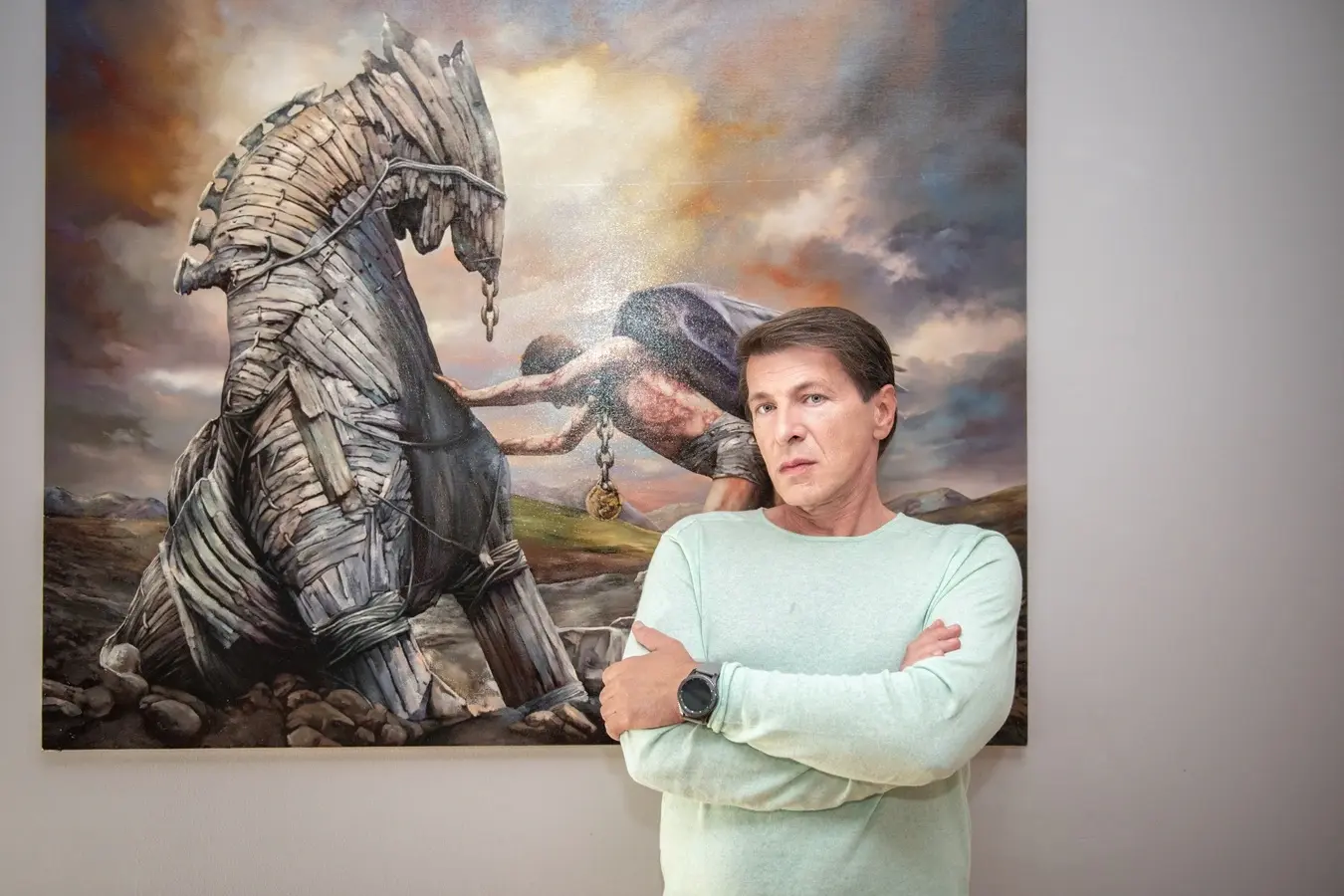
“When I was planning a three-and-a-half-week holiday in Italy, my first thought was to pack my paints. What was I supposed to do for all those days if I couldn’t paint? When I am not working, I fall asleep and wake up with a guilty conscience. I think I have my father to thank for the way I feel about painting,” Mišo recalls.
In the rhythm of urban life, few people manage to combine work with pleasure, and fewer still genuinely enjoy what they do. Our interviewee is one of them. He loves his work, his studio and the act of painting. But there is more to it than that. Years of experience have also taught him how to enjoy life, to appreciate the little things as much as the greater pleasures.
“When it comes to hedonism, I like beautiful things. They are usually expensive, but there is a famous saying that we are not rich enough to buy cheap things. I like beautiful women, and I have my vices, too. I have been smoking for a long time, and I enjoy a beer. I like technology, plants and chess. I enjoy competition in all sorts of things, and I like proving myself,” Pećarić says.
He also loves Banja Luka, the city where he grew up, its tree-lined avenue and the chestnut tree he can see from his window, a tree without which the city would not feel quite the same to him. On pleasant evenings, he likes to sit on his terrace, look at the chestnut tree and enjoy the sense of belonging that comes with being part of this city.
Pećarić is a wonderful example of how hedonism can be found in both life’s simple pleasures and its finer things. He is an artist with a wealth of experience, someone who has travelled widely and met all kinds of people. Yet what makes him happy is sitting on his terrace, looking at the chestnut tree he grew up with.
Do We Make Time for Talent?
Pećarić also runs a painting school. People of all ages come to paint in his studio, and he says there is no shortage of talent among them.
“Older generations paint for fun, to relax. I give them a little guidance and help them along, and they genuinely enjoy it. But there are some remarkably talented children among the younger ones,” Mišo points out.
Banja Luka Does Not Forgive Success
Mišo’s father, Žika, used to say that Banja Luka does not forgive success, and his son is inclined to agree. He believes that anyone who makes a name for themselves, or even tries to succeed through their talent in any field, is immediately met with criticism and pushed back into a box, as if they must be prevented from standing out from the crowd.
“Banja Luka is a fairly typical place, somewhat envious by nature. I realised that a long time ago. Why is it like that? I don’t know. That is a question for the analysts,” Pećarić says.
- Written by Tanja Vukomanović / HEDONIST
- This article is part of the HEDONIST archive and was originally published in 2020, in the magazine’s second print issue.